Showing posts with label Oslo accords. Show all posts

Friday, 16 April 2010

Love of the Land: Secretary Clinton at Dedication of Center: Israel must jump higher, remain silent (insatiable demands)

Secretary Clinton at Dedication of Center: Israel must jump higher, remain silent (insatiable demands)


Dr. Aaron Lerner
IMRA
16 April '10

[Dr. Aaron Lerner - IMRA:

Here are Secretary of State Clinton's marching orders to Israel:

"But easing up on access and movement in the West Bank, in response to credible Palestinian security performance, is not sufficient to prove to the Palestinians that this embrace is sincere. So we encourage Israel to continue building momentum toward a comprehensive peace by demonstrating respect for the legitimate aspirations of the Palestinians, stopping settlement activity, and addressing the humanitarian needs in Gaza, and to refrain from unilateral statements and actions that could undermine trust or risk prejudicing the outcome of talks."

There is a reason she doesn't just say "prejudicing the outcome of talks" because she knows what that means.

It means that Israel cannot annex territories during the course of negotiations.

That's the same limitation Israel accepted at the start of the Oslo process.

It is the only limitation.

What about settlement construction?

Oh, that's "spirit of Oslo".

(Read full post)

Love of the Land: Secretary Clinton at Dedication of Center: Israel must jump higher, remain silent (insatiable demands)

Wednesday, 31 March 2010

Love of the Land: Tom Friedman sings in the Obama Chorus

Tom Friedman sings in the Obama Chorus


Fresnozionism.org
29 March '10

I don’t know why I keep expecting better from Friedman. But his recent op-ed in the NY Times puts him squarely on the Dark Side.

Sometimes the brightest guys can’t see their noses in front of their faces. I’m going to quote him at length. As you read this, ask yourself a) what he is leaving out, and b) what he assumes about Israeli intentions and character.

The collapse of the Oslo peace process, combined with the unilateral Israeli pullouts from Lebanon and Gaza — which were followed not by peace but by rocket attacks by Hezbollah and Hamas on Israel — decimated Israel’s peace camp and the political parties aligned with it.

At the same time, Israel’s erecting of a wall around the West Bank to prevent Palestinian suicide bombers from entering Israel (there have been no successful attacks since 2006), along with the rise of the high-tech industry in Israel — which does a great deal of business digitally and over the Internet and is largely impervious to the day-to-day conflict — has meant that even without peace, Israel can enjoy a very peaceful existence and a rising standard of living.

To put it another way, the collapse of the peace process, combined with the rise of the wall, combined with the rise of the Web, has made peacemaking with Palestinians much less of a necessity for Israel and much more of a hobby. Consciously or unconsciously, a lot more Israelis seem to believe they really can have it all: a Jewish state, a democratic state and a state in all of the Land of Israel, including the West Bank — and peace.


Friedman is absolutely right that the collapse of the Oslo process and the violent Arab reaction to Israel’s unilateral withdrawals decimated the Israeli “peace camp.” But he somehow manages to ignore the causality involved.

(Read full post)

Love of the Land: Tom Friedman sings in the Obama Chorus

Wednesday, 24 March 2010

Love of the Land: Fayyad’s toy gun

Fayyad’s toy gun

If Arafat did not dare divide the land, will a technocrat bereft of charisma and leadership take such an audacious step?


Israel Harel
Opinion/JPost
23 March '10

With the Oslo wind in his sails reanimating his international legitimacy even after he had become a political corpse – and with his Israeli partners anxious to prove that Oslo, despite endless murderous terror, was not a fatal mistake – Palestinian leader Yasser Arafat announced that on May 4, 1999 he would unilaterally declare the establishment of a Palestinian state. The political world was in turmoil. Except for the United States and its European allies, there was a supportive anticipation that Arafat would make good on his vision/threat and realize the dream of generations of Palestinians. Israel was bewildered.

So excited was the international political scene that its most veteran research institute decided to alleviate the tension by holding a simulation exercise: Will he or will he not declare independence? Participants arrived from all over the globe. All eyes were on the Palestinian delegates, none of whom moved (even though every participant represented only himself) without consulting Arafat who reportedly attached tremendous importance to the outcome.

Most of the Israeli and non-Arab observers believed Arafat would not dare declare independence, fearing Israeli military pressure and Israel’s withdrawal from the Oslo process, since he would be violating one of Oslo’s fundamental rules: No side would take unilateral measures.

I also believed Arafat would not make the declaration, but for an entirely different reason. His threat was directed at an objective that I don’t fully understand, I said, but was definitely not the realization of the dream of generations. The Palestinians, I argued at that simulation and believe to this day, do not want a state of their own alongside Israel. Accordingly, Arafat would make a show of yielding to the counsel of the Arab states and avoid declaring independence. And so it was, even though few if any agreed then with my thinking.

(Read full article)


Love of the Land: Fayyad’s toy gun

Monday, 8 March 2010

Love of the Land: Oslo Discord

Oslo Discord


Asgeir Ueland
Tablatmag.com
04 March '10

Once staunch supporters of Israel, Norwegians have shifted to a pro-Palestinian stance. What changed?

It is late January, and red-eyed travelers on an overnight train to Oslo can see little of Norway’s frozen capital. Darkness holds the city in its grip, and by 8 a.m. there still is no sign of the sun.

Despite its weather, Norway stands at the top of the yearly U.N. Human Development Index, thanks to massive oil and gas reserves that were discovered in the North Sea in 1969 and changed the face of Norwegian society. Over the last 40 years, the country went from being a poor, frozen outpost of Northern Europe to a social democratic paradise whose capital gave its name to the 1993 peace accords between Israel and the Palestinians. Yet over the same period, Norway also went from being a warm ally of Israel to a hotbed of pro-Palestinian sentiment and an unfriendly place for Israelis to visit and do business. The marked shift in Norwegian feeling toward Israel is typical of a larger shift throughout Scandinavia toward demonizing the Jewish state, despite the near-total absence of sizable communities of Jews or Muslims there who might seek to shape domestic opinion or foreign policy. The question of why Norwegians have become so invested in a complex conflict between two very un-Scandinavian peoples on the other side of the globe offers useful insight into the social and political dynamics that have turned once-friendly Europeans against Israel.

“The relations between Norway and Israel are relations between friends, but they lack real content,” said an Israeli diplomat I talked to in Oslo. “The bilateral plate is empty.” In 2003, according to the Israeli trade ministry, overall Israeli exports to the European Union stood at $10.4 billion; exports to Norway were a mere $69 million and have remained at more or less the same level since.

(Read full article)


Love of the Land: Oslo Discord

Wednesday, 24 February 2010

Love of the Land: Israel's Last Chance of Survival

Israel's Last Chance of Survival


Daniel Greenfield
Sultan Knish
22 February '10

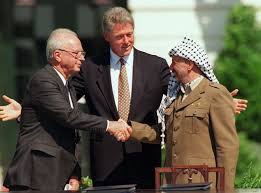
In the summer of 2011, it will have been 18 years since the Oslo Accords were signed by Shimon Peres, secretly and without the knowledge of the Israeli public whose rights to their own land were being signed away. The accord was based on meetings by left wing academics with terrorists that were illegal under Israeli law, signed covertly by a disgraced politician who had been an admirer of Marx and finally sealed with a public handshake between the world's greatest terrorist and an Israeli Prime Minister suffering from such severe dementia that he had trouble recognizing the man beaming down on them both as the President of the United States, who 5 years later would be facing impeachment.

That handshake with Arafat took place on September 13th, 8 years minus 2 days, before terrorists would duplicate a feat that only Arafat's own terrorists had previously accomplished, by simultaneously hijacking 4 aircraft. Even as the United States had begun pandering to Arafat, the rise of the next wave of terrorism was already underway with Bin Laden hard at work on the organization that would evolve into the Al Queda we know today. The Oslo Accords would play a crucial role in the rise of Islamist terrorism creating a vacuum into which the Muslim Brotherhood could step into with groups such as Hamas and Al Queda. And the Oslo Accords would also come to define Israel's worst defeat since the accords it had signed with Rome over two thousand years ago.

Now as that fateful 18 year mark approaches, there is still a crack in the door remaining through which Israel can save itself. In Hebrew the word for life is Chai, whose letters code as 18. And eighteen years after the scourge of Oslo has brought war and death into the heart of Israel, turned its town and cities into targets for missiles, made its roads into highways of death and now threatens to divide Jerusalem itself-- Israel has the chance to choose life over death by appeasement.

Each year since Oslo, the situation has grown steadily worse. Not just militarily, not just in relation to the children who have been left without arms and legs by Arab terror. But even diplomatically as well. The political war against Israel has reached an unprecedented height with no comparison to even the ugliest days of the Intifada. And all of it has one common element, a blood lust spurred on by Israel's willingness to accommodate, appease and retreat. Not only has any Israeli concession, any act of goodwill and compassion, not changed the way Israel is portrayed-- but each one has only fed the furious hate that Islam and the international left feels for it.

(Read full article)


Love of the Land: Israel's Last Chance of Survival

Sunday, 14 February 2010

Love of the Land: Were the Oslo Accords a state of mind?

Were the Oslo Accords a state of mind?


Dr. Alex Grobman
Special to The Jewish State
05 February '10

Finding a solution to the Arab/Israeli conflict has been a constant source of frustration for American administrations. Each new U.S. president assumes he can resolve this intractable dispute either through the sheer force of his personality or his unique understanding of the problems in the region.

The Oslo Peace Accords -- which were officially signed at a public ceremony in Washington, D.C. on Sept. 13, 1993, in the presence of PLO chairman Yasser Arafat, Israeli Prime Minister Yitzhak Rabin, and U.S. President Bill Clinton -- is among the most glaring example of how American presidents are naive about how to settle the conflict.

In "Doomed to Failure?: The Politics and Intelligence of the Oslo Peace Process," Ofira Seliktar, a professor of political science at Gratz College and adjunct professor at Temple University, analyzes the environment in which the Oslo Accords evolved, and the reasons why the agreement failed. The downfall of the Soviet Union and the defeat of Iraq in the Gulf War in 1991 were viewed by the Israeli peace activists and their supporters in the West as a sure sign that the climate was ripe to start the Oslo negotiations that lead to the Declaration of Principles.

Shimon Peres, the most vigorous proponent of this view, believed that a new Middle East had emerged that would prevail over the "irrational" and "tribalist" attitudes like extreme nationalism and religious fundamentalism among the Arabs throughout the region. Once peace was achieved, peace activists expected there would be an added bonus: Israel would probably abandon its own "tribal-particularistic culture shaped by the ultraorthodox and national religious Zionists in favor of a more universalistic-secular creed."

Seliktar describes how the negotiations began, the principles upon which they were based, and the Labor party's attempt to implement the accord even as Yasser Arafat's legitimacy continued to be repudiated. She explores how the Likud government attempted to effect a midcourse modification of the agreement, and Labor's efforts to circumvent and ignore PA blatant violations of the interim provisions of the Accord in order to achieve a final peace settlement.

Those who want to understand the way in which Israel predicts and manages political change will find this book of special interest. Seliktar shows us why the Oslo Accords were doomed from the start.

(Read full article)

Love of the Land: Were the Oslo Accords a state of mind?

Friday, 29 January 2010

Love of the Land: Ending the illusion of peace in our time

Ending the illusion of peace in our time


Isi Leibler
Candidly Speaking from Jerusalem
28 January '10

It is high time that we ceased indulging in theatrics and spoke the truth. We all desperately yearn for peace, and the vast majority of us do not wish to rule over Arabs. If we could convince ourselves that our neighbors would commit to peaceful coexistence, we would make major sacrifices. But alas, the prospects for a comprehensive settlement in the near future are virtually zero.

Since the Oslo Accords, we have remained in a state of denial, refusing to reconcile with the reality that the duplicitous Palestinian leaders, then Yasser Arafat and today Mahmoud Abbas, rather than seeking to create an independent state, were utilizing terror and diplomacy to dismember the Jewish state in stages. We ignored the relevance of Arafat’s repeated call to his people to heed the passage in the Koran relating to the prophet Muhammad consummating the Al Hudaibiya Treaty with the Koreishi Jews and subsequently reneging and killing them. The message clearly signaled that agreements with Jews and non-Muslims may be violated.


Our passion to achieve peace blinded successive governments into accepting the false premise that Palestinian leaders were peace partners, and repeatedly chant the idiotic mantra that the peace process was irreversible and that “peace in our time” was achievable. This cost the lives of thousands in terror attacks and generated successive wars. In conveying this charade to the world at large, we encouraged the false belief that our conflict with the Arabs was a struggle between two peoples to divide land. We maintained this nonsense even after Arafat and Abbas rebuffed Ehud Barak and Ehud Olmert, who had offered them virtually all the territory previously occupied by Jordan and Egypt.

(Read full article)

Love of the Land: Ending the illusion of peace in our time

Thursday, 28 January 2010

Love of the Land: Mahmoud Abbas, Palestinian Authority President

Mahmoud Abbas, Palestinian Authority President


John Perazzo
Frontpagemag.com
27 January '10

Click here to view the full Mahmoud Abbas profile.

Excerpts from the Mahmoud Abbas profile:

In the mid-1950s Abbas became involved in underground Palestinian politics, and joined a number of exiled Palestinians in Qatar. While there, he recruited numerous people who would become key figures in the Palestine Liberation Organization (PLO), and was one of the founding members of Fatah in 1957.

Through the 1960s, 70s, and 80s, Abbas travelled with Yasser Arafat and the rest of the PA leadership-in-exile to Jordan, Lebanon, and Tunisia. Widely regarded as a pragmatist, Abbas is credited with initiating secretive contacts with leftist and pacifist Jewish organizations during the 1970s and 80s, and is considered by many to have been a major architect of the 1993 Oslo peace accords (evidenced in part by the fact that he traveled with Arafat to the White House to sign the accords).

Love of the Land: Mahmoud Abbas, Palestinian Authority President

Love of the Land: Peace for Land

Peace for Land


Jay D. Homnick
The American Spectator
26 January '10

"So, Sadie, why do you look so happy today?"

"I got a letter from my son Abe in Israel."

"And how is with Abe?"

"He lost all his money in a business, his apartment was damaged by a bomb and he had to wait a month to get a refrigerator."

"Then why so happy?"

"Because mine Abe writes such a beautiful Hebrew!"

This bit of Jewish gallows humor encapsulates much of the modern experience of having coreligionists, often relatives, in Israel. The grind of their everyday battle for survival is tolerated while the astonishing phenomenon of the revenant country and language is celebrated. The perfect metaphor for life in Israel is the ubiquitous habit there of eating sunflower seeds. They jam a fistful of unopened shells in their mouths, then walk down the street spitting the shells while somehow extracting the seeds with teeth and tongue, swallowing only the seeds. Israelis spend their lives dodging shells of one sort or another.

One of these is the shell game of the world-demanded American-sponsored Europe-monitored peace talks with the Palestinians. As matters are currently constituted, these are simply impossible to bring to a satisfactory conclusion. Sounds shocking, but no less true for all that.

(Read full article)


Love of the Land: Peace for Land

Tuesday, 26 January 2010

Love of the Land: The Good Old Days Before Peace

The Good Old Days Before Peace


Khaled Abu Toameh
Hudson New York
26 January '10

Many Jews and Arabs living in this part of the world really miss the good old days before the Middle East peace process began -- before Yasser Arafat and the PLO were brought to the West Bank and Gaza Strip after the signing of the Oslo Accords.

It is time to cry out loudly that this peace process has been nothing but a disaster for both peoples. Has anyone ever noticed that more Jews and Arabs have died since the signing of the Oslo Accords than during the period between 1967 and 1993?

This peace process, correctly dubbed by some as a “war process,” has failed; it is time to try something else.

Real peace between Palestinians and Jews cannot be achieved, at least not in the foreseeable future. The gap between the two sides remains as wide as ever and the two sides do not trust one another at all. Instead of talking about conflict resolution, we should go for conflict management , with good-will gestures from both parties.

(Read full article)

Love of the Land: The Good Old Days Before Peace

Tuesday, 12 January 2010

Love of the Land: A road map leading nowhere

A road map leading nowhere


Moshe Arens
Haaretz
12 January '10

It is now close to 17 years since Israel's ill-fated decision to recognize the PLO as the legitimate representative of the Palestinian people and the Oslo Accords. Despite the accords, or possibly because of them, during those years much blood has been shed and no significant progress was made toward peace between Israelis and Palestinians.

There was no absence of good intentions on the part of Israel. But as was shown repeatedly, good intentions are not enough to resolve the seemingly intractable issues that separate the parties. On the contrary, on many occasions, suggestions and proposals offered by Israel actually created obstacles to any progress in the negotiations. Far-reaching concessions offered by Israel, although rejected by the Palestinians, only served to establish what the Palestinians from then on insisted would have to be the starting point for future negotiations, actually creating a pitfall on the road map for any progress.

Ehud Barak's egregious concessions offered at the Camp David talks in 2000, and the additional farcical proposals made by the Israeli delegation at the continuation of these talks in Eilat, only served to establish a roadblock on the way to peace.

Why would an Israeli offer of concessions end up being a roadblock to further progress? For the simple reason that if these concessions are not supported by the majority of the Israeli public they cannot be implemented, while a Palestinian demand that these concessions become the starting point of any further negotiations blocks the resumption of negotiations.

The prime minister or government that offers these concession might well argue that they are the democratically elected government and have the perfect right to offer concessions that they consider appropriate. And they do have that right, but if they are aware of the fact that the Israeli public would not support these concessions they should know that they cannot be implemented, and therefore they are actually doing a disservice to the very peace process they claim to be pursuing by offering these concessions to the Palestinians.

(Read full article)


Love of the Land: A road map leading nowhere

Saturday, 2 January 2010

Love of the Land: A low and dishonest decade

A low and dishonest decade


Caroline Glick
carolineglick.com
01 January 09

Upon returning from Cairo on Tuesday, Prime Minister Binyamin Netanyahu proclaimed, "It's time to move the peace process forward."

The most sympathetic interpretation of Netanyahu's proclamation is that he was engaging in political theater. It was a low and dishonest statement uttered at the end of what has been, in the immortal words of W.H. Auden, "a low and dishonest decade."

Everyone with eyes in their heads knows that there is no chance of making peace with the Palestinians. First of all, the most Israel is willing to give is less than what the Palestinians are willing to accept.

But beyond that, Gaza is controlled by Hamas, and Hamas is controlled by Iran.

For its part, Fatah is not in a position to make peace even if its leaders wished to. Mahmoud Abbas and his deputies know that just as Hamas won the 2006 elections in Judea, Samaria and Gaza, Hamas would win elections today. To maintain even a smudge of domestic legitimacy, Fatah's leaders have no choice but to adopt Hamas's rejection of peaceful coexistence with the Jewish state.

Clearly, now is not the time "to move the peace process forward."

No less than what it tells us about Netanyahu, his statement is notable for what it tells us about Israel. Our continued willingness to ensnare ourselves in the rhetoric of peace processes demonstrates how little we have progressed in the past decade.

In 1999, Netanyahu was ejected from office by an electorate convinced that he was squandering an historic opportunity for peace between Israel and its neighbors. A majority of Israelis believed that Netanyahu's signature policies of demanding that the Palestinians abide by their commitments to Israel, and maintaining the IDF's security zone in south Lebanon were dooming all hope for peace.

(Read full article)


Love of the Land: A low and dishonest decade

Friday, 1 January 2010

Love of the Land: The Deadly Price of Pursuing Peace

The Deadly Price of Pursuing Peace


Evelyn Gordon
Commentary Magazine
January '10

When the Oslo process began in 1993, one benefit its adherents promised was a significant improvement in Israel’s international standing. And initially, it seemed as if that promise would be kept: 37 countries soon established or renewed diplomatic relations with Israel; a peace treaty was signed with Jordan; five other Arab states opened lower-level relations.

But 16 years later, it is clear that this initial boost was illusory. Not only is Israel’s standing no better than it was prior to the famous handshake between Yitzhak Rabin and Yasir Arafat on the White House Lawn in September 1993, it has fallen to an unprecedented low. Efforts to boycott and divest from Israel are gaining strength throughout the West, among groups as diverse as British academics, Canadian labor unions, the Norwegian government’s investment fund, and American churches. Israeli military operations routinely spark huge protests worldwide, often featuring anti-Semitic slogans.

References to Israel as an apartheid state have become so commonplace that even a former president of Israel’s closest ally, the United States, had no qualms about using the term in the title of his 2007 book on Israel. European polls repeatedly deem Israel the greatest threat to world peace, greater even than such beacons of tranquility and democracy as Iran and North Korea. Courts in several European countries, including Belgium, Britain, and Spain, have seriously considered indicting Israeli officials for war crimes (though none has actually yet done so). And in October, when the United Nations Human Rights Council overwhelmingly endorsed a report that advocated hauling Israel before the International Criminal Court on war-crimes charges, even many of Jerusalem’s supposed allies refused to vote against the measure. In academic and media circles, it has even become acceptable to question Israel’s very right to exist—something never asked about any other state in the world. None of these developments was imaginable back in the days when Israel refused to talk to the Palestine Liberation Organization, had yet to withdraw from an inch of “Palestinian” land, and had not evacuated a single settlement.

Yet even today, conventional wisdom, including in Israel, continues to assert that Israel’s international standing depends on its willingness to advance the “peace process.” That invites an obvious question: if so, why has Israel’s reputation fallen so low despite its numerous concessions for peace since 1993?

(Read full article)


Love of the Land: The Deadly Price of Pursuing Peace

Friday, 18 December 2009

Love of the Land: Oslo - not the "occupation" is undermining Israel's ethical, democratic and diplomatic foundations

Oslo - not the "occupation" is undermining Israel's ethical, democratic and diplomatic foundations


Dr. Aaron Lerner
IMRA
17 December 09

"The truth is harsh. The occupation is destroying Israel. It is undermining Israel's ethical, democratic and diplomatic foundations."

So claims Haaretz Correspondent Ari Shavit in today's edition.

I would suggest that, in retrospect, much of the activity surrounding Oslo - rather than the "occupation" - has been "undermining Israel's ethical, democratic and diplomatic foundations."

Oslo corrupted our respect for human life. Soldiers and civilians alike became no more than pawns in a game of peacemaking under the gun. And today, after sinking up to our noses in the mire of Oslo, with politicians often ultimately treating brutal murders as temporary insignificant inconveniences, we find a dramatic increase in murder, violent crime, even violence in the schoolyard.

Oslo corrupted the very top of Israel's intelligence system. Some allowed their ideology to seriously cloud their judgment as they naively thought they could sub-contract Israel's security to their Palestinian pals who they wined and dined on open expense accounts. Others, with an eye on their career track, opted to present reports and analysis that supported the "process" rather than what they really thought. And it didn't stop there. Some of these top Israelis entered into a web of business relations with their Palestinian counterparts. Money - the ultimate corrupter.

Oslo corrupted the political system, with it becoming acceptable to make bare-faced lies to the Knesset, as was the case when Shimon Peres denied the existence of his "Jerusalem Letter", and later when time and again the explicit policy choices made by the citizens was ignored after election day. But it wasn't just the lies and the vote buying. Oslo introduced brazen and open foreign interference in the Israeli democratic process with money from the European Union and other nations financing various leftist groups in Israel and even some politicians.

Oslo so corrupted respect for the democratic process that the ruling government even went so far as to use the services of the State's intelligence apparatus to undermine the standing of their political rivals and silence them rather than engage them in serious debate. To this day serious public debate is marred by the efforts to silence voices with charges of incitement and the "extremist" label.

Oslo corrupted the news media as reporters abandoned their critical "watchdog" role, opting to either distort or ignore the truth as their contribution to the "peace process".

(Read full post)


Love of the Land: Oslo - not the "occupation" is undermining Israel's ethical, democratic and diplomatic foundations

Thursday, 17 December 2009

Love of the Land: Hamas still wants to liberate 'all of Palestine'

Hamas still wants to liberate 'all of Palestine'


Dr. Aaron Lerner
IMRA
17 December 09

"The truth is harsh. The occupation is destroying Israel. It is undermining Israel's ethical, democratic and diplomatic foundations"
Hamas still wants to liberate 'all of Palestine' By Ari Shavit, Haaretz

So claims Ari Shavit.

I would suggest that, in retrospect, much of the activity surrounding Oslo has been "undermining Israel's ethical, democratic and diplomatic foundations."

Oslo was, from the first day, a story of tremendous corruption - both financial and professional - among Israeli officials involved in the "process".

- many of the Israelis involved with the Palestinians made personal fortunes in business deals that they made - at times with the very same Palestinians that they interacted with on a profffessional basis - that were related to the PA.

- many of the Israelis involved seriously and consciously distorted the assessments that they provided to policy makers so that their careers would not be hurt by being identified as an "enemy of the peace process".

- democratic values were ignored or abused in moves to push through various policies and programs that were at odds with the mandates given the elected leadership as expressed in the results of elections in which the candidate and parties promised that a vote for them was a vote against those very policies and programs.

- Oslo took Yasser Arafat and his PLO off the dungheap of history (wallowing in Tunis after being thrown out of Lebanon) - leading ultimately to the diplomatic challenge we face today.]

Love of the Land: Hamas still wants to liberate 'all of Palestine'

Tuesday, 15 December 2009

Love of the Land: Calling a Crime a Crime

Calling a Crime a Crime


Evelyn Gordon
Contentions/Commentary
13 December 09

(Definite food for thought in this article. One needs merely to compare the non-response to the terrorist stabbing of a young woman Motzei-Shabbat in Gush Etzion or at the gas station here 3 weeks ago, to gauge the different reactions. Terrorist attacks rarely are considered an impediment to the process, therefore ignored, free of pious condemnation by both PM and DM. Given who benefited from a defacing of the mosque, it may be more profitable to look towards those who wish to demonize an entire sector of Jews who stand in the way of a 2nd or 3rd Hamastan.)

It’s a measure of how badly the “peace process” has warped Israel’s language of values that the most intelligent response to Friday’s torching of a mosque near Nablus, allegedly by extremist settlers, came from the Organization of the Islamic Conference. Its secretary general, Ekmeleddin Ihsanoglu, correctly identified the crime as “blatant aggression against the sanctity of sacred places.”

That’s more than Israeli politicians seemed capable of doing. Defense Minister and Labor Party chairman Ehud Barak, for instance, sounded as if the real crime were the potential damage to the peace process. “This is an extremist act geared toward harming the government’s efforts to advance the political process,” he declared. Similarly, opposition leader and Kadima chairwoman Tzipi Livni condemned it as a “despicable act of provocation” — as if the crime were the response it might provoke.

If the perpetrators were settlers, they probably did intend to undermine the peace process by provoking a violent Palestinian response. But that’s not what made their act criminal. The crime isn’t the impact on the peace process; it’s the wanton destruction of a house of worship.

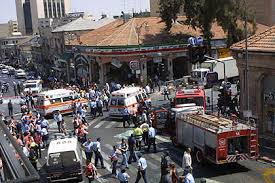
This perversion of language began when Yitzhak Rabin and Shimon Peres deemed the suicide bombings that followed the 1993 Oslo Accord “crimes against the peace process” and the victims, “sacrifices for peace.” For them, this was a political necessity: If Oslo were seen as producing more anti-Israel terror rather than less, Israelis would turn against Oslo — and its sponsors. Hence they had to paint the attacks not as the same old anti-Israel terror, but as a new form of terror, aimed equally at Israel and its Palestinian partner — i.e., at the peace process itself.

(Full article)


Love of the Land: Calling a Crime a Crime

Thursday, 10 December 2009

Love of the Land: Suicide isn’t an option

Suicide isn’t an option


FresnoZionism.org
08 December 09

Sometimes I find myself writing about Palestinian demands and Israeli responses in connection with plans for a ‘peace agreement’ which will bring about a ‘two-state solution’. I’ll say “how dare they insist on this or that” or “any agreement must include… blah, blah”.


This is a waste of time. The ‘two-state solution’ exists only in the minds of those who do not understand the actual players in this game, or the mouths of those (like the Swedes) who see it as a way to weaken Israel. No Palestinian with the power to influence a decision wants a peaceful two-state solution or an end to the conflict — what they want is to gain an advantage in the long-term struggle with Israel.


My head is spinning from the doubletalk of the Europeans or the Obama administration, for example, in which they give lip service to Israel’s security while demanding that Israel sacrifice it to escalating Arab demands, and the doubletalk from Israel in which its leaders pretend to believe that peace is possible while trying to avoid giving up too much for nothing.

So could we please forget about Oslo, the Roadmap and all of the forty-two quintillion ’solutions’ that have been proposed, all of which are premised on the idea that the Palestinian Arabs want to end the conflict if we can just find terms that they would accept. They don’t.


(Continue reading)


Love of the Land: Suicide isn’t an option

Tuesday, 24 November 2009

Love of the Land: The Israeli-Palestinian Conflict: What’s It Really About and Why Does it Continue?

The Israeli-Palestinian Conflict: What’s It Really About and Why Does it Continue?


Barry Rubin
The Rubin Report
23 November 09

It is always the same theme: Palestinians are the victims of Israel. They want an end to the “occupation,” which in a real sense has not existed for 15 years, and are desperate for a state of their own. Help us! Help us! Help us!

But the funny thing is that it doesn’t turn out that the Palestinian political leaders behave as if they actually believe this stuff. Between 1948 and 1988, the Palestinian leadership explicitly rejected negotiations with Israel, rejected any two-state solution, and openly sought total victory. This was true for two decades after Israel captured the West Bank and Gaza Strip. Indeed, in 1979, for example, when local Palestinian notables indicated an interest in negotiating with Israel for a state (in the framework of the Egypt-Israel Camp David agreement), PLO leader Yasir Arafat told them they’d be traitors and die if they did any such thing.

In 1988, the PLO said it wanted a state of its own but did so with such double-talk language that it was all too clear this was intended only as a springboard for a second round in which Israel would be destroyed. Then the PLO opened a dialogue with the United States based on its agreement to stop terrorism. Though the United States bent over backwards to ignore terrorist attacks (it’s only a specific member group in the PLO attacking so it doesn’t count, said the State Department), Arafat so blatantly broke his promise that the dialogue was broken off.

Then Arafat supported Saddam Hussein of Iraq in his invasion of Kuwait and the Palestinian leader expressed the hope that Iraq would defeat the United States.

What followed at the PLO’s moment of weakness—Saddam defeated; the angry Kuwaitis and Saudis cut off his money—was an act of what they hoped would be enlightened generosity by Israel and America: now that the PLO was so defeated, they reasoned, it would see that victory was impossible and make peace. The result, the Oslo peace process, proved the Palestinian leadership didn’t want a stable peace with a two-state solution. Arafat repeatedly broke his commitments.

And when the moment of truth came, both at Camp David and in the Clinton plan during 2000, the Palestinian leadership (now the Palestinian Authority, PA) turned down offers of a state. Instead, Arafat launched an armed terrorist assault on Israel that went on for five years until the Palestinians were defeated.

(Continue reading...)


Love of the Land: The Israeli-Palestinian Conflict: What’s It Really About and Why Does it Continue?

Thursday, 19 November 2009

Love of the Land: Frolicking in the Quicksand: How the Obama Administration Keeps Making Huge Mistakes in the MIddle East

Frolicking in the Quicksand: How the Obama Administration Keeps Making Huge Mistakes in the MIddle East


Barry Rubin
The Rubin Report
19 November 09

Of course, the Obama Administration has its defenders. They either ignore criticism of the Administration’s foreign policy or claim it is all partisan and ideological. And yet the truth is that if you watch the government's policy on a daily basis it is truly remarkable how many dumb, avoidable mistakes are made.

I won’t supply a long list here but instead will talk about the latest one. Let’s take it step by step to see what a mess is being created.

Background: Israel announced in 1993, at the time of the Oslo agreement with the PLO, that it did not view construction on existing settlements as a violation. The Palestinians, during the ensuing 16 years, never made this a big issue. The U.S. government, while it can say it technically opposed this, was pretty quiet about it, never did anything.

Then President Barack Obama came to office and made the construction issue the centerpiece of his Middle East policy, sometimes it has appeared to be the keystone of his whole foreign policy. It may seem like an exaggeration but often it seems as if the administration believes that if Israel stopped building 3000 apartments all the region’s problems would go away.

So far, the Administration has wasted almost ten months in this pursuit. First, it shouted at Israel as if it were some servant to do it fast or else. Then when Israel didn’t, the Administration realized that perhaps Israel should get something in exchange for the concession. So it went to Arab states and asked—presuming, wrongly, that they are desperate for a peace agreement—for some compromise but got nothing.

Now it had destroyed its own policy since the Palestinian Authority (PA) refused to come to negotiations until there was a complete freeze. How could it be less hardline than the president?

But there was a solution, sort of. Israel agreed to stop all construction once the apartments currently being built are finished. And naturally, Israel said, this didn’t apply to east Jerusalem.

The United States accepted the deal, with Secretary of State Hilary Clinton exulting about what a huge concession Israel was making. Aside from everything else, the U.S. government knew how big a risk Prime Minister Benjamin Netanyahu was taking with his coalition.

Ok. Sorry to give you all this background but it is necessary to understand how the Administration loves to jump in the quicksand.
(Continue reading...)


Love of the Land: Frolicking in the Quicksand: How the Obama Administration Keeps Making Huge Mistakes in the MIddle East

Sunday, 15 November 2009

Love of the Land: The Vision of Shaul

The Vision of Shaul


Yisrael Harel
Haaretz
12 November 09

According to Shaul Mofaz, only an Israeli peace plan will prevent terrorism (and we have given the Palestinians a permanent exemption from needing to present plans of their own). After all, everyone knows that the outbreak of the longest and cruelest period of terror ever to hit Israel (lasting about 10 years) stemmed from the absence of the Oslo initiative (and the subsequent Oslo agreement). Similarly, the terror of rockets on the western Negev stemmed from the absence of the disengagement plan (and its subsequent implementation).

Since today, due to the absence of a plan, relative quiet prevails in the south, it is necessary to again take the initiative. Only another plan will extricate the people of Israel from the unfamiliar, abnormal tranquillity they have had to contend with since the army's Operation Cast Lead in Gaza.

Mofaz's diplomatic plan is a stew of rehashed ideas, most of which are either irrelevant or will never be implemented, that various people have tossed into the political debate in recent years. The reason the diplomatic "meditations" of the chairman of the organization of truthful politicians even deserves consideration stems from the positive, sometimes even enthusiastic, response with which the initiative has been received.

Only in Israel could a former chief of staff who failed both ethically and operationally in a long war on terror, and then became a hapless defense minister (who predicted that the disengagement would bring an end to the Qassam rockets, and then contended with such impressive success with the thousands of missiles of "peace and quiet" that were fired at Negev residents), be taken seriously by the public rather than being seen as a political adventurer. Only in Israel could a politician who cheated his party and his voters (saying that Likud was his home and then defecting to Kadima) almost win the leadership of another major party and then vie for the prime minister's crown ("as prime minister, I will have the right to implement the plan").

The torchbearers of Mofaz's prophetic vision (who, in their prior incarnations, embraced the visions of eminent seers like Ariel Sharon, Ehud Olmert, Ehud Barak and others) tell the public that well-known experts reinforced his sense of urgency (we need the courage to change before disaster strikes) about coming out with a "peace plan." The position papers from which his plan derives were prepared by think tanks. It would be interesting to know who those think tanks are - because think tanks worthy of the name would make their case with facts and figures and show the prime ministerial aspirant that suicide bombers and Qassam rockets exploded in our midst in the wake of "peace plans," not because of their absence.

There is almost no important detail in Mofaz's innovative plan that has not been discussed in the past with the Palestinians and rejected out of hand. Genuine research would have revealed that. Such research would also have discovered that in response to every one of the "plans" conceived in Israel with the goal of avoiding "diplomatic stalemate" (plans whose guiding principle always involved concessions on Israel's part), the Palestinians only hardened their stance. Instead of seeing these plans as a demonstration of Israel's sincere desire for peace, they viewed them, and with justification, as a product of weakness.

More than once, the Palestinians have reacted to these plans with outbursts of lethal terror. And why should they respond to them in any other way, when they know that rejecting these plans, and certainly if coupled with violence, will lay the groundwork for the next concession-filled plan, including the absurd idea (which Mofaz includes in his plan) of giving the Palestinians territory within the Green Line?

Judging by the reception Mofaz's plan has won, those who didn't want him as chairman of the Kadima party could get him in the future as prime minister. Then Israel, not America, would be known as the land of unlimited opportunity, at least for politicians without backbone. But given the stringent demands the public makes of its leaders - integrity, vision, adherence to goals, leadership skills and strategic understanding - actually, why not Mofaz?


Love of the Land: The Vision of Shaul
Related Posts Plugin for WordPress, Blogger...