Showing posts with label Obama Mideast policy. Show all posts

Tuesday, 20 April 2010

Love of the Land: The Jews of Silence

The Jews of Silence


Richard Baehr
American Thinker
18 April '10

The New York Times, in a front page article, described how President Obama appears to be reconsidering, if not turning away from, the historic strategic alliance between the U.S. and Israel. In remarks made at the end of the multinational nuclear security talks, Obama reinforced this message, saying the following:

It is a vital national security interest of the United States to reduce these conflicts because whether we like it or not, we remain a dominant military superpower[.] ... And when conflicts break out, one way or another, we get pulled into them. And that ends up costing us significantly in terms of both blood and treasure.


It is almost impossible to exaggerate the significance of these two lines as to the president's thinking. It is also impossible to read these and not realize that this president is the greatest threat to the strategic alliance of the U.S. and Israel since the founding of the modern Jewish state in 1948. The first sentence is in some ways the more incredible. No prior American president has been resentful or unhappy about leading the world's greatest superpower. This can mean only one of two things:

(Read full article)

Please be a subscriber. Just put your email address in the "Subscribe" box on the upper right-hand corner of the page.

Love of the Land: The Jews of Silence

Monday, 19 April 2010

Love of the Land: Why Rashid Khalidi is Happy: The Obama Middle East Policy and the Palestinians

Why Rashid Khalidi is Happy: The Obama Middle East Policy and the Palestinians


Ron Radosh
Pajamasmedia.com
18 April '10

A few weeks ago, when discussing the Obama administration’s policy towards Israel, I linked to this 2008 Los Angeles Times report on how Rashid Khalidi and other supporters of the Palestinian cause regarded Barack Obama as their friend. Obama’s warm words at a going away party for Khalidi in 2003, when he was about to leave Chicago for New York City and a position at Columbia University, had “left some Palestinian American leaders believing that Obama is more receptive to their viewpoint than he is willing to say.”

On Sunday’s Fareed Zakaria GPS on CNN, Khalidi was a guest along with Bret Stephens, the pro-Israel columnist from the Wall Street Journal and former editor of the Jerusalem Post. During the discussion, Zakaria asked whether or not it was “a shift for the — the United States to be suggesting that this stalled peace process [between Israel and the Palestinians] hurts America’s ability to pursue its interests.” What the administration is now saying, Khalidi responded, “is that Israel is a drag on the United States. It’s not a strategic asset, and this is a discursive shift of some significance.” (my emphasis) To put it a bit differently, Rashid Khalidi, who in 2008 worried that because of American politics Obama had to appear to be a supporter of Israel, now believes that Obama’s promise to move U.S. policy towards the Palestinian perspective is coming true.

(Read full article)

Please be a subscriber. Just put your email address in the "Subscribe" box on the upper right-hand corner of the page.


Love of the Land: Why Rashid Khalidi is Happy: The Obama Middle East Policy and the Palestinians

Friday, 16 April 2010

Love of the Land: Secretary Clinton at Dedication of Center: Israel must jump higher, remain silent (insatiable demands)

Secretary Clinton at Dedication of Center: Israel must jump higher, remain silent (insatiable demands)


Dr. Aaron Lerner
IMRA
16 April '10

[Dr. Aaron Lerner - IMRA:

Here are Secretary of State Clinton's marching orders to Israel:

"But easing up on access and movement in the West Bank, in response to credible Palestinian security performance, is not sufficient to prove to the Palestinians that this embrace is sincere. So we encourage Israel to continue building momentum toward a comprehensive peace by demonstrating respect for the legitimate aspirations of the Palestinians, stopping settlement activity, and addressing the humanitarian needs in Gaza, and to refrain from unilateral statements and actions that could undermine trust or risk prejudicing the outcome of talks."

There is a reason she doesn't just say "prejudicing the outcome of talks" because she knows what that means.

It means that Israel cannot annex territories during the course of negotiations.

That's the same limitation Israel accepted at the start of the Oslo process.

It is the only limitation.

What about settlement construction?

Oh, that's "spirit of Oslo".

(Read full post)

Love of the Land: Secretary Clinton at Dedication of Center: Israel must jump higher, remain silent (insatiable demands)

Thursday, 12 November 2009

Love of the Land: Iran and Syria Are Up; Egypt and Saudi Arabia Are Down. And this is Israel’s Fault?

Iran and Syria Are Up; Egypt and Saudi Arabia Are Down. And this is Israel’s Fault?


Barry Rubin
The Rubin Report
12 November 09

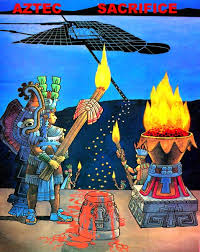
The Aztecs of Mexico believed that if they didn't sacrifice human victims each day the sun wouldn't come up the next morning. This seems to be the principle governing how Western elites blame Israel for everything that goes on in the Middle East and propose as a remedy even more U.S. concessions.

A remarkable example is how the
New York Times tries to explain what is in fact a very important development in the region in an article entitled, “Influence of Egypt and Saudi Arabia Fades.” Wow! I could have told you that back in 2000.

But why has it faded? Could it be because of such long-term problems as these regimes' corruption, incompetence, rejection of reform, and inability to break from radical stances? Could it be that the fact that these regimes keep feeding anti-Americanism, hatred of Israel, militant interpretations of Islam, and extremism generally rebound against them?

And might it be that radical forces—like Iran, Syria, Hamas, and Hizballah—have shown, with help from the United States and Europe, that hardline positions and violence pay?

Could it possibly be, in the shorter term, that the apologies, concessions, and refusal to confront the extremist Islamists have emboldened them and demoralized the relative moderates?

No. Guess who is blamed?

“With Israel having rebuffed American calls to freeze settlement-building, and with the prospects for substantive peace talks fading, Saudi Arabia and Egypt are increasingly viewed in the region as diminished actors whose influence is on the wane, political experts say.”

These experts have obviously not been following the news. Seems to me that Israel did agree to freeze building on settlements (the word “settlement-building” implies Israel is building more settlements and expanding existing ones which isn’t true). Remember that speech Secretary of State Hilary Clinton just made in Jerusalem praising this concession?
(Continue article)

Love of the Land: Iran and Syria Are Up; Egypt and Saudi Arabia Are Down. And this is Israel’s Fault?

Saturday, 7 November 2009

Love of the Land: Next, Locusts?

Next, Locusts?


The abject failure of the Obama administration's Middle East policy

Eliot Abrams
The Weekly Standard
11/16/2009, Volume 015
Issue 09

Can anything else possibly go wrong for the Obama administration's Middle East policy? In the past ten days, Secretary of State Hillary Clinton has twice reversed herself publicly on her attitude toward the Israeli settlements. Palestinians have refused her direct request to rejoin peace talks with Israel, and Palestinian Authority president Abbas has said he will not run for reelection. U.S.-Israel relations are in a state of frozen mistrust. The New York Times and Washington Post, among others, are calling Obama's policy a complete failure--in news stories as well as editorials. The only thing missing is a plague of locusts.

The policy is indeed a complete failure. In ten months the administration has managed to offend and demoralize Israelis and Palestinians, lose the support of Arab governments, and reduce previously excellent relations with the government of Israel to levels unmatched since the James Baker days. Meanwhile, George Mitchell's trips to the region are increasingly reminiscent of the Colin Powell visits in 2002 and 2003--producing little but embarrassment. The Israeli "100 percent settlement freeze" and the Arab outreach to Israel, early goals of the Obama team, are now forgotten, as is an early resumption of serious Israeli-Palestinian peace talks.

These disasters are mostly the product of an ignorant and belligerent attitude toward Israel and especially its prime minister. The ignorance was most evident in the administration's view that a total construction freeze could be imposed not only in every settlement but in Jerusalem itself. But the U.S. policy was worse: We demanded a freeze that would apply to construction by Jews, but not by Arabs; could any Israeli leader be expected to support such a position? One does not need to be a member of the Knesset to understand that such a freeze was impossible for Benjamin Netanyahu and his coalition as it would have been for any Israeli prime minister--but apparently this fact was beyond the understanding of Mitchell, Rahm Emanuel, and all the other "experts" on the Obama team.

The belligerence toward Netanyahu has been evident all along, but is best shown by the refusal to tell Israel's prime minister whether or not the president will see him this coming week when Netanyahu (like the president) addresses the United Jewish Communities annual general assembly in Washington. The Israelis gave the White House weeks of notice that Netanyahu had agreed to speak, would be in town, and hoped to see Obama. The White House reaction has been to keep him twisting in the wind, with news stories several days before his arrival saying the president had not decided yet whether to see Netanyahu.

Think of it: Our closest ally in the region, critical issues at stake (from Iran's nuclear program and the recent Israeli seizure of an Iranian arms shipment meant for Hezbollah to Abbas's announcement), yet the Israelis get no answer. Obama and his "experts" may think they are reminding Netanyahu who is boss, but they are in fact reminding all of us why Israelis no longer trust Obama--and making closer cooperation between the two governments that much harder.


Love of the Land: Next, Locusts?

Thursday, 5 November 2009

Love of the Land: The Wrecking Crew

The Wrecking Crew


Jennifer Rubin
Contentions/Commentary
05 November 09

In yet another “My, how they messed it all up!” assessment of the Obami’s Middle East peace efforts, the Washington Post finds consensus: “the administration’s efforts have faltered in part because of its own missteps.” The reviews are in and they’re not pretty:

Daniel Levy, a veteran Israeli peace negotiator now at the Century Foundation in Washington, summed up the administration’s efforts in recent days as “amateur night at the Apollo Theater.” He said the administration did not game out the consequences of its demands on the parties — and then flinched. “They just dug deeper and deeper their own grave,” he said. “All of this talk of negotiations doesn’t cut the mustard in the region.”

Turns out, just as conservative critics argued, the key error was in adopting the Palestinian bargaining gambit as our own — namely, insisting on an unattainable absolute freeze on settlements. This of course encouraged Palestinian intransigence and Israeli mistrust. The amateur show reached its climax as Hillary Clinton, like a flighty teenager, first praised Israeli concessions as unprecedented and then rushed to soothe the scorned Palestinians, assuring them that the absolute settlement freeze was still the U.S.’s aim.

As they were knocking over the furniture, the Obami felt compelled to deny the Bush-era agreement with Israel for reduced settlement activity. Rather than spruce that up with a bit of self-serving rhetoric and garner some credit for advancing the “peace process,” the Obama brain trust embarked on its fruitless quest for a settlement freeze, ultimately alienating both sides. As Elliott Abrams, George W. Bush’s deputy national security adviser, observed, “We had nine months of nonsense.” The Obami have earned the contempt of both sides and left the parties so estranged that face-to-face talks may no longer be in the offing.

This is the “smart diplomacy” set. This is Middle East strategy brought to us by Rahm Emanuel and David Axelrod, the sage gurus of international diplomacy who we are told egged Obama on and figured they might outfox Bibi Netanyahu or, better yet, orchestrate his downfall. For this they give the Nobel Peace Prize.

In many administrations, heads would roll. You’d see a shake-up of the advisers who presided over this debacle. But so sign of that yet. Emanuel and Axelrod have moved on to running the Afghanistan war, Clinton is “reasserting herself,” George Mitchell is racking up the frequent-flyer miles, and James Jones is doing whatever it is James Jones does. Should the mainstream American Jewish community be pleased with this display? Well, they’ve gone a bit mute, perhaps abiding by the advice that if you have nothing nice to say, better to be quiet. Nevertheless, those who vouched for the Obami’s brains and Zionist credentials were, we now know, duped.

As for the country as a whole and our allies, it is a sobering sight — the full extent of the Obami’s incompetence and arrogance and the results of both, that is. For those hoping to “restore America’s place in the world,” it’s about time to realize that our standing, at least in the Middle East, has never been lower. And let’s not forget: the same underachievers are supposed to be devising an Afghanistan-war plan and working to prevent a nuclear-armed Iran. Do you feel safer yet?


Love of the Land: The Wrecking Crew

Wednesday, 4 November 2009

Love of the Land: The Middle East: Can You Handle the Truth?

The Middle East: Can You Handle the Truth?


Barry Rubin
The Rubin Report
03 November 09

The Obama Administration has no idea of what is about to happen. After all, it has won hasn't it and done something positive for the Palestinians, right? It demanded that Israel freeze all construction on West Bank settlements. Israel agreed, save only that it finish the approximately 3000 units already begun. So the U.S. government can deem itself successful, having delivered something along the lines of what it promised originally to give the Palestinians.

Moreover, this agreement was ultimately gained without any corresponding Palestinian or Arab concessions. It will be remembered that for some months the United States tried to get the Arab side to give something. It failed. Nor did the U.S. government give anything to Israel in exchange for the freeze.

So objectively, what’s happened? Israel made a big concession; Israel got nothing; the Arab side gave nothing. Isn’t this a sort of Palestinian or Arab victory; proof of President Barack Obama’s leverage with Israel; an example of Israeli flexibility?

And, after all, when the current apartments being constructed are finished there will be a construction freeze. So all that’s necessary is to wait a few months, right?

Take a step back, clear your mind, look at it. Of course that’s what has happened. The Palestinians and the Arab states “should” be happy.

But this is the Middle East, a place where even if all Arab or Iranian demands are met, this only triggers anger, blame, complaint, and still more demands.

And you can’t solve the problem using Western rules. Hilary Clinton, stung by Arab criticism that she praised Israel’s plan too highly, does a bit of a turnaround two days after proclaiming Israel’s concession to be amazing:

“This offer falls far short of what we would characterize as our position or what our preference would be. But if it is acted upon, it will be an unprecedented restriction on settlements and would have a significant and meaningful effect on restraining their growth."

Nope, that won’t do it. You are saying a nice, rational, carefully callibrated Western-style statement: we want more but it’s a step in the right direction so it should be praised and it is a good thing. That isn’t how things work here. In the eyes of the Palestinian and Arab leadership Israel cannot ever do anything good. You can praise Palestinians, Muslims, and Arabs every day of the week but you aren't allowed to ever say anything positive about Israel or do anything for that country.
(Full article)


Love of the Land: The Middle East: Can You Handle the Truth?

Tuesday, 3 November 2009

Love of the Land: The Thrill Is Gone

The Thrill Is Gone


Rachel Abrahms
The Weekly Standard
02 November 09

“Palestinian” “leaders” are afloat in a sea of anti-Zionism and self-pity so deep and so wide, so intractable and so paralyzing, they have made bedfellows -- odd as they may be --- of Bibi Netanyahu and the U.S. secretary of state. Only a few months ago Mrs. Clinton was pursing her prissy schoolmarm’s lips at the Israeli prime minister over even the minimal “natural growth” of settlements; today she is using those same lips to hail his moratorium on new construction -- a considerable compromise -- as “unprecedented”. Politicians in Ramallah are disheartened, as indeed they should be. Now, says one, “the mask has fallen off the face” of Barack Obama.

But the mask has fallen off the face of the “Palestinian” leadership, as well. They had good reason to rejoice in thinking they’d found a champion in the man who was going to put daylight between the U.S. and Israel. What the Obamic minions doing their own “unprecedented” pressing of Israelis perhaps hadn’t comprehended was that the Arabs of Judea and Samaria thought the American president would save them from taking responsibility for their own fate.

Have they lost their savior? So it would appear, though you can never predict, really, with the mercurial foreign policy of this president. And what’s revealed with their unmasking? Nothing really new, though maybe it’s news to George Mitchell. “Peace” is not their object; never has been: “Negotiations,” says a “Palestinian” spokesman, “are about ending the occupation and settlement expansion is about entrenching the occupation.” And this: “Palestinian Authority officials on Sunday warned that Washington's failure to force Israel to halt all construction in the settlements would lead to an ‘explosion.’” And this:

Nabil Abu Rudaineh, a spokesman for PA President Mahmoud Abbas, said that the region was on the verge of a volcanic eruption because of Prime Minister Binyamin Netanyahu's refusal to accept the Palestinians' demand to halt settlement construction.

“Explosion” and “volcanic eruption.” Would that mean violence against innocent Jewish citizens sitting in cafes and riding on buses?


Love of the Land: The Thrill Is Gone

Saturday, 24 October 2009

Love of the Land: Is It Blank?

Is It Blank?


Jennifer Rubin
Contentions/Commentary
23 October 09

Secretary of State Hillary Clinton gave the president a report documenting the progress made in the Middle East “peace process.” This report uses many words to explain that there hasn’t been any:

“The Secretary advised the President that challenges remain as the United States continues to work with both sides to relaunch negotiations in an atmosphere in which they can succeed,” a White House official said on background in a statement. “They also discussed the progress that has been made on a number of issues and the path ahead.”

No “Cairo Effect”? Hmm. The president was impatient, we were told, but we’re still “working to relaunch negotiations.” Well, they could make progress. (”‘Would we like to have reached the point to launch negotiations? Of course,’ an official said. ‘Are we satisfied? No. Do we still think it’s possible in a relatively short period of time to get that admittedly preliminary step accomplished? Yes we do, that’s what we’re engaged in.’”) Engaged in working to relaunch negotiations, that is.

Even a “peace process” cheerleader like Aaron David Miller seems to acknowledge that Obama hasn’t helped matters: “Those Israelis who don’t want to move ahead, have a ready made excuse. Between Goldstone, Obama, Abbas’ weakness, and Hamas, dealing with the peace process isn’t a terribly attractive proposition from this Israeli government’s perspective.” But the ultimate “excuse” not to move ahead has been handed by Obama to the Palestinians on a silver platter — the absence of a total settlement freeze (which wasn’t in the cards to begin with).

So what to do? Why, more of the same! George Mitchell (who must get paid by the mile) is jetting back to the Middle East for more meetings. That’s what he and the peace processer do — they meet. Those meetings seem increasingly divorced from the reality on the ground — for example, an emboldened Hamas, a Palestinian Authority without authority to negotiate, a rejectionist Arab world, and a nervous Israel. Maybe it’s time to try something new. The Obama Middle East peace offensive has been a bust, no matter how creatively written or spun Clinton’s report may be.


Love of the Land: Is It Blank?

Friday, 16 October 2009

Love of the Land: Failure Everyone Can See Now

Failure Everyone Can See Now


Jennifer Rubin
Contentions/Commentary
15 October 09


At some point, not even the mainstream media can spin sufficiently for the hapless Obama foreign policy. This Washington Post report is blunt:

A political crisis for the Palestinian Authority and growing doubts about American mediation have deeply undercut chances that Israeli-Palestinian peace talks will resume in the near future, according to officials and analysts on both sides.

After nine months of shuttle diplomacy by U.S. special envoy George J. Mitchell, the gap between Israeli and Palestinian leaders appears to have grown, and it now includes not only a dispute over Israeli settlement construction in the West Bank, but also renewed tension over Jerusalem, disagreement over the framework for the talks and controversy over a U.N. report on alleged war crimes during Israel’s offensive in the Gaza Strip last winter.

In other words, Obama’s Middle East gambit, apparently inspired by those known Middle East policy wonks Rahm Emanuel and David Axelrod, has failed. Spectacularly so. Putting daylight between the U.S. and Israel and sneering at the Bush team for being too close to Israel didn’t really get the Obami anywhere, did it? The Post is candid that the fixation on settlements “backfired.” As virtually every pro-Israel conservative commentator predicted, “It raised hopes among Palestinians, who began to demand nothing less than a full freeze, and led to severe tensions in U.S.-Israeli relations.”

And all that ingratiating with the “Muslim World” in Cairo? Not much was gained; in fact, the parties are more estranged than ever. Our relations with Israel have not been this strained since . . . well, ever . . . and the administration’s credibility is arguably worse than any of its recent predecessors.

What can be learned from all this? Sanctimonious speeches and fractured history-telling don’t make for “peace.” Savaging your allies doesn’t get you anywhere. And ignoring hard truths — including the Palestinians’ unsolved internal divisions and refusal to renounce and root out terrorism — also doesn’t get you anywhere. Moreover, Obama’s appearance on the scene doesn’t change any of the fundamental issues; neither does chanting “diplomacy” or “dedication to the peace process.”

This should be a wake-up call for the administration. The Obama team might want to consider letting domestic pols run foreign policy. And they might put away some of their egocentric misconceptions about the power of Obama’s aura.


Love of the Land: Failure Everyone Can See Now

Saturday, 3 October 2009

Love of the Land: A Universe Apart

A Universe Apart


Jennifer Rubin
Contentions/Commentary
02 October 09


Discussing Obama’s failed Mideast-peace strategy, Michael Gerson focuses on an increasingly critical ramification (aside from the soured U.S.-Israeli relations, the humiliating rebuff to the U.S., and the encouragement of Palestinian rejectionism) of the president’s decision to put “daylight” between America and Israel:

Obama has injected considerable suspicion into the American-Israeli relationship, picking public fights on issues such as settlements and adopting a tone of neutrality in other controversies. If Israel thinks America is an increasingly unreliable partner, Israel will be more likely to depend on itself alone — and let the bombers fly.

As Gerson points out, the Israelis (along with the French) have every reason to doubt U.S. resolve. Anyone who’s listened to Obama’s rhetoric from Cairo to Pittsburgh can discern that this is not a man who draws lines in the sand and not someone willing to take decisive action (unless it’s to capitulate unilaterally, as he did on missile defense). So we find ourselves in the not unexpected situation brought about by American weakness and procrastination: ”If the Israelis were confident that America would act decisively against the Iranian nuclear threat in the greatest extremity, they would be far less likely to act themselves.”

Indeed, one senses that Bibi Netanyahu and Barack Obama are on a rhetorical seesaw. The higher Obama’s rhetoric becomes and the less grounded in reality he appears (as was the case at the UN), the more blunt and steely-eyed Netanyahu becomes (as was the case with his UN speech). Obama ignores Iran’s genocidal threats, so Netanyahu must remind us of them. Obama loves to speak of a “process,” so Netanyahu warns we must have results. Obama clings to the security blanket of “multilateralism,” while Netanyahu emphasizes that the UN is no better than a low-rent circus. Obama obscures and conceals the Iranian nuclear operations, whereas Netanyahu highlights them. There is not simply “daylight” between the two leaders but a vast expanse that separates them.

Gerson is right: the Israelis will do what they must, in no small part because the American president does not view the world as they do. And they in turn are not about to put their fate in the hands of someone who lacks both the understanding and the will to keep nuclear arms out of the hands of butchers whose fondest hope is to eradicate the Jewish state.


Love of the Land: A Universe Apart

Wednesday, 16 September 2009

Love of the Land: Who cares about “negotiations”?

Who cares about “negotiations”?


Ted Belman
Israpundit
15 September 09


Mitchell, Netanyahu fail to agree on settlement halt. But don’t stand up and cheer just yet. Mitchell is still hanging around.

Netanyahu told his party

    “In any case, I will not agree to enter into talks whose results are defined and known in advance. That’s what negotiations are for and we are willing to begin right away.”

    In discussing the talks with the United States on freezing construction in the settlements, Netanyahu stressed that the agreement is only about “cutting down the construction” and said that it was still uncertain how long the restrictions would apply.

    Netanyahu said that the agreement includes the continued construction of 2,500 housing units on which work has already begun, and 450 new housing units in the large settlement blocs. Netanyahu also said that public structures will be allowed, including schools, synagogues and more.


The truth of the matter is that negotiations will not end in any agreement or even a partial agreement. Surely the Israeli government knows this. Surely the US knows this too. Either they want negotiations for the sake of appearances or they must have a plan as to how they are going to force Israel to give the Arabs most of what they want. If it is the latter, as I suspect, then Netanyahu’s remark highlighted above is all the more telling. But why should he agree to any kind of freeze if he believes the negotiations will go nowhere?

Another thing that bothers me about this is the fact that we are being asked to commit to the US. What do we hope to get from the US for our commitment. If the settlement freeze is the big issue to the “Palestinians” then why aren’t we sitting with them and asking them what they are prepared to give in exchange.

The only thing that the freeze is intended to do is get the negotiations started. But why is Israel interested in negotiations that go nowhere or worse still that will involve increased pressure on Israel. Israel should prefer no negotiations. Then there wouldn’t be a freeze and Israel could unilaterally impose a deal on the Arabs, step by step.

It is clear that the Arabs don’t want negotiations. Which is another way of saying they don’t want a state, at least one that requires compromises to achieve or more importantly, one that prevents them from pursuing their dream of destroying Israel. The fact that they are not begging us for negotiations is all you need to know about how good the present situation is for them, save for those pesky settlements.

Abbas, as you know, keeps demanding a complete freeze before negotiations can commence. Fatah to Haaretz: Fatah to Haaretz: No settlement freeze, no talks

    Palestinian negotiator Yasser Abed Rabbo, secretary-general of the Fatah Executive Committee, told Haaretz that the Palestinian demand for a complete building freeze in settlements remains.

    Without such a freeze, he said, there is no possibility for a political process. “Why should we start a process we know won’t be of any use?,” he asked.

    However, Abed Rabbo also noted the PA has yet to hear a detailed American proposal, and that Abbas was undecided about meeting Netanyahu.

    “The decision will be made after Abu Mazen meets with Mitchell and hears what he has to say,” Abed Rabbo said.

    He told reporters that if a meeting does take place, its primary objective will be determining Netanyahu’s stands on political issues.

    [..] However, since the American administration clearly signaled its interest in a trilateral summit, Abbas risks being presented as a refusing a peace offer, while allowing Israel to claim it has no partner for a peace process.

    For all these reasons, Abbas and the Palestinian leadership are keenly expecting an American offer that would allow them to present a Palestinian achievement to counterbalance Israel’s construction in the territories.

In the present situation, the economy in Judea and Samaria is growing rapidly, the West is underwriting the PA’s deficit and their militarization, diplomats are beating a path to their door, they have the protection of the IDF and they don’t have to make compromises that could get them killed. What more could they want? A statelet or autonomous area as proposed by Netanyahu? Forget about it.

We must conclude that the US is the only one pushing for negotiations. If so they miscalculated.

According to Mort Zukerman, Obama is Fumbling a Chance for Middle East Peace

    Alas, the American pressure campaign following Obama’s ascent has had one clear outcome, and not one we had hoped for: It has made a peace deal much less likely. Obama has not exerted pressure equally. He ignores what Israel has done in recent years to advance the cause of peace and what the Arabs have failed to do. The onus has been on Israel and Israel alone. This has allowed the Arabs yet again to abdicate responsibility. It has reinforced the long-standing Arab belief that the United States can “deliver Israel” if only it has the will to do so, thereby reducing Arab incentives to make concessions in direct negotiations with Israel. The moderate Arab states, whose principal concern is not Israel but an expansionist Iran seeking domination in the Middle East, have been unwilling to raise a finger to advance the process—not Egypt, not Jordan, not Saudi Arabia.

Furthermore Bret Stephens argues Obama Is Pushing Israel Toward War . Because Obama is demonstrating a lack of will, Israel must prepare for an attack all the more.

I expect that a tripartate meeting will not take place until after the holidays

Love of the Land: Who cares about “negotiations”?
Related Posts Plugin for WordPress, Blogger...