Wednesday, 4 November 2009

Israel Matzav: Good news: Hamas missiles can reach Tel Aviv

Good news: Hamas missiles can reach Tel Aviv

Military intelligence chief Amos Yadlin said on Tuesday that Hamas has upgraded its missile capability and is now capable of shooting a rocket 60 kilometers from Gaza, enough to reach the outskirts of Tel Aviv.

In recent days, several successful tests of Iranian-made rockets have been carried out, he said, adding that the rockets have a range of up to 60 kilometers.

As a result, the Tel Aviv area is under threat of rocket fire from the Strip.

During Operation Cast Lead last winter, Grad-type rockets, Kassam rockets, and mortar shells were fired into Israeli territory, with projectiles hitting Beersheba, some 40 kilometers from the Strip.

Though rocket fire from the Strip has decreased since the three-week offensive, weapons are continually smuggled through tunnels along the Philadelphi Corridor, on Gaza's southern border with Egypt.

DEBKA fills in details about the missiles.

Israel's military intelligence chief Brig. Amos Yadlin revealed Tuesday, Nov. 3, that the Palestinian Hamas had successfully tested a new 60-km range Iranian shore-to-sea missile firing it west from the Gaza coast. When fired north overland the missile could reach Tel Aviv.

Brig. Yadlin's report to the Knesset foreign affairs and security committee confirmed DEBKAfile's Oct. 25 disclosure of intensive Iranian efforts to arm Hizballan and Hamas with extended-range missiles and rockets capable of reaching Israel's strategic heartland. He revealed that Iranian arms were reaching Hizballah and Hamas through Syria and, for the first, time via Turkey.

The intelligence chief did not specify the source of the missiles delivered to Hamas or disclose who their instructors were. DEBKAfile's military sources report that the Hizballah on orders from Tehran apparently took charge of smuggling the new missiles to their Palestinian allies and its officers instructed them in their use.

Our military sources identify the new missile in Hamas' arsenal as a C-802 of the Silkworm series (of Chinese origin), of the type Hizballah fired to cripple the Israeli missile ship Hanit on July 15 2006 during the second Lebanon war.

Tehran has since showered thousands of these missiles on Hizballah. They are positioned along the Lebanese Mediterranean in closer formation than almost any coastal defense array in the world.

Yes, that's a picture of a C-802 Silkworm at the top of this post.

There are two pieces of bad news here. One is that Hamas has the missiles - let's see whether Israel will retaliate immediately and powerfully (without worrying about human shield casualties) if Hamas fires one. The second piece of bad news is that Turkey is apparently helping smuggle them, further moving Turkey into Iran's Islamic orbit.

Israel Matzav: Good news: Hamas missiles can reach Tel Aviv

Israel Matzav: Russian - Saudi arms deal being held up by Israel?

Russian - Saudi arms deal being held up by Israel?

DEBKA is reporting that a $7 billion deal for Russia to sell Saudi Arabia the S-400 anti-missile system is being held up by Israeli objections to the prospect of Saudi radar tracking every plane that takes off from Israel.

The deal was promised to the Russians by the Obama administration in return for Russia agreeing to hold off on selling the S-300 anti-missile system to Iran.

Let's go to the videotape.


The original DEBKA story is here. It's not clear how Israeli objections could stop such a sale from going through. The Russians certainly don't need Israeli or American approval to make this kind of sale, and the Americans seem to have agreed not to object to it anyway.

There is something to this story, but something is missing here.

Hmmm.

Israel Matzav: Russian - Saudi arms deal being held up by Israel?

Israel Matzav: Iran running out of oil?

Iran running out of oil?

The Information Center on Intelligence and Terrorism says that Iran is running out of oil.

Iran will turn from the world's fourth leading exporter of oil to an importer in eight years, according to a special report issued by the Tehran government, which was translated and distributed by the Information Center on Intelligence and Terrorism.

The report cites an eight percent average drop in production a year, coupled with a five percent annual increase in consumption. It also notes a drop in foreign investment in Iranian oil fields, where $4.5 billion a year is needed to maintain its current 2.5 million barrels-a-day output.

Maybe they can import it from Venezuela. Heh.


Israel Matzav: Iran running out of oil?

Israel Matzav: The EU tries to step up to the plate

The EU tries to step up to the plate

With American leadership in foreign affairs lacking, the European Union is trying to step up to the plate on the Goldstone Report in the UN General Assembly. Unfortunately, their plan is not very effective.

The initiative is a list of "red lines" which was adopted by the 27 members of the European Union. Its main points:

1. A resolution brought for the approval of the General Assembly will not include operational steps, like taking the matter to the Security Council or the International Court of Justice.

2. The resolution would call on Israel and the Palestinians to embark on an independent investigation into the events of Operation Cast Lead, and the allegations of war crimes.

3. The handling of the Goldstone report will return to the Human Rights Council, the UN body in Geneva. The parties will have to report to the council on the findings of their investigations in a few months.

...

The French and British has emphasized in their exchanges with the Arab representatives that if the "red lines" are not part of the resolution being prepared, the European Union will abstain, and may even vote against it - and expects that much of the international community will too.

"If you agree to go for a simple resolution which calls on Israel to carry out an investigation you will receive full support," a source familiar with the proposal said. "However, if you attempt to go further there will be at least 60 abstentions and only 120 votes in support."

Any resolution the Palestinians put forth will receive a large majority, but there is great importance to the weight of EU votes, and other countries who will vote in line with the EU.

With an automatic majority for anything they do, why should the 'Palestinians' care if 60 countries abstain? For that matter, why should they care if 60 countries vote against? If I'm the 'Palestinians,' I insist on passing a General Assembly resolution that refers the matter to the Security Council with a request that the Security Council use Chapter 7 (the Chapter that gives the UN the power to compel countries to take action) to implement the Goldstone Report, and refer it to the International Criminal Court if the parties don't cooperate with the Security Council. Then I sit and wait to see who will exercise a veto: Russia? England? France? The United States?

What could go wrong?

So what is the solution? Frankly, there isn't one. The only way that this is not going to come through the Security Council and pass is if someone exercises a veto. And I'm not counting on that.


Israel Matzav: The EU tries to step up to the plate

Israel Matzav: Christine Chinkin

Christine Chinkin

You will recall that Christine Chinkin was the member of the Goldstone panel who signed a letter that appeared in the Times of London on January 11, 2009 - while Operation Cast Lead was still going on - which was entitled Israel’s bombardment of Gaza is not self-defence – it’s a war crime. Here's part of that letter.

ISRAEL has sought to justify its military attacks on Gaza by stating that it amounts to an act of “self-defence” as recognised by Article 51, United Nations Charter. We categorically reject this contention.

The rocket attacks on Israel by Hamas deplorable as they are, do not, in terms of scale and effect amount to an armed attack entitling Israel to rely on self-defence. Under international law self-defence is an act of last resort and is subject to the customary rules of proportionality and necessity.

...

Israel’s actions amount to aggression, not self-defence, not least because its assault on Gaza was unnecessary. Israel could have agreed to renew the truce with Hamas. Instead it killed 225 Palestinians on the first day of its attack. As things stand, its invasion and bombardment of Gaza amounts to collective punishment of Gaza’s 1.5m inhabitants contrary to international humanitarian and human rights law. In addition, the blockade of humanitarian relief, the destruction of civilian infrastructure, and preventing access to basic necessities such as food and fuel, are prima facie war crimes.

We condemn the firing of rockets by Hamas into Israel and suicide bombings which are also contrary to international humanitarian law and are war crimes. Israel has a right to take reasonable and proportionate means to protect its civilian population from such attacks. However, the manner and scale of its operations in Gaza amount to an act of aggression and is contrary to international law, notwithstanding the rocket attacks by Hamas.

When Chinkin was named to Goldstone's panel, a number of pro-Israel groups objected, claiming that the Times letter meant that Chinkin's mind was made up and that she was not impartial (the other members were not impartial either, but they weren't quite as blatant). One group, UN Watch, filed a petition with Goldstone asking that he disqualify Chinkin from serving on the panel. Goldstone rejected the petition, and told South Africa's Business Day:

“I was asked about this on Israeli television today and I repeat what I said. Firstly, I’ve known Christine Chinkin for years. I’ve always found her to be not only highly intelligent but a person who has an open mind. This is not a judicial inquiry. If it had been a judicial inquiry, that letter she’d signed would have been a ground for disqualification … I have absolutely no reason to question her open-mindedness, her willingness to change her opinions if need be, and indeed she has demonstrated that openness during all of her work on this mission and in all our discussions.”

So what made this mission different from a judicial inquiry?

“All we’re doing is collecting facts. We’ve got no judicial powers at all. We simply report the facts and any recommendations we wish to make to the Human Rights Council and possibly to other organs of the UN.”

That may be a legal distinction, but in such a fraught area of the world, will people pause to consider the difference? Goldstone starts answering even before I’ve finished the question. “Absolutely. A judicial inquiry — I’m talking about a criminal inquiry where a court would have the power to find people guilty and punish them — is very remote from the sort of brief we’ve got.”

But given Israel’s apparent view that the UN is out to get it, surely this fact would guarantee that the government — especially in the build-up to a general election, which it held in February — wouldn’t recognise the fact-finding mission? For the first time in our conversation Goldstone drops his legal rigour and reveals the passionate person beneath. Behind the legal argument is an honest, human assessment. “Look, there are four of us. We’re going to be reporting on facts and making recommendations on them. It’s not a judicial job. It really isn’t. Everybody brings views to the table…. All of us brought our political views with us. Human beings have them.”

Goldstone's report has sections called "findings of fact" and "conclusions of law" - which are sections that appear in a judge's decision. But United Nations Watch wants the answer to a different question that arises from Chinkin's service on the commission.

The question that Goldstone has never answered: if he promised that his fact-finding inquiry would be impartial, why should its status as judicial, quasi-judicial, or non-judicial, have lessened the minimal requirements of impartiality? Was he and his mission subject to any standards at all, and if so, which? Our legal brief invoked the basic standards of international fact-finding, but to even these he effectively pleaded immunity.

Goldstone’s message to Israel has boiled down to this: The ends do not justify the means. Yet in continuing to look away from that which he knows to be wrong, sacrificing the principles of natural justice for his naively-held objective of enforcing justice and peace in the Middle East through the UN’s most biased bodies, it is this very principle that he violates time and again.

Maybe someone will put that question to Goldstone on Thursday.


Israel Matzav: Christine Chinkin

Israel Matzav: Barak has learned nothing

Israel Matzav: Barak has learned nothing

Israel Matzav: Testing Obama's commitment to Israel

Testing Obama's commitment to Israel

In Monday's New York Times, there was an op-ed by liberal apologist Henry Siegman, who claims that President Obama has an 'unqualified' commitment to the State of Israel, and who blames Israel's antipathy for Obama on its 'pathological' rejection of a return to the 1949 armistice lines (that's not the term Siegman uses, but the term Siegman uses is incorrect, as you will see if you follow the next link).

Rick Richman devises a test to determine whether President Obama's commitment to Israel is 'unqualified.' Richman's test is acceptance of President Bush's 2004 letter to Israel. And of course that means that Obama's support for Israel is not unqualified.

So far so good: Rick defines the test in a manner in which Obama is sure to fail it. But the key here isn't Rick's definition of the test. The key is why Obama fails the test and that goes beyond a simple refusal to accept the Bush letter.

The Obama State Department has declined, no less than 21 times, to pass this test. The administration’s continued silence about it leads to a certain amount of doubt about Obama’s commitment — a doubt increased by Hillary Clinton’s BBC interview on Friday. Asked about Israel’s settlements, she said this:

We continue to have very serious questions about the legitimacy of the settlements that Israel has promoted. We understand that to a large extent, it has to do with their security needs and fears about trying to have a defensible perimeter around Israel.

But we also are committed to a two-state solution. And as President Obama said, that two-state solution will take place in the territory occupied by Israel since 1967. The question is how we get to it. And that’s what we’re trying to achieve.

The paragraph-long “But” that follows Hillary’s asserted understanding of the need for a defensible perimeter undermines Obama’s allegedly “unqualified” commitment — particularly given the structure of her answer, which sets Israel’s desire for such a perimeter against what Obama is “trying to achieve.”

There is an unqualified commitment here, but it's not to Israel's security. There's an unqualified commitment to a 'Palestinian state.' If one commitment is unqualified, the other cannot be. Obama has chosen his side. Henry Siegman has too.


Israel Matzav: Testing Obama's commitment to Israel

Israel Matzav: Dealing with the 'Palestinian Authority's torture

Dealing with the 'Palestinian Authority's torture

Last week, I posted that the 'Palestinian Authority' has finally admitted that it tortures 'prisoners' of all stripes. The Wall Street Journal asks where the critics are regarding that report. Here's the bottom line:

So here's the state-of-play in the department of moral outrage. When Britain is accused of abetting U.S. interrogations, lawsuits, investigations, and threats to try Tony Blair for war crimes quickly follow. When Israel attacks Hamas in order to end rocket launches on its soil, it risks a session before the International Criminal Court. But when the West funnels billions to a Palestinian government whose abuses are brazen and ongoing, there is mainly silence.

Indeed. The West is so committed to the 'poor Palestinian' narrative and to the notion that a 'Palestinian state' will solve the World's problems that it is incapable of seeing what is really going on or confronting it.


Israel Matzav: Dealing with the 'Palestinian Authority's torture

Israel Matzav: Interview with Dan Senor, co-author of Start-Up Nation

Israel Matzav: Interview with Dan Senor, co-author of Start-Up Nation

Israel Matzav: Hagel to chair Intelligence Advisory Board

Hagel to chair Intelligence Advisory Board

A month ago, I reported on the possibility that former Senator Chuck Hagel would replace Robert Gates as Secretary of Defense. Hagel is a longtime opponent of Israel. Now, there's even worse news. Hagel is to chair President Obumbler's Intelligence Advisory Board.

During his two terms in the Senate, which ended earlier this year, Hagel directed sweeping criticisms against Jewish supporters of Israel, while at the same time making comments defending Yasser Arafat. He also opposed economic sanctions on Iran in a bill sponsored by then-Senator Barack Obama.

In a statement, the White House said the Intelligence Board’s role is to “provide the president with an independent source of advice on intelligence matters,” including the “quality, quantity and adequacy of intelligence activities,” the “effectiveness of organization structure, management and personnel” and the performance of all federal agencies involved in intelligence collection or policy.

The Republican Jewish Coalition criticized the appointment as “a matter for serious concern.” RJC Executive Director Matt Brooks (who is a subscriber to this email list) said: “A review of Hagel’s record over the years on these issues reveals a fundamental misunderstanding of the Middle East and of the nature of the threats to U.S. interests in the region. Placing him in a sensitive role in the intelligence community, where he will advise the president on the effectiveness of intelligence community assessments of global issues, is very troubling.”

What could go wrong?


Israel Matzav: Hagel to chair Intelligence Advisory Board

Israel Matzav: Clinton backtracks

Clinton backtracks

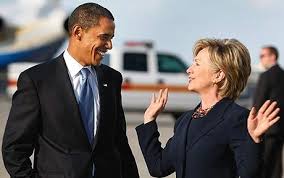
Remember all those nice comments US Secretary of State Hillary Clinton made about Israel on Sunday? Well, they were not very pleasing to 'our Arab friends' and so, like President Obama's 2008 comments to AIPAC about Jerusalem, they have gone under the bus. Here is a summary of the Arab reaction to Clinton's statements on Sunday.

The official Palestinian Authority daily has accused US Secretary of State Hillary Clinton of taking bribes from Israel and wallowing in “a swamp of lies.”

“Why, Mrs. Hillary? How much did the Zionists pay you as a bribe?” taunted an article in today’s edition of Al-Hayat Al-Jadida, which is controlled by the office of PA Chairman Mahmoud Abbas.

Another article in the paper accused Clinton of lying:

"Words that treat truth with cruelty and wallow in the swamp of lies, especially coming from a person of senior position, are improper… [such are] the words of US Secretary of State, Hillary Clinton."
[Al-Hayat Al-Jadida, Nov. 2, 2009]

Al-Hayat Al-Jadida also ran a cartoon reiterating a longstanding Palestinian claim that the US is controlled by Jews. It shows an Uncle Sam figure looking into a mirror held by a caricature of a hook-nosed religious Jew, wearing a hat with a Star of David. Instead of seeing his own reflection, the American sees the Jew in the mirror.

Here's Clinton's backtracking in response.
Secretary Clinton delivered the following remarks Monday morning at a camera spray upon meeting with Moroccan Foreign Minister Fassi-Fihri in Marrakech, Morocco:

For 40 years, successive American administrations of both parties have opposed Israel’s settlement policy. That is absolutely a fact.

And the Obama Administration’s position on settlements is clear, unequivocal. It has not changed. And as the President has said on many occasions, the United States does not accept the legitimacy of continued Israeli settlements. Now, the Israelis have responded to the call from the United States, the Palestinians and the Arab world to stop settlement activity by expressing a willingness to restrain settlement activity. They will build no new settlements, expropriate no land, allow no new construction or approvals.

And let me just say this offer falls far short of what we would characterize as our position, or what our preference would be. But if it is acted upon, it will be an unprecedented restriction on settlements and would have a significant and meaningful effect on restraining their growth.

Let me take a step back because I want to put this into the broader context. I will offer positive reinforcement to the parties when I believe they are taking steps that support the objective of reaching a two-state solution.

I will also push them as I have in public and in private to do even more. And in my report to the President last month, I talked about Israeli willingness to restrain settlement activity as a positive step.

In the same report, I praised President Abbas’ leadership of the Palestinian Authority for their courage and the security measures on the West Bank. The steps being taken under President Abbas and Prime Minister Fayed are also unprecedented and we have never seen such effective security. I have on many occasions going back – as you know in Sharm El Sheikh - praised the accomplishments that the Palestinian Authority has demonstrated in building, training, and reforming their security forces.

I told Prime Minister Netanyahu that these positive steps on the part of the Palestinians should be met by positive steps from Israel - movement and access, operations by the IDF and on Israeli security arrangements on the West Bank. Israel has done a few things in that regard but they need to do much more. And President Abbas has shown leadership and determination on this issue and Israel should reciprocate.

I just want to clarify that what we are trying to achieve is a two-state solution with a state that represents the aspirations of the Palestinian people – the sovereignty and to have control over their own future, and provide the security guarantees to Israel for their own future. That is my goal. And when either party takes any steps that looks like it moves us in the right direction – even if it is not what I would like or what I would prefer - I’m going to positively reinforce that.

This is an opportunity for both sides to try to move forward together, to get into negotiations, and to realize the goal that many of us around this table have supported and worked for for many years.
What could go wrong?

By the way, the only US President other than Obama not to accept the 'legitimacy of settlements' was Jimmy Carter. The others called them 'obstacles to peace' (which many people now understand that they are not) but never questioned their legitimacy or legality.

Israel Matzav: Clinton backtracks

Love of the Land: The Middle East: Can You Handle the Truth?

The Middle East: Can You Handle the Truth?


Barry Rubin
The Rubin Report
03 November 09

The Obama Administration has no idea of what is about to happen. After all, it has won hasn't it and done something positive for the Palestinians, right? It demanded that Israel freeze all construction on West Bank settlements. Israel agreed, save only that it finish the approximately 3000 units already begun. So the U.S. government can deem itself successful, having delivered something along the lines of what it promised originally to give the Palestinians.

Moreover, this agreement was ultimately gained without any corresponding Palestinian or Arab concessions. It will be remembered that for some months the United States tried to get the Arab side to give something. It failed. Nor did the U.S. government give anything to Israel in exchange for the freeze.

So objectively, what’s happened? Israel made a big concession; Israel got nothing; the Arab side gave nothing. Isn’t this a sort of Palestinian or Arab victory; proof of President Barack Obama’s leverage with Israel; an example of Israeli flexibility?

And, after all, when the current apartments being constructed are finished there will be a construction freeze. So all that’s necessary is to wait a few months, right?

Take a step back, clear your mind, look at it. Of course that’s what has happened. The Palestinians and the Arab states “should” be happy.

But this is the Middle East, a place where even if all Arab or Iranian demands are met, this only triggers anger, blame, complaint, and still more demands.

And you can’t solve the problem using Western rules. Hilary Clinton, stung by Arab criticism that she praised Israel’s plan too highly, does a bit of a turnaround two days after proclaiming Israel’s concession to be amazing:

“This offer falls far short of what we would characterize as our position or what our preference would be. But if it is acted upon, it will be an unprecedented restriction on settlements and would have a significant and meaningful effect on restraining their growth."

Nope, that won’t do it. You are saying a nice, rational, carefully callibrated Western-style statement: we want more but it’s a step in the right direction so it should be praised and it is a good thing. That isn’t how things work here. In the eyes of the Palestinian and Arab leadership Israel cannot ever do anything good. You can praise Palestinians, Muslims, and Arabs every day of the week but you aren't allowed to ever say anything positive about Israel or do anything for that country.
(Full article)


Love of the Land: The Middle East: Can You Handle the Truth?

Love of the Land: J Street Dreams, Israeli Reality

J Street Dreams, Israeli Reality


P. David Hornik
FrontPageMag.com
03 November 09

“To say that you have to love Israel or be pro-Israel to be part of J Street is a terrible mistake.”

Thus Judith Baker of the fringe-left Brit Tzedek v’Shalom (its English moniker is Jewish Alliance for Justice and Peace), recently incorporated into J Street, told a reporter at the J Street conference on Tuesday. Indeed, “peace or Israel” seems to be the question. It’s also reported that “J Street’s university arm has dropped the ‘pro-Israel’ part of the left-wing US lobby’s ‘pro-Israel, pro-peace’ slogan to avoid alienating students.”

As a student involved with J Street explains, “We don’t want to isolate people because they don’t feel quite so comfortable with ‘pro-Israel,’ so we say ‘pro-peace,’ but behind that is ‘pro-Israel.’”

Or as J Street’s ever-smooth-talking director Jeremy Ben-Ami further expounds, “If the way to engage the young part of our community is to give them space to work through their relationship with Israel, then we’re going to do that. We’re not going to shut them out, because the only way to keep them in the community is to give them the space to work that out.”

It’s just what we need here in Israel, and it warms our hearts: distant psychobabble by “progressives” at a Washington conference. Israel, too, has its peacenik Left—but it’s become electorally diminutive and it also doesn’t engage in “space to work out your feelings”-type talk; in Israel even the peaceniks are a little too reality-scarred for that.

And speaking of corruptions of language, even J Street’s rapidly proliferating critics have been letting it get away with the “pro-peace” label, which means—what? That AIPAC and the other mainstream American Jewish organizations, or the right-leaning Israeli electorate, are anti-peace? Clearly many of the J Streeters think exactly that—apostles of peace in a desert of militants—or they wouldn’t have such trouble putting “pro-Israel” and “pro-peace” together.

Though one might be tempted to think, or hope, that it’s all an unimportant sideshow, the Obama administration’s decision to send National Security Adviser James Jones—no less—to address the peacenik convocation suggests otherwise. Michael Goldfarb reports that when “Jones offered several strong statements of support for Israel,” the J Street crowd responded with no more than “polite applause…. It’s possible that most of the participants…just didn’t know they were supposed to get up and cheer at the pro-Israel lines…but more likely they just weren’t moved to do so.”

Goldfarb notes, however, that Jones took positions on two issues—the Goldstone Report and Iranian sanctions—that are far to the right of J Street’s stances. This could mean, Goldfarb speculates, that “the administration wanted to distance itself from J Street on some of the major issues”—one can only hope so.

Whatever the actual importance of this conference, Israeli eyes were more likely to be cast toward another part of the world. On the same day, Tuesday, that the peace-fest was in full swing, Israel’s deputy foreign minister Danny Ayalon found himself in peril during a state visit to the UK when what are described as “pro-Palestinian activists” tried to get him arrested under the UK’s universal-jurisdiction law.

Although similar attempts have been made during visits to the UK by Israeli military figures—up to and including, last month, Defense Minister Ehud Barak—this marks the first such attempt against a non-military Israeli official. The “activists” may, however, have seen a flier identifying Ayalon as “a former captain in the Israeli army.” By such criteria, a very large number of Israelis would be liable.

Palestinians and those allied with them have indeed, particularly since last winter’s Gaza war, been mounting a massive effort to get Israeli officials indicted and tried, whether in the International Criminal Court at The Hague or in Britain and other European countries that have universal-jurisdiction laws.

Closer to home, when recently the Obama administration got Palestinian Authority president Mahmoud Abbas to refrain from seeking an anti-Israeli resolution at the UN Human Rights Council in Geneva, the outrage among West Bank and Gaza Palestinians was so great that Abbas reversed his decision—and still finds himself, at present, a figure so despised and ostracized that his political career is hanging by a thread.

In other words, among the reasons the peace ideology, unlike with the J Streeters, has dwindled among Israelis is that our ostensible peace partners, the Palestinians, would rather see our leaders jailed than sitting across a negotiating table.

But such nuances don’t register among the busy progressives across the pond. Between them and Israel lies an “unplumb’d, salt, estranging sea” that is much more than physical. The J Streeters would be the last people who would try to bridge it, or even understand that it exists.


Love of the Land: J Street Dreams, Israeli Reality

Love of the Land: Who Killed Engagement with Iran?

Who Killed Engagement with Iran?


Jonathan Tobin
Contentions/Commentary
03 November 09

The collapse of President Obama’s daft strategy for “engaging” with the tyrants of Tehran has left his cheering section with some terrible questions. After spending months soft-pedaling Iran’s stolen election, abuse of dissidents, as well as the danger from its funding of terrorists and, of course, the threat from its drive for nuclear weapons, the administration thought it had fixed the problem with the deal it negotiated to have the Iranians ship their enriched uranium out of the country for processing. It was doubtful that the deal would have worked or that the Iranians wouldn’t have cheated. But Tehran’s rejection of the pact that its representatives had negotiated has the Obama camp thoroughly perplexed.

Their problem is that they can’t accept the obvious answer to the question as to why their solution has been sunk. Having been warned by skeptics of engagement that the Iranians’ only objective in negotiations was to prevaricate, the administration now finds itself scrambling for an explanation as to why their goodwill and generous offers have gotten them exactly nowhere. But ready as always with an explanation for their dilemma is the New York Times, which served up a healthy serving of excuses today in an article designed to rationalize both Iran’s stalling and Washington’s failed strategy. The piece, titled “Iran’s Politics Stand in the Way of a Nuclear Deal With the West,” claims that left to his own devices, Iranian President Mahmoud Ahmadinejad would love to ratify the pact and fulfill its requirements. But he can’t, says author Michael Slackman, because Iranian dissidents as well as a pesky school of “pragmatic conservatives” won’t let him get away with it. According to Slackman, liberal foes of the regime such as former presidential candidate Mir Hussein Moussavi, are trying to score points with the public by hammering Ahmadinejad as insufficiently nationalist, while the “pragmatists” to the right of him think he is betraying the Islamist cause by allowing the West to “cheat” Iran.

(Read full article)


Love of the Land: Who Killed Engagement with Iran?

Love of the Land: How Israel Destroyed Syria's Al Kibar Nuclear Reactor

How Israel Destroyed Syria's Al Kibar Nuclear Reactor


Erich Follath/Holger Stark
Der Spiegel/TY to RPS
02 November 09

(How do they know, and from where do they know, I have no idea. But this is one fascinating story. Enjoy!)

In September 2007, Israeli fighter jets destroyed a mysterious complex in the Syrian desert. The incident could have led to war, but it was hushed up by all sides. Was it a nuclear plant and who gave the orders for the strike?


The mighty Euphrates river is the subject of the prophecies in the Bible's Book of Revelation, where it is written that the river will be the scene of the battle of Armageddon: "The sixth angel poured out his bowl on the great river Euphrates, and its water was dried up to prepare the way for the kings from the East."


Today, time seems to stand still along the river. The turquoise waters of the Euphrates flow slowly through the northern Syrian provincial city Deir el-Zor, whose name translates as "monastery in the forest." Farmers till the fields, and vendors sell camel's hair blankets, cardamom and coriander in the city's bazaars. Occasionally archaeologists visit the region to excavate the remains of ancient cities in the surrounding area, a place where many peoples have left their mark -- the Parthians and the Sassanids, the Romans and the Jews, the Ottomans and the French, who were assigned the mandate for Syria by the League of Nations and who only withdrew their troops in 1946. Deir el-Zor is the last outpost before the vast, empty desert, a lifeless place of jagged mountains and inaccessible valleys that begins not far from the town center.


But on a night two years ago, something dramatic happened in this sleepy place. It's an event that local residents discuss in whispers in teahouses along the river, when the water pipes glow and they are confident that no officials are listening -- the subject is taboo in the state-controlled media, and they know that drawing too much attention to themselves in this authoritarian state could be hazardous to their health.


Some in Deir el-Zor talk of a bright flash which lit up the night in the distant desert. Others report seeing a gigantic column of smoke over the Euphrates, like a threatening finger. Some talk of omens, while others relate conspiracy theories. The pious older guests at Jisr al-Kabir, a popular restaurant near the city's landmark suspension bridge, believe it was a sign from heaven.


All the rumors have long since muddied the waters as to what people may or may not have seen. But even the supposedly advanced Western world, with its state-of-the-art surveillance technology and interconnectedness through the mass media, has little more solid information than the people in this Syrian desert town. What happened in the night of Sept. 6, 2007 in the desert, 130 kilometers (81 miles) from the Iraqi border, 30 kilometers from Deir el-Zor, is one of the great mysteries of our times.


'This Incident Never Occurred'


At 2:55 p.m. on that day, the Damascus-based Syrian Arab News Agency (SANA) reported that Israeli fighter jets coming from the Mediterranean had violated Syrian airspace at "about one o'clock" in the morning. "Air defense units confronted them and forced them to leave after they dropped some ammunition in deserted areas without causing any human or material damage," a Syrian military spokesman said, according to the news agency. There was no explanation whatsoever for why such a dramatic event was concealed for half a day.


At 6:46 p.m., Israeli government radio quoted a military spokesman as saying: "This incident never occurred." At 8:46 p.m., a spokesperson for the US State Department said during a daily press briefing that he had only heard "second-hand reports" which "contradict" each other.


To this day, Syria and Israel, two countries that have technically been at war since the founding of the Jewish state in 1948, have largely adhered to a bizarre policy of downplaying what was clearly an act of war. Gradually it became clear that the fighter pilots did not drop some random ammunition over empty no-man's land on that night in 2007, but had in fact deliberately targeted and destroyed a secret Syrian complex.


Was it a nuclear plant, in which scientists were on the verge of completing the bomb? Were North Korean, perhaps even Iranian experts, also working in this secret Syrian facility? When and how did the Israelis learn about the project, and why did they take such a great risk to conduct their clandestine operation? Was the destruction of the Al Kibar complex meant as a final warning to the Iranians, a trial run of sorts intended to show them what the Israelis plan to do if Tehran continues with its suspected nuclear weapons program?


In recent months, SPIEGEL has spoken with key politicians and experts about the mysterious incident in the Syrian desert, including Syrian President Bashar Assad, leading Israeli intelligence expert Ronen Bergman, International Atomic Energy Agency head Mohammed ElBaradei and influential American nuclear expert David Albright. SPIEGEL has also talked with individuals involved in the operation, who have only now agreed to reveal, under conditions of anonymity, what they know.


These efforts have led to an account that, while not solving the mystery in its entirety, at least delivers many pieces of the puzzle. It also offers an assessment of an operation that changed the Middle East and generated shock waves that are still being felt today.

(Full Story)


Love of the Land: How Israel Destroyed Syria's Al Kibar Nuclear Reactor

Love of the Land: "Delivering" the West Bank

"Delivering" the West Bank


Khaled Abu Toameh
Hudson New York
03 November 09

Even if Israel were to freeze all construction in the West Bank settlements, this would not mean that peace would prevail in the Middle East the following day.

Those who think that Palestinians would take to the streets to express their joy over such a move are living on a different planet and have a short memory.

In the summer of 2005, when Israel destroyed all settlements in the Gaza Strip and evicted more than 8,000 Jews from their homes, not a single Palestinian welcomed the Israeli pullout.

Neither Fatah nor Hamas saw the Israeli withdrawal as a goodwill gesture that could pave the way for making peace between Israelis and Palestinians. On the contrary, many Palestinians interpreted the withdrawal as a sign of weakness, attributing to the wave of suicide bombings and rocket attacks against Israel.

Now the Palestinian Authority is saying that it won’t return to the negotiating table unless Israel halts all construction in the settlements. The Palestinian Authority is trying to create the impression that had it not been for the continued construction, peace would have come to the region a long time ago.

This argument, of course, is untrue -- otherwise, peace would have prevailed after Israel destroyed the settlements in the Gaza Strip.

And was there peace between Jews and Arabs before the settlements started popping up after 1967?

The Palestinian Authority’s entire approach toward the issue of settlements has been characterized by hypocrisy from the beginning.

If the issue of the settlements were so important, as the Palestinian leadership claims, why didn’t Yasser Arafat and his advisors sign the Oslo Accords more than fifteen years ago without demanding that Israel first halt construction of new homes in the settlements?
(Read full article)


Love of the Land: "Delivering" the West Bank

Love of the Land: When No Means No

When No Means No


Pleading with Iran will get the West nowhere.

Bret Stephens
Wall Street Journal
02 November 09

I once overhead a guy try to make a date over the phone. His end of the conversation went roughly as follows:

"How about Friday?" (Pause.) "Not Friday? Because I'm free most of the weekend." (Pause.) "Not this weekend? What about next Saturday?" (Pause.) "Are you free at all next week?" (Long pause.) "Well, are you ever free?"

Apparently she was not, at least as far as he was concerned.

Now it's the turn of the Obama administration to play the guy who won't take a hint. And it falls to the Islamic Republic of Iran to be the girl who's hard—actually, impossible—to get.

Tehran's most recent abrupt rejection came last week, when it reportedly decided that it was not enough for the U.S. to trash four binding Security Council resolutions demanding that Iran cease enriching uranium. Nor was it enough that France and Russia were prepared, with America's blessing, to convert Iran's existing stockpile of low-enriched uranium (LEU) to a grade of 19.75%, a hair's breadth shy of the 20% needed for a crude nuclear device.

"The key issue is that Iran does not agree to export its lightly enriched uranium," an unnamed senior European official told the New York Times. "That's not a minor detail. That's the whole point of the deal."

Perhaps this is merely some tactical posturing by Iran; as of this writing, its foreign minister hasn't yet categorically ruled a deal out. Then again, it's probably worth rehashing the history of the West's nuclear negotiations with Tehran to see where things are likely to go from here.
(Read more...)


Love of the Land: When No Means No

Love of the Land: Palestine's Missing Critics

Palestine's Missing Critics


Where's the outrage for Ramallah's atrocities?

Wall Street Journal
02 November 09

Israel's harshest critics claim to champion the rights of Palestinians. So we're curious about the fallout, or lack thereof, from revelations that the Palestinian Authority regularly brutalizes its own in the West Bank while enjoying a steady flow of dollars and euros.

Senior PA official Haitham Arar was quoted in the Daily Mail more than a week ago openly discussing the abuses. That follows a Mail On Sunday report in January that detailed the Authority's regular use of beatings, whippings, attacks with electrical drills, and other methods of torture doled out to anyone seen threatening the authority of Fatah, the party of President Mahmoud Abbas. Murder and rape are also commonplace.

As Middle East analyst Tom Gross points out, the only news here is that a Western newspaper has bothered to write about it. At least some ink is spilled documenting Hamas's blunt methods, but much less has been made of Fatah's abuses since Yasser Arafat took over most of the territory in 1993. What's more, Western governments support the internecine violence with ever-increasing aid. As of Sept. 15, the European Union had delivered €268 million to the Authority this year, and in July the U.S. extended an additional $200 million.

The money will not stop now that Ramallah is no longer trying to hide the mistreatment. Westminster's one response has been to quietly send officers to the West Bank to train Authority forces on how not to torture prisoners.

So here's the state-of-play in the department of moral outrage. When Britain is accused of abetting U.S. interrogations, lawsuits, investigations, and threats to try Tony Blair for war crimes quickly follow. When Israel attacks Hamas in order to end rocket launches on its soil, it risks a session before the International Criminal Court. But when the West funnels billions to a Palestinian government whose abuses are brazen and ongoing, there is mainly silence.


Love of the Land: Palestine's Missing Critics

Love of the Land: 'Kassam Children' bring Sderot's rocket traumas to Jerusalem stage

'Kassam Children' bring Sderot's rocket traumas to Jerusalem stage


Sderot Media Center
Rebecca Baskin
27 October 09

Some young Sderot residents are about to give Jerusalemites a dramatic peek into what life is really like in the beleaguered city.

Through the Sderot Media Center's Community Theater Therapy program, 40 girls from two Sderot high schools worked together to produce a play, Children of Kassam Avenue, based on their experiences growing up under rocket fire. They will be performing tonight (Monday) in Jerusalem, at Merkaz Hamagshimim Hadassah in the German Colony neighborhood. This will be the first performance of the play outside of Sderot.

According to the SMC, more than 70% of Sderot children have symptoms of post-traumatic stress disorder. Theater therapy has proven to be an effective way to help these girls cope with their experiences and daily reality, while at the same time giving outsiders an insight into what life under the constant threat of rocket fire is truly like.

Rotem Amar, one of the young actresses, explained last week: "We took stories from our daily lives that happened to a few girls here. We simply expanded them and made them into a play. In the play, we show what happens to each girl in her own way."

The 10-month process started with 20 group-therapy sessions. The feelings and experiences shared in these sessions formed the foundation for the play. Their first performance took place two weeks ago in front of an audience of 200, a mix of Sderot residents and people who came from outside the town.

The Sderot Media Center believes that drama offers the girls a unique and effective way to cope with their experiences.

"Through drama, Sderot children have the opportunity to present their perspective to the world. Theater therapy offers the children the chance to visually express their feelings and emotions which are typically unimaginably difficult to produce, which, in effect, gives them a sense of direction over those feelings. The therapy promotes personal development and confidence, and self-expression," said a video on the SMC Web site.

Livnat Shlesinger, project director, agrees that theater therapy offers the girls a way to face their feelings and experiences, and thus learn how to deal with them.

"If you run away from your hardships, close your eyes and get under the covers, it will find you in the end and it will be harder. When you bring it to a group, talk about it, bring it up, show it, show my life, my reality, it helps me deal with it," she told The Jerusalem Post last week.


In addition, Shlesinger told Ynet news that the project has "instilled a sense of confidence in these Sderot actresses and has given them new tools to deal with the stress and pressure of living in a rocket zone."

Another important aspect of the project is exposing those from outside Sderot to the daily realities in the western Negev. According to the SMC, the mission of the Community Treatment Theater is to influence Israeli public opinion and to ultimately perform in the Knesset.

Said Amar to the Post, "We want to raise people's awareness. It's important that they know what we are experiencing, so they don't look at it with a removed understanding [and think things] like, 'Kassams fall in Sderot, fine.' It's not fine and we can't get used to it."

Another actress, Raya Hanoyakev, said that it was important to produce and share the play, "to show that we are not miserable. Most people say, 'Ooh, she's from Sderot, she must be miserable. She experiences Kassams, she must be miserable.' Absolutely not. I experience Kassams, sababa (fine). I haven't gotten used to it, and I don't plan on getting used to it."


Love of the Land: 'Kassam Children' bring Sderot's rocket traumas to Jerusalem stage

Love of the Land: Why Are Arabs Unhappy with Hillary? Blame Obama

Why Are Arabs Unhappy with Hillary? Blame Obama


Jonathan Tobin
Contentions/Commentary
02 November 09

If Hillary Clinton is unhappy about the abuse she is taking from the Arab world over her equivocal attitude toward Israel, then she should blame President Obama and those of his foreign-policy advisers who urged him to make picking a fight with the Jewish state over settlements one of their top priorities once they took office. Clinton is taking flack for her comment that Israel’s offer to “restrain” the building of housing in Jewish settlements in the West Bank was “unprecedented.”

She’s right, in that Israeli Prime Minister Benjamin Netanyahu has gone a long way toward trying to mollify the Obama administration on this issue. But having spent much of the past year hounding Netanyahu over settlements in a futile attempt to undermine the Israeli’s hold on power (in fact, Netanyahu’s popularity has grown as a result of his refusal to bow to Obama, while the Israeli public has lost all faith in the U.S. president’s goodwill), the Americans have raised Arab expectations to the point where any Israeli gesture on the issue is considered insignificant. Even more, when the United States reacts to such Israeli gestures with anything but complete contempt, it is interpreted by the Arabs as American acquiescence with the entire settlement enterprise. The Arab world was wrongly encouraged by months of Washington skirmishing with Jerusalem to think that the administration intended to completely ditch the U.S.-Israel alliance. Anything less than a break with Israel winds up being seen as a betrayal of those unrealistic hopes that were engendered by Obama’s ill-advised strategy.

So what does Clinton say in her defense in response to Arab criticisms? All she can do is repeat past rhetoric that attacks Israel on settlements, which does nothing to ameliorate Arab hard feelings. Allowing more “daylight” between Israel and the United States has turned out to be dead end from which the administration cannot extract itself.

But let’s go back to the basics about this whole dispute. The settlements argument was utterly pointless, because even if Israel continued to build everywhere at a breakneck pace, it wouldn’t mean that they couldn’t or wouldn’t surrender territory if a real peace deal was in the offing. But it isn’t. In fact, the Palestinians still have no interest in negotiating with Israel for reasons that have everything to do with the toxic nature of Palestinian nationalism and their refusal to accept a Jewish state within any borders and nothing to do with any gestures the Israelis have or have not made. So the argument with Israel accomplished nothing to undermine America’s standing on both sides of the argument, which is, when you think about, quite a trick.

The bottom line of Obama’s and Clinton’s first 10 months in office is worsened relations with both Israel and the Arab world, with peace just as far off as it was under Bush. All of which should leave us wondering just how much worse off another year of Obama’s foreign-policy incompetence will leave the Middle East.


Love of the Land: Why Are Arabs Unhappy with Hillary? Blame Obama

Love of the Land: Candidly Speaking: 'Perfidious Albion' and Jewish leaders

Candidly Speaking: 'Perfidious Albion' and Jewish leaders


Isi Leibler
JPost
02 November 09

The British and French foreign ministers, both of whom have Jewish ancestors, are now among the most vociferous European critics of Israel. This was reaffirmed by their odious "absence" from the vote on the Goldstone Report at the UN Human Rights Council.

Under these circumstances one would expect leaders of the well-established Anglo-Jewish community to have lobbied their government in advance and made it aware of the sentiments shared by the vast majority of British Jews.

However, the Board of Deputies of British Jews, which purports to be the voice of Anglo-Jewry, procrastinated until after the UN vote. This was no surprise because Anglo-Jewish leaders have a long tradition of burying their heads in the sand, determined not to rock the boat under any circumstances.

A few years ago, Henry Grunwald, the recently retired president of the Board of Deputies, even wrote an op-ed in The Jerusalem Post expressing pride in the effectiveness of a policy based on "whispering" rather than "shouting."

That approach is reflected by public demonstrations of solidarity with the Jewish state being deferred until forced under pressure from the Jewish street; inadequately confronting anti-Semites like the former mayor of London; and insufficiently opposing those seeking to boycott and delegitimize Israel.

THREE RECENT disconcerting events signal that the newly elected Board of Deputies president, Vivian Wineman (a former head of the UK branches of Peace Now and the New Israel Fund) is unlikely to deviate from this craven approach.
(Full Article)


Love of the Land: Candidly Speaking: 'Perfidious Albion' and Jewish leaders

Love of the Land: Clinton and the Stormy Weather (1998)

Clinton and the Stormy Weather (1998)


(1998) Dry Bones cartoon: Bill Clinton and Rain Stormy Weather in Israel.
Today's Golden Oldie is a Dry Bones cartoon done in 1998.

I returned to Israel a few days ago in time to say hi and goodbye to the LSW (long suffering wife) who took off for a two week vacation and family visit in NYC and New Jersey.

My return coincided with the Clinton visit (Hillary, not Bill) and the sudden pounding of the country with violent rain storms. I've spent the past few days with my nose pressed to the window pane, watching the storm outside, and sipping a mug of hot coffee. Here in the Holy Land, rain is a blessing ...but highways and basements are being flooded.

There's something about Israeli rain storms that makes me feel closer to the land, and I just didn't feel very political. Which is why I searched for something about sudden storms for today's Golden Oldie . I found this 1998 cartoon about being hit by a sudden blustery storm ...strangely tho', it's also about meeting with Clinton (Bill not Hillary) and about demands for Israeli concessions!

Go figure.


Love of the Land: Clinton and the Stormy Weather (1998)

Our Rabbi & Military Exemption for Yeshiva Students

Our Rabbi & Military Exemption for Yeshiva Students


03
Nov
2009

Our Rabbi, Ha-Rav Tzvi Yehudah Ha-Cohain Kook

Rav Shear Yashuv Cohain, son of the Nazir and Rav of Haifa, related that during the War of Independence, there was a major dispute between Rabbis – including within Yeshivat Mercaz Ha-Rav, if yeshiva students should be drafted into the military. The students followed the path of our Rabbi and the Nazir and were active in the Haganah, Etzel and Lechi. During the waiting period, after the UN votes and before the end of the British Mandate, Rav Shear Yashuv would learn in the yeshiva. One day he left the yeshiva and saw a broadside with the huge title that Maran Ha-Rav Kook opposed drafting yeshiva students into the army, and it included harsh quotes from one of his letters regarding this issue. He was unsure what to do and left deep in thought when he bumped into our Rabbi. Our Rabbi, who recognized his state, said: "Shear Yashuv, what happened? Why are you so upset and pale?" He told him what happened and pointed to the broadside. Our Rabbi roared: "This is a distortion! This is a total distortion!" over and over.
After he calmed down, he explained that these quotes were taken from a letter of Maran Ha-Rav Kook to Rav Dr. Hertz, Chief Rabbi of England, regarding being drafted into the British army, which the latter presented to the government. Yeshiva students who arrived in London from Russia and Poland as refugees of World War One and were learning Torah were left off the list of those exempt from military service (for example, priests, who were exempted). Maran Ha-Rav Kook admonished him, and said that this has nothing to do with the war for Jerusalem. Rav Shear Yashuv encouraged and aided our Rabbi to publish a booklet clarifying this issue.
During the difficult battle for the Old City in Jerusalem, the Jewish community was defeated and Rav Shear Yashuv, who was badly wounded on his leg, and the surviving fighters were taken into Jordanian captivity. He thus did not merit seeing the publication of the booklet he initiated. After approximately eight months and the establishment of the State, Rav Shear Yashuv was released and taken to Zichron Yaakov for rehabilitation. Within a day, at a time when buses were rare, our Rabbi appeared outside his window. He entered the room, hugged and kissed him and burst out crying. He removed a small booklet from his pocket and gave it to him. It was dedicated to Rav Shear Yashuv.
Originally posted by Torat HaRav Aviner
Related Posts Plugin for WordPress, Blogger...