Showing posts with label Ma'arat HaMachpela. Show all posts

Tuesday, 2 March 2010

Love of the Land: Israel’s Latest Sin—Honoring Its Heritage

Israel’s Latest Sin—Honoring Its Heritage


P. David Hornik
Frontpagemag.com
01 March '10

When the Israeli cabinet announced the other day that the Cave of the Patriarchs in Hebron, and Rachel’s Tomb in Bethlehem, would be included in a list of Israeli “heritage” sites, it touched off a wave of Palestinian violence and threats—along with diplomatic protests that were all too concordant with the Palestinian bullying.

Prime Minister Benjamin Netanyahu, who has launched the “heritage” program as a way of strengthening Israelis’ connection with their Jewish and Zionist roots, initially left the two West Bank sites (though other West Bank sites were included) off the list, apparently fearing various kinds of fallout. Netanyahu was only persuaded to include them at the last minute by Shas, a religious party that is part of his coalition.

Sure enough, the West Bank heated up with an increase in rocks and Molotov cocktails thrown at Israeli vehicles, and, particularly, daily disturbances in Hebron, where crowds of Palestinians burned tires and threw rocks and bottles at Israeli soldiers. By Sunday the disturbances had spread to Jerusalem.

On the verbal plane a spokesman for the Gaza-based Islamic Jihad terror organization declared that “If the Israelis continue to damage our mosques and holy places, we will respond [i.e., mount terror attacks] within the Zionist territory”—alluding to the fact that the Cave of the Patriarchs is a compound with a mosque as well as a synagogue, while Rachel’s Tomb has recently been claimed to be a mosque as well.
Ismail Haniyeh, Hamas prime minister in Gaza, piped up with “Jerusalem is ours, the land is ours, and God is with us. We will not accept these decisions….” And Mahmoud Abbas, president of the official, West Bank-based Palestinian Authority and considered secular and a moderate, was hardly more moderate in his reaction, calling the decision to add the two sites to the heritage list “a serious provocation which may lead to a religious war.”

(Read full article)


Love of the Land: Israel’s Latest Sin—Honoring Its Heritage

Love of the Land: David Ben Gurion: Hebron is Jerusalem's Sister

David Ben Gurion: Hebron is Jerusalem's Sister


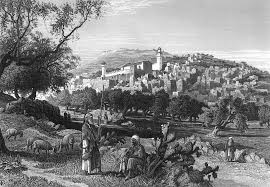
Hebron, City of the Patriarchs
The Jewish Community of Hebron


Hebron is Jerusalem's Sister

Three cities hold a great and unique place in the ancient history of our people: Shechem, Hebron and Jerusalem. In the Book of Genesis (Bereshit) we are told that Terach took his son Abram, his nephew Lot and his daughter-in-law Sarai, Abram's wife and left Ur Kasdim bound for Canan. On route they reached Haran and dwelt there. Terach died in Haran.

Then the Almighty said to Abram: "Go forth from your land, from your birth place and from your father's house to the land that I shall show you...and Abram went forth as he had been told by the Eternal...and he took with him Sarai his wife, Lot his nephew, all their possessions and the souls that they had acquired in Haran...and they came to the Land of Canan. And Abram passed through the land until the place Shechem...and the Eternal appeared to Abram and said, "Unto your children shall I give this land." There Abram built there an altar unto the Eternal who had appeared to him-and Abram continued his journey shouthward ... and Abram made his camp and came and settled in the Plains of Mamre that are in Hebron and he built an alter to the Almighty." (Genesis 12-B).

Hebrew history begins in Hebron. In Hebron...there arose the first Hebrew armed force, which battled with four great kings:...because they had captured Abram's nephew Lot and his property. When Abram heard this in Hebron, he immediately mobilized 318 of his followers and pursued the four kings up to Dan in the north, where he attacked at night and destroyed them, and rescued all the property and his nephew Lot, the women and the rest of the captives. This was the first war in Jewish history, which ended not merely with victory, but also with a demonstration of Abram's breadth of spirit...

When Sarah died in Hebron at the age of one hundred and twenty-seven, Abraham turned to the Hittites to grant him a burial plot. After prolonged and devious negotiations by the Hittites, Abraham paid four hundred silver shekels to Ephron for his field and all the trees surrounding its boundaries-and it became his. And when Abraham died 38 years later, he was buried by his sons Isaac and Ishmael in the cave which Abraham had bought from the Hittites.

Before Jacob died in Egypt, after going down there to see his son Joseph, he made his sons promise to bury him with his fathers "in Hebron in the cave, in Ephron the Hittite's field, where were buried Abraham and his wife Sarah, Isaac and his wife Rebecca and where I buried Leah" (Genesis 49:29, 31). And that is what Joseph and his brothers did. It is thus clear that only the three Patriarchs and the three Matriarchs of the Jewish People were buried in the Cave of Machpela.

However, the importance of Hebron is not merely its role in the lives of the Patriarchs and Matriarchs of our nation. After Saul, the first King of Israel fell upon his sword in the war with the Philistines, so that he might not be taken captive, and David replaced him as King, David inquired of the Eternal: "Shall I go up to one of the cities of Judah?" And the Eternal answered: Go up!" And David said: "Unto where shall I go up?" And G-d answered" "To Hebron." And David went up there...and the men of Judah came and anointed David there as King of Judah" (Samuel II,2.4). Finally, after the death of Abner, commander of Saul's army, "and all the tribes of Israel came to David in Hebron and proclaimed: "Behold we are of the bone and flesh; and so it was yesterday and the day before, while Saul was King over us, it was you who were the leader of Israel; and the Almighty has said "You shall shepherd my people Israel and you shall be prince of Israel." And all the elders of Israel came to the king in Hebron, and King David made a covenant with them in Hebron over Israel" (Samuel II, 5:1-3). Thus arose in Hebron the greatest royal dynasty that Israel ever had.

The city of Jerusalem-which became in the course of time, from the crowning of David until our own days, not merely the most precious and Holy City in the Land of Israel, but one of the most revered cities in the world is not mentioned at all in the Five Books of the Torah. Further, after the reign of David who captured the city Jerusalem from the Jebusites and made it the eternal capital of Israel and his son, King Solomon, built the Beit HaMikdash (Temple) within her. After Solomon died the people of Israel came to crown his son Rechavam, not in Jerusalem, but in Shechem. And of the forty years of David's reign, seven and a half he ruled in Hebron, while Jerusalem, though not mentioned at all in the Torah, was made by Israel's greatest king into the city of holiness.

However, don't forget: the beginnings of Israel's greatest king were in Hebron, the city to which came the first Hebrew about eight hundred years before King David, and we will make a great and awful mistake if we fail to settle Hebron, neighbor and predecessor of Jerusalem, with a large Jewish settlement, constantly growing and expanding, very soon. This will also be a blessing to the Arab neighbors. Hebron is worthy to be Jerusalem's sister.

David Ben Gurion
Sdeh Boker
18 Shvat 5730
25 Jan. 1970
Love of the Land: David Ben Gurion: Hebron is Jerusalem's Sister

Tuesday, 27 October 2009

Love of the Land: Rambam Day in Hebron

Rambam Day in Hebron


David Wilder
The Wilder Way
9 Chesvan 5770/27 October 09

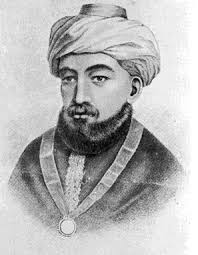
In 1165 Moshe ben Maimon, known as Maimonides or the Rambam, visited Eretz Yisrael. In the preface to his commentary on the Talmudic tractate of Rosh Hashana he writes of his visit to Hebron.

"And on the first day of the week, the ninth day of the month of MarCheshvan, I left Jerusalem for Hebron to kiss the graves of my forefathers in the Cave of Machpela. And on that very day I stood in the Cave and I prayed, praised be G-d for everything. And these two days, the sixth (when he prayed on Temple Mount in Jerusalem) and the ninth of Mar-Cheshvan I vowed to make as a special holiday and in which I will rejoice with prayer, food and drink. May the Lord help me to keep my vows…At the edge of the field is the house of Abraham, And it is forbidden to build a home there, in respect to Abraham."

Eight hundred and forty four years ago today, one of Judaism's greatest scholars arrived in Hebron, following his visit to Jerusalem. One can only imagine his excitement, standing next to the caves of Machpela, worshiping adjacent to the graves of the Patriarchs and Matriarchs. Perhaps we can sense a little of his exhilaration through his words, by vowing to mark his visit to Temple Mount in Jerusalem, and Ma'arat HaMachpela in Hebron, as an eternal, personal holiday.


Reading the Rambam's account, and feeling some of his awe, I ask myself, do people today, eight and half centuries later, still experience the same wonder when visiting such holy sites such as Temple Mount and Ma'arat HaMachpela.

A couple of weeks ago a friend of mine told me the following story:
Several years ago a famous Rabbi visited Hebron with many of his disciples. Upon arriving, he told his Hebron host, "I almost didn't come." When asked why, what was the problem, the Rabbi answered: "When the famous holy Rabbi Chaim ben Atar (known as the Ohr HaChaim HaKadosh) traveled to the city of Meron (in the Galil) to the tomb of Rashbi (Rabbi Shimon bar Yochai, renowned Jewish scholar and mystic who lived during the Talmudic era, author of the Zohar), he first imposed upon himself many hardships and suffering, by fasting, by rolling in the snow, and other physical afflictions, in order to purify himself before approaching the holy Rashbi's cave. Then, when he reached Meron, he crawled on his hands and legs to the site itself, out of fear and awe."
The Rabbi continued: Knowing this, how could I dare allow myself to visit the caves of Machpela, the tomb of our Patriarchs and Matriarchs?!"
His host looked at him and asked, "but you are here – you came anyhow."
The Rabbi answered, "Yes, I did come. I decided that it is permissible to visit your father and mother, even if your clothes are stained and dirty."

A poignant story, but with a very profound message. Ma'arat HaMachpela - Hebron, is not only the home the founders of our people, the roots of Judaism and all monotheism, the beginning of modern 'civilized' civilization. Hebron is the home of our mothers and fathers, Mom and Dad, Grandma and Grandpa – that simple, that deep. Mommy and Daddy will always welcome their children home, notwithstanding anything!

I have the honor and privilege to work with many different people and groups, Jews and gentiles, youth and the elderly, people from all over the globe. My tours are fairly standard; I try to express the same values and information to everyone; it makes little difference to me who they are or what the represent. The material to be imparted is not only 'information' – it is much more that that – it is the essence of our very existence.

There are those people have heard some of it before. Others know almost nothing. But when they leave, almost undoubtedly, their lives have changed.
(Full Article)

Love of the Land: Rambam Day in Hebron
Related Posts Plugin for WordPress, Blogger...