Showing posts with label Hebron. Show all posts

Tuesday, 13 April 2010

Love of the Land: A Dangerous Silence

A Dangerous Silence


Edward I. Koch
Yonkers Tribune
12 April '10

I weep as I witness outrageous verbal attacks on Israel. What makes these verbal assaults and distortions all the more painful is that they are being orchestrated by President Obama.

For me, the situation today recalls what occurred in 70 AD when the Roman emperor Vespasian launched a military campaign against the Jewish nation and its ancient capital of Jerusalem. Ultimately, Masada, a rock plateau in the Judean desert became the last refuge of the Jewish people against the Roman onslaught. I have been to Jerusalem and Masada. From the top of Masada, you can still see the remains of the Roman fortifications and garrisons, and the stones and earth of the Roman siege ramp that was used to reach Masada. The Jews of Masada committed suicide rather than let themselves be taken captive by the Romans.

In Rome itself, I have seen the Arch of Titus with the sculpture showing enslaved Jews and the treasures of the Jewish Temple of Solomon with the Menorah, the symbol of the Jewish state, being carted away as booty during the sacking of Jerusalem.

Oh, you may say, that is a far fetched analogy. Please hear me out.

The most recent sacking of the old city of Jerusalem – its Jewish quarter – took place under the Jordanians in 1948 in the first war between the Jews and the Arabs, with at least five Muslim states – Egypt, Jordan, Lebanon, Syria and Iraq – seeking to destroy the Jewish state. At that time, Jordan conquered East Jerusalem and the West Bank and expelled every Jew living in the Jewish quarter of the old city, destroying every building, including the synagogues in the old quarter and expelling from every part of Judea and Samaria every Jew living there so that for the first time in thousands of years, the old walled city of Jerusalem and the adjacent West Bank were "Judenrein" -- a term used by the Nazis to indicate the forced removal or murder of all Jews..

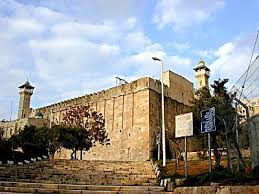
Jews had lived for centuries in Hebron, the city where Abraham, the first Jew, pitched his tent and where he now lies buried, it is believed, in a tomb with his wife, Sarah, as well as other ancient Jewish patriarchs and matriarchs. I have visited that tomb and at the time asked an Israeli soldier guarding it – so that it was open to all pilgrims, Christians, Muslims and Jews -- “where is the seventh step leading to the tomb of Abraham and Sarah,” which was the furthest entry for Jews when the Muslims were the authority controlling the holy place? He replied, “When we retook and reunited the whole city of Jerusalem and conquered the West Bank in 1967, we removed the steps, so now everyone can enter,” whereas when Muslims were in charge of the tomb, no Jew could enter it. And I did.

(Read full article)

Love of the Land: A Dangerous Silence

Tuesday, 9 March 2010

Love of the Land: The erasure of Jewish history and heritage

The erasure of Jewish history and heritage

Bataween
Point of No Return
09 March '10

The Arab and Muslim outcry against Israel's proposed restoration of Jewish heritage sites in Hebron is symptomatic of a campaign to deny and erase Jewish history and heritage in the region as a whole. Read my guest post on CiFwatch.


The rebuilt Hurva synagogue in the old city of Jerusalem (With thanks: Eliyahu)

Rising from the ashes like a phoenix, the rebuilt Hurva synagogue is about to be inaugurated in Jerusalem’s Jewish quarter.


The synagogue, restored to 19th century magnificence with its finely carved wooden pillars, gilt ornamentation and frescoes of Jerusalem, is a rare symbol of the revival of Jewish life after Israel’s post-1967 reunification of the city. The synagogue was razed to the ground in 1948, dynamited by the Transjordanian Arab Legion, along with scores of other synagogues. The old city was depopulated of thousands of its Jewish inhabitants, their homes looted, the Jewish cemetery on the Mount of Olives desecrated and its tombstones used for latrines and as paving stones.

(Read full story)


Love of the Land: The erasure of Jewish history and heritage

Tuesday, 2 March 2010

Love of the Land: Israel’s Latest Sin—Honoring Its Heritage

Israel’s Latest Sin—Honoring Its Heritage


P. David Hornik
Frontpagemag.com
01 March '10

When the Israeli cabinet announced the other day that the Cave of the Patriarchs in Hebron, and Rachel’s Tomb in Bethlehem, would be included in a list of Israeli “heritage” sites, it touched off a wave of Palestinian violence and threats—along with diplomatic protests that were all too concordant with the Palestinian bullying.

Prime Minister Benjamin Netanyahu, who has launched the “heritage” program as a way of strengthening Israelis’ connection with their Jewish and Zionist roots, initially left the two West Bank sites (though other West Bank sites were included) off the list, apparently fearing various kinds of fallout. Netanyahu was only persuaded to include them at the last minute by Shas, a religious party that is part of his coalition.

Sure enough, the West Bank heated up with an increase in rocks and Molotov cocktails thrown at Israeli vehicles, and, particularly, daily disturbances in Hebron, where crowds of Palestinians burned tires and threw rocks and bottles at Israeli soldiers. By Sunday the disturbances had spread to Jerusalem.

On the verbal plane a spokesman for the Gaza-based Islamic Jihad terror organization declared that “If the Israelis continue to damage our mosques and holy places, we will respond [i.e., mount terror attacks] within the Zionist territory”—alluding to the fact that the Cave of the Patriarchs is a compound with a mosque as well as a synagogue, while Rachel’s Tomb has recently been claimed to be a mosque as well.
Ismail Haniyeh, Hamas prime minister in Gaza, piped up with “Jerusalem is ours, the land is ours, and God is with us. We will not accept these decisions….” And Mahmoud Abbas, president of the official, West Bank-based Palestinian Authority and considered secular and a moderate, was hardly more moderate in his reaction, calling the decision to add the two sites to the heritage list “a serious provocation which may lead to a religious war.”

(Read full article)


Love of the Land: Israel’s Latest Sin—Honoring Its Heritage

Love of the Land: David Ben Gurion: Hebron is Jerusalem's Sister

David Ben Gurion: Hebron is Jerusalem's Sister


Hebron, City of the Patriarchs
The Jewish Community of Hebron


Hebron is Jerusalem's Sister

Three cities hold a great and unique place in the ancient history of our people: Shechem, Hebron and Jerusalem. In the Book of Genesis (Bereshit) we are told that Terach took his son Abram, his nephew Lot and his daughter-in-law Sarai, Abram's wife and left Ur Kasdim bound for Canan. On route they reached Haran and dwelt there. Terach died in Haran.

Then the Almighty said to Abram: "Go forth from your land, from your birth place and from your father's house to the land that I shall show you...and Abram went forth as he had been told by the Eternal...and he took with him Sarai his wife, Lot his nephew, all their possessions and the souls that they had acquired in Haran...and they came to the Land of Canan. And Abram passed through the land until the place Shechem...and the Eternal appeared to Abram and said, "Unto your children shall I give this land." There Abram built there an altar unto the Eternal who had appeared to him-and Abram continued his journey shouthward ... and Abram made his camp and came and settled in the Plains of Mamre that are in Hebron and he built an alter to the Almighty." (Genesis 12-B).

Hebrew history begins in Hebron. In Hebron...there arose the first Hebrew armed force, which battled with four great kings:...because they had captured Abram's nephew Lot and his property. When Abram heard this in Hebron, he immediately mobilized 318 of his followers and pursued the four kings up to Dan in the north, where he attacked at night and destroyed them, and rescued all the property and his nephew Lot, the women and the rest of the captives. This was the first war in Jewish history, which ended not merely with victory, but also with a demonstration of Abram's breadth of spirit...

When Sarah died in Hebron at the age of one hundred and twenty-seven, Abraham turned to the Hittites to grant him a burial plot. After prolonged and devious negotiations by the Hittites, Abraham paid four hundred silver shekels to Ephron for his field and all the trees surrounding its boundaries-and it became his. And when Abraham died 38 years later, he was buried by his sons Isaac and Ishmael in the cave which Abraham had bought from the Hittites.

Before Jacob died in Egypt, after going down there to see his son Joseph, he made his sons promise to bury him with his fathers "in Hebron in the cave, in Ephron the Hittite's field, where were buried Abraham and his wife Sarah, Isaac and his wife Rebecca and where I buried Leah" (Genesis 49:29, 31). And that is what Joseph and his brothers did. It is thus clear that only the three Patriarchs and the three Matriarchs of the Jewish People were buried in the Cave of Machpela.

However, the importance of Hebron is not merely its role in the lives of the Patriarchs and Matriarchs of our nation. After Saul, the first King of Israel fell upon his sword in the war with the Philistines, so that he might not be taken captive, and David replaced him as King, David inquired of the Eternal: "Shall I go up to one of the cities of Judah?" And the Eternal answered: Go up!" And David said: "Unto where shall I go up?" And G-d answered" "To Hebron." And David went up there...and the men of Judah came and anointed David there as King of Judah" (Samuel II,2.4). Finally, after the death of Abner, commander of Saul's army, "and all the tribes of Israel came to David in Hebron and proclaimed: "Behold we are of the bone and flesh; and so it was yesterday and the day before, while Saul was King over us, it was you who were the leader of Israel; and the Almighty has said "You shall shepherd my people Israel and you shall be prince of Israel." And all the elders of Israel came to the king in Hebron, and King David made a covenant with them in Hebron over Israel" (Samuel II, 5:1-3). Thus arose in Hebron the greatest royal dynasty that Israel ever had.

The city of Jerusalem-which became in the course of time, from the crowning of David until our own days, not merely the most precious and Holy City in the Land of Israel, but one of the most revered cities in the world is not mentioned at all in the Five Books of the Torah. Further, after the reign of David who captured the city Jerusalem from the Jebusites and made it the eternal capital of Israel and his son, King Solomon, built the Beit HaMikdash (Temple) within her. After Solomon died the people of Israel came to crown his son Rechavam, not in Jerusalem, but in Shechem. And of the forty years of David's reign, seven and a half he ruled in Hebron, while Jerusalem, though not mentioned at all in the Torah, was made by Israel's greatest king into the city of holiness.

However, don't forget: the beginnings of Israel's greatest king were in Hebron, the city to which came the first Hebrew about eight hundred years before King David, and we will make a great and awful mistake if we fail to settle Hebron, neighbor and predecessor of Jerusalem, with a large Jewish settlement, constantly growing and expanding, very soon. This will also be a blessing to the Arab neighbors. Hebron is worthy to be Jerusalem's sister.

David Ben Gurion
Sdeh Boker
18 Shvat 5730
25 Jan. 1970
Love of the Land: David Ben Gurion: Hebron is Jerusalem's Sister

Thursday, 25 February 2010

Love of the Land: Responses to: Frequently Asked Questions about Hebron and Shuhada Street

Responses to: Frequently Asked Questions about Hebron and Shuhada Street


David Wilder
Hebron.com
23 February '10

Responses to: Frequently Asked Questions about Hebron and Shuhada Street

Introduction: International organizations declared Thursday, February 25, 2010 as 'Open Shuhada Street Day.' Shuhada, in Arabic, means martyr. This is, according to the Arabs, a road named in memory of 'martyrs' who have murdered Jews. The street's real name is King David Street, in honor of King David, who began his monarchy, the Kingdom of Judea, and later the Kingdom of Israel, in Hebron, over 3,000 years ago. Parts of this road have been closed to Arab traffic for security reasons. Gadi and Dina Levy were murdered on this road by a homicide bomber. Aharon Gross was stabbed to death on this road. Sixteen year old Eliya Meshulam was stabbed and critically wounded on the road. Six men were killed and twenty others wounded on the road in a major terror attack on this road. Two retired men were stabbed by an Arab terrorist on the road. Three young men had acid thrown at them on this road. Others were attacked, but escaped injury.

Question
1. The settlers say they only have 3% of Hebron. They say they’re not allowed to go to H1 or most of H2. Given that they are restricted from the vast majority of the city, why shouldn’t Palestinians be restricted from the tiny portion of H2 that the settlers claim?

Hebron is a city deep inside the Palestinian territories. Israeli settlements in any of these territories are illegal according to the Fourth Geneva Convention. The issue is not that the settlers have only 3% of the city, but rather that they are controlling part of an occupied city.

H1, an area which consists of about 80% of Hebron, is controlled by the Palestinian Authority. H2, the remaining 20%, is controlled by Israel. Israeli settlers, who make up less than 1% of the population of Hebron, control 20% of the city, which is not only incredibly disproportionate but also illegal.

In order to allow the settlers to live in a small part of H2, the Israeli army exerts control over a much larger proportion of the city in order to secure a buffer zone for the settlement. While the settlers themselves do not travel around most of H2, the Israeli military does patrol the entirety of H2, thereby placing restrictions on Palestinian movement throughout this part of Hebron. If Israeli settlers were allowed to walk in all of H2, the Israeli military would likely control an even larger percentage of the city in order to keep them safe.

Although H2 is a relatively small portion of the city, it is Hebron's true city centre where the industrial and commercial zones, as well as the most important landmarks, are located. H2 is an important passageway between the northern and southern parts of the city. Therefore, restricting movement in H2 significantly affects the freedom of movement of all residents of Hebron.


1. Response:
a) Concerning H1 and H2: Israelis presently have access to three percent of Hebron. Arabs have access to 98% of Hebron. Jews are forbidden from entering H1. Arabs may travel freely between H1 and H2.


Concerning the city center: As can be seen above, Hebron city center is certainly not in H2. Arab Hebron is a large, thriving city, with continued construction, factories, businesses, markets, and all elements of metropolitan life. This area, much larger than H2, is certainly more conducive to businesses and markets; therefore the claim that H2 is actually the city center is false.
Concerning access to all areas of Hebron, Hebron's Arab population has access to over 98% of the city. All areas can be accessed without any major issues.

(Continue to read full article)


Love of the Land: Responses to: Frequently Asked Questions about Hebron and Shuhada Street

Thursday, 18 February 2010

Love of the Land: Heritage Sites Must Include Key Biblical Sites

Heritage Sites Must Include Key Biblical Sites


Dr.Aaron Lerner
IMRA
Weekly Commentary
18 February '10

The most powerful Jewish advisor to a foreign superpower returned home to Israel to bury his father in the family crypt. He stood there with his brothers, knowing that they had no choice but to return to the formidable foreign entourage waiting for them across the border.

For while he was second only to the ruler of the foreign empire, he and his brothers had to leave their children and cattle behind in what at the time was a gilded cage as a guarantee that they would not exploit this opportunity to permanently return home to Israel.

And today, we can stand at that very same place and as we let the pathos sink in of that heart wrenching moment we also celebrate how lucky we are that we have been honored to be able to not only visit, but to stay, rather than turn back to face generations of servitude on foreign soil.

That's what strikes me when I visit the Cave of the Patriarchs in Hebron.

It is right there in Genesis Chapter 50.

When Prime Minister Binyamin Netanyahu talked about the critical need for Israelis to link to their past in his 3 February speech at the Herzliya Conference, the Cave of the Patriarchs - now covered by the only intact Herodian period building - came immediately to mind.

And this with the added "bonus" that prayer arrangements at the site shared by Jews and Moslems serve as living proof that Jewish controlled holy sites can indeed be open to all. This in sharp contrast to Moslem controlled multi-religion sites where non-Moslem prayer is strictly restricted.

(Read full commentary)

Love of the Land: Heritage Sites Must Include Key Biblical Sites

Monday, 25 January 2010

Love of the Land: Are Rock attacks really dangerous?

Are Rock attacks really dangerous?


The Muqata
24 January "10

There's been a marked escalation of Palestinian rock throwing lately on the roads.

The Jerusalem Post caught some attacks on video in Hevron -- as Palestinian kids throw rocks at their neighboring Jewish homes.


And then, there are rock attacks on Jewish motorists.

(Read full post)


Love of the Land: Are Rock attacks really dangerous?

Tuesday, 27 October 2009

Love of the Land: Rambam Day in Hebron

Rambam Day in Hebron


David Wilder
The Wilder Way
9 Chesvan 5770/27 October 09

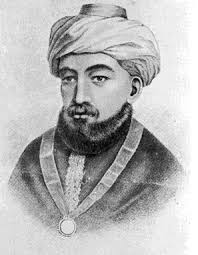
In 1165 Moshe ben Maimon, known as Maimonides or the Rambam, visited Eretz Yisrael. In the preface to his commentary on the Talmudic tractate of Rosh Hashana he writes of his visit to Hebron.

"And on the first day of the week, the ninth day of the month of MarCheshvan, I left Jerusalem for Hebron to kiss the graves of my forefathers in the Cave of Machpela. And on that very day I stood in the Cave and I prayed, praised be G-d for everything. And these two days, the sixth (when he prayed on Temple Mount in Jerusalem) and the ninth of Mar-Cheshvan I vowed to make as a special holiday and in which I will rejoice with prayer, food and drink. May the Lord help me to keep my vows…At the edge of the field is the house of Abraham, And it is forbidden to build a home there, in respect to Abraham."

Eight hundred and forty four years ago today, one of Judaism's greatest scholars arrived in Hebron, following his visit to Jerusalem. One can only imagine his excitement, standing next to the caves of Machpela, worshiping adjacent to the graves of the Patriarchs and Matriarchs. Perhaps we can sense a little of his exhilaration through his words, by vowing to mark his visit to Temple Mount in Jerusalem, and Ma'arat HaMachpela in Hebron, as an eternal, personal holiday.


Reading the Rambam's account, and feeling some of his awe, I ask myself, do people today, eight and half centuries later, still experience the same wonder when visiting such holy sites such as Temple Mount and Ma'arat HaMachpela.

A couple of weeks ago a friend of mine told me the following story:
Several years ago a famous Rabbi visited Hebron with many of his disciples. Upon arriving, he told his Hebron host, "I almost didn't come." When asked why, what was the problem, the Rabbi answered: "When the famous holy Rabbi Chaim ben Atar (known as the Ohr HaChaim HaKadosh) traveled to the city of Meron (in the Galil) to the tomb of Rashbi (Rabbi Shimon bar Yochai, renowned Jewish scholar and mystic who lived during the Talmudic era, author of the Zohar), he first imposed upon himself many hardships and suffering, by fasting, by rolling in the snow, and other physical afflictions, in order to purify himself before approaching the holy Rashbi's cave. Then, when he reached Meron, he crawled on his hands and legs to the site itself, out of fear and awe."
The Rabbi continued: Knowing this, how could I dare allow myself to visit the caves of Machpela, the tomb of our Patriarchs and Matriarchs?!"
His host looked at him and asked, "but you are here – you came anyhow."
The Rabbi answered, "Yes, I did come. I decided that it is permissible to visit your father and mother, even if your clothes are stained and dirty."

A poignant story, but with a very profound message. Ma'arat HaMachpela - Hebron, is not only the home the founders of our people, the roots of Judaism and all monotheism, the beginning of modern 'civilized' civilization. Hebron is the home of our mothers and fathers, Mom and Dad, Grandma and Grandpa – that simple, that deep. Mommy and Daddy will always welcome their children home, notwithstanding anything!

I have the honor and privilege to work with many different people and groups, Jews and gentiles, youth and the elderly, people from all over the globe. My tours are fairly standard; I try to express the same values and information to everyone; it makes little difference to me who they are or what the represent. The material to be imparted is not only 'information' – it is much more that that – it is the essence of our very existence.

There are those people have heard some of it before. Others know almost nothing. But when they leave, almost undoubtedly, their lives have changed.
(Full Article)

Love of the Land: Rambam Day in Hebron

Wednesday, 14 October 2009

Love of the Land: Short History of Israel-Palestinian Conflict: 1929, 2000, 2009, Anti-Jewish Rumors over the Temple Mount Lead to Palestinian Riots

Short History of Israel-Palestinian Conflict: 1929, 2000, 2009, Anti-Jewish Rumors over the Temple Mount Lead to Palestinian Riots


Barry Rubin
The Rubin Report
13 October 09

In August 1929, wild rumors that Jews had attacked Arabs, cursed the name of Islam’s founder, and were about to seize the Temple Mount led to inflammatory sermons in mosques, followed by massive Arab riots. More than 105 Jews were killed by Arabs; not a single Arab was killed by a Jew.

The exact same thing happened—albeit with far fewer casualties—in 2000, 2009, and at several points in between. The pattern tells a great deal about why the conflict doesn’t end and in fact stays a great deal the same.

The worst single incident took place in Hebron, where scores of Jews were murdered or wounded. Some were saved by Arab neighbors. The remaining Jews had to flee Hebron, never to return. Their property was taken by the Arab residents.

True, there had been a right-wing Jewish demonstration at which slogans were chanted claiming ownership of the Western Wall (the surviving part of the retaining wall of the ancient Jewish Temple) but there had been no violence against Arabs.

Almost exactly 80 years later, the visit of a French tourist group to the Temple Mount set off wild rumors that Jews were going to seize the Temple Mount. Passions were inflamed by Islamic clerics who were appointees of the Palestinian Authority and organized by Fatah, Hamas, and Hizb al-Tahrir,

Again, days of rioting were set off. But no Jews were killed because they were defended by Israel’s security forces, not British police (as had been the case in 1929). No Arabs were killed because of the restraint exercised by Israeli police. One can imagine if parallel events had taken place in an Arabic-speaking country. Naturally, there will be no international praise for this restraint.

The Western Wall and the rest of the Old City of Jerusalem was captured by Jordanian forces in the 1948 war. All synagogues were torn down or turned into other facilities; all Jewish residents were expelled.

In 1967, Israeli forces captured the Old City in the Six-Day war of that year. No Arab residents were expelled; no mosques or churches were closed down. On the contrary, there was a massive Arab migration to the city which greatly increased the Muslim population there.

Even though the Temple Mount is the holiest place—I would argue the only legitimate Holy Place—for Jews, it was left under Arab Muslim supervision. Jewish prayer was forbidden up there by Israel’s authorities, both to avoid provoking Muslims and also in line with a rabbinic forbidding of doing so lest the Temple’s space be defiled.

The al-Aqsa Mosque and Dome of the Rock were also under Arab Muslim control. The area was closed to Muslim prayer only during periods of violence and opened thereafter as soon as possible.

In 2000, a brief tour of the Temple Mount by Ariel Sharon—he merely walked through for about an hour, looked around, and then left—was the rationale used to set off an intifada that lasted for about five years and cost several thousand lives.

Afterward, Marwan Barghouti, leader of Fatah on the West Bank, described in detail how he used this as an excuse to set off the uprising. This violence took place about the time that President Bill Clinton, with Israeli agreement, proposed the creation of an independent Palestinian state which would, among other things, control most of east Jerusalem.

All of these things are points of fact, yet thoroughly neglected ones internationally. Both Israel and the Palestinians claim the Old City and there have been a wide variety of plans to solve this problem. Basically, however, the issue is not really closer to solution than it was in that far distant past.

The salient fact is that 80 years after the 1929 riots the same scenario has prevailed of demonization and lies about Jews, deliberately inflamed by Arab political and religious forces, has led to massive Arab violence.

If you want to know why the conflict has not been resolved over such a long time, examine the different behavior of the two sides.


Love of the Land: Short History of Israel-Palestinian Conflict: 1929, 2000, 2009, Anti-Jewish Rumors over the Temple Mount Lead to Palestinian Riots

Tuesday, 8 September 2009

Love of the Land: Rivlin, in Hebron, Slams Netanyahu: You Can't Build TA By Destroying Ariel

Rivlin, in Hebron, Slams Netanyahu: You Can't Build TA By Destroying Ariel


Chaim Levinson-Nir Hasson
Haaretz
08 September 09

Knesset Speaker Reuven Rivlin criticized Prime Minister Benjamin Netanyahu's plan to freeze settlement construction while on a visit to Jewish compounds in Hebron yesterday.

"Anyone who believes Jerusalem can be built by destroying Hebron hasn't learned a thing," said Rivlin, in Hebron for a memorial ceremony for the victims of the 1929 Hebron massacre. "Anyone who thinks you can build Tel Aviv by drying up Ariel and Ma'ale Adumim, or that we'll get our territorial rights recognized this way, is destined to repeat past mistakes. Anyone who thinks we will thus escape a Holocaust is embracing false hopes," said Rivlin.

Read All at :

Love of the Land: Rivlin, in Hebron, Slams Netanyahu: You Can't Build TA By Destroying Ariel

Friday, 28 August 2009

Love of the Land: Mr. Obama, Hebron is an eternal home for Jews

Mr. Obama, Hebron is an eternal home for Jews


Eighty years after a massacre of Jews here and despite ongoing Arab threats, we yearn for peace. But will Obama's pressure on settlements force us to leave?

The Obama administration is pressuring Israel to agree to a total building freeze of Jewish settlements in Judea and Samaria (the West Bank). It may not be long before Israelis are forced to withdraw from places such as Hebron, in order to "prevent terror" and "achieve peace."

It's commonly thought that "if only" Israel would give up all land outside the 1967 borders, then peace would be at hand. However, Arab terror against Jews did not begin after the Six-Day War in 1967.

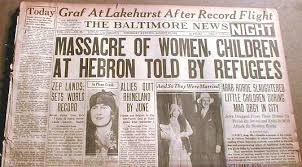
Eighty years ago today, Arabs massacred 67 Jews in Hebron and wounded 70 more. Incited by the grand mufti of Jerusalem, Haj Amin el-Husseini, and shouting "Kill the Jews!", the perpetrators raped, mutilated, tortured, beheaded, or dismembered men, women, children, and even babies in a two-day spree of violence. The victims were guilty of no crime. Jews had lived there for hundreds of years in peace with their neighbors. But Arab instigators preached hateful sermons and spread malicious rumors that boiled over into bloodshed.

Of the many accounts of betrayal and courage that day in 1929, here are two:

Ben-tzion Gershon, a doctor and pharmacist who treated Jews and Arabs in Hebron, defied his wife's warnings and opened the door to an Arab woman who feigned that she was about to give birth. The woman moved aside, and a murderous mob stormed in and gang-raped his wife. When Dr. Gershon begged them to stop, they answered: "If you don't want to see it, you don't have to" – and gouged his eyes out before killing him, according to the testimony of one of Gershon's daughter.

Some Arabs showed great courage in protecting Jews that day. One Arab landlord refused to allow his Jewish tenants to be murdered. He stood fast outside the door of their home, even when a fellow Arab put a sword to his throat and drew blood. The landlord refused to budge and finally the mob relented.

As British High Commissioner Sir John Chancellor put it: "I do not think that history records many worse horrors in the last few hundred years...."

Three days after the massacre the ruling British expelled the surviving victims from Hebron, leaving the city without a Jewish presence for the first time since 1260.

Read All at :

Love of the Land: Mr. Obama, Hebron is an eternal home for Jews

Love of the Land: Remembering the Hebron Massacre

Remembering the Hebron Massacre


Until 1929, Jews had lived in the city for three millennia.

Jerold S. Auerbach
Wall Street Journal
27 August 09

No theme is more deeply embedded in Jewish history than exile and return. The biblical exodus from Egypt to the promised land, the return from Babylonian exile, and, most recently, the establishment of the state of Israel all affirmed the enduring determination of the Jewish people to return to their homeland.

Yet another wrenching exile and return, now rarely remembered, occurred 80 years ago this week. On Aug. 23-24, 1929, the Jewish community of Hebron was exiled following a horrific pogrom. The tragedy is known as Tarpat, an acronym for its date in the Hebrew calendar.

Until 1929, Jews had lived in Hebron for three millennia. There, according to Jewish tradition, Abraham purchased the cave of Machpelah to bury Sarah. It was the first parcel of land owned by the Jewish people in their promised land. Ever since, religious Jews revered Hebron as the burial site of their matriarchs and patriarchs. Conquered, massacred and expelled over the centuries, Jews always returned to this sacred place.

After 1267, under Muslim rule, no Jews were permitted to pray inside the magnificent enclosure, built by King Herod in the 1st century, that still surrounds the burial caves. But following the expulsion of Jews from Spain at the end of the 15th century, a small group of religious Jews rebuilt a community of study and prayer in Hebron.

In August 1929, that community was suddenly and brutally attacked. Incited by the Grand Mufti of Jerusalem—who claimed that Jews were endangering Muslim holy sites on the Temple Mount in Jerusalem—Arab rioters swept through Palestine. In Hebron, the carnage was horrendous.

It began on Friday afternoon when Arabs attacked Jews with clubs and murdered a yeshiva student. The next morning, joined by local villagers, Arabs swarmed through Hebron screaming "Kill the Jews." They broke into the home of Eliezer Dan Slonim, where many Jews had gathered for safety. There they wielded knives and axes to murder 22 innocents. In the Anglo-Palestine Bank, where 23 corpses were discovered, blood covered the tile floor. That day, three children under the age of five were murdered. Teenage girls, their mothers and grandmothers were raped and killed. Rabbis and their students were castrated before they were slain. A surviving yeshiva student recounted that he "had seen greater horrors than Dante in hell."
Read All at :
Love of the Land: Remembering the Hebron Massacre

Monday, 4 May 2009

HEBRON - A JEWISH COMMUNITY - NOW , AND FOREVER


HEBRON JEWS: A COMMUNITY OF MEMORY

Hebron Jews: A Community of Memory
Jerold S. Auerbach

Israel recently marked two momentous events in its brief history: two years ago it observed the fortieth anniversary of the Six-Day war, followed last year by the sixtieth anniversary of independence. Although each offered an appropriate occasion for celebration of a stunning historic achievement, both provoked prolonged lamentation by many Israelis, first over Israel’s shameful responsibility for “Naqba,” the Palestinian dispersion in 1948 that accompanied the rebirth of a Jewish state; and then over the “Pyrrhic” victory and “occupation” of “Palestinian” land since 1967. Two anniversaries this year, if noticed at all, are likely to attract even sharper criticism. Hebron Jews will commemorate the eightieth anniversary of the horrific 1929 massacre, which led to the expulsion of a 400 year-old Jewish community from the City of the Patriarchs. But they also celebrate the thirtieth anniversary of their return to inhabit abandoned Jewish property after five decades of forced exclusion from Hebron. Together, these commemorative occasions will demonstrate the power of Jewish memory in a community of Jews committed to preserving the historical links between biblical antiquity and modern Israel, between Judaism and Zionism.
Yet no Jews are as reviled as the Jews of Hebron. Vilified as “zealots,” “fanatics” and “fundamentalists” who illegally “occupy” someone else’s land, they are the Jewish settlers whom legions of critics love to hate. It is seldom noticed that their most serious transgression, settlement in the Land of Israel—the return of Jews to their historic homeland— defines Zionism.
Living in the ancient biblical city south of Jerusalem, Hebron Jews are clustered near Me’arat HaMachpelah, the Cave of Machpelah, the oldest Jewish holy site in the world. There, according to Jewish tradition, Abraham purchased the first parcel of land owned by the Jewish people in their promised land to bury Sarah. There, too, the other patriarchs and matriarchs were entombed. Since biblical antiquity Jews have lived and prayed in Hebron and made pilgrimages to the Machpelah shrine. Conquered, massacred, expelled and exiled over the centuries, they have always remembered Hebron and they have always returned. One of the four ancient holy cities, Hebron was honored with designation as a city of refuge and a priestly city. It became King David’s first capital, an important administrative center for King Hezekiah in his eighth-century war against the Assyrians, and a crucial battleground during the Maccabean and Bar Kokhba uprisings. There, at the beginning of the Common Era, King Herod built the massive stone enclosure around the burial tombs that remains the oldest intact structure in the entire Land of Israel.
But Jews were not alone in finding sacred meaning and inspiration in Hebron. Over the centuries, Christians and Muslims attempted to make Hebron exclusively theirs.
Beginning in the mid-thirteenth century, Muslim rulers prohibited Jews (and other “infidels”) from entering Machpelah to pray at the tombs, permitting them to ascend no higher than the seventh step outside the enclosure. But itinerant Jewish travelers persisted in making pilgrimages to the ancient burial site and some elderly Jews moved to Hebron to be buried near their biblical ancestors. Following the expulsions from Spain at the end of the fifteenth century, a small group of pious Jews built a community of study and prayer in Hebron on land purchased for them by a wealthy benefactor. Sephardic Jews trickled in from villages and cities in the Middle East, subsequently joined by Hasidim from Eastern Europe. Gathered around the Avraham Avinu (“Our Father Abraham”) synagogue, in a dark and cramped quarter adjacent to the market in the center of town, they clung tenaciously to their precarious foothold, dependent for economic survival largely on emissaries dispatched to benefactors scattered throughout the Jewish world.
During much of the nineteenth century, a time of impressive community expansion, Hebron Jews maintained relatively harmonious, if largely subservient, relations with their Muslim neighbors, who treated them as dhimmis. Hebron became widely known for its Talmudic scholarship and learning.
Yeshivas sprouted, a medical clinic opened, and the first paved road from Jerusalem linked Hebron to other Jewish communities in Ottoman Palestine.
But there was little connection between Hebron Jews and the nascent Zionist movement. The secular Jews who rode the swift currents of nineteenth-century nationalism largely abandoned the religious Judaism that had framed Jewish life during 2,000 years of statelessness and exile. At the founding Zionist convention in Basel in 1896, Max Nordau insisted “Zionism has nothing to do with religion.” Like other emancipated modern Jews, these iconoclastic Jewish nationalists were prepared to cast off a religion that looked backward to the past and inward to divine revelation and sacred texts. Only Zionism, stripped of religious content, could provide an answer to the Jewish Question—the place of Jews in modern society—by relocating them within the boundaries of their own homeland.In 1929, after nearly a decade of British rule in Palestine following World War I, Hebron Jews suffered another of the horrific pogroms that had long punctuated Jewish history. Incited by Haj Amin al-Husseini, the mufti of Jerusalem, Arab rioting swept through Palestine. The venerable Hebron Jewish community was suddenly attacked. Sixty-seven Jews were murdered; scores were assaulted, severely wounded, even mutilated. After British soldiers removed traumatized survivors from their homes and evacuated them to Jerusalem, Hebron became Judenrein. Two years later an attempt to rebuild the community failed. During Israel’s War of Independence in 1948, Hebron was conquered and absorbed within the Kingdom of Jordan. In the old Jewish Quarter remnants of its past— synagogues, yeshivas, even the ancient cemetery—were desecrated and virtually obliterated.
Nineteen years later, when the Israel Defense Forces swept into biblical Judea and Samaria near the end of the Six-Day War, Hebron—along with Jerusalem—was restored to Jewish control after 2000 years. For the first time since 1267, Jews could pray inside the Machpelah enclosure. Israelis visited Hebron by the thousands, and then tens of thousands. On a single June day, 70,000 Jewish visitors flooded the city.
Inside the venerable shrine a Yemenite man blew repeated blasts on his shofar while a Moroccan woman, wailing Ima, Ima (“Mother, Mother”), kissed the cenotaph marking Sarah’s tomb.
The return to biblical Judea and Samaria was the unanticipated consequence of an unwanted war. Determined to erase the lingering humiliation of 1948 and annihilate the Jewish state, Israel’s Arab neighbors—Egypt, Syria, and Jordan—had inadvertently compelled secular Zionists to confront their Jewish past and future. The sudden presence of Israeli soldiers and tourists in Hebron provoked vigorous debate in government circles over the fruits of victory, the rights of conquest, the claims of history and possibilities for peaceful co-existence—a debate that continues to divide Israeli society.
The Labor government acted with alacrity in Jerusalem. It bulldozed the Arab neighborhood abutting the Western Wall and annexed the Old City and east Jerusalem. In the Old City, where the Jewish Quarter had been abandoned since 1948, ancient Jewish history and modern Zionism converged in an outpouring of nationalist and religious enthusiasm.
There was virtually no question, either in government circles or in an exultant nation, but that the Western Wall would remain under Israeli sovereignty and the historic Jewish Quarter would be rebuilt.
But the government remained ambivalent, at best, about Hebron. A symbol of the old religious yishuv that secular Zionists spurned, Hebron was problematic in ways that Jerusalem was not. Yet former Prime Minister David Ben-Gurion, meeting with Israeli Cabinet members, insisted: “On Jerusalem we must not budge. We have to quickly establish a large Jewish settlement there. The same with Hebron.” And in a ceremony at the ancient Jewish cemetery on the Mount of Olives two months after the war, Defense Minister Moshe Dayan boldly proclaimed, “We have returned to all that is holy in our land….We have returned to the cradle of our people, to the inheritance of the Patriarchs….We have returned to the Mountain [the Temple Mount], to Hebron and to Nablus. We will not be parted from the holy places.” Not all Israelis appreciated the encounter with their ancient heritage. A promising young writer, Amos Oz, confessed: “I don’t have any feeling that Hebron’s part of my homeland. But I do feel this about Holon,” the dreary town outside Tel Aviv where he first fell in love. Archaeologist Yigal Yadin sharply denounced the embrace of national and religious relics as “idolatrous.” As passionately (and publicly) as he had previously celebrated his own discovery of the bones of nine hundred suicidal Jewish Zealots at Masada, he now ridiculed Jews for praying inside Machpelah, which he dismissed as the likely site of tombs of Arab sheikhs. In the spring following the Six Day War, a group of predominantly religious Zionists, led by Rabbi Moshe Levinger, came to Hebron to celebrate Passover. Levinger, born in Jerusalem in 1935, had attended a Bnei Akiva yeshiva, served in the army, and studied at the Mercaz HaRav in Jerusalem. Then he joined Kibbutz Lavi, near the Golan Heights, where he combined rabbinical duties with shepherding.
Shortly after the 1967 war, Levinger visited Hebron to explore the possibility of rebuilding the community. In the desecrated Jewish cemetery, he experienced “an awakening of tempestuous spirits.” The visit, he recalled, created “an internal turmoil that left me restless for days and weeks.” He decided to return to Hebron and restore a Jewish community there. Early in the spring of 1968, he contacted the military governor of Hebron to request permission to hold a Passover Seder and spend the night there.
In recognition of the historic Jewish presence in Hebron, Labor Minister Yigal Allon had already floated a proposal for a Jewish neighborhood nearby, perhaps an “upper” Hebron on a hill overlooking the Arab city (modeled on Upper Nazareth in the Galilee). But the government did not respond to Levinger’s inquiries. Meeting with Hanan Porat, who had led the return to Gush Etzion after the war, and Elyakim Haetzni, a maverick lawyer, the decision was reached to go to Hebron without government permission.
Rabbi Levinger negotiated a rental arrangement with the owner of the Park Hotel for Passover week in April 1968. The hotel, a nondescript two-story stone building, had fallen on hard times, losing nearly its entire clientele now that prosperous Jordanians no longer vacationed there. Posing as Swiss tourists, the Levinger group negotiated a rental agreement for one dollar nightly for each guest. Levinger left a substantial deposit for “an unlimited amount of people for an unspecified period of time.” The hotel owner assured Levinger that they could extend their stay if they wished.
Some Israeli government authorities learned of the plan, but they did not interfere. Central Command General Uzi Narkiss told Levinger, “What do you want? To settle in Hebron? I don’t care. I know nothing. Rent a hotel, put up tents….I know nothing.”
A sizable group of Israelis—estimates range between sixty and eighty—arrived in Hebron to celebrate Passover and restore a Jewish presence in the city. The Levingers, clearly intending to stay, brought their four children, a refrigerator, and a washing machine. The kitchen was made kosher, and mezzuzas were attached to door-frames. “We never told anyone that we were going only to celebrate Passover,” Rabbi Levinger recalled. “The government authorities knew that we wanted to settle.” Rabbi Chaim Druckman, another graduate of the Mercaz HaRav yeshiva, led the Seder. Hanan Porat attended. Rabbi Shlomo Aviner, a recent immigrant from France who would lead Ateret Cohanim, the movement to restore a Jewish presence throughout Jerusalem’s Old City, joined the celebration. So did veteran Irgun fighter Shmuel Katz and Maariv journalist Yisrael Harel. Elyakim Haetzni, accompanied by his wife, mother, and four children, described the Seder nearly forty years later as “a once in a lifetime experience.” Miriam Levinger sensed “an historical breakthrough, and we all felt deeply moved and excited.” After the festive meal, exulting participants, joined by a Druze soldier who was guarding the hotel, danced and sang v’shavu banim l’gvulam (“your children shall return to their borders”).
The next morning the celebrants, singing and dancing through the streets of Hebron, carried Torah scrolls to Me’arat HaMachpelah. That evening, after the end of the Jewish Sabbath, some of the older participants left the hotel to return to their homes, but younger Israelis and yeshiva students remained behind, soon to be joined by newcomers. The next day, in their exuberance, they sent a telegram to Labor Minister Allon: Blessings for festival of our freedom to you from Hebron City of Patriarchs from first of those returning to it to settle in it in the name of 30 families Rabbi Moshe Levinger.
The new settlers remained in the Park Hotel for six weeks while the government debated what to do about them. In a compromise solution, they agreed to be relocated to the former British and Jordanian police building, now under Israeli military control, on a hill overlooking the city. There they remained, in miserably cramped quarters, while the government debated their future. After two years of hesitation that ended only after a terrorist attack wounded dozens of Jews awaiting entry to Me’arat HaMachpelah during Sukkoth, government ministers finally decided to decide. The new settlement of Kiryat Arba was built on a twenty-two-acre tract overlooking Hebron on an empty hill that had been seized after the war by Israeli military authorities.
But Kiryat Arba was not Hebron. Despite Levinger’s fiery insistence that “no government has the authority or right to say that a Jew cannot live in all parts of the Land of Israel,” the time was not right, the issue was too sensitive, or there were security problems, budgetary constraints, or American pressures to consider. The Likud government of Menachem Begin, in principle at least, seemed to favor the expansion of Kiryat Arba until it reached the size of Hebron, thereby creating separate Jewish and Arab cities. But exploratory discussions went nowhere. Then, in 1978, the government stunned settlers when it signed the Camp David accords with Egypt, committing it to return the entire Sinai Peninsula and grant “autonomy” to West Bank Palestinians. Settlers sensed that opportunities were slipping from their grasp.
Fifty years after the 1929 massacre, Kiryat Arba residents decided that the time had come to return to Hebron. By community consensus, the issue would be forced by women and children, who were least likely to provoke a harsh response from the government or military. One week after Passover, at 4:00 A.M., ten women led by Miriam Levinger and Sarah Nachshon, joined by thirty-five children, eight of whom were Nachshons, arrived by truck at the rear of Beit Hadassah, the former medical clinic in the heart of Hebron. Assisted by teenage boys from Kiryat Arba, they quietly climbed ladders, cut wires to the windows, and unloaded mattresses, cooking burners, gas canisters, water, a refrigerator, laundry lines, and a chemical toilet.
Safely inside the dilapidated building, the excited children sang v’shavu banim l’gvulam, God’s promise that children would return to Zion. Hearing their voices, an astonished Israeli soldier came down from his observation post on a nearby roof to investigate. When he inquired how they had entered the building, a four-year-old girl responded, “Jacob, our forefather, built us a ladder and we came in.”
In their first message from Beit Hadassah the women declared, “When we went to live eight years ago in Kiryat-Arba . . . it was because of compromise and going towards the government. Our wish was and still is Jewish settlement within Hebron.” At the end of their first Shabbat in Beit Hadassah, yeshiva students from Kiryat Arba came to dance and sing outside. Miriam Levinger described that moment: “We felt as if the souls of the murdered of this place had come and gathered with us at the window...to rejoice with us at the sight of Jews dancing on Saturday evening in the streets of Hebron. I wanted to calm them and say to them, ‘You can rest, you have waited for many years, now we have returned. What was in the past in Hebron is what will happen in the future.’”
“With the sword in one hand and the Bible in the other,” wrote journalist Amos Elon disapprovingly, Hebron settlers had the temerity to insist that “deeds contracted in the late Bronze Age are the legal and moral basis for present claims”—as though biblical roots in the Land of Israel were not the deepest source of Zionism itself. Hebron became the ideological vanguard of the Jewish settlement movement that has embedded nearly 300,000 Israelis in Judea and Samaria.Seven hundred Jews, joined by 200 yeshiva students, now live in Hebron, surrounded by 160,000 Palestinian Arabs. For thirty years, the government of Israel has stifled growth in the Jewish Quarter, obstructed property purchases by Jews, and constricted population enlargement. With their impassioned blend of Zionist nationalism and religious Judaism blamed for undermining Israeli democracy and jeopardizing Middle Eastern peace efforts, Hebron Jews may be the only Jews in the world whose critics can viciously malign them without incurring the taint of anti-Semitism.
Their determination to remember, in the very place where Jewish memory may be said to have originated, places them at the epicenter of a polarizing conflict within contemporary Israel—as acrimonious as the struggle between Israelis and Palestinian Arabs—over the identity and future boundaries, both external and internal, of the Jewish state.
A year ago, the sole surviving member of a Jewish family that had owned property in Hebron since the 15th century Spanish expulsion, appeared before the High Court of Justice with registration records to document his claim. Yosef Ezra was the seventy-five-year-old son of Yaacov ben Shalom Ezra. Father and son had been the only Jews to remain behind in Hebron between 1936 and 1947. Yosef praised Hebron Jews as “true pioneers, among the last who are putting Zionism into practice.”
Jerold S. Auerbach is professor of history at Wellesley College. This essay is drawn from his forthcoming book, Hebron Jews: Memory and Conflict in the Land of Israel, to be published in July by Roman & Littlfield.
taken from: B'NAI ELIM (http://bnaielim.blogspot.com/)
Related Posts Plugin for WordPress, Blogger...