Showing posts with label Suicide bombings. Show all posts

Thursday, 10 December 2009

Love of the Land: There is No Peaceful Solution to Terrorism

There is No Peaceful Solution to Terrorism

Daniel Greenfield
Sultan Knish
08 December 09

It has become fashionable in modern circles to believe that terrorism is the cry of the oppressed, that bombs on buses are the voice of the disempowered and that beheaded schoolteachers are the response of a people deprived of their human rights. They are of course wrong.


Terrorism is nothing more strategic atrocity, a horror show meant to shock and repulse, to weaken morale and bring about negotiations. Which is precisely what diplomats and peace activists willingly provide them. Their notion of a "peaceful solution" invariably ends with the butchers in charge and everyone else on the run. The result may indeed be a peaceful solution, insofar as anyone who disagrees has been executed or fled into exile, and a reign of terror insures that no one disturbs the peace.

The liberal premise is that terrorists are themselves victims who act violently only because they lack any alternative recourse. And yet when given a chance to rule, terrorists invariably demonstrate that they are not monsters because they are oppressed, but that they are oppressed because they are monsters. Communist terror on behalf of the oppressed peasants and workers before the Revolution, was nothing compared to the horrors that were unleashed under the USSR. Nazi violence on behalf of a dispossessed Germany proved to be forgettable compared to the genocide they unleashed as the ruling party. Palestinian Arab terror before the Oslo Accords seems almost simple in comparison to their reinvention of Suicide Bombings after the agreements granting them autonomous territory inside Israel.

From Shiite terror in Iran to the Taliban in Afghanistan. From Latin American Marxists to the Brown Shirts of Berlin to Mugabe and the Viet Cong -- empowered terrorists are not peaceful terrorists. A brutal thug before a treaty is no different than the same brutal thug after the treaty. The only difference is how much power he has.

There is no peaceful solution to terrorism, because terrorism is not a peaceful act. The only way to defend against force is with greater and smarter force. To try and make peace with terrorists is to reward their tactics and insure that they will be repeated over and over again. You cannot defeat terrorism by making peace with it. You can only bare your own throat to the knife.

That is a lesson that Israel has been demonstrating for 17 years during which every treaty, each agreement and concession has been met with greater and deadlier outbursts of violence and terrorism. Israeli concessions on Ramallah, led to suicide bombings in Tel Aviv. The forced evacuation of Jews from Gaza led to rockets raining down on Israeli villages. The willingness to negotiate after all this has turned Jerusalem into a war zone. If Israel agrees to the latest US-EU plan to divide Jerusalem-- the war will move on to the Galilee and the Negev. The apartments in Jerusalem that were once used for target practice by Jordanian snipers occupying half the city, will in turn be used for the same purpose again by Fatah and Hamas terrorists. But one thing is certain, the violence will grow and continue.

(Read full article)


Love of the Land: There is No Peaceful Solution to Terrorism

Thursday, 8 October 2009

Love of the Land: Suicide Bombing as Worship

Suicide Bombing as Worship

Dimensions of Jihad

by Denis MacEoin
Middle East Quarterly
Fall 2009, pp. 15-24

Many motives are cited for suicide bombings, from religious sanctification to revenge for Western foreign policy to hatred of Israel, but one thing ties them together: the boast that Muslims love death, whereas their enemies love life. From killing the infidel enemy through suicide attacks, to allowing the subordinate female to participate in suicide attacks, a pattern emerges. And just as honor killings are a perversion of the most basic of human ties, so love for martyrdom takes societies into a direct relationship with the darkest side of human nature. In trying to explain this, it may be feasible to identify routes to a possible solution.

Origins


Since the 1980s, killing oneself deliberately has become the most popular method of attacking and killing one's enemies in countries including Iraq and Afghanistan, in territories such as Chechnya or the West Bank and Gaza, and even in Western countries such as the United States and Great Britain. It was a real-life Shi'i fanatic, a thirteen-year-old boy called Hossein Fahmideh, who set things moving in 1981 when he died with a grenade in his hand, throwing himself under a tank during the Iran-Iraq war. He was followed by thousands of young Iranians carrying "keys to paradise," who walked and ran across minefields, ripping their bodies apart for God and the Islamic regime.[1] Two years later, the first suicide attack occurred against a Western target when a bomber drove a vehicle packed with explosives into the lobby of the American embassy in Beirut. Apart from himself, he killed 63 people: 32 Lebanese, 17 Americans, and 14 visitors. Iran denied all involvement in the attack, but its protégé, Hezbollah, soon claimed responsibility, and it was subsequently established that the killings had been approved and financed by senior Iranian officials. The Iranian role in many subsequent suicide bombings has been crucial, given the existence of a clerical elite that inherited a deeply-embedded Shi'i cult of martyrdom, whose traditions of flagellation, public weeping, passion plays, martyrdom sermons, and hagiographies of martyrs were pushed into overdrive after the revolution of 1979.
An Islamic Paradox

By 2008, 1,121 suicide bombers had carried out attacks in Iraq, killing on a massive scale. With the exception of Sri Lanka, where the Tamil Tigers used the tactic, suicide bombing has become an almost exclusively Islamic phenomenon. Whether religiously observant or driven by other motives, the bombers have been Muslims, regardless of their country of origin. Even Muslims raised and educated in non-Muslim countries (like Britain's 7/7 bombers) and exposed to cultures without overt jihadi propaganda have put on explosive belts and gone to their deaths in order to kill nonbelievers. Apart from their Islamic roots, these terrorists display a wide range of characteristics. Many have been young men, some of whom were mentally disabled, while others were very bright, some uneducated, others university graduates; a growing number are women, mostly young, some old, some virgins, others pregnant or mothers. Many have belonged to terrorist groups such as Hamas and have been indoctrinated in Islamist thought, anti-Semitism, or general hatred of the West. Others have been volunteers seeking to expiate sins or retrieve the honor of their families.

Yet suicide bombing involves a paradox within Islam. On the one hand, laws relating to jihad unambiguously state that fighters must not take the lives of noncombatants, such as women, children, the sick, or the elderly. At the same time, anyone who dies while fighting non-Muslims is considered a martyr and guaranteed the highest rank in paradise. How do Islamists get round this problem? Some may shut their eyes and get on with it, but others come face to face with the paradox by dividing the problem into bite-size pieces. Clerics sanctify the bombers in their sermons, organizations including Hamas and Islamic Jihad identify and celebrate them as fighters in the jihad, and foreign donors provide aid that is siphoned off to the families of the martyrs.[2]

Whatever the private motivation of the suicide bomber, his or her action is rooted in much broader national, communal or, above all, religious demands, pressures, and desires. These range from religious convictions and edicts to concepts of holy war and martyrdom to conflicts over issues of shame and honor to social constructs of sexuality. Most importantly, the bombings have nothing to do with suicide. Nor are they described as such by those who send the bombers out and those who immolate themselves. To make it easier to understand what modern Islamist suicide bombing is about, we need to examine its historical background, its religious/nationalist role in the Israeli-Palestinian conflict, and its psychological and cultural roots in the Arab and Islamic interpretation of women, sexuality, shame, and honor.
(Full Article)


Love of the Land: Suicide Bombing as Worship

Monday, 21 September 2009

Love of the Land: Is the U.S. About to Dump Syria?

Is the U.S. About to Dump Syria?


Michael J. Totten
Contentions/Commentary
20 September 09

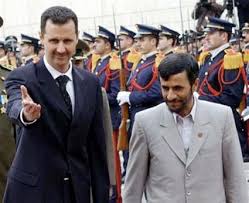
Hussain Abdul-Hussain reports in Kuwait’s Arabic-language daily Al Rai that the Obama administration has quietly decided not to return an ambassador to Syria as promised. He quotes unnamed officials who say president Bashar Assad is blackmailing the United States and its neighbors while conceding nothing in negotiations.

“Assad had started to count the American eggs in his basket before offering anything in return,” said an administration official, according to Tony Badran’s translation from Arabic. “Assad fires a rocket here or there [in south Lebanon] and expects us to run to him. . . . This kind of security blackmail no longer works on the United States.”

Syrian blackmail, though, has been working for decades. Bashar Assad’s government, like that of his late father, Hafez Assad, is an extortionist gangster regime that demands—and usually gets—the diplomatic equivalent of protection money. “The basic line is ‘Do what we want or we will kill you,’ ” said Barry Rubin, author of The Truth about Syria. “Yet at the same time they hold out the bait of great progress if only their demands are met. They play the West at times like a master fisherman reeling in his victim.”

There’s a case to be made, albeit a weak one, for buying off rogue regimes if they’ll behave. The biggest problem with bribing the Syrians, aside from the fact that it encourages more blackmail later, is that Assad won’t even hold up his end of the deal. “The Syrians,” Lebanese blogger Mustapha explained on his blog Beirut Spring, “try to sell, for a high price, water for fires they cause themselves, then they don’t deliver.”

No matter what the Syrian government is offered—normal relations, a looser sanctions regime, trade agreements—it has never rolled back support for international terrorist organizations. Syria refuses to hold peace talks with Israel or close down the local branches of Hamas and Islamic Jihad. Assad won’t stop obstructing the formation of a new Lebanese government nor will he shut down his terrorist pipeline into Iraq.

Lebanese politicians and journalists have been under siege by Syrian assassins and car bombers since 2005. Iraqis have been blown apart by Syrian-supported suicide-bombers since 2003. And Israelis have been under assault by terrorist groups backed by Damascus since the Assad regime came to power decades ago. “This is how Syria negotiates,” Lee Smith wrote in 2007 after Syrian agents blew up a bus on Mount Lebanon, “with its knife on the table and dripping with blood.”

“The impediment to real change in the Syrian regime’s behavior in a manner that would satisfy American decision-makers is structural and systemic,” wrote Tony Badran in NOW Lebanon. “Syria cannot abandon its support for violence and subversion, or its alliance with Iran, because those are the only tools allowing it to bolster its relevance above its political weight.”

Indeed, Assad and his father have made Syria an indispensable nation in the Middle East, despite its utter dearth of economic and military power, by exporting terrorism and suicide murder to neighboring countries. Henry Kissinger’s famous formulation, “No war without Egypt, no peace without Syria,” would be negated at once if Assad ceased and desisted his support for Palestinian, Lebanese, and Iraqi terrorist groups. Syria would become just another failed Soviet-style state with no more geopolitical power than Yemen.

The Obama administration has been a bit more accommodating of Assad than it should have been, but the same can be said for every American administration in recent decades. Barry Rubin warned about this possibility long before Barack Obama was even elected. “The next U.S. president might try to engage Syria and spend a year or so finding out that it doesn’t work,” he told me in 2007.

Bashar Assad does not play well with others, and he never has. Neither did his father. The Syrians, according to a U.S. official quoted by Abdul-Hussain, “don’t know the difference between normalizing relations and behaving like they’ve defeated the US in a world war.”

President Obama’s conciliatory nature meant a temporary rapprochement with Syria was likely, if not inevitable. Assad’s nature all but ensures it won’t last.

Related: The Syrian Paradox
.


Love of the Land: Is the U.S. About to Dump Syria?
Related Posts Plugin for WordPress, Blogger...