Showing posts with label Sderot. Show all posts

Friday, 7 May 2010

Love of the Land: Artists 4 Israel bring some color to Sderot

Artists 4 Israel bring some color to Sderot


Ron Friedman
JPost/Sderot Media Center
29 May '10

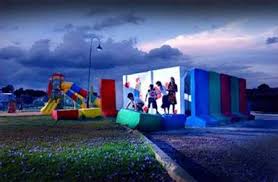
“Unfortunately, people here have to live with bomb shelters. We’re here doing a little something to bring some color to something that’s here for an ugly reason,” said American graffiti artist Cycle, summing up perfectly the aim of the Artists 4 Israel mission to Israel.

Tuesday was the group’s third day in Sderot, where urban artists from the United States, Spain, Mexico and Israel have been busy beautifying the bombarded city’s public bomb shelters.

The “Murality Project” is all about sending a message of support to the residents of Sderot.

“We couldn’t be here to build the bomb shelters or fight in the war, but we can help the people fight the debilitating effects, which are just as bad,” said Craig Dershowitz, president of Artists 4 Israel, a nonprofit advocacy group. “We can step in and help reignite the city that has suffered for so long, with our artwork.”

Participating in the project are 25 artists, including some of the top names in New York City’s urban art scene. In Sderot, the group of non-Jewish, American and international artists joined Israelis to contribute their talent to beautify the city.

“Some of the artists here are used to being flown first-class and housed in five-star hotels for commissioned work. Here they sleep on the floor, six people to a room at the local yeshiva building,” said Dershowitz. “They contributed valuable time and art that can sometimes be sold for as much as $10,000, expressing their support for Sderot and Israel.

(Read full story)

Love of the Land: Artists 4 Israel bring some color to Sderot

Sunday, 7 March 2010

Love of the Land: Purim Recollections: The Real Heroes of Sderot

Purim Recollections: The Real Heroes of Sderot


Anav Silverman
Sderot Media Center
04 March '10

“The next Megillah reading will be at 6:30 pm sharp,” said a voice on the intercom.

I was at the Jerusalem Central Bus Station. It was the eve of Purim and I had just arrived to the station from Ashkelon. The rain was pouring outside and I knew there was no way I would make it in time to the Megilah reading at the synagogue I usually attend near my home.

So I decided I would stay for the reading at the station, thinking to myself-not my ideal location but still--what other bus station in the world would offer unique opportunity on Purim?

I found the synagogue on the third floor which was quickly becoming full of people. Chabadniks, Breslavim, Haredim, Israeli soldiers, women in pants and men in payot. Religious, secular and traditional Jews were all gathering together to hear the story of our Jewish heroes from two thousand years ago.

Five minutes left before Megillah reading and not enough Megillahs to go around.

I looked around me. We were all strangers but there was that familiar feeling of family in the air. We were all here, all united in one purpose-- to recall our story of national survival and strength over two thousand years ago.

It’s an ongoing story for our people and in Israel today the situation is no different.

I had come back to Jerusalem after spending the day in Sderot where I work for Sderot Media Center, a social media organization dedicated to bringing the voices of Sderot residents to the attention of the global community. As a media center, we have made many acquaintances and friends in the Sderot community, all of whom share survival stories from rocket attacks.

(Read full story)


Love of the Land: Purim Recollections: The Real Heroes of Sderot

Monday, 22 February 2010

Love of the Land: Sderot--a return to normalcy?

Sderot--a return to normalcy?


Anav Silverman
Sderot Media Center
17 February '10

Health professionals weigh in on the state of Sderot civilians post-Operation Cast Lead

Although news reports have frequently described the situation in Sderot as back to normal-with real estate having gone up 20 to 30 percent, 1,400 new homes approved for construction, and families returning to the city-behind the headlines the impact of previous rocket attacks are still hammering at the population.

Hila Barzilai, the director of the Sderot Resilience Center (Merkaz Hosen) recently told Sderot Media Center that in the past six months following Operation Cast Lead, hundreds of Sderot children have turned to the resilience center for therapy treatment.

“These kids come to us with their parents to seek therapy for the trauma built up from years of rocket attacks,” says Barzilai. "These problems did not just begin post-Operation Cast Lead. We are talking about eight years of constant rocket attacks whose psychological effects are now emerging during this period of calm."

Over 364 new patients arrived to the resilience center six months after Operation Cast Lead, according to Barzilai. "We do everything possible to limit the long-lasting affects of these rocket attacks but it is a long and drawn-out process.”

The average recovery period for a child can take up to eight months or more, said Barzilai. One of the challenges of trauma patients face in the recovery process are the sporadic rocket attacks that still continue to hit Sderot and the western Negev region.

Barzilai notes in frustration that "it takes one rocket attack to destroy any progress in the patient's therapy. The siren alert will trigger the flashbacks of terror and fear in the child or adult, which means that the therapy process has to begin anew."

(Read full article)


Love of the Land: Sderot--a return to normalcy?

Thursday, 18 February 2010

Love of the Land: I guess our New Israel Fund check got lost in the mail

I guess our New Israel Fund check got lost in the mail


Jacob Shrybman
Sederot Media Center
16 February '10

When the news of the New Israel Fund (NIF) paying around $8 million to organizations that provided the Goldstone Report with all its condemnations of Israel, it was clear that the “New Israel” desired by the New Israel Fund is one with more than 9 years of consistent rocket fire.

Our organization, Sderot Media Center (SMC), with a yearly budget of close to $200,000, worked tirelessly on a formal report that was requested by the Goldstone Commission itself, which encompassed the impact of the rocket fire on the residents of the Sderot region. We sent this formal report accompanied by photographs and videos to depict to this UN committee, which did not visit Sderot, what it is like to live under either daily rocket fire or the threat of daily rocket fire over the course of then eight years. The Goldstone Committee then flew our director, Noam Bedein, to the UN Headquarters in Geneva to give a 30-minute presentation/testimony in front of the committee on this daily reality lived in Sderot.

The New Israel Fund paid around $8 million to organizations that provided information to the Goldstone Report. As a cited provider of information for the Goldstone Report, I guess our New Israel Fund check got lost in the mail?

(Read full article)

Love of the Land: I guess our New Israel Fund check got lost in the mail

Tuesday, 16 February 2010

Love of the Land: Can it all be just a mistake?

Can it all be just a mistake?


Itzik Yarkoni
Sderot Media Center
09 February '10

Hamas officials said that a 52-page document has been compiled to testify that the offensive missiles fired during Operation Cast lead were “an accident” due to their weapon’s lack of aiming capabilities toward military installations.

However, section 1687 of the “Goldstone Report” presents that, “indeed, Palestinian armed groups, among them Hamas, have publicly expressed their intention to target Israel civilians.... claimed responsibility for the deaths of each of the Israeli civilians killed by rocket fired during the operations in Gaza”.

This begs the question: If Hamas weapon’s suffer from inaccuracy, maybe the information that was given to Goldstone is also off target?

I remember the first time that I heard about Sapir college was when I was traveling in the United States after the army. When I asked about the whereabouts of the college, a friend replied, “It is a nice place next to Sderot. However, the situation is a little strange. Rockets are launched towards the city daily”. I did not know what lay ahead for me at Sapir College, but I decided that I would take the risk. After all, I figured something would be done, eventually, to stop the rockets.

Eight years have passed since the first rocket was launched towards Sderot. The situation has not changed, I was wrong. More than ten thousand kassam missiles, grad, and mortar shells have been fired from Gaza, of which eighty-four fell in Sderot during Operation Cast Lead. Moreover, the “military installations” Hamas speaks of are nowhere to be found in the city. Where exactly were the rockets intended to fall?

(Read full story)

Love of the Land: Can it all be just a mistake?

Tuesday, 9 February 2010

Love of the Land: Israel on Canadian college campuses; an up-hill battle

Israel on Canadian college campuses; an up-hill battle


Noam Bedein
Sderot Media Center
04 February '10

Presenting the human side of Sderot, Israel and the western Negev would seem innocuous enough, as it is the only region in the western world where rockets and missiles target a civilian population. The people of southern Israel have their own story to share.

Yet after a 13-day coast-to-coast visit to Canadian college campuses, organized by Hillel Canada and the CIJA umbrella organization of Canadian Jewry, it would seem that even Sderot residents must fight for their legitimate right to live in the land of Israel.

The purpose of this trip was to balance the after-effects of the “Gaza narrative”, exactly one year after Israel's 21-day Operation Cast Lead in the Gaza Strip.

On Canadian college campuses, the challenge became to justify the very existence of the city of Sderot.

This was best exemplified by an article published in a Winnipeg student newspaper, penned by a Palestinian-Canadian sociology student. This student amazingly attacked the credibility of another student for sharing her experiences visiting Sderot. This student had described her shock at the ’15 second’ alarm, known as the “Color Red,” which warns Sderot residents of only a few seconds to escape to safety from the time the missile is fired from Gaza to the time it explodes in Sderot.

The Palestinian student showed little sympathy for Sderot under fire:


“ 'Sderot’ is actually a settlement on the Palestinian land of Najd, an illegally occupied territory stolen from Palestinians. It is a town created on the ashes of an ethnically cleansed and defaced Palestinian village....You want to talk about ‘terror’? Najd’s Palestinian villagers were expelled on May 13th, 1948 by Israeli forces before Israel was even declared a state.”

Here is a well-educated student born in Canada, with Palestinian descent, that calls the Israeli town of Sderot an illegitimate “settlement” constructed on the ruins of an Arab village abandoned during the 1948 war. Indeed this same student makes no acknowledgement of the historical fact that between 1951-1953, the Jews that settled in Sderot were from among the 850,000 Jews expelled in masses from Arab countries in the Middle East. During and after the 1948 war, 670,000 Palestinian Arab refugees were fled or forced from their homes.

Indeed, this Canadian-Palestinian college student was not the first to rationalize the thousands of aerial attacks and terrorizing of Sderot and southern Israel civilians.


Love of the Land: Israel on Canadian college campuses; an up-hill battle

Friday, 5 February 2010

Love of the Land: What is a Miss?

What is a Miss?


Paula R. Stern
A Soldier's Mother
04 February '10

Palestinians shot a rocket at Israel yesterday. For all intents and purposes, they again missed their target...whatever that might have been this time. Palestinians also launched explosive barrels against Israel's shore lines. For all intents and purposes, they again missed their target...whatever that might have been. The devices - three so far and counting, were all found and neutralized. A miss. Again.

Because this new water warfare is a bit unique, it garners a bit of international attention but for all intents and purposes, the explosives were oh-so-boringly disarmed. No spectacular explosions; no blood; no deaths and so, sadly, no real news as far as much of the world is concerned.

The world is blasé about the rockets that keep raining down on us. Yesterday, another rocket - the 20th rocket in a period of 34 days. The rocket crashed down near a city of 25,000 people. Certainly, Hamas cannot control the rockets - proof in the fact that they keep missing. But...because they cannot be controlled, because they are launched indiscriminately, they bring with them terror.

There is no miss when it comes to terror - and that is the point that must be made.
A miss doesn't make the news but that doesn't mean anything on the scale of what is really important. Twenty times in the last month, close to one million people have been terrorized by rockets.

(Read full article)


Love of the Land: What is a Miss?

Sunday, 31 January 2010

Love of the Land: Sderot Victim's UN Testimony: Ignored by Goldstone Report

Sderot Victim's UN Testimony: Ignored by Goldstone Report


UN Watch
(First posted
16 January '09)

"Are human rights for some, but not others?" Organized by UN Watch, Sderot law student Liraz Madmony testified on Jan. 12, 2009, before the U.N. Human Rights Council emergency session on "Israel's Grave Violations in Gaza." The speech, delivered in name of the EUJS, was covered in the Jerusalem Post and Maariv newspapers, and on numerous Israeli TV and radio programs. UN Watch submitted this testimony to the Goldstone inquiry, but it was completely ignored.


Love of the Land: Sderot Victim's UN Testimony: Ignored by Goldstone Report

Tuesday, 26 January 2010

Love of the Land: Eyeless in Gaza

Eyeless in Gaza


Anav Silverman
Frontpagemag.com
25 January '10

The past year brought a fresh wave of anti-Israel rhetoric and accusations, most of which cited Israel’s “siege” of Gaza during last winter’s Operation Cast Lead as evidence of Israel’s injustice toward the Palestinians. The international press frequently echoed calls by human rights groups and activists to “end Israel’s illegal blockade” and “liberate Gaza.” Such messages have been conceived to undermine Israel and present a very misleading picture of the actual Gaza conflict.

In a typical blockade, no supplies would be allowed to enter into enemy territory. Similarly, most English dictionaries define siege as an “act or process of surrounding and attacking a fortified place in such a way as to isolate it from help and supplies.” But in fact Israel has allowed substantial shipments of aid into Gaza. Israel’s Ministry of Foreign Affairs’ website has reported that in 2009 alone, Israel allowed 703, 224 tons of humanitarian aid and 105,600,128 liters of fuel to be delivered into the Gaza Strip following Operation Cast Lead.

“The IDF invested major resources to enable the flow of humanitarian aid to the Gaza Strip,” said Col. Moshe Levi, the head of the IDF’s Gaza Coordination and Liaison Administration, in November 2009. According to Levi, humanitarian aid to the Gaza Strip increased by 900 percent compared to the previous year. Over 22, 893 humanitarian aid trucks entered into Gaza throughout 2009.

(Read full article)


Love of the Land: Eyeless in Gaza

Monday, 25 January 2010

Love of the Land: Hamas' response to Goldstone?

Hamas' response to Goldstone?


Elder of Ziyon
24 January '10

Dia Al Madhoun, a Hamas judge and head of the Central Committee to Document and Prosecute Zionist War Criminals, has claimed that everything Hamas did during Operation Cast Lead was legal in international law.

In an article in the Al Qassam Brigades website, al-Madhoun lays out his "legal" arguments.

Firstly, he says, the rights of Hamas to use rockets and other weapons is protected by international law, and he brings as proof a UN General Assembly resolution from 1970 (25/2621) which "Reaffirms the inherent right of colonial peoples to struggle by all necessary means at their disposal against Colonial powers which suppress their aspiration for freedom and independence."

He doesn't mention that GA resolutions have no force under international law, before even getting to whether Gaza is "occupied" or whether Jews returning to their homeland are "colonialists."

(Read full post)

Love of the Land: Hamas' response to Goldstone?

Sunday, 24 January 2010

Love of the Land: Civilians First

Civilians First


Only in Israel does concern for the safety of soldiers override the state’s obligation to defend its civilians.

Assaf Sagiv
Azure Online
Winter 5768

(Written before Cast Lead but just as timely and should be required reading before venturing to speak on this topic.)

In 1847, disaster befell a Portuguese Jew by the name of David Pacifico, a trader living in Athens. An anti-Semitic mob stormed his house, looted its contents, and left it wrecked and vandalized. The beleaguered merchant appealed to the Greek authorities, demanding compensation for the considerable financial losses caused by the attack. He was turned down. A British subject by birth, he then turned to Her Majesty’s government, which responded with decisive force. In 1850, a Royal Navy squadron was dispatched to the Aegean Sea, where it seized Greek ships, confiscated property, and even blockaded the port of Piraeus for two months. The blockade was lifted only when the Greek government agreed to pay Pacifico restitution.

These punitive actions caused an international uproar: France and Russia, which along with Britain sponsored the fledgling Greek state, protested vehemently against the blockade. Even London itself was bitterly split over the issue. The House of Lords condemned the sanctions, but the House of Commons reversed the sentence following a lengthy speech delivered by Lord Palmerston, the foreign minister. The renowned statesman appealed to British legislators’ sense of national pride, and justified his country’s intervention on Pacifico’s behalf by recalling an ancient and revered precedent: “As the Roman, in days of old, held himself free from indignity when he could say, Civis Romanus sum [I am a Roman citizen], so also a British subject, in whatever land he may be, shall feel confident that the watchful eye and the strong arm of England will protect him against injustice and wrong.”

Some one hundred thirty years after this proclamation, the State of Israel proved that such commitments are not solely the privilege of imperial powers like Rome or Britain. Even a small country is sometimes prepared to take far-reaching measures-in more than one sense of the word-to defend its citizens against acts of aggression.

(Read full article)


Love of the Land: Civilians First

Thursday, 31 December 2009

Love of the Land: From shelled to sheltered: Sderot's new reality

From shelled to sheltered: Sderot's new reality


Jeff Abramowitz
Deutsche Presse-Agentur
Sderot Media Center
24 December 09

Sderot, Israel (DPA) - This winter, Eli Asayag has opened the windows of his cafe. A year ago they were tightly shuttered, hopeful protection against rockets that were raining down onto southern Israel and especially on Sderot, located about three kilometres from the Gaza Strip.

Sderot residents are breathing easier today, 12 months after last winter's war between Israel and Gaza militants. Israel had launched the campaign after years of rocket fire from Gaza on its southern towns and villages.

However, even though rocket fire is no longer a feature of daily life in Sderot and other towns and villages close to the Gaza Strip, it is not yet a distant memory. Rockets are still launched from the salient, but in far, far fewer numbers.

"This last year was one of the calmest in the last 10, possibly even 20 years. Only 284 missiles were launched at southern Israel from the Gaza Strip, compared to 3,200 in 2008," says Noam Bedein, who heads an NGO in Sderot.

"We feel the conflict has not ended 100 per cent, but we do feel a difference," notes Sderot supermarket owner Yakov Dahan.

"At last our children can go out onto the streets, to join in outdoor activities," he says.

Yet for all the palpable sense of relief residents say they feel after Israel's offensive, the trauma of the past decade, when a total of 12,000 rockets were launched at southern Israel, remains.

(TY to :"Israel Patriot" for Youtube suggestion)


Residents still remember the fear that the constant threat of rocket attacks used to bring.

(Continue article)


Love of the Land: From shelled to sheltered: Sderot's new reality

Monday, 28 December 2009

Love of the Land: After the war....

After the war....


Liat Collin
My Word/JPost
26 December 09

It has been exactly a year since Israel launched what is officially known as Operation Cast Lead, but often referred to as "the war in Gaza."

At some point during the campaign, my Sabra next-door neighbor found me in the kitchen helping my son pack a care package for soldiers - part of his elementary school's war effort. "Oh, it's so sad," she sighed. "I don't think there has ever been a generation that hasn't sent packages to soldiers. I remember doing it in the Six Day War."

Until Cast Lead was launched on December 27, schoolchildren all over the country had been sending care packages to children in Sderot and other communities close to Gaza which were suffering from constant missile attacks.

A friend in Sderot, fed up with the government's policy of restraint, once quipped that she had considered lobbing the stale cakes, cookies, chocolate bars and doughnuts over the border into Gaza as ammunition. When the war finally broke out - after even Ehud Olmert's government couldn't ignore some 80 missiles a day - she felt more relief than fear.

Having spent eight years raising her children under fire, she realized war would not be worse than what had been considered peace until then. Her family was already used to living with missiles: At home, not locking the bathroom door and sleeping in the safest part of the house; when out, automatically judging the location of the closest shelter. In Sderot, they have just 15 seconds from the Color Red warning until the missile lands. It's probably the only place in the world where wearing seat belts was banned as dangerous.

IN ASHKELON, the situation was different. Although under threat, residents hadn't had to live with Kassams before.

"It was really tough," says Dr. Stephen Malnick, a longtime resident. "There are so many things we had taken for granted that we suddenly couldn't do: like going shopping and walking along the promenade on the beach. My daughter, a student at Sapir College, didn't leave the apartment for two weeks - except once: She went to a salon and had her nails manicured. She told me, 'There are some things a woman just doesn't give up on,'" he recalls.

(Read full article)

Love of the Land: After the war....

Saturday, 26 December 2009

Love of the Land: Celebrating Hanukkah in the Rocket Zone of Israel

Celebrating Hanukkah in the Rocket Zone of Israel


Photos by Noam Bedein

Anav Silverman
Sderot Media Center
24 December 09

This year, Jewish residents in the Israeli city of Sderot celebrated the holiday of Hanukkah by lighting a menorah built out of steel Qassam rockets. The rockets, which were stored away at the Sderot Police Station, are some of the thousands of Palestinian rockets that have exploded on the Israeli city in the past nine years. It was a symbolic act; one that reflected the strength of spirit that has come to define the city’s inhabitants.

For some Sderot residents, however, the celebration of Hannukah, which commemorates the re-dedication of the Holy Temple in Jerusalem and the Jewish people’s defeat of the Syrian Greeks over 2,000 years ago, brings back more recent memories of hardship.

Aliza Amar lights the candles of her family’s Menorah with the face of a mother who has weathered a great deal in the past year. It is a cold and windy night in Sderot, as the Amar family gathers together to celebrate the seventh night of Hannukah.

It was around this time two years ago that a Qassam rocket directly struck the Amars’ home, injuring Aliza and leaving the family homeless for almost a year. The rocket attack took place on the eighth day of Hanukkah, Dec. 13, 2007, and only the Amars' Menorah and Jewish holy books were found completely intact.


“All the memories from that difficult period come flooding back during this holiday,” says Aliza, a mother of four children. “The Qassam rocket that destroyed our home, destroyed our way of life. It was a terrifying time. My husband and I had to relocate our family to a tiny apartment temporarily, get the kids into therapy, and find time to recover from the initial shock and injuries. We are still reeling from the impact of that attack to this day.”

Amar points to the entrance to the front yard which was only completed in the last month. “I haven’t had a front yard with a garden for almost two years. The first thing we had built after the rocket explosion was a new bomb shelter. All the other repairs had to wait.”

(Read full post)


Love of the Land: Celebrating Hanukkah in the Rocket Zone of Israel

Friday, 25 December 2009

Love of the Land: A Year After the Gaza War: The Forgotten Children of Sderot

A Year After the Gaza War: The Forgotten Children of Sderot


Stephanie L. Fried
PajamasMedia.com
24 December 09

It’s been a year since Operation Cast Lead, and from the media silence, one would assume that all is quiet on the Gaza/Israel front. There’s been scant reportage of projectile launches coming out of Gaza into Sderot and southern Israel. That’s probably because people aren’t dying.

But a quick call to Sderot Media Center sheds light on the situation as it truly stands. There have been 283 missiles, rockets, and mortar rounds launched into Israel since last January. And almost every time there’s a launch, air-raid sirens sound to warn residents that they have 15 seconds before touchdown to take cover in bomb shelters.

Since 2001, the city of Sderot has been hit by 10,000 missiles launched by Palestinian militants based in the Hamas-run Gaza enclave. The entire town has suffered but those most traumatized are the children, whose nightmares return every time a siren sounds.

From toddlers to teenagers, more than 80% of Sderot’s 8000 kids are living proof of post-traumatic stress disorder (PTSD). Many of them wet their beds, suffer bad dreams, suck their thumbs, experience chronic anxiety, sleep in their parents’ beds, and exhibit lingering physical and psychological manifestations that accompany life in an environment where they have had to scramble for cover in life-and-death situations.

Until now, they’ve had therapy resources available via the town’s Resilience Center Treatment Clinic. The center staff treat the kids’ symptoms and guides parents on coping with their children’s trauma. The center also serves as a safe haven.

But recently the news came that the Resilience Center Treatment Clinic, which is dependent on donations and subsidies, is in jeopardy of shutting down. There’s simply not enough money to keep it going. Rocket and missile barrages minus casualties have a funny way of turning formerly exuberant private donors into “we had to re-prioritize our spending” withholders. The Israeli government has also had to re-prioritize what comes from its coffers.

Page 1 of 2 Next ->


Love of the Land: A Year After the Gaza War: The Forgotten Children of Sderot

Tuesday, 1 December 2009

Love of the Land: The Deal for Gilad Shalit

The Deal for Gilad Shalit


Jacob Shrybman
FrontPagemag.com
1 December 09

As an oleh chadash (new immigrant) that came to land of the Jewish people not due to persecution or suffering but because of deep-rooted beliefs in Zionism, like many I have a big problem with all the latest discussions over Gilad Shalit.

As an oleh chadash that has recently received a profile score of 97 to serve my mandatory army service in a combat unit, and as an oleh chadash that for the past year has lived in the Gaza border city of Sderot I have an enormous problem with the latest discussions over Gilad Shalit.

I do not hold some seat in the government with some fancy title but I know what is going on now is wrong and it pains me to watch it happen.
Why is the discussion during the past week about how many terrorists we are going to give Hamas, Fatah, and the PA as a whole for Gilad’s return? Why isn’t the discussion about how we are going to make Hamas pay a huge price for the kidnapping of Gilad or about a plan to retrieve him?

Because we simply have entered into the Arabs’ shuk of hostage negotiating they have already declared a victory that will only empower them to kidnap more soldiers. It is laughable if one believes that they care if they get back 400, 1000, 980 or even 5 of their terrorists because they are in no way lacking numbers, and moreover as they use their own sons and daughters as human shields they clearly don’t value the lives of those they are receiving.

After a 21 day operation inside the Gaza Strip and we didn’t see Gilad back home, and now with our government, providing our enemies with the future opportunities to kidnap more of our sons and brothers- what am I supposed to think as someone soon entering the Israeli Defense Forces for ideological reasons when I know that my homeland won’t rescue me and will minimally take over 3 years to trade me only at the cost of future capture of others like me?

As someone living in Sderot since Operation Cast Lead it is hard to believe that this cowardly surrender to our enemies will bring anything but more missiles to more cities in Israel. It is awing to me when even the Defense Minister Ehud Barak has accepted the reality of rockets in our lives when last week in Sderot he described the situation as quiet. Friday before Shabbat we surpassed a count of 280 qassams, mortars and grads fired since Operation Cast Lead- apparently an acceptable amount to our elected leaders.

So what am I supposed to think as someone who lives in Sderot for the same ideological reasons that I have come to my homeland and will serve in our army, when I know our government is giving our enemies the opportunity to fire more missiles at me and others like me?

(Continue reading)

Jacob Shrybman is a writer for the Sderot Media Center.

Love of the Land: The Deal for Gilad Shalit

Sunday, 25 October 2009

Love of the Land: Another Tack: Condemnations are commendable

Another Tack: Condemnations are commendable


Sarah Honig
JPost
22 October 09


In my very early childhood I used to let out a whoop of joy whenever the radio reported yet another UN condemnation for another Israeli anti-terrorist retaliation. As it turned out, I had lots of opportunity for elation. When my bemused parents admonished me with increased exasperation, I explained that I was happy because the UN had again rewarded our battlefield triumph.

Plainly, I didn't understand what the word condemnation meant, nor had any notion about Orwellian doublespeak, international hypocrisy or diplomatic duplicity. I simply noticed that when things go well for Jews, they get condemned.

That made condemnation sound like a good thing. Each condemnation became akin to a trophy or a victory medal for letting our tormentors have it.

More years than I care to admit later - after I had learned the definition of long strange words and became aware of the real dangers inherent in a tarnished national image - I still can't entirely fault my juvenile interpretation of grown-up events.

EVEN THE Goldstone report fits so well into my kindergarten-age perceptions. When rockets were rained on Sderot and environs for nearly a decade, Israelis were obviously faring badly. Yet so long as Israelis were victimized by Arabs, the rest of the world said nothing. Our weakness and our pain seemed to excite no reaction, indeed draw no notice, as if they occurred in a sealed vacuum.

However, as soon as the victims defended themselves, albeit belatedly, a tempest was stirred. The entire world's attention was suddenly riveted on little old us and the condemnations - familiar, strident and ever-hectoring - came, fast and furious as they had during all the decades of Israel's existence and even prior to Jewish independence. Only a show of Israeli deterrence brought Goldstone here. His very interest in us must indicate that we had done something worthy in our self-interest.
(Full Article)


Love of the Land: Another Tack: Condemnations are commendable

Wednesday, 14 October 2009

Love of the Land: BBC: Downplaying Sderot's Suffering

BBC: Downplaying Sderot's Suffering

Honestreporting.com
Media Critiques
14 October 09

Katya Adler's report pays lip service to the plight of Israeli schoolchildren.

As part of its Hunger to Learn series, the BBC's Katya Adler "meets children in Gaza whose schooling has been repeatedly interrupted by conflict." Undoubtedly, Palestinian children have suffered as a result of difficult conditions in Gaza. However, Adler's report demonstrates typical BBC bias:

  • The report implies that Israel deliberately bombed a primary school during the recent Gaza conflict. Israel's motivations for taking military action are subtly questioned: "Israel says this is in response to rocket and mortar fire by Gaza militants, aimed at Israeli citizens." Does the BBC believe it possible that Israel took military action in Gaza simply for the sake of it?

Indeed, while Israel does not deliberately target schoolchildren, the same cannot be said of Palestinian terrorists who have deliberately launched rocket attacks at specific times when Israeli children are travelling to their schools, considering it an achievement if a rocket lands (as they have done on numerous occasions) on schools or kindergartens.

  • Adler discusses the mental scars of Gazan children due to Operation Cast Lead, referring to psychological and social problems and difficulty concentrating. While this may be the result of Israel's three-week operation, the same descriptions could be equally applied to the Israeli children of Sderot who have suffered from 8 years of rocket attacks from Gaza.

According to a 2008 NATAL study (Center for Victims of Terror and War), between 70% to 94% of Sderot children suffer from symptoms of Post Traumatic Stress Disorder while 28% of children are diagnosed with PTSD. About 30% of Sderot adults are also diagnosed with PTSD.
In addition, over 5,500 patient files have been opened in the Sderot Mental Health Center in light of continuous rocket fire. In the year 2007 alone, 1,117 trauma victim files were opened. Anxiety symptoms among children often include sleeping difficulties, nightmares, sweating, development regressions, wetting beds, and fear of the outside.

  • Despite this, nowhere in the online text is any reference to the suffering and trauma of Israeli children whose education and daily lives have also been affected by conflict. However, perhaps in a poor attempt to claim a semblance of balance, Adler interviews two Israeli pupils from Sderot in the second of two short video segments.

Deliberately downplaying the situation in Sderot, Adler says to them:"When you talk to schoolchildren in Gaza they say look at us, so many of us are killed in wars with Israel, whereas in Sderot not many children die, not many are injured, not many rockets are actually fired." Would Adler consider questioning Gazan pupils about their views on rockets fired at their Israeli counterparts?

In fact, some 12,000 rockets and mortars have been fired from the Gaza Strip since 2001 while over 1,000 people have been wounded as a result.

  • Indeed, the attitude and presentation between the two videos is striking. Israeli pupils are interviewed in a sterile and quiet school playground environment, pictured talking directly to Adler. In stark contrast, the segment in Gaza is interspersed with dramatic scenes of conflict and destruction to accompany the interviews with Palestinian children. There are plenty of images and footage available of rocket attacks on Sderot but the BBC evidently chose not to use them thus downplaying their effects.

Katya Adler's lip service to balance is yet another example of the BBC's anti-Israel bias.

Perhaps more disturbing is an almost identical video clip adapted from Adler's report for Children's BBC Newsround, aimed specifically at British schoolchildren. Complete with images of the Gaza conflict, there is no attempt to provide context to the military operation other than to say that a school had been bombed by Israel "to protect its own soldiers from attack."

There is no mention of Sderot, Hamas, Palestinian terror or any other details, even in a simple form that might aid a child's understanding of the situation. Instead, young minds will invariably perceive Israel as the bad guy in the story. Yet more pernicious reporting from the BBC - poisoning children against Israel.

You can send your comments to the BBC Complaints website -http://www.bbc.co.uk/complaints (for detailed instructions on how to navigate the BBC Complaints website, click here).


Love of the Land: BBC: Downplaying Sderot's Suffering

Tuesday, 8 September 2009

Love of the Land: School Bells and Rocket Sirens

School Bells and Rocket Sirens


Anav Silverman
IsraelNationalNews.com
04 September 09

Although the third Hamas-Israel ceasefire is still in effect, Sderot schoolchildren began the 2009 school year both excited and yet apprehensive.

Two days before the doors to Sderot's nine schools opened, two rockets fired from Gaza triggered the city's rocket warning system known as the Color Red siren, and sent residents racing for a shelter on Sunday evening, August 30.

"I was scared but not surprised," says Rotem, a 16-year-old Sderot student, beginning eleventh grade at a local Sderot high school. "We know that the rocket attacks will begin again and I don't think that anyone here really believes that the quiet will last. We've lived here [in Sderot] long enough to know that," she says. Although the third Hamas-Israel ceasefire is still in effect, Sderot schoolchildren began the 2009 school year both excited and yet apprehensive.

Two days before the doors to Sderot's nine schools opened, two rockets fired from Gaza triggered the city's rocket warning system known as the Color Red siren, and sent residents racing for a shelter on Sunday evening, August 30.

"I was scared but not surprised," says Rotem, a 16-year-old Sderot student, beginning eleventh grade at a local Sderot high school. "We know that the rocket attacks will begin again and I don't think that anyone here really believes that the quiet will last. We've lived here [in Sderot] long enough to know that," she says.

Dina Huri, principal of a Sderot elementary school, made sure that the opening school year would offer everything for her first to sixth grade students and that also included upgrading the school shelters against future rocket attacks.

"During the summer, I had the 3 school bomb shelters transformed into "kid-friendly" shelters," she says. Huri had the shelter painted in bright colors and installed rugs so that the children would feel more comfortable. Huri doesn't remember the exact date of when the shelters were first installed-- "they have been around for a while"--but she says that the original concrete grey slabs made children feel like they were imprisoned. "Last year, every time the siren blared, the students had to run into these concrete structures, wondering when they could leave. Now these shelters are places that the students want to play in."
Read All at :
Love of the Land: School Bells and Rocket Sirens
Related Posts Plugin for WordPress, Blogger...