Showing posts with label Chanukah. Show all posts

Saturday, 26 December 2009

Love of the Land: Celebrating Hanukkah in the Rocket Zone of Israel

Celebrating Hanukkah in the Rocket Zone of Israel


Photos by Noam Bedein

Anav Silverman
Sderot Media Center
24 December 09

This year, Jewish residents in the Israeli city of Sderot celebrated the holiday of Hanukkah by lighting a menorah built out of steel Qassam rockets. The rockets, which were stored away at the Sderot Police Station, are some of the thousands of Palestinian rockets that have exploded on the Israeli city in the past nine years. It was a symbolic act; one that reflected the strength of spirit that has come to define the city’s inhabitants.

For some Sderot residents, however, the celebration of Hannukah, which commemorates the re-dedication of the Holy Temple in Jerusalem and the Jewish people’s defeat of the Syrian Greeks over 2,000 years ago, brings back more recent memories of hardship.

Aliza Amar lights the candles of her family’s Menorah with the face of a mother who has weathered a great deal in the past year. It is a cold and windy night in Sderot, as the Amar family gathers together to celebrate the seventh night of Hannukah.

It was around this time two years ago that a Qassam rocket directly struck the Amars’ home, injuring Aliza and leaving the family homeless for almost a year. The rocket attack took place on the eighth day of Hanukkah, Dec. 13, 2007, and only the Amars' Menorah and Jewish holy books were found completely intact.


“All the memories from that difficult period come flooding back during this holiday,” says Aliza, a mother of four children. “The Qassam rocket that destroyed our home, destroyed our way of life. It was a terrifying time. My husband and I had to relocate our family to a tiny apartment temporarily, get the kids into therapy, and find time to recover from the initial shock and injuries. We are still reeling from the impact of that attack to this day.”

Amar points to the entrance to the front yard which was only completed in the last month. “I haven’t had a front yard with a garden for almost two years. The first thing we had built after the rocket explosion was a new bomb shelter. All the other repairs had to wait.”

(Read full post)


Love of the Land: Celebrating Hanukkah in the Rocket Zone of Israel

Thursday, 17 December 2009

Love of the Land: The war on Hanukka

The war on Hanukka


Michael Freund
Fundamentally Freund/JPost
16 December 09

For more than 2,000 years, Jews around the world have been faithfully celebrating Hanukka, the annual festival of lights which commemorates the miracles performed for our ancestors during the great Hasmonean revolt against the Seleucid tyrant Antiochus Epiphanes.

It is a holiday rife with meaning for young and old, which in part explains its popularity among all sectors of Jewry, from the most estranged to the most observant. Who, after all, does not draw inspiration from the heroism of the Maccabees? Guided by divine providence, they restored our national and religious sovereignty, defeated the Syrian-Greek invaders and purified the Temple in Jerusalem.

What a stirring example of Jewish faith and fortitude!

AND YET, in recent years, a deeply troubling phenomenon has taken root, as the festival and its underlying themes have come under attack. By defacing and distorting its meaning, a growing number of pundits have essentially declared war on Hanukka, seeking to hijack the holiday to advance their own personal or political agendas.

For the most part, the assault on this beloved holiday has largely been led by devotees of the left, who have sought to shear away Hanukka's historical, religious or even cultural content, and transform it into a vehicle for promoting entirely unrelated issues.

Take, for example, an article in last week's Philadelphia Inquirer, which proclaimed the advent of "Hanukka with a climate-change message," It quoted Arthur Waskow of the Shalom Center, who said regarding the holiday: "Can there be a more perfect occasion to focus on energy conservation and breaking our dependence on fossil fuel?" Somehow, I doubt that when Judah the Maccabee and his brothers made their valiant stand two millennia ago, they did so to promote awareness of global warming.

The fact of the matter is that the Maccabees fought to salvage Judaism, not to save the oceans or even the whales. To suggest otherwise is to misrepresent the holiday and its message.

(Continue article)

Related: Hanukkah's Scrooge


Love of the Land: The war on Hanukka

Love of the Land: The War for Israel's Soul

The War for Israel's Soul


Moshe Feiglin
Manhigut
17 December 09

It is very symbolic that Defense Minister Barak has chosen Chanukah - the holiday that would never have been born if the Greeks had not attempted to eliminate Jewish faith - to threaten the freedom of thought of a Jewish scholar and educator. "Teach what I tell you to teach," says Barak," and in exchange we will allow the religious nationalist students to combine Torah study with army service - as long as they defer to the army and not to their rabbis."

The struggle between the Israeli regime and Rabbi Eliezer Melamed's hesder yeshiva in Har Bracha is another chapter in the all-out war that the auto-anti-Semitic Israeli elite wages against Religious Zionism. This is a war for Israel's soul. It is the war of the crumbling anti-Jewish old guard fighting for its hegemony against the Jewish alternative that is being born.

Whoever reads the leftist commentaries in Ha'aretz understands that the elites crave another expulsion; they yearn for burning synagogues and the sight of settler families being dragged from their homes. For them, the goal of expulsion is expulsion itself and the goal of the battle against the yeshiva of Har Bracha is the destruction of all the hesder yeshivas. Four and a half years ago, they broke the physical body of the settlements. Now they want to break its spirit.

When Barak expelled the Har Bracha yeshiva from the army, he turned all the remaining yeshivas into state-controlled institutions. From now on, the rabbis of the various hesder yeshivas must all toe the government line. If not, they, too, will be expelled from the hesder arrangement. The students must understand that if a rabbi cannot speak his mind because of fear of the government and its ego-inflated ministers, the Torah that he teaches cannot be one hundred per cent true.

The only logical reaction to the current phase of this war for Israel's soul is for all the hesder yeshivas to cancel their arrangement with the Defense Ministry. Instead, they should send the students who have not yet enlisted in the army to the Har Bracha yeshiva. But it is hard to believe that that is what will happen. So now the ball is in the yeshiva students' court.

For years, Religious Zionist youth have been brought up to serve in the army with self-sacrifice. In Israel, army service is a prerequisite for growing up. Enlistment is like a second bar-mitzvah - an essential part of a young man's maturity and self-image. But now, it is time for the Religious Zionist youth to overcome the army tradition. They must defer their enlistment and enroll in the Har Bracha yeshiva, instead.

Forget about the hesder arrangement. The fact that it is an "arrangement" means that something about it is not right. Study true Torah for two years in Har Bracha or in other yeshivas that are not state-controlled. Mold your values and beliefs well. At the age of 20 - enlistment age according to the Torah - enlist in the army like all other Israelis. Just make sure that you are willing to clearly delineate the limits of obedience.


Love of the Land: The War for Israel's Soul

Wednesday, 16 December 2009

Love of the Land: Israel's False Dream of Peace

Israel's False Dream of Peace

Daniel Greenfield
Sultan Knish
15 December 09

During the time of Chanukah, a holiday inspired by the resistance of a band of brothers to the tyranny of Aniochus IV of the Seleucid Empire, Israeli Prime Minister Netanyahu is instead confronting the consequences of buckling under to Obama's tyranny by imposing a building freeze on hundreds of thousands of Israelis living in Judea and Samaria.


As police, housing inspectors and Jewish area residents scuffle over attempts to stop construction on private houses that their owner are already paying mortgages on-- the "settlement freeze" has emerged as yet another disastrous chapter in the long history of Israeli concessions meant to create peace, where there is no peace. Intended as yet another "confidence building gesture" to reassure the Palestinian Authority, which had already preemptively rejected it as well as any further negotiations, but in reality was more of an attempt to appease Obama by propping up his foreign policy credentials-- the "settlement freeze" has wreaked economic havoc on the lives of everyone from newlyweds planning to move into their first home, families looking to add an addition to accommodate an addition to their family to larger housing projects for Israel's growing population of immigrants from Russia and parts of the Middle East where Jews have traditionally been oppressed.

And so in the name of appeasing Obama and Palestinian Arab terrorists, Netanyahu's actions have touched off tensions among Israelis and worsened the economic situation of many working class families. And all for nothing. The "confidence building gesture" did not build any confidence on the Palestinian Arab side, which is confident enough to bypass negotiations entirely in the hopes of bullying Israel into agreeing to yet more concessions before even bothering to sit down at the negotiating table. Neither did it appease the Obama Administration, which remains frustrated that it could not get Jews barred from living in East Jerusalem, which under Jordanian occupation had its Jewish population ethnically cleansed. Like every confidence building gesture that Israel has made in the past, this one has been both destructive and futile, forcing Israel to pay dearly with nothing to show for it.

Unfortunately from the very beginning, Israel's leaders harbored a false dream of peace that has never been fulfilled. And that mirage of a friendly Middle East has tricked Prime Minister after Prime Minister into cutting deals that cut Israel's throat. In 1947, Israel was prepared to accept a UN partition plan that would have left a fingernail of territory for native Israelis and refugees from the Holocaust to build a state on. But the Arab powers rejected the partition plan, and the resulting War of Independence enabled Israel to hold on to at least marginally defensible borders. Had Egypt's Nasser and Jordan's Hussein not chosen war with Israel in 1967, Israel would have remained within those same weak borders and with its capital city cut in half. But Nasser and Hussein chose war and so Israel reunited Jerusalem and liberated some of its villages in Gaza and Judea and Samaria that had fallen into enemy hands in 1948, such as Kfar Darom, villages that the international community would insist on calling "settlements" and "occupied territories". And without those territories as buffer zones, it is likely that Israel would have been cut and half, and destroyed in the Yom Kippur War of 1973.

(Read full article)

Love of the Land: Israel's False Dream of Peace

Love of the Land: Hanukkah's Scrooge

Hanukkah's Scrooge


Robert M. Goldberg
American Spectator
14 December 09

Based upon his recent article in the Financial Times ("Israel must unpick its ethnic myth"), I know what Tony Judt wants for Hanukkah: The evaporation of a collective Jewish existence and the elimination of the Zionist entity -- the state of Israel -- which is essential to that dream.

In the FT article, Judt complains that when he was a lad in Israel his Zionist teachers told him a fairy tale that only a Jewish state could be an "alternative to persecution, assimilation or cultural dilution…. The Israel they wished me to join was therefore grounded, and could only be grounded, in an ethnically rigid view of Jews and Jewishness."

For this reason, Judt, a University Professor at New York University, regards the establishment and existence of Jewish state as a dangerous aberration and the major source of many of the world's ills. In fact, he hates being reminded he is Jewish and has concocted an ideology around that pathology unrelated to both history and fact.

So, for instance, Judt ignores the creation of Pakistan as Muslim state in 1947, a year before Israel was founded, or that many of the European states he regards a examples post-ethnic enlightenment have a "right of return" for ethnic Germans, French, Spanish, etc. or that their treatment of immigrants is more restrictive and selective than Israel or America.

Judt supported American intervention in the Bosnian conflict and the creation of the predominantly Muslim state of Bosnia-Herzegovina on humanitarian grounds. In 1999, " in defending the U.S.-led NATO effort, he wrote: "the extermination of minorities within national frontiers has many recent European precedents." There is precedent in the Middle East too where, as Victor Davis Hanson observed, "over half-million or so Jews… have been ethnically cleansed from (and sometimes murdered in) Baghdad, Cairo, Damascus, and almost every Jewish community in the Arab Middle East."

But to Judt the creation of the Jewish state is something unique to nature and politics; particularly in the idealized global village Judt's brain seems to wander. He has decided that its perpetuation depends largely on too many Jews around the world believing in the "fiction" that Israel is the restoration of a people to their ancient nationhood and that such a nation must play a transformative and positive role in human affairs.

(Continue article)


Love of the Land: Hanukkah's Scrooge

Love of the Land: Money (1984)

Money (1984)


Today's Golden Oldie is a Dry Bones cartoon done 25 years ago this month in 1984.

It was a time of economic pressure. Folks didn't know how they'd make it to the end of the month. Which is why this cartoon resonated so well with local fans at the time.

Happy Hanukka!


Love of the Land: Money (1984)

Tuesday, 15 December 2009

Tzipiyah.com - Inspiring Jewish Pride-Chanukah: Then and Now

Chanukah: Then and Now

chanukiya
As we know the two reasons we celebrate Chanukah are to commemorate how the Jews won the war against the Greeks and how the oil that was found in the Beit Hamikdash lasted for 8 days. I was always wondering if there was a deeper connection between these two events and I heard an interesting explanation of how they are connected. If we look deeper into what the cause of war between the Greeks and the Jews was about, we can understand that the war was not just to eradicate the Jews physically, but to extinguish the jewish soul. They wanted Judaism to just be cultural and not spiritual which is why they banned the jewish people from keeping Shabbat, Rosh Chodesh and Brit Mila. These three mitzvot symbolize our connection with Hashem and show that Judaism is not just another culture that is void of spirituality. In addition, the Greeks didn’t believe that Hashem is always involved in the world and controls nature. The connection between these two seemingly separate events is that when Hashem performed the miracle that the Jews were able to win over the Greeks who greatly outnumbered them, it showed that Hashem is involved in our everyday activities and is in charge of nature even though it seemed like a natural occurrence. The open miracle with the oil lasting for 8 days also clearly showed how Hashem is openly involved in our lives and how against all odds they were able to find oil that was not defiled and could be used to light the menorah. These two miracles showed the Greeks that contrary to their belief, Hashem is constantly involved in world events and in our own personal lives.

Another question that comes up is, when do we commemorate the victory over the Greeks? It seems that we are only commemorating the miracle of the oil when we light the menorah. I heard an interesting answer, that explains that in the Beit Hamikdash the menorah only had seven branches and on our menorah we have eight. Why is there this difference? Also if there was enough oil for the first night of Chanukah then why was that such a miracle? The reason for the difference is that we have the extra branch/candle to symbolize the victory over the Greeks. On the first night we light the menorah to commemorate the victory and the other seven nights we are commemorating the miracle of how the oil lasted for all the rest of the days. The lesson we can take from Chanukah is that Hashem is constantly watching over us and helping us even at times when it seems as if events are progressing naturally. May we all have a bright and uplifting Chanukah!


Tzipiyah.com - Inspiring Jewish Pride-Chanukah: Then and Now

But what is going to be?...

But what is going to be?...


14
Dec
2009

Question: What is the mitzvah of the lights of Chanukah – lighting them or placing them in the correct place?
Answer: It is well-known that this is a dispute in the Gemara (Shabbat 22-23) as to whether the mitzvah is the lighting of the Chanukah lights, or whether the mitzvah is that the lights be placed in the proper spot, i.e. lit for a certain period of time. What is the difference? One example is in a case where someone who is not obligated in the mitzvah, like a non-Jew, kindles the lights and then a Jew, who is obligated, picks them up and puts them down. If the mitzvah is the actual lighting, since the lights were kindled by someone who is not obligated, the Jew cannot not fulfill his obligation with them. If, however, the mitzvah is placing the lights, even though the lights were kindled by someone who is not obligated, since they were put down by the Jew, he does fulfill his obligation. The Halachah is that the actual lighting is the mitzvah (Shulchan Aruch, Orach Chaim 675:1). This is also verified by the blessing itself: "Who has made us holy with His mitzvot and commands us to light…"
Based on this discussion, we can ask: What exactly was the miracle of Chanukah? Was the miracle the actual lighting of the Menorah in the Temple or was the miracle that they were lit for a certain period of time? The miracle seems to be that they were lit for a certain period of time, since there was no problem lighting the Menorah – there was enough oil for one day! If we say that the miracle was the actual lighting of the Menorah, what was the miracle? Answer: The miracle was that it took great strength to be bold enough to even light the Menorah in the first place. They could have said: "Why should we light it? It needs to be lit for eight days before new oil will be ready. It isn't worth it to light it for one day." But they did not say this. They said: "Hashem commanded us to light. We will light. What will be tomorrow? We don't know. Hashem will decide." The same is true of the revolt. "You are going to rebel against the Greeks?! You think you can win?! Sure you can begin a battle, but how are you going to win? Why even start then?" "We were commanded by Hashem, so we will begin. After that Hashem will decide." There was a great miracle, but they didn't know that this was going to occur when they began. This is "Mesirat Nefesh" – true self-sacrifice. There are many example of great self-sacrifice in our tradition, but the miracle of Chanukah is unique. Up to this point, there were always prophets. Here, however, there were no prophets to give direction. They acted because they understood what Hashem commanded them to do.
This is similar to the question of why Yom Ha-Atzmaut was established on the 5th of Iyar in particular, since on that day no miracle occurred. The Jewish State was declared, and with it a life-threatening situation began (Chanukah and Purim were established on the day after the "war" ended). Our Rabbi, Rav Tzvi Yehudah Ha-Cohain Kook, explained that the courage to declare the State is the miracle of miracles, the soul and root of all of the miracles and wonders (Le-Netivot Yisrael vol. 1, p. 179). The Talmud discusses a shepherd who abandoned his flock, leaving it prey to either a wolf or a lion who came and tore it to pieces. The Rabbis established that his responsibility for the slaughter depends on whether or not he would have been able to save the animals. If he would not have been able to overcome the attacking animal, he is exempt from all payment. The Talmud asks: Why is this so? Perhaps it would have happened as for David: "Your servant slew both the lion and the bear" (Shmuel 1 17:36)? Perhaps a minor miracle would have occurred (Baba Metzia 106a)? The Tosafot described the miracle: "A spirit of courage and the knowledge to wage war" (Tosafot ibid.). So too in the matter of the declaration of the State: "The awakening, the exerting of effort, the philosophizing and the strengthening for the drive to rescue and revive," is a miracle from the Heavens, "with a supreme and inner stimulus of power." The fact that the Nation of Israel was filled with the spirit to fight and the knowledge to wage war is the foundation of all miracles (Le-Netivot Yisrael ibid.). From this act flowed all of the miracles which led to establishment and strengthening of the State of Israel.
Originally posted by Torat HaRav Aviner

Monday, 14 December 2009

Love of the Land: Against All Odds

Against All Odds


Chanuka is a time for miracles, both in those days and ours. To see more Torah Live Chanuka videos, visit www.torahlive.co.il


Love of the Land: Against All Odds

Love of the Land: Chanukah and the One Light Above

Chanukah and the One Light Above

Daniel Greenfield
Sultan Knish
12 December 09

For the eight days of Chanukah, it is common to see a candelabra with eight lights and one light above it, shining here and there, in the windows of stores and hallways, in people’s homes and even on intersections. Some are filled with oil, while others are topped with candles. Some tower high overhead and some are child sized. But all have eight lights and one above it, and all commemorate the same occasion.


Many nations have religious holidays and days of national liberation and independence, however rarely do the two come together quite in the way that Chanukah does. That is because Chanukah is both a commemoration of national liberation from the rule of the pagan Syrian-Greek empire ruled by Antiochus IV and a commemoration of the hand of divine influence in both inspiring and accomplishing that liberation.

The Jews throughout history have had a way of getting in the way of great empires. The Egyptians, the Philistines, the Assyrians, Babylonians and Persians had all tried to enslave and destroy the Jewish people. A few thousand years ago after an Egyptian Pharaoh had first gotten the bright idea to clap chains on the Jewish refugees who had been serving as his faithful shepherds and send them off to build the pyramids, and some 2000 plus years before the present day, Antiochus IV, like so many kings before whose sense of power had overwhelmed both their sense of reason and morals, decided that ruling over his empire would be simpler and easier without the Jews in it.

Where Pharaoh had embarked on that process by throwing male Jewish babies into the Nile, to please one of his many gods while carrying out a genocide that was meant to destroy the Jewish people and integrate what was left into Egypt-- Antiochus IV focused not on physical extermination, but cultural annihilation. The fundamental books of Jewish life, the scriptures that gave the Jewish people meaning and identity were destroyed.and banned. Hellenic ways and mores became law. Jewish ones became an offense punishable by death.

Some accepted the decree out of fear or even with enthusiasm. Others however rose up and resisted. And war came between the handfuls of Jewish Maccabee partisans and the armies of Antiochus IV’s Selecuid empire. A war that had its echoes in the past and would have it again in the future as lightly armed and untrained armies of Jewish soldiers would go on to fight in that same land and those same hills and valleys against the Romans and eventually the armies of six Arab nations. The Syrian Greek armies were among the best of their day. The Maccabees were the sons of the priesthood living in the backwaters of Israel, members of a nation that had not been independently ruled since the Babylonian hordes had flooded across the land, destroying everything in their path. Since then a shifting mass of nations and rulers had sat on their thrones while the Jews had bowed their heads.

(Full article)


Love of the Land: Chanukah and the One Light Above

Love of the Land: When The People Will Hike

When The People Will Hike


Paula R. Stern
A Soldier's Mother
09 December 09

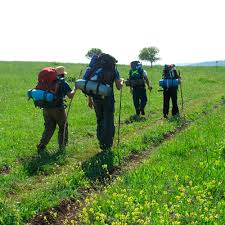
One of the interesting things about Israelis and Israel is that we love to hike. We climb mountains, descend into riverbeds. We seek water, the highs and lows of the land. We explore the caves, the hills, the valleys. Everything, everywhere...whenever we can. It's a national obsession - perhaps born out of too many years in which we could not freely hike our land.

On extended days off from the army, rather than avoid his army friends, Elie will arrange to get together and hike with them. Our family has gone on many hikes - few really challenging ones, as I am a bit nervous having children walk near the edges of cliffs and things. It is probably another one of the seldom recognized miracles that happen daily here that so few people actually get injured.

Some of Israel's recognized tourist sites are carefully marked. Follow the green or blue arrows. Stick on the path and climb and descend...that's what I do. I am a path-follower. Boring it is, but what can you do. As soon as I leave the path, I am sure scorpions and snakes and lions and tigers will attack. No, it's the path for me (at least as far as my kids know, so let's leave it at that. Kids, stay ON the path).

What do most Israelis do...especially the young ones? (Read here my three sons and most army-age people.) Well, if there are arrows, it is too much evidence that man has been here before. Why walk the path, my sons often feel, if they can scale the sides. Elie is often the first to break off to the side...his brothers follow as I slowly wind my way safely and slowly along the path. They sprawl on the ground, relaxed and amused, as I catch up to them.

As I said, it is a national obsession that we can't do often enough because despite living in this beautiful country, we live in the real world. We work...hard...and if you keep the Sabbath, you really have no day in which you can simply escape to the far reaches of our land.

So, when can we hike? The answer is the holidays - as many of them as possible. We go in the summer, on Passover, on Sukkot...and on Hanukah, which starts at the end of this week.

(Read full article)

Love of the Land: When The People Will Hike

Friday, 11 December 2009

Love of the Land: Chanukah 5770

Chanukah 5770


Hannuka, Chanukah, Chanukkah . . . however you spell it, it stands for our eight-day "Festival of Lights".

And it begins tonight!

Have a Happy!!

.


Love of the Land: Chanukah 5770

Love of the Land: Occupation & Expansion - And Historical Truth

Occupation & Expansion - And Historical Truth

Yisrael Medad
My Right Word
10 December 09


Dr. Tali Erickson-Gini of the Israel Antiquities Authority just informed us that:

An Analysis of an Archaeological Excavation has Proven for the First Time: Hasmonean Rule Extended South into the Negev Highlands

“The Hasmonean king Alexander Jannaeus, great-grandson of Matityahu, conquered Gaza and the Negev and for decades prevented the Nabataeans from using the Incense Road”

...One of the sites that were excavated was Horvat Ma'agurah, which is located on a ridge, c. 3.4 kilometers west of the Sede Boqer region...It was along this road that the Nabataeans transported precious goods such as myrrh and frankincense to the Mediterranean Sea and Egypt.


(Continue article)

Love of the Land: Occupation & Expansion - And Historical Truth

Love of the Land: Inspiration from Chanukah

Inspiration from Chanukah


'Sing and rejoice, O daughter of Zion; for, lo, I come, and I will dwell in your midst, says G-d. And many nations shall join themselves to G-d in that day, and shall be My people, and I will dwell in your midst; and you will know that the G-d of hosts has sent me to you. And G-d willl inherit Judah as His portion in the holy land, and shall choose Jerusalem again. (From this week's haftarah, Zecharia 2:14-16)

"Things are tough in the Land of Israel," said the Jews who made aliyah after the Cyrus Declaration. "We can't make ends meet, the Samarians who were brought to the Land harm us, and the good, fat exile beckons."

And then, Zecharia the prophet makes an odd declaration. He calls upon the suffering new immigrants to build the Temple in Jerusalem as a solution to all their problems. G-d will imbue the Land with His Divine Presence, the non-Jews will admire Israel and Judah will inherit its Land. It sounds out of touch with reality.


But reality proves that when a nation has a spiritual focal point, it flourishes. When Zechariah related his prophecy, Israel still did not have political independence, but the building of the Temple restored vitality to the nation and the Land of Israel regained its status as spiritual center of the Jewish Nation. The nation that had been exiled from its Land 70 years ago and was apparently doomed to extinction triumphantly returned to the stage of history.

Two hundred years later, evil winds once again gusted through the Land. This time, the main danger was internal. The Hellenist globalization process had been at work for years and in the Land of Israel, many succumbed to assimilation and loss of their Jewish identity. The public leaders were Hellenists and used their power - even the position of High Priest - to achieve their goals. Most of the public was enchanted with Greek culture and sport and did not notice that it was losing its identity, its uniqueness and most of all - its Jewish destiny.

But the Hellenists were impatient. They wanted to finish the process quickly and what they could not achieve with the lures of their culture, they chose to achieve by coercion. "Use force against Israel," wrote Gideon Levi of the Ha'aretz newspaper to Barack Obama. The Hellenist leaders in Jerusalem used the same logic and convinced Antiochus to impose his evil decrees against the Jews.

That is the point where the tables turned. The Nation of Israel came back to its senses. When the traditional Jews felt that they had to choose between their loyalty to their nation, Land and G-d or the charms of universal culture, they quite unexpectedly chose their loyalty to their Jewish identity. Their choice had implications much more serious than a few weeks in a military prison or loss of their source of income. It was a choice between life and death. Perhaps because the choice was so fateful, the answer was so loud and clear.

The holiday of Chanukah is the holiday of the triumph of Jewish identity. "Not with military might and not with power, but with My spirit, says the G-d of hosts." (From this week's haftara, Zecharia 4:6) We will continue to struggle for Jewish leadership that will build the Holy Temple and re-fashion the State of Israel as the spiritual center that illuminates the entire world. The Jewish People always triumphs and with G-d's help, we will triumph this time, as well.

Shabbat Shalom and Happy Chanukah,

Michael Fuah


Love of the Land: Inspiration from Chanukah
Related Posts Plugin for WordPress, Blogger...