Showing posts with label Revolutionary Guard. Show all posts

Wednesday, 13 January 2010

Love of the Land: A Murderous Deception in Tehran Marks a New Escalation in the Islamic Republic’s Struggle for Survival
A Murderous Deception in Tehran Marks a New Escalation in the Islamic Republic’s Struggle for Survival


Michael Ledeen
Faster Please (PJTV)
12 January '10

(As opposed to the original news reports emanating from Iran, which hinted at Israeli or U.S involvement, now a different picture is emerging. Michael Ledeen is not alone in this opinion.)

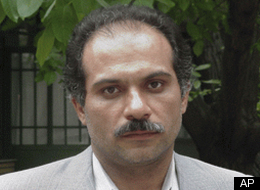
Early Tuesday morning — sometime between 7:30 and 8 o’clock — physics professor Massoud Ali-Mohammadi was killed in an explosion while in his automobile leaving for Tehran University. The explosion came from a motorcycle rigged with explosives that had been parked in front of his house for three days. It was detonated by remote control.

Despite a torrent of disinformation from the regime, Ali-Mohammadi was not involved in the secret nuclear weapons project, and — again contrary to the regime’s lies — he was certainly not a regime loyalist. Indeed, he was among many university professors who supported Green leader Mir Hossein Mousavi during last spring’s heated electoral campaign (see the entry at 1259 GMT on Enduring America). Why was he killed now? Because he was planning to leave the country for Stockholm, where he’d been offered a one-year fellowship in his chosen specialty, particle physics.

So unless the killers were totally confused, this was not a blow at the regime by its enemies, whether domestic or foreign (as you can imagine, there were all sorts of wild accusations from official media, blaming the murder on America, Israel, the MEK, which plays the crocodile to Supreme Leader Ali Khamenei’s Captain Hook and obscure “royalist” organizations abroad), but rather the opposite: it was a vicious assault by the regime against one of its critics.

The use of the motorcycle is suggestive, for such devices were used by Iranian proxies in Iraq. I am told that the assassination is the first such act on Iranian soil by the Revolutionary Guard’s “foreign legion;” highly trained killers from Lebanese Hezbollah. Members of the legion had participated in street fighting in Tehran during recent demonstrations and were identified at the assassination site. Their bloody act Tuesday morning suggests that Khamenei has decided to go all out to crush his enemies. If further confirmation is required, it has come from Khamenei’s personal spokesman and representative to the Guards, Ali Saeedi, who, we hear from Scott Lucas at Enduring America, has reportedly declared that the the deaths of 75,000 people will be worthwhile if the Islamic Republic is thereby preserved.

As if the carnage unleashed against the Iranian people were not bloody enough! So we can expect to see further escalation in the near future. The regime can be expected to use the disinformation about Ali-Mohammadi’s assassination to justify mayhem on a greater scale.

(Continue page 2)


Love of the Land: A Murderous Deception in Tehran Marks a New Escalation in the Islamic Republic’s Struggle for Survival

Tuesday, 15 December 2009

Love of the Land: Military Mutiny in Iran?

Military Mutiny in Iran?


Afshin Ellian
pajamasmedia.com
12 December 09


Leading commentators and diplomats have been pondering for quite some time why the Iranian leader is not prepared to act against the revolution in a major way. The “China model” could be applied, a brutal, fast, and extremely violent strike against the opposition. According to conventional wisdom, tyrants will use all means to eliminate their opponents. So why haven’t the mullahs adopted Chinese methods?

Tanks and soldiers

Applied to the Islamic Republic of Iran, it means the following:

  • At a given time (e.g., around three o’clock in the morning) soldiers would raid the cities and arrest everybody suspected of even the slightest “green” revolutionary inclination.
  • All communications with the outside world would be temporarily shut down.
  • People would wake up with a statement by the leader proclaiming the definitive end of all demonstrations. Then thousands would be executed.

Speed and brutality are the key aspects of the China model. Why does Khamenei not activate this model?

This summer he did consider this, before he became ill. He even gave carte blanche for the arrest of opposition leader Mousavi. But Khamenei has subsequently stopped its implementation. Why? Because he had been told that this would provoke an explosion that would likely engulf him and his regime.

Revolutionary Guards

At the time, I also heard another reason, which, if true, would be the main reason. There are serious doubts about the military itself. The army and parts of the Revolutionary Guards (abbreviated as RG) would, under those circumstances, choose the side of the opposition and the people. The military power of Khamenei would be broken. This, however, was speculation without proof.

Now there is evidence to support it. On December 10, a statement signed by a number of officers and commanders of the Iranian army was released. The regular army of Iran had not been involved in the suppression of the population. The statement was signed by:

  • Pilots and personnel of the aviation division of the regular army (Havanirooz)
  • Commanders and personnel of the 31th artillery division of Isfahan of the regular army
  • Pilots and airmen of the regular army
  • Teachers of the Shaid Satari University of the regular air force
  • Officers and staff of the logistics training unit the regular army
  • Professors and lecturers of the Imam Ali University for officers of the regular army
  • Officers, staff, and commanders of the chief of staff of the regular army

What did these soldiers write?

Page 1 of 2 Next ->

Afshin Ellian is a professor of law at Leiden University.


Love of the Land: Military Mutiny in Iran?

Wednesday, 28 October 2009

Love of the Land: Regional Outreach

Regional Outreach


J.E. Dyer
Contentions/Commentary
27 October 09

Iranian ships loaded with weapons keep turning up in the darnedest places. The latest report is that Yemeni authorities on Monday seized an Iranian ship in their waters trying to deliver anti-armor rounds to Yemen’s Shia Zaidi rebels. Especially noteworthy is that the ship was seized on Yemen’s Red Sea coast. Yemenis say the ship is not the first to pull into the Eritrean port of Asmara and then cross the Red Sea to deliver weapons to the Zaidi insurgents. The Yemeni press, in fact, reports that Iran is training Zaidi rebels in Eritrea. Yemen’s President Ali Abdullah Saleh insisted earlier this year that the Zaidi (or al-Houthi) rebels are being trained by Hezbollah.

Iran’s 2008 basing agreement with Eritrea has received minimal attention in the West, in part because there is little new information on any developments related to it. Radio France International reported in May that Iranian warships and a submarine had been observed in Asmara along with a unit of Iran’s Pasdaran, the Revolutionary Guard’s paramilitary force. If a submarine were actually present, it would have been one of Iran’s mini-submarines, small one- or two-man submersibles with a very restricted range of operations. Iran has long cultivated a mini-submarine threat to shipping in restricted waters. As for the warships, Iran is using Asmara for the replenishment of its antipiracy patrol ships.

Israel, of course, has expressed concern over this Iranian Red Sea presence, and analysts have connected it with the overland arms route for Hamas, interdicted in a dramatic air raid over Sudan in February. Somalia watchers continue to warn that Iranian arms are flowing to al-Shabaab, the al-Qaeda-affiliated insurgency in southern Somalia, through Eritrea. Riyadh is now increasingly concerned about Iran’s support to the Yemeni rebels, whose stronghold in western Yemen is on the poorly guarded border with Saudi Arabia. The rebels claimed last week that they came under attack from Saudi forces when operating near the border, a credible claim given the level of Saudi disquiet.

The evidence is relentless: arming regional insurgents and terrorists is what Iran commits its limited resources to. Arranging forward logistics for the effort in a strategically positioned port is a measure of that commitment. The same commitment is to be expected to threats like holding global shipping at risk and deploying ballistic missiles to the Red Sea coast. We are already seeing the regional initiatives Iran will feel even freerto mount once it has nuclear weapons. It is a fatal error to suppose that we will feel just as free, under those conditions, to oppose them.


Love of the Land: Regional Outreach
Related Posts Plugin for WordPress, Blogger...