Showing posts with label Khameni. Show all posts

Wednesday, 13 January 2010

Love of the Land: A Murderous Deception in Tehran Marks a New Escalation in the Islamic Republic’s Struggle for Survival
A Murderous Deception in Tehran Marks a New Escalation in the Islamic Republic’s Struggle for Survival


Michael Ledeen
Faster Please (PJTV)
12 January '10

(As opposed to the original news reports emanating from Iran, which hinted at Israeli or U.S involvement, now a different picture is emerging. Michael Ledeen is not alone in this opinion.)

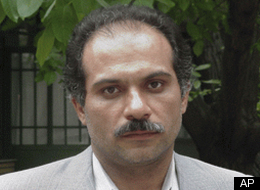
Early Tuesday morning — sometime between 7:30 and 8 o’clock — physics professor Massoud Ali-Mohammadi was killed in an explosion while in his automobile leaving for Tehran University. The explosion came from a motorcycle rigged with explosives that had been parked in front of his house for three days. It was detonated by remote control.

Despite a torrent of disinformation from the regime, Ali-Mohammadi was not involved in the secret nuclear weapons project, and — again contrary to the regime’s lies — he was certainly not a regime loyalist. Indeed, he was among many university professors who supported Green leader Mir Hossein Mousavi during last spring’s heated electoral campaign (see the entry at 1259 GMT on Enduring America). Why was he killed now? Because he was planning to leave the country for Stockholm, where he’d been offered a one-year fellowship in his chosen specialty, particle physics.

So unless the killers were totally confused, this was not a blow at the regime by its enemies, whether domestic or foreign (as you can imagine, there were all sorts of wild accusations from official media, blaming the murder on America, Israel, the MEK, which plays the crocodile to Supreme Leader Ali Khamenei’s Captain Hook and obscure “royalist” organizations abroad), but rather the opposite: it was a vicious assault by the regime against one of its critics.

The use of the motorcycle is suggestive, for such devices were used by Iranian proxies in Iraq. I am told that the assassination is the first such act on Iranian soil by the Revolutionary Guard’s “foreign legion;” highly trained killers from Lebanese Hezbollah. Members of the legion had participated in street fighting in Tehran during recent demonstrations and were identified at the assassination site. Their bloody act Tuesday morning suggests that Khamenei has decided to go all out to crush his enemies. If further confirmation is required, it has come from Khamenei’s personal spokesman and representative to the Guards, Ali Saeedi, who, we hear from Scott Lucas at Enduring America, has reportedly declared that the the deaths of 75,000 people will be worthwhile if the Islamic Republic is thereby preserved.

As if the carnage unleashed against the Iranian people were not bloody enough! So we can expect to see further escalation in the near future. The regime can be expected to use the disinformation about Ali-Mohammadi’s assassination to justify mayhem on a greater scale.

(Continue page 2)


Love of the Land: A Murderous Deception in Tehran Marks a New Escalation in the Islamic Republic’s Struggle for Survival
Saturday, 19 December 2009

Love of the Land: The Eclipsing of the Arab-Israeli Conflict

The Eclipsing of the Arab-Israeli Conflict


Michael J. Totten
Contentions/Commentary
18 December 09

According to a new study of public opinion by the folks who host the Doha Debates in Qatar, a clear majority in 18 Arab countries now thinks Iran poses a greater threat to security in the Middle East than Israel. The leadership in most of these countries has thought so for years. That average citizens now do so should be encouraging news for everyone in the region — aside from the Iranian government, Hamas, and Hezbollah.

Some may find it hard to believe that so many Arabs think Iran is more threatening than Israel, but I don’t. Leave aside the fact that Iran really is more threatening. Arabs and Persians have detested each other for more than a thousand years, ever since Arabs conquered premodern Iran and converted its people to Islam. The lasting ethnic enmity between the two is compounded by religious sectarianism. Most Arabs are Sunnis, most Persians are Shias, and Sunnis and Shias have been slugging it out with each other since the 8th century.

After the Iranian revolution against the Shah Reza Pahlavi in 1979, Ayatollah Ruhollah Khomeini’s Islamic Republic exploded into the Arab Middle East with a campaign of imperialism and terrorism. Khomeini never concealed his ambition to lead the whole Muslim world, and the government he founded has been hammering the established Sunni Arab order with a battering ram ever since.

Iran had excellent relations with Israel before Khomeini scrapped the alliance and switched to the Arab side. Like his successor Ali Khamenei, he used violent anti-Zionism to win the hearts and minds of the Arabs. It worked to an extent for a while. Most Arab governments didn’t buy it, but the people often did.

As recently as 2006, Iran, despite the fact that it has a Persian and Shia majority, picked up considerable cache among Sunni Arabs for attacking Israel from Lebanon with its Hezbollah proxy. (Lebanese Sunnis weren’t very happy about it, but Sunnis in Egypt and Syria certainly were.) The Egyptian and Saudi governments were alarmed, and they condemned Hezbollah for sparking the conflict.

This was unprecedented. While it barely registered in the West, it was huge in the Middle East, so huge that some of the more paranoid Lebanese Shias started thinking that the Sunnis and the Israelis were conspiring against them.

(Full article)


Love of the Land: The Eclipsing of the Arab-Israeli Conflict

Tuesday, 15 December 2009

Love of the Land: Military Mutiny in Iran?

Military Mutiny in Iran?


Afshin Ellian
pajamasmedia.com
12 December 09


Leading commentators and diplomats have been pondering for quite some time why the Iranian leader is not prepared to act against the revolution in a major way. The “China model” could be applied, a brutal, fast, and extremely violent strike against the opposition. According to conventional wisdom, tyrants will use all means to eliminate their opponents. So why haven’t the mullahs adopted Chinese methods?

Tanks and soldiers

Applied to the Islamic Republic of Iran, it means the following:

  • At a given time (e.g., around three o’clock in the morning) soldiers would raid the cities and arrest everybody suspected of even the slightest “green” revolutionary inclination.
  • All communications with the outside world would be temporarily shut down.
  • People would wake up with a statement by the leader proclaiming the definitive end of all demonstrations. Then thousands would be executed.

Speed and brutality are the key aspects of the China model. Why does Khamenei not activate this model?

This summer he did consider this, before he became ill. He even gave carte blanche for the arrest of opposition leader Mousavi. But Khamenei has subsequently stopped its implementation. Why? Because he had been told that this would provoke an explosion that would likely engulf him and his regime.

Revolutionary Guards

At the time, I also heard another reason, which, if true, would be the main reason. There are serious doubts about the military itself. The army and parts of the Revolutionary Guards (abbreviated as RG) would, under those circumstances, choose the side of the opposition and the people. The military power of Khamenei would be broken. This, however, was speculation without proof.

Now there is evidence to support it. On December 10, a statement signed by a number of officers and commanders of the Iranian army was released. The regular army of Iran had not been involved in the suppression of the population. The statement was signed by:

  • Pilots and personnel of the aviation division of the regular army (Havanirooz)
  • Commanders and personnel of the 31th artillery division of Isfahan of the regular army
  • Pilots and airmen of the regular army
  • Teachers of the Shaid Satari University of the regular air force
  • Officers and staff of the logistics training unit the regular army
  • Professors and lecturers of the Imam Ali University for officers of the regular army
  • Officers, staff, and commanders of the chief of staff of the regular army

What did these soldiers write?

Page 1 of 2 Next ->

Afshin Ellian is a professor of law at Leiden University.


Love of the Land: Military Mutiny in Iran?

Thursday, 29 October 2009

Love of the Land: The Vienna Nuclear Talks – and Iranian/Western Rashomon

The Vienna Nuclear Talks – and Iranian/Western Rashomon


MEMRI
Inquiry and Analysis - No. 557
25 October 09

Reports in the Iranian media on the Vienna talks differ considerably from those in the Western media. The following are the main points of difference:


1. The Purpose of the Talks


The Western version: The purpose of the talks is to discuss the future of Iran's nuclear program; it was the U.S. that forced Iran to attend the talks.


The Iranian version: The purpose of the talks is not to discuss the future of Iran's nuclear program or of its uranium enrichment activities, but to address Iran's need to purchase uranium at a level of 20% for use in its nuclear reactor in Tehran.


2. The Outcome of the Talks


The Western version: The sides have agreed on a draft deal. This has been transferred to the participating countries, all of which must respond by the evening of October 23, 2009.


The Iranian version: There is no agreed-upon draft deal. Each side has submitted its own proposal for the perusal of the other, and Iran is waiting for a reply to its proposal to purchase nuclear fuel. [1]


The October 23 deadline was presented by ElBaradei at his own initiative, and does not obligate Iran.


3. Iran's Position on the Western Proposal


The Western version: Iran is expected to give an affirmative answer shortly.


The Iranian version: An answer cannot be expected soon, in light of the gravity of the issue.


Under no circumstances will Iran allow its "strategic reserves" of enriched uranium to be removed from the country. [2]


If Iran's demand to purchase uranium at a level of 20% is not met, it will enrich uranium to this level in Iran. [3]


The deal proposed by the West is nothing but an attempt to deceive Iran, and is not anchored in international law. It is the IAEA that is obliged, according to its own regulations, to supply any NPT member with enriched uranium for research purposes. [4]


[1] A source close to the Iranian delegation in Vienna said: "The Islamic Republic of Iran has submitted a clear proposal to buy the fuel required for the Tehran nuclear reactor, and is awaiting an answer." The source said further, "Iran is a buyer of fuel for the Tehran reactor, and sellers should respond to the buyer's proposal," IRIBnews (Iran), October 23, 2009.

[2] A source close to the Iranian delegation to the Vienna talks said that "one thing is clear, namely that Iran will not lose its strategic reserves." Kayhan (Iran), October 24, 2009.

An editorial in the daily Kayhan, which is close to Iranian Supreme Leader Ali Khamenei, stated: "The West - which a week or two ago thought with enthusiasm that Iran would be willing to give up all its strategic reserves at once, [namely all] its [uranium] enriched to a low level, in return for a handful of promises - is now gradually learning that Iran has no intention whatsoever to do so. In fact, to put it as briefly as possible, Iran's strategic choice in the Vienna talks is not to hand over its nuclear material and to receive it [back in the form of] nuclear fuel, because in principle, [Iran] cannot place the least bit of trust in the Western side to remain committed to its promises on this issue... Iran will never give up its strategic reserves." Kayhan (Iran), October 24, 2009.

[3] The Kayhan editorial stated: "[Iran's] strategic options are either to purchase nuclear fuel or to enrich [uranium] to 20% inside Iran - and the West must choose between the two. Kayhan (Iran), October 24, 2009.

[4] Iranian Majlis Speaker Ali Larijani said that the West was trying to deceive Iran or impose its position upon it. He explained that a deal in which the West took Iran's nuclear fuel and promised to enrich it further had no legal or logical basis. According to the IAEA regulations, he said, the West was "obliged to provide Iran with enriched uranium for the research reactor in Tehran. Moreover, there is no guarantee that if a deal is struck, the West will [actually] provide Iran with the nuclear fuel [after it receives Iran's nuclear material]." ISNA (Iran), October 24, 2009.

In an editorial, the daily Jomhouri-ye Eslami called to object to the attempts to remove Iran's uranium reserves from the country, saying that this was an American trap personally designed by President Obama. An Iranian consent to this deal, the paper continued, would eliminate Iran's achievements in the field of nuclear enrichment, and this in return for nothing more than "false promises and illusions." Jomhouri-ye Eslami (Iran), October 25, 2009.

Iran's deputy Majlis speaker, Mohammed Reza Bahonar, said at an October 24, 2009 conference in Tehran that the IAEA's charter obliged it to supply its member states with nuclear fuel, and that failure to supply Iran with enriched uranium would therefore be a violation of this body's obligations. ILNA (Iran), October 25, 2009.


Love of the Land: The Vienna Nuclear Talks – and Iranian/Western Rashomon

Thursday, 17 September 2009

Love of the Land: What Happened to the U.S. Deadline on Iran?

What Happened to the U.S. Deadline on Iran?


Dore Gold
JCPA /Jerusalem Issue Briefs
Vol. 9, No. 9
16 September 09


  • Iran's new proposal to the West did not provide any opening for serious negotiations on the nuclear issue, but rather vague formulations for the agenda of any future talks. Back in July, when the G-8 announced that the opening of the UN General Assembly "would be an occasion for taking stock of the situation in Iran," most international observers understood that there was a hard September deadline that Iran had to meet to begin serious nuclear negotiations. Unfortunately, at this stage, there is little evidence that the Obama administration is about to adopt effective action in a timely manner in light of Iran's policy of rejectionism, setting aside diplomatic engagement and moving to a policy of severe sanctions.


  • Glyn Davies, the U.S. ambassador to the International Atomic Energy Agency (IAEA), recently acknowledged that the Iranian stockpile of low-enriched uranium has already reached a sufficient level so that it was possible to talk about Tehran having "a dangerous and destabilizing possible breakout capacity." Tehran undoubtedly observed that no serious action was taken against North Korea for its nuclear breakout, either by the Bush or Obama administrations.


  • The common assumption in Washington policy circles today is that even if Iran reaches the nuclear finish-line, the U.S. can fall back on the same Cold War deterrence that was used against the Soviet nuclear arsenal. However, Iran is a true revolutionary power whose aspirations extend into the oil-producing states. It is involved in both the Afghan and Iraqi insurgencies, while its support for terrorism reaches into Lebanon, Gaza, Egypt, Saudi Arabia, and Sudan. With Iran threatening the flow of oil tankers through the Strait of Hormuz as well, through which roughly 40 percent of the world's oil flows, the nuclearization of Iran has global - and not just Middle Eastern - implications.


  • In 2003-2005, Tehran engaged with the EU-3 for two years, exploiting the talks to race ahead with construction of key uranium enrichment facilities, while fending off punitive measures by the UN Security Council for three entire years. Iran today is far more advanced than it was then and the time for diplomatic experimentation is extremely limited.


In the first part of September 2009, it became clear that Iran was defying the U.S. and its Western allies by again refusing to open serious negotiations over its nuclear program, thereby ignoring the deadline it had been given to respond favorably to President Barack Obama's repeated overtures to engage diplomatically. After all, President Mahmoud Ahmadinejad declared on September 7 that, from his point of view, "the nuclear issue is finished." To be clear, he added: "we will never negotiate on the Iranian nation's rights." Days later, Iran's new five-page proposal to the P-5 plus 1 (the U.S., Russia, China, the UK, France and Germany) did not provide any opening for serious nuclear negotiations either, but rather vague formulations for the agenda of any future talks.

Indeed, the Iranian document began by asserting that the world was moving beyond "the difficult era characterized by domination of empires, predominance of military powers," in essence envisioning a period in which the U.S. was no longer a dominant power. It made reference to the need for "complete disarmament," but said nothing about Iran's own nuclear program. In his Friday sermon on September 11, Supreme Leader Ayatollah Ali Khamenei further backed the uncompromising Iranian nuclear stance that Ahmadinejad had voiced and which appeared in the Iranian document. It is to be remembered that Iran is presently in violation of at least five UN Security Council Resolutions that insist it suspend its continuing enrichment of uranium.

The U.S. Sets a September Deadline for Serious Nuclear Talks

Back in July, when the G-8 announced that the opening of the UN General Assembly "would be an occasion for taking stock of the situation in Iran," most international observers understood that there was a hard September deadline that Iran had to meet to begin serious nuclear negotiations. President Obama stated at a July 10 press conference after the G-8 meeting: "We've offered Iran a path towards assuming its rightful place in the world. But with that right comes responsibilities. We hope Iran will make the choice to fulfill them, and we will take stock of Iran's progress when we see each other this September at the G20 meeting."

Unfortunately, at this stage, there is little evidence that the Obama administration is about to adopt effective action in a timely manner in light of Iran's policy of rejectionism, setting aside diplomatic engagement and moving to a policy of severe sanctions. Engagement was the centerpiece of its Middle East policy and has been hard to abandon. For example, while rejecting the newest Iranian proposals on September 10, State Department Spokesman Philip J. Crowley reminded reporters that engagement was still official U.S. policy, stating: "We remain willing to engage Iran."

Moreover, within twenty-four hours he announced the Obama administration's willingness to join the P-5 plus 1 in order to meet with Iranian leaders directly and open negotiations, despite the repeated statements coming out of Tehran. The hard-line Iranian newspaper Javan noted the dramatic U.S. shift on September 14: "One day after the hasty response to Iran's updated package of proposals, America made a U-turn and announced that because these proposals could become a basis for direct talks with Iran, it accepts the talks over this package." Indicating Iranian understanding of the new U.S. policy, the article was entitled: "The Inevitable Acceptance of Nuclear Iran."

The first meeting between the two sides reportedly will take place in early October when Javier Solana, the EU foreign policy chief, meets with Saeed Jalili, the chief Iranian nuclear negotiator. They will be joined by representatives from the P-5 plus 1, but, according to Solana's office, the meeting will not yet be a "formal negotiation," which presumably will come at a later stage. The September deadline appeared to have vanished and the Iranians have gained valuable time.

(Continue)


Love of the Land: What Happened to the U.S. Deadline on Iran?
Related Posts Plugin for WordPress, Blogger...