

Obama's virtual reality

Yoram Ettinger
Israel Opinion/Ynet
21 May '11
http://www.ynetnews.com/articles/0,7340,L-4071786,00.html
Op-ed: President’s idealistic vision ignores Arab tradition of tyranny, political violence
On November 2, 2010, the US electorate decided that President Obama was detached from domestic reality, and therefore dealt the Democratic Party a devastating defeat in federal and state legislatures, as well as in gubernatorial elections. In his May 19, 2011 speech on the Middle East, the President proved himself detached from Mideast reality as well.
President Obama is determined to introduce democracy to Arab countries, in spite of their 1,400 year old systemic track record of tyranny, terror, political violence, uncertainty, volatility and treachery. He prefers the virtual reality of the "Arab Spring," rather than contending with the Middle Eastern reality of the "Stormy Arab Winter." Hence, he views the seismic events rocking the region as "a story of self-determination" and is convinced that "repression will not work anymore."
Obama's virtual reality leads him to compare the violent Arab Street to "the defiance of those patriots in Boston who refused to pay taxes to a king, or the dignity of Rosa Parks as she sat courageously in her seat." Are the two million Egyptians who assembled at Cairo's Tahrir Square, cheering Sheikh Kardawi, a top Muslim Brotherhood leader, following in the footsteps of Patrick Henry and Martin Luther King???
President Obama offers to relieve "a democratic Egypt" of up to $1billion in debt and to channel billions of dollars to Egypt and Tunisia, "the vanguard of this democratic wave…, (which) can set a strong example through free and fair elections, a vibrant civil society, accountable and effective democratic institutions and responsible regional leadership." He expects the flow of aid to generate trade, entrepreneurship and a free market economy. However, he downplays the absence of an appropriate infrastructure of values and education in the Arab Middle East, which is a prerequisite for democracy and a free market economy.
Obama has chosen to ignore in his speech clear and present threats to US economic and national security interests - such as Iran's nuclearization and Islamic terrorism - while the "Arab Roller Coaster" runs uncontrollable and Russia and China deepen their penetration of the Middle East. Furthermore, the US is about to withdraw from Iraq and Afghanistan, which could be leveraged by rogue regimes, exacerbating regional violence, instability and uncertainty.
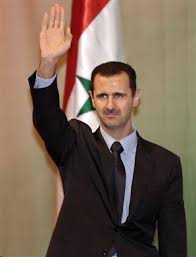
In February, 2010, President Obama appointed a new ambassador to Damascus – following four years of diplomatic absence – "because Assad could play a constructive role in the Middle East." So much for Mideast realism…
Like deer caught in headlights
Persian Gulf leaders are traumatized by the Iranian threat, by domestic upheaval and by a potential Iraqi "earthquake" in the aftermath of the US departure, irrespective of the Palestinian issue. Other Arab leaders are shaky in the face of lethal domestic turbulence, which is totally unrelated to the Palestinian issue, to the Arab-Israeli conflict or to Israel's existence. Nonetheless, Obama is convinced that "the conflict between Israelis and Arabs has cast a shadow over the region."
Like a deer caught in a headlights-look, the American president is glued to the Palestinian "screen saver." He is convinced that the Arab-Israeli conflict and the Palestinian issue are a root cause of Middle East turbulence, the crown jewel of Arab policy-making and a core cause of anti-US Islamic terrorism.
Hence, he disregards the sweeping popularity of bin Laden and Saddam Hussein on the Palestinian Street, the presence of Palestinian terrorists in Iraq and Afghanistan, Abbas’ track record in intra-Arab subversion and terrorism and the anti-Semitic, anti-Israel and anti-US hate-education and incitement in Abbas-controlled education, the media and the clergy.
Obama also disregards the unprecedented Palestinian terrorism triggered by the Oslo Accord, by the Israeli initiative to establish the Palestinian Authority and by Israel's withdrawal from the entire Gaza Strip and from 40% of Judea and Samaria.
Obama pressures the Jewish State to partition Jerusalem and to retreat to the 9-15 miles wide pre-1967 lines, in defiance of precedents which document that the Palestinian-Israeli conflict has never been over the size – but over the existence – of the Jewish State. Thus, Obama radicalizes Palestinian expectations and demands, distances them from – and replacing them at - the negotiation table, and signals to the Palestinians that terrorism is rewarded. By doing so, he forfeits the role of an honest broker.
President Obama's position is at odds with the majority of the American people and most Democrats. It is out of step with most Senators and Representatives, who are empowered to initiate, bloc, suspend, amend and turn around policy. Therefore, Obama's plan will not be implemented unless the Jewish State wastes its substantial base of American support, submitting itself to the pressure of a relatively-weak president, who is rapidly losing the "Bin Laden bonus," and increasingly requires congressional cooperation in order to be reelected.
In fact, it was the pressure by congressional Democrats that forced Obama – against his worldview – to declare in his speech that "symbolic actions to isolate Israel at the UN in September won't create an independent state." In other words, the US will not tolerate a Palestinian Tsunami in the UN in September.
If you enjoy "Love of the Land", please be a subscriber. Just put your email address in the "Subscribe" box on the upper right-hand corner of the page.
Israel Opinion/Ynet
21 May '11
http://www.ynetnews.com/articles/0,7340,L-4071786,00.html
Op-ed: President’s idealistic vision ignores Arab tradition of tyranny, political violence
On November 2, 2010, the US electorate decided that President Obama was detached from domestic reality, and therefore dealt the Democratic Party a devastating defeat in federal and state legislatures, as well as in gubernatorial elections. In his May 19, 2011 speech on the Middle East, the President proved himself detached from Mideast reality as well.
President Obama is determined to introduce democracy to Arab countries, in spite of their 1,400 year old systemic track record of tyranny, terror, political violence, uncertainty, volatility and treachery. He prefers the virtual reality of the "Arab Spring," rather than contending with the Middle Eastern reality of the "Stormy Arab Winter." Hence, he views the seismic events rocking the region as "a story of self-determination" and is convinced that "repression will not work anymore."
Obama's virtual reality leads him to compare the violent Arab Street to "the defiance of those patriots in Boston who refused to pay taxes to a king, or the dignity of Rosa Parks as she sat courageously in her seat." Are the two million Egyptians who assembled at Cairo's Tahrir Square, cheering Sheikh Kardawi, a top Muslim Brotherhood leader, following in the footsteps of Patrick Henry and Martin Luther King???
President Obama offers to relieve "a democratic Egypt" of up to $1billion in debt and to channel billions of dollars to Egypt and Tunisia, "the vanguard of this democratic wave…, (which) can set a strong example through free and fair elections, a vibrant civil society, accountable and effective democratic institutions and responsible regional leadership." He expects the flow of aid to generate trade, entrepreneurship and a free market economy. However, he downplays the absence of an appropriate infrastructure of values and education in the Arab Middle East, which is a prerequisite for democracy and a free market economy.
Obama has chosen to ignore in his speech clear and present threats to US economic and national security interests - such as Iran's nuclearization and Islamic terrorism - while the "Arab Roller Coaster" runs uncontrollable and Russia and China deepen their penetration of the Middle East. Furthermore, the US is about to withdraw from Iraq and Afghanistan, which could be leveraged by rogue regimes, exacerbating regional violence, instability and uncertainty.
In February, 2010, President Obama appointed a new ambassador to Damascus – following four years of diplomatic absence – "because Assad could play a constructive role in the Middle East." So much for Mideast realism…
Like deer caught in headlights
Persian Gulf leaders are traumatized by the Iranian threat, by domestic upheaval and by a potential Iraqi "earthquake" in the aftermath of the US departure, irrespective of the Palestinian issue. Other Arab leaders are shaky in the face of lethal domestic turbulence, which is totally unrelated to the Palestinian issue, to the Arab-Israeli conflict or to Israel's existence. Nonetheless, Obama is convinced that "the conflict between Israelis and Arabs has cast a shadow over the region."
Like a deer caught in a headlights-look, the American president is glued to the Palestinian "screen saver." He is convinced that the Arab-Israeli conflict and the Palestinian issue are a root cause of Middle East turbulence, the crown jewel of Arab policy-making and a core cause of anti-US Islamic terrorism.
Hence, he disregards the sweeping popularity of bin Laden and Saddam Hussein on the Palestinian Street, the presence of Palestinian terrorists in Iraq and Afghanistan, Abbas’ track record in intra-Arab subversion and terrorism and the anti-Semitic, anti-Israel and anti-US hate-education and incitement in Abbas-controlled education, the media and the clergy.
Obama also disregards the unprecedented Palestinian terrorism triggered by the Oslo Accord, by the Israeli initiative to establish the Palestinian Authority and by Israel's withdrawal from the entire Gaza Strip and from 40% of Judea and Samaria.
Obama pressures the Jewish State to partition Jerusalem and to retreat to the 9-15 miles wide pre-1967 lines, in defiance of precedents which document that the Palestinian-Israeli conflict has never been over the size – but over the existence – of the Jewish State. Thus, Obama radicalizes Palestinian expectations and demands, distances them from – and replacing them at - the negotiation table, and signals to the Palestinians that terrorism is rewarded. By doing so, he forfeits the role of an honest broker.
President Obama's position is at odds with the majority of the American people and most Democrats. It is out of step with most Senators and Representatives, who are empowered to initiate, bloc, suspend, amend and turn around policy. Therefore, Obama's plan will not be implemented unless the Jewish State wastes its substantial base of American support, submitting itself to the pressure of a relatively-weak president, who is rapidly losing the "Bin Laden bonus," and increasingly requires congressional cooperation in order to be reelected.
In fact, it was the pressure by congressional Democrats that forced Obama – against his worldview – to declare in his speech that "symbolic actions to isolate Israel at the UN in September won't create an independent state." In other words, the US will not tolerate a Palestinian Tsunami in the UN in September.
If you enjoy "Love of the Land", please be a subscriber. Just put your email address in the "Subscribe" box on the upper right-hand corner of the page.
Love of the Land: Obama's virtual reality




 Posts
Posts


