Showing posts with label Arab. Show all posts

Tuesday, 8 September 2009

Love of the Land: Egyptian (and Arab) Hypocrisy

Egyptian (and Arab) Hypocrisy

Khaled Abu Toameh
Hudson Institute
08 September 09

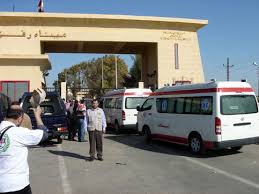
The Egyptian media in particular and the Arab media in general are full of stories about the “siege” that Israel has been imposing on the Gaza Strip since Hamas came to power. Hardly a day passes without an Egyptian or Arab government official condemning Israel for turning the Gaza Strip into a “big prison.” However, none of these officials or media representatives point out the fact that the Gaza Strip, home to some 1.3 million Palestinians, also has a joint border crossing with Egypt. This border crossing, known as the Rafah terminal, has been closed by the Egyptians for most of the time during the past two years. The closure denies Palestinians access not only to Egypt, but to the rest of the world. One can understand why Israel does not want Palestinians from the Gaza Strip to enter its territories. But it is hard to understand why the Egyptians are keeping the border crossing closed, thus sending Palestinians to knock on Israel’s door for help. If the Egyptians do not want Palestinians to enter their country, that is fine. But why not open the terminal so that Palestinians could at least travel to other countries? Why, for instance, are the Egyptians banning many patients from the Gaza Strip from crossing the border to seek medical treatment in Arab and Western hospitals? And why are the Egyptians banning students from ...

Love of the Land: Egyptian (and Arab) Hypocrisy

Wednesday, 2 September 2009

Love of the Land: A Day in the Life of the Middle East

A Day in the Life of the Middle East


Barry Rubin
The Rubin Report
1 September 09

I’ve never been so discouraged, a courageous Arab intellectual writes to me. Understandably so. There are three fronts really in the battle of the Middle East, and none of them are going so well.

What are these three fronts? First and most important are the actions of the countries, leaders, and forces in the region themselves.

Second, is the understanding of these actions and developments as conveyed to the minds of participants and observers both in the region and internationally. Here, the role of the media, academia, and other conveyer belts of information are critical in shaping policymaker and public opinion.

Third, there is the response of governments outside the region, which means primarily in the West.

If we take one day in the region, we can see the interaction of these factors. Briefly, dangerous and outrageous developments happen in the region; they are misinterpreted—important things ignored, marginal ones obsessed about; enemies made to seem moderate and threats defused only in theory. Western responses are also misconceived and inadequate.

Eventually the pressure builds up to the point of crises. But what’s worse, an outbreak of crisis or a slow erosion of interests and a deepening of tyranny? Clearly, from the Western government standpoint, the latter is preferable. With no violent major crisis in play it is easy to do little or nothing, to avoid risks, to portray policies as successful.

In this framework, the region’s countries and societies have three main states of existence when it comes to degree of freedom and quality of life for the people: to advance (which only happens in rare places), to stand still (which is a prevalent condition), or actually to move backward.

I will leave it to you to categorize different places in this regard. Right now, I think Iran, Lebanon, the Gaza Strip, and Turkey are moving backward. Generally, I’ll leave the categorization to you.

Ironically, the one country that is clearly moving forward is Israel. It is stable within and relatively secure (whatever prospects for the future may seem worrisome). The economy is doing well despite the international slump, and feelings of well-being are remarkably high. This is a point that should always be kept in mind. And yes this does relate to having a democratic system and a largely free enterprise but regulated economy.

But enough background, let’s go to the headlines:
Read All at :

Love of the Land: A Day in the Life of the Middle East

Originally posted by The Rubin Report (http://rubinreports.blogspot.com)
Related Posts Plugin for WordPress, Blogger...