Saturday, 17 October 2009

Love of the Land: Amnesty International UK branch signals support for anti-Zionist extremism with endorsement of Israel apartheid analogy

Amnesty International UK branch signals support for anti-Zionist extremism with endorsement of Israel apartheid analogy


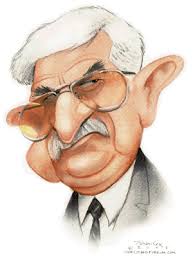
Robin Shepherd
Think Tank Blog
16 October 09

In a deeply disturbing move that marks the end of any pretence at impartiality as well as another new low in British attitudes to Israel, Amnesty International’s UK branch has now indicated that it endorses the notion that Israel is an apartheid state.

For an event scheduled for October 28 entitled “Discriminatory and unsustainable: Water and politics in Israel & the Occupied Palestinian Territories” Amnesty has revealed that its keynote speaker will be Ben White, author of “Israeli Apartheid: A Beginner’s Guide” which was published in June by Pluto Press.

On its website, Amnesty is promoting White’s book and describes him as “a writer and freelance journalist specialising in Palestine/Israel.”

In fact, White is an anti-Israeli ideologue whose book is riddled with distortions aimed at smearing the Jewish state by association with apartheid South Africa. In promoting his book and honouring him as keynote speaker, Amnesty has endorsed the legitimacy of the apartheid analogy in relation to Israel and thus placed itself inside the extremist wing of the anti-Israel camp.

Amnesty has simultaneously put itself in the company of far-Left and militantly anti-Zionist groups such as the charity War on Want which has been the subject of investigations by the UK’s main charity watchdog, the Charity Commission, after it too promoted White’s book at an event over the summer.

Until recently, the use of the apartheid analogy to demonise and deligitimise Israel was the preserve of mavericks on the fringes whom mainstream organisations would have shunned as untouchable.

But in the last few months and years it has gradually gained currency in the mainstream through the efforts of NGOs, Muslim groups, the Guardian newspaper and high profile international figures such as former U.S. president Jimmy Carter.

The Nazi analogy has also begun to move from the fringes towards the centreground and was widely used to attack Israel during Operation Cast Lead in Gaza in December 2008 and January 2009.

A once respected human rights organisation (of which I was once a member), Amnesty International’s credibility has been severely damaged by its anti-Israel stance as many observers, including Harvard Law Professor Alan Dershowitz, have remarked.

However, the latest move marks a point of departure since it takes Amnesty out of the ranks of NGOs which are merely characterised by anti-Israeli leanings and places it inside the realm of anti-Israel activism.

Human Rights Watch has moved in a similar direction. It admitted earlier this year that it had used its disputes with pro-Israel groups as a marketing tool for its fund raising efforts in Saudi Arabia.

As I have remarked before, the anti-Israeli agenda is not simply a problem for Israel. Its adoption also has the effect of corrupting those who participate in it. Few examples are more illustrative of such dangers than the corruption of the global human rights agenda by Human Rights Watch, the UN Human Rights Commission and Amnesty International.

It is a depressing and shameful state of affairs. But since so few people (in Britain and Europe at least) seem motivated to do anything substantial to address it, it is likely to get worse rather than better as time goes by. I really wonder where this is all going.

Anyone who wants a fuller discussion of such matters should get a copy of my new book, A State Beyond the Pale: Europe’s Problem with Israel. Click here to read about it and purchase it:

http://www.amazon.co.uk/State-Beyond-Pale-Europes-Problem/dp/0297856642/ref=pd_sim_b_1


Love of the Land: Amnesty International UK branch signals support for anti-Zionist extremism with endorsement of Israel apartheid analogy
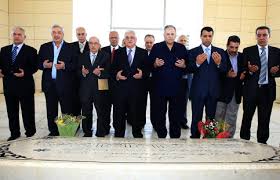
Love of the Land: Civil Fights: Mahmoud Abbas's new rules of diplomacy

Civil Fights: Mahmoud Abbas's new rules of diplomacy


Evelyn Gordon
JPost Column
14 October 09

With so much attention understandably focused on the Palestinian Authority's efforts to get Israel prosecuted for so-called "war crimes" in Gaza, the other obstacle to renewed peace talks is receiving less scrutiny than it deserves.

The PA's demand that talks with Binyamin Netanyahu resume from where they broke off under his predecessor, Ehud Olmert, is nothing less than a demand to completely rewrite the principles of diplomacy. Were it accepted, countries would no longer be bound only by signed agreements. Instead, they would be bound by any offer ever made during negotiations, even if the offer were rejected by the other party.

A brief recap: In September 2008, when he had already resigned as prime minister but not yet left office, Olmert made PA chairman Mahmoud Abbasa far-reaching offer. The offer, which Olmert and his advisors later detailed to various media outlets, and which Abbas confirmed to The Washington Post, gave the Palestinians even more than the 1996 Clinton plan, long considered the blueprint for any agreement. It included an Israeli withdrawal from 94 percent of the West Bank, with territorial swaps to compensate for the remainder; international control over Jerusalem's holy sites, with Muslim countries holding three of the governing body's five seats; and a symbolic absorption by Israel of some 5,000 Palestinian refugees. It was backed by a detailed map of the proposed border.

According to Israeli reports, Abbas wanted a copy of the map, and Olmert replied, "if you sign it, you can have it." Abbas requested a day to think it over and promised to return for another meeting the next day.

But Abbas never returned; he never even called. Olmert remained in office for another six months, but throughout that time he heard nothing from Abbas. In February, he made one final effort, using US Secretary of State Hillary Clinton as an intermediary, but to no avail.

Only in May 2009 did he finally learn - via Abbas's Washington Post interview - what the PA chairman thought of his offer: He rejected it, Abbas told the paper, because "the gaps were wide."

Now, Abbas is demanding that the offer he rejected become the starting point for future negotiations. "There were maps prepared by both sides and proposals for territorial swaps, so we can't go back to square one," he told the pan-Arab daily Al-Hayat last month. He has reiterated this position in discussions with American officials, vowing not to resume the talks unless it is accepted. In short, he is demanding that Israel be bound not by signed agreements, but by an offer to which he never even deigned to respond.

Nor is he alone in this demand. Just last week, Egyptian President Hosni Mubarak told his country's Armed Forces paper that it would be "unreasonable and unacceptable" for talks not to begin where they left off, while Jordan's King Abdullah II made similar comments to Haaretz.

WERE THIS position actually accepted, the consequences for all diplomacy, worldwide, would be devastating.

First, if negotiators fear that offered concessions will bind their governments even if no agreement is reached, they will be loath to offer such concessions, making it impossible ever to conclude any agreement. After all, no country wants to forfeit negotiating assets without receiving anything in exchange. Yet that is the meaning of Abbas's demand: Once a concession is offered, it remains on the table even if the other side offers nothing in exchange, and can thus no longer be traded for reciprocal concessions.

Second, this eliminates a crucial tool that all negotiators and mediators use in trying to close deals: the threat that an offered concession will no longer be available tomorrow, so it is in the other party's interest to say yes today. Under the Abbas principle, any concession, once offered, would always be available, so saying yes is contrary to the other party's interest: It is better off waiting to see what additional concessions might be forthcoming.

But beyond its consequences for diplomacy, this principle would also destroy a fundamental democratic right: the public's right to replace a government whose policies it opposes. A decisive majority of Israelis voted for parties opposed to Olmert's concessions precisely because they deemed his offer reckless. But should Abbas's demand be accepted, the policy Israel's majority rejected would nevertheless remain in force. In other words, voters would no longer have the right to change their country's foreign policy; they would be limited to replacing the personnel administering this policy.

Granted, all democracies accept such limits in one particular case: Signed, ratified agreements - which require parliamentary or popular approval and apply to both sides - obligate subsequent governments regardless of those governments' views. But under the Abbas principle, any lone negotiator - even one who, like Olmert, had already been so repudiated that his own government compelled him to resign - would have the power to bind his country's future governments while imposing no reciprocal obligations on his interlocutors, merely by offering a concession that the other side rejected.

Acceding to Abbas's demand would obviously sound the death knell for the peace process. Not only can Netanyahu's government not accept some of Olmert's concessions, but it would be deterred from offering any concessions of its own by the knowledge that these would be deemed binding even were no agreement reached. And Abbas would have no incentive to sign anything if he could instead keep pocketing concessions without offering anything in exchange.

For this reason alone, one would have expected the West to unceremoniously reject this condition. Astoundingly, however, neither the US nor the European Union has yet done so publicly, nor is there any indication that they have even done so privately.

Their silence becomes even more incomprehensible when one considers the destructive implications of this principle for both democracy and diplomacy in general. It would be a pity if brand-new Nobel Peace Prize laureate Barack Obama, who won precisely for striving "to strengthen international diplomacy" by preferring "dialogue and negotiations" as the means of resolving international conflicts should be the very person to render those tools utterly ineffective.

Love of the Land: Civil Fights: Mahmoud Abbas's new rules of diplomacy

Love of the Land: How the Palestinian Authority is Killing Even the Charade of a Peace Process

How the Palestinian Authority is Killing Even the Charade of a Peace Process


Barry Rubin
The Rubin Report
15 October 09

Let’s take a careful look at this AP dispatch on an October 12 Fatah internal memorandum. The official Fatah document charges the Obama Administration with disappointing the Palestinians and being mainly responsive—like presumably all previous presidents—to the pro-Israel lobby.

It states:

"All hopes placed in the new U.S. administration and President Obama have evaporated. Obama couldn't withstand the pressure of the Zionist lobby, which led to a retreat from his previous positions on halting settlement construction and defining an agenda for the negotiations and peace."

Now if the Palestinian Authority and Fatah aren’t happy with Obama they are going to have a very difficult time ever finding a U.S. government they like.

And even given this attitude, their “job” is to court the U.S. government, give it incentives to help them, show they are compromising in order to win its favor, and prove they can deliver benefits for American interest. But they have no concept of such a strategy.

Instead, they basically demand what they want and view anyone who doesn’t give it to them—without their doing anything to earn it—as an enemy.

Note carefully this passage in the AP dispatch about the memorandum:

“Obama raised Palestinian hopes further with his repeated calls for Israel to halt all construction in settlements in the West Bank and east Jerusalem--areas the Palestinians claim for a future state.”

What the mass media won’t tell you is that Obama himself introduced this divisive idea of a freeze—which the Palestinians had never made a precondition for talks—thus leading the Palestinians to raise their demands and, consequently, wrecking even talks being held, much less them achieving any progress.

And here, indirectly, is the proof:

“The last round of Israel-Palestinian negotiations broke down late last year with no apparent breakthroughs on the main issues dividing the two sides: final borders, the status of Jerusalem and a solution for Palestinians who lost homes and other property in Israel after it achieved statehood in 1948.”

No mention of construction freeze here, right? Just borders, Jerusalem, and the Palestinian demand (a rather strange one for real nationalists but not for those who put the priority on destroying Israel) that Palestinians go to live in Israel rather than Palestine.

Two other points are worth noting. First, the Western media virtually never mention Israeli demands when discussing the peace process. Nothing about security guarantees, that any peace agreement ends the conflict forever (which is a rather normal thing to request), plus demilitarization and the barring of any foreign forces from entering the state. Only Palestinian demands are ever brought up.

(To be fair, one could imply that Israel wants border modifications, east Jerusalem, and Palestinians going to live in Palestine, but in other articles these are mentioned far less than Palestinian demands.)

Second, the AP articles states:

“The Palestinians want talks to resume from the point they broke down last year under Prime Minister Benjamin Netanyahu's predecessor, Ehud Olmert. Netanyahu says he is not bound by any concessions Olmert may have made.”

This is a common misstatement, rationalizing a ridiculously sleazy bargaining technique. Imagine you are in negotiation with someone over the sale of a house. You offer him a higher price if he makes certain concessions like helping on financing, including the furnishings, etc. He says: “No, I won’t give you any of those things. Now remember where we left off? You offered me a higher price in exchange for nothing.”

If the Palestinians had accepted Olmert’s offer and made their own concessions to get more, Netanyahu would view himself as bound by any concessions Olmert made. But since the Palestinians rejected Olmert’s proposal and refused to give the concessions he asked of them, no Israeli government is bound. As Prime Minister Yitzhak Rabin once said in an identical situation: Nothing is decided until everything is decided.

And finally here’s my favorite line about the memorandum:

“The document, dated October 12, was issued by Fatah's Office of Mobilization and Organization. The office is headed by the party's No. 2, Mohammed Ghneim.”

Do an Internet search—allowing for variations for the transliteration of this name, example, Muhammad Ghaneim—and you will find that
I’m just about the only one who has written about this gentleman and his role as the number-two man in Fatah, the Palestinian Authority, and the PLO. Everyone else has ignored it.

I wrote that Ghaneim is a hardliner who rejected the 1993 Oslo agreement and would pull the Palestinian leadership in a more radical direction, making peace even more impossible and increasing the movement’s anti-Americanism.

This is precisely what’s happening.

Love of the Land: How the Palestinian Authority is Killing Even the Charade of a Peace Process

Mourning for Jerusalem

Mourning for Jerusalem

The UNHRC decision yesterday took the deeply flawed Goldstone Report, pared off the few sections that were critical of Hamas, and added condemnation to Israel for trying to keep the peace in Jerusalem, an issue which has nothing to do with anything - or perhaps, has everything to do with it.

In a few days the Daf Yomi brigade will reach this story (I'm still a few pages ahead):

After the destruction of the Second Temple many of the Pharisees decided never again to eat meat or drink wine, as a statement of their grief. Rabbi Yehoshua engaged their leaders in conversation, and asked why?
- Because with the destruction of the Temple we can no longer bring sacrifices, nor pour wine on the alter.
- Well, then why eat bread? Bread was part of the ritual, too?
- You're right. We won't eat bread, either, only fruit.
- But fruit [in the broader meaning of agricultural produce] shouldn't be consumed either. After all, we used to bring our tithes to the Temple, and we can't do that anymore?
- You're right. We'll only eat agricultural produce of the sort that wasn't brought to the Temple.
- But water? We can't drink water anymore, either, can we? Water used to be poured on the alter?

To this they had no answer, and Rabbi Yehoshua continued:
My children, come and I'll try to resolve this for you. We can't not mourn. Yet we can't mourn too much, for if we do there will be no life. So we must mourn as part of life, thus: When a man paints his home he should leave a small section unpainted. When preparing a feast, he should leave a small part unprepared. When a woman puts on her jewelry, she should put on a bit less. As it is written, "If I forget thee Jerusalem, let my right hand wither". [This was written after the destruction of the First Temple, so Rabbi Yehoshua was referring to a cultural tool which had already proved itself]. And whoever mourns Jerusalem will yet see her in her celebration.

Bava Batra, 60b

Did Rabbi Yehoshua know that he was fine-tuning the culture of mourning to a level - not too harsh, but not too easy, either - that would be sustainable for almost 2,000 years? I doubt it. Yet the impulse was clearly there. Mourning must fit into life.

The significance of the story isn't the ancient legend, but the fact that ever since it has been possible to see Jewish homes with a patch of unpainted wall, zecher lachurban, a memory of the destruction. Because the balance Rabbi Yehoshua sought was correct, we have indeed, after a very long time, seen Jerusalem rebuilt as the capital of the Jews.

In Yemin Moshe, a neighborhood across from the wall of the Old City, there is a wealthy man who recently refurbished his home. Instead of leaving an unpainted patch, he had an artisan use a new-fangled technology to etch page 60b into a block of Jerusalem limestone, and mount it in his living room wall.

Is this a sign of mourning, or of celebration?
Originally posted by Yaacov Lozowick's Ruminations

Richard Kemp on the Gaza Operation

Richard Kemp on the Gaza Operation

I'm taking the unusual step of copying an entire post from another blog. It's the transcript of Richard Kemp's testimony earlier today before the UNHRC, lifted from UN Watch:

Self-Defense is not a Crime of War

UN Watch Oral Statement

Delivered by Colonel Richard Kemp, 16 October 2009UN Human Rights Council: 12th Special Session

Thank you, Mr. President.

I am the former commander of the British forces in Afghanistan. I served with NATO and the United Nations; commanded troops in Northern Ireland, Bosnia and Macedonia; and participated in the Gulf War. I spent considerable time in Iraq since the 2003 invasion, and worked on international terrorism for the UK Government’s Joint Intelligence Committee.

Mr. President, based on my knowledge and experience, I can say this: During Operation Cast Lead, the Israeli Defence Forces did more to safeguard the rights of civilians in a combat zone than any other army in the history of warfare.

Israel did so while facing an enemy that deliberately positioned its military capability behind the human shield of the civilian population.

Hamas, like Hizballah, are expert at driving the media agenda. Both will always have people ready to give interviews condemning Israeli forces for war crimes. They are adept at staging and distorting incidents.

The IDF faces a challenge that we British do not have to face to the same extent. It is the automatic, Pavlovian presumption by many in the international media, and international human rights groups, that the IDF are in the wrong, that they are abusing human rights.

The truth is that the IDF took extraordinary measures to give Gaza civilians notice of targeted areas, dropping over 2 million leaflets, and making over 100,000 phone calls. Many missions that could have taken out Hamas military capability were aborted to prevent civilian casualties. During the conflict, the IDF allowed huge amounts of humanitarian aid into Gaza. To deliver aid virtually into your enemy's hands is, to the military tactician, normally quite unthinkable. But the IDF took on those risks.

Despite all of this, of course innocent civilians were killed. War is chaos and full of mistakes. There have been mistakes by the British, American and other forces in Afghanistan and in Iraq, many of which can be put down to human error. But mistakes are not war crimes.

More than anything, the civilian casualties were a consequence of Hamas’ way of fighting. Hamas deliberately tried to sacrifice their own civilians.

Mr. President, Israel had no choice apart from defending its people, to stop Hamas from attacking them with rockets.

And I say this again: the IDF did more to safeguard the rights of civilians in a combat zone than any other army in the history of warfare.

Thank you, Mr. President.

Originally posted by Yaacov Lozowick's Ruminations

JDL to Protest anti Jewish State resolutions at the Reform Movement's Biennial Convention in Toronto

JDL to Protest anti Jewish State resolutions at the Reform Movement's Biennial Convention in Toronto


An Open Letter to the Rabbis of Canada,

Anti-Jewish State resolutions will be introduced at the International Reform Judaism Convention, November 4 - 8, 2009

The resolutions are an attempt to introduce the concept of a Bi-National State by demanding that the Arabs of Israel have full equality in the Government of Israel.

The Arabs of Israel celebrate the 'nakba'. The Arabs of Israel do not support a Jewish State. The resolution is a negation of the realities of the Arab Middle East.

- Rabbi Eric Yoffie - is a key note speaker at the J Street Conference and will be a Key note speaker at this conference.

Delegates at this conference should be given proper information and not propaganda from the advocates of a Bi-National State

On December 15, Rabbi Eric H. Yoffie, the president of the Union of Reform Judaism (one of the largest Jewish organizations in America), gave a sermon in San Diego in front 5,000 Reform Jews in which he announced URJ's alliance with Islamic Society of North America (ISNA - one of the largest Muslim organizations in America).
On January 2, 2008, several prominent moderate Muslims published a column in the Jewish Week titled "Attention Rabbi Yoffie: Please Speak To Moderate Muslims" in which they expressed their dismay with the URJ's decision. These moderate Muslims explained why ISNA is anything, but moderate, and appealed to Rabbi Yoffie to reconsider URJ's association with ISNA.

According to the The Investigative Project's website, the world's foremost anti-terrorism NGO, The Islamic Society of North America was founded in 1981 and is the largest Muslim organization in the U.S. Incidentally, Sami al-Arian of the PIG helped established ISNA. "ISNA serves as an umbrella group for hundreds of Islamic organizations in North America, some of which promote the Islamic fundamentalist doctrines of Muslim Brotherhood, Hamas, and the Palestinian Islamic Gihad. The Muslim Brotherhood has a plan to subvert the United States using front groups. One of the identified front groups is ISNA, the same ISNA which URJ is so eager to embrace.

Reform Movement's Biennial Convention http://biennial.urj.org/ will present Anti Jewish State Resolutions

Israeli Arab Citizens Resolution (PDF 155.73 KB)

http://biennial.urj.org/_kd/Items/actions.cfm?action=Show&item_id=1184&destination=ShowItem

Q and A on Israeli Arabs Resolution (PDF 85.54 KB)

http://biennial.urj.org/_kd/Items/actions.cfm?action=Show&item_id=1187&destination=ShowItem


The Jewish Defence League of Canada will oppose the resolution that is harmful to the interest of the Jewish State of Israel. We will have a candle light vigil with banners and signs on opening night at the Toront Metro Convention Center. Our goal is not to divide Jews but to speak with delegates and convince them to vote against this harmful resolution. Please join us.

With Love of Israel,

Meir Weinstein National Director Jewish Defence League of Canada

www.jdl-canada.com

Originally posted by B'NAI ELIM (Sons of the Mighty)

RubinReports: The Window of Opportunity is Now Closed and Locked Down: Passing Goldstone Resolution Marks End of Peace Process Era

The Window of Opportunity is Now Closed and Locked Down: Passing Goldstone Resolution Marks End of Peace Process Era

By Barry Rubin

The UN Human Rights Council has now endorsed the Goldstone Report. There are important implications to this decision that make it a turning point.

It means the first make or break test for Obama's foreign policy. There is no easy way out. The president must either block a disastrous UN resolution through effective diplomacy in the UN corridors, accept a bad resolution in order to avoid a confrontation, or veto such a resolution an accept the price in unpopularity. Oh, and it also marks the end of the peace process era that began in 1993, showing both sides why they don't want a compromise deal.

Of course, it says a great deal about the nature of international affairs nowadays. What does it say about the UN that it condemns Israel but says not a word and does not a deed against Hamas, which is guilty of aggression, terrorism, seizure of power by force, calls for genocide, antisemitism, indoctrination of children to become suicide bombers, oppression of women, systematic use of civilians as human shields, and a range of war crimes.

Trying to present the Goldstone report in a more favorable light, Western media overstated its “evenhandedness,” playing up a few mentions of Hamas to pretend that both sides in the conflict were condemned. The UNRC drops this pretense and only speaks of Israel, totally removing the factors that forced a reluctant Israel to launch an operation on the Gaza Strip.

This is not merely another of the many ritual condemnations of Israel but a demonization. Israel is now accused of massive war crimes on a remarkably flimsy basis. Of course it is all political but this is a step toward delegitimization. The Arabic-speaking, Muslim-majority, and left-wing governments that supported the resolution see this as a step not toward a compromise peace but an elimination of Israel altogether.

I am not saying that this is going to happen, or that the resolution will have any actual negative impact on Israel itself. Yet what is most important is that having tasted blood, these forces will not be interested in getting less. Why should they—including the Palestinian Authority—settle for a stable two-state solution when they believe they can get far more without giving up anything?

It is an accident but not a coincidence that the Palestinian Authority signed a unity agreement with Hamas in the same week that the resolution was passed. The two groups won’t actually cooperate but the document they reluctantly signed for reasons of organizational rivalry symbolizes the fact that their strategies, though not tactics, now coincide to a large degree.

This, then, is the first reason why the passage of this resolution is an important development. It marks not only the end of the peace process but the end of the peace process era. Arabic-speaking, Muslim-majority, and some states governed by left-wing governments (Cuba, Venezuela, Bolivia, Nicaragua in Latin America and others) seek a one-state solution in which Israel no longer exists. It marks a return—in thinking but not in military practice—to the pre-1993 period where there is nothing to talk about.

The most important country that voted for passing the Goldstone resolution in the UNHRC, Russia, doesn’t think that way, nor does China. European states also do not support such a development. Loud sectors in intellectual life and media do, though these do not set policy. But the point is that these countries also won’t act to stop it. The many abstentions on the vote is symbolic of the fact that most Western democracies and countries that don’t support directly endorse this campaign are, at best, bystanders, at worst, appeasers.

The second reason why this development is so important is what it tells about U.S. policy. Remember that the Obama Administration joined the UNHRC based on the explicit argument that it could moderate the radical-dominated group. This strategy has failed.

But so, on a larger-scale, is the concept that President Barack Obama’s “popularity offensive” in which he distanced himself from Israel, lavished devotion on the Palestinian cause, extolled the glories of Islam, and apologized for past U.S. policies would have some beneficial effect.

The policy has done worse than failing it has, predictably, backfired. The question is whether this will be recognized, much less reversed, by the Obama Administration.

But there’s more. The United States now faces more tests.

Step 1: Can it stop the progress of this resolution and report into implementation through judicial decisions and sanctions against Israel or not? Certainly, the United States will work to water down the ensuing resolutions. To do so it will need to use leverage and even threats in order to succeed. A “nice guy” strategy could fail miserably here.

Step 2: The next possible failure would be if the U.S. government accepted a resolution which was somewhat watered down but still too extreme. In other words, it would buy off immediate trouble in exchange for longer-term woes.

Step 3: If the resolution is still too far-out, the Administration may have to veto it. (European states know they can afford to be cowardly and leave it to America to stop the madness.)

If the United States does veto the resolution, it will have to brave condemnation and unpopularity. Does Obama have the guts for this?

[There is also another alternative being mentioned, to pass an anti-Israel General Assembly resolution if the United States vetoes one in the Security Council.]

Finally, there is the lesson for Israel. Let’s cut away all the obvious points about relying on itself, mistrusting the world, and so on. There is one item of overriding importance:

Israel knows that if it yields territory and is attacked from that territory, no matter how great the provocation, it cannot depend on international support but can rather know it will face international condemnation.

What does this say about a two-state solution? Israel pulls out of the West Bank, a Palestinian state is created (either on the West Bank or that plus the Gaza Strip), that state either attacks Israel or allows (and encourages) terrorists to do so across the border.

Israel has no response to defend itself that isn’t highly costly.

Bottom line: No Israeli government will make such a deal; the Israeli people will not support such a deal.

Along with myriad other reasons, the Palestinian Authority and Hamas can now argue persuasively that they enjoy broad international support for wiping out Israel altogether. They have no incentive--since both are indifferent to the welfare of their people--to make any compromise peace.

Good-bye hope for peace. I now declare the window of opportunity that had seemed to open in the late 1980s, which met and failed the test of the Oslo process, and yet which continues to inspire false hope for many people to be fully and officially closed.

RubinReports: The Window of Opportunity is Now Closed and Locked Down: Passing Goldstone Resolution Marks End of Peace Process Era

RubinReports: The Question on which the World Hangs: Can Obama Learn To Manage U.S. Foreign Policy Well?

The Question on which the World Hangs: Can Obama Learn To Manage U.S. Foreign Policy Well?

By Barry Rubin

I often fantasize about the existence of a large employment advertisement that goes like this: “Wanted, President of the United States. No previous experience necessary.”

Does the fate of the world, then, depend on one simple question: Is Barack Obama capable of learning? Maybe it does. This is an absurd situation but nonetheless it’s what this third planet from the yellow star Sol is up to nowadays.

Obviously, the answer is unknown as of today and probably will be until the spring of 2010. I refer only to foreign policy—I leave American domestic issues to those who know more about them than I do.

For a while, I thought the answer must be “yes” but now I am less sure. Let me lay out the reasons why by beginning with two central problems. First, there is the evident lack in Obama’s intellectual make-up of the most basic concepts of international strategy. I don’t say that as an insult but unfortunately it is an easily observable fact.

Obama is a man who preaches universal nuclear disarmament. Yet he has to a large degree already practiced strategic self-disarmament.

Where are the ideas of diplomacy and strategy that seem to have no place in his arsenal?

Credibility: Understanding the need to ensure in others a belief that you are strong, determined, and ready to use power

Deterrence: Possession of the proven instruments—including willpower—to stop other’s from doing what you don’t want because they know you will even go to war to stop them. Consequently, they are most likely to avoid going to war.

The use of serious threats and friction: In diplomacy you must demand a great deal—even consciously asking for too much—in order to get a moderate amount.

Ensuring allies that you will support and protect them, precisely because you are prepared to be a tenacious fighter—if you’ll excuse the expression—one mean son-of-a-bitch.

Leadership: Taking a stance and pushing it through even if others among your friends oppose it or are not ready for it, even if they accuse you of unilateralism.

Willingness to use force: If you so denounce and apologize for past use of force, who will believe that you will employ it in future?

Readiness to be unpopular: To make tough decisions, to do things that other governments and populations don’t like—rightly or wrongly—because you are acting in your own country’s interest. In some ways, Obama’s international popularity is not a good thing but a hint of how wrong he’s gone.

I know that there are those who would presume to answer the above points by finding some quotation here or policy statement there. The word “Afghanistan” might be mentioned—which is precisely why Obama has made a big deal of fighting that war, which is the one war in the world least worth fighting and most likely to fail. Yet don’t we all really know that this critique is a true one?

And can one really believe that he will learn all these things in a few months, no matter what the experience? Others have, perhaps, so learned but they were people who simply didn’t know, they were perhaps ignorant and inexperienced but had not installed directly contrary ideas at the center of their beings.

The problem, it should be stressed, is not that a Democrat or that a liberal is president of the United States. One might merely say: Franklin Roosevelt, Harry Truman, John Kennedy, Lyndon Johnson, and Bill Clinton. All had their faults (yes, one name has been left out of this list but he, too, could be added) and made big mistakes, but they were less disastrous potentially than Obama is. Hilary Clinton stands within this pattern; Obama does not.

In fact, the current president is a man who is not a liberal Democrat in the sense that these people were but rather a man of what in America can be called the left. In Europe, one might say “far left” or in Britain “hard left.” Again, this is not meant as an insult but as a statement of fact for Obama lies beyond the traditional liberal (America) and Labour or Socialist framework of national leaders.

At the same time, it should be stressed, of course, that the right-wing has exaggerated Obama’s perfidy and intentions. He does not seek to destroy Israel or to empower the world’s worst dictators. Indeed, he has no overarching program despite all his fine words. The watchword for his administration is really passivity, to do the minimum, avoid confrontation, and substitute soaring rhetoric for clear, attainable goals or strategies closely attuned to realities.

And this is the other reason why I am doubtful at the moment about Obama’s learning. This issue can be summed up in the phrase: the cost of change. For to change he would have to consider confronting Venezuela and North Korea, Syria and Iran, numerous radical and terrorist groups, and even to a lesser extent Russia and China. He would have to decide consciously to sacrifice that popularity which is his greatest boast. Obama would have to turn into his opposite, and there are few men who have the self-knowledge, courage, and strength to make such a thorough self-transformation.

When one makes these points in conversation, the response is often that Obama is better than Bush. Aside from being irrelevant this precisely reveals the problem. For being the Anti-Bush is too important for him and Bush, whatever his faults, was a national interests’ president. Again, the question is not whether Obama is better than Bush, the issue is whether he is a good president in his own right.

Another argument that is frequently made is that Obama is “smart.” Yet being smart is not enough to make you able to perform any given complex job. No matter how smart you are you might not be able to be a surgeon or a software writer or an army general, or any other complex occupation that requires certain skills and psychological orientations beyond just being intelligent.

As the British professor Basil Willey put it just after World War Two reflecting back on the previous century of sad history, “Knowledge without wisdom brings sorrow.” Or to quote a popular aphorism: Wise people are those who have to get smart people out of trouble. As has also been pointed out, smart, attractive, fashionable people—who David Halberstam called memorably the best and the brightest—got the United States into the Vietnam War.

A smart person may proceed on wrong premises, or by the very process of being in love with ideas may value them above experience. Obama thinks he knows precisely what must be done and unfortunately that program is dead wrong.

The final point is that there are good people around him, a the huge force of advisors who—hopefully or presumably, you choose the word—will warn him that his thinking is very out of touch with the world. They, if not he, will be capable of evaluating the administration’s experience and urging a course correction.
That might be. But I also must keep in mind that some (many?) share his conceptions, that human beings have an amazing ability to see what they want to see (and not what they don’t want to see), that they will want to please their boss, and finally that many draw different conclusions which make them fight rather than unite.

Of course, administrations do change their policies and many are the presidents who had quite distinctive periods of different policies during their term in office. Perhaps that will happen to Obama due also to the force of external events. We will see. At the moment, though, I’m more pessimistic given the evidence we do have.

RubinReports: The Question on which the World Hangs: Can Obama Learn To Manage U.S. Foreign Policy Well?

UN Human Rights Council to Vote on Goldstone - Defense/Middle East - Israel News - Israel National News

UN Human Rights Council to Vote on Goldstone - Defense/Middle East - Israel News - Israel National News

Shared via AddThis

Israelis Punishing Turks with Unofficial Tourist Boycott - Politics & Government - Israel News - Israel National News

Israelis Punishing Turks with Unofficial Tourist Boycott - Politics & Government - Israel News - Israel National News

Shared via AddThis

IDF Prof.: Extreme Left Wants African Workers to Destroy Israel - Inside Israel - Israel News - Israel National News

IDF Prof.: Extreme Left Wants African Workers to Destroy Israel - Inside Israel - Israel News - Israel National News

Shared via AddThis

Bibi, Lieberman Move to Squash Goldstone - Defense/Middle East - Israel News - Israel National News

Bibi, Lieberman Move to Squash Goldstone - Defense/Middle East - Israel News - Israel National News

Shared via AddThis

Claiming a Stake in Jewish History - Inside Israel - Israel News - Israel National News

Claiming a Stake in Jewish History - Inside Israel - Israel News - Israel National News

Shared via AddThis

Spain to Back Obama on Israel-PA Talks - Defense/Middle East - Israel News - Israel National News

Spain to Back Obama on Israel-PA Talks - Defense/Middle East - Israel News - Israel National News

Shared via AddThis

Infrared to Avoid Friendly Fire - Made in Israel - Israel News - Israel National News#replies

Infrared to Avoid Friendly Fire - Made in Israel - Israel News - Israel National News#replies

Shared via AddThis

the Jerusalem Connection Blog » Will Safe Houses be Needed Again?

the Jerusalem Connection Blog » Will Safe Houses be Needed Again?

Twinkle, Twinkle Little Star

Twinkle, Twinkle Little Star

Shared via AddThis

Tzipiyah.com - Parshat Breishit

Parshat Breishit

This week, we start reading the Torah from its beginning, and the parshah of the week discusses how the world was formulated at its beginning. On the first day of the world’s creation, the Torah states:

“God said ‘Let there be light’ and there was light. God saw that the light was good, and God separated between the light and the darkness” [Genesis: 1: 3-4]

It’s very interesting to note that although the Torah speaks of the manner in which God created light, it does not recount how God created darkness! Why is this so?

One may suggest that God did not create darkness because darkness is merely a “lack of light” and was always there. Therefore there is no reason that God needed to create darkness. However, this is false. Just as God made light, so too did he make darkness; this concept is highlighted in our prayers everyday, in which we say:

“Blessed are You, Hashem, our God, King of the Universe, Who forms light and creates darkness, makes peace and creates all” [Morning service: In the blessings of the Shema]

So what was the Torah hinting at by omitting God’s creation of darkness? (*See footnote)

Our Rabbis tell us, that on a conceptual level “light” always refers to goodness, while “darkness” always refers to evil. By leaving out the creation of darkness, the Torah is perhaps telling us an extremely profound idea, relating to “light” and “darkness” on this conceptual level. Everything in this world of course originates from God; everything. And being that God is perfect in every which way, it is impossible that anything that emanates from His presence can be defected or “evil” in any fashion. Therefore, the Torah only describes how God fashioned “light” because only goodness (light) can come from Him.

However, the concept of evil in this world is not something created by God, but by man.

On a simple level: God created a world for us containing only good. He has bestowed this good upon us and has made it our responsibility to preserve it. Therefore, it is only through man’s actions that the world can remain good or become evil.

On a deeper level, this idea can be understood by the recognition that no matter what happens in this world is done for the good. Even when the world has been steeped in corruption and has reached a damaged state, we have to understand that it is only damaged in our eyes. No matter how horrible a situation may be, we must understand that it is really for our benefit, and the only reason it may seem “evil” is because that is how we categorize it. According to this explanation, “evil” is created in this world only through man’s thoughts and perceptions.

This concept is so vital for our relationship with God and our (limited) understanding of His ways, that it is conveyed to us on the very first day of creation. May we merit to “see the light” in every corner of our lives, and be able to abolish the darkness that may have been created through our own doings.

Good Shabbos,

NZL

*According to the scope of this essay, the omission of God’s creation of darkness is only in order to relate the idea which we will further develop. However, as indicated by the verse, God indeed “creates darkness”. The actual meaning of this is rather complex and steps way beyond the scope of this essay. If anyone is interested in understanding the meaning behind how “God creates evil” please contact me and I will do my best to explain it according to my limited level of understanding.


Tzipiyah.com - Parshat Breishit

Posted using ShareThis

BREISHEET: GUARDIAN OF EDEN

BREISHEET: GUARDIAN OF EDEN

Rabbi Baruch Binyamin Hakohen Melman

The ultimate challenge in life is in giving back, in repaying the Source of Life for the gifts which we have freely received. Paid forward, we have yet to earn them. Through giving back, whether by tzedaka (righteousliving), tefilah (self-judgment) or teshuva (turning to G*d), gemilut chasadim (deeds of loving kindness) or learning Torah, we restore equilibrium both to ourselves and to the world.

Our parsha this week, B'reisheet, deals with the subject of taking. While our emphasis in life should properly belong to giving, it is important to understand some of the deeper meanings of taking. The very first act of "taking" (kicha) in the Torah, is when "G*d TOOK the man and placed him inthe Garden of Eden to work it and to guard it." (Gen 2:15). But then we were flawed and proved unworthy of remaining in our pristine surroundings until we could earn our way back to return with a greater maturity. Man was told to guard the Garden, but in just the next chapter (Gen 3:22):

"And G*d said, man has now become like one of us in knowing good and evil. Now he must be prevented from putting forth his hand and also TAKING from the Tree of Life. He can eat it and live forever."

Ironically, man who was to guard the Garden is now himself to be guarded FROM the Garden by the cheruvim, the holy cherubs, at the east of Eden, along with the LAHAT HA-CHEREV HA-MIT'HAPECHET to guard the path of the Tree of Life. This LAHAT HA-CHEREV HA-MIT'HAPECHET is usually translated as "revolving sword blade." I would rather translate it as a "flaming sword which makes everything seem the opposite."

In otherwords, were we to pass through and gain entrance to the Garden, we would finally glimpse the world of truth (olam ha-emet), where everything is how it should be. In our world, the world of falsehood (olam ha-sheqer), the wicked often prosper and the good often suffer. The Sabbath (Shabbat) is that opportunity to transport ourselves back to the Garden, to catch but a fleeting glimpse of the olam ha-emeth. Indeed, the Sabbath is called me'eyn olam haba, "a taste (aspect) of the world to come." On the Sabbath, even the flaming swords of Eden have a day of rest, paralleling the fires of gehennom ("hades") which are said to also abate on this day.

Finally, though not chronologically, we have the TAKING of the man's bone, in the building of woman (Gen 2:21). The word bone in English comes from the Hebrew, because the woman was built from man's bone. VayiVeN means he built. The bones are the building blocks, the support scaffolding of the human body. Without bones we would be slithering on the ground like the snake. The snake lacked true binah, understanding. Man and woman have it by nature, though
it is truly learned only through experience, trial and error.

Now if man is considered to be the crown of creation, then woman, appearing as she does on the proverbial scene after man, is therefore the CROWN of the CROWN of creation. That is, if every creature formed later than any other creature is said to be on a higher level, then how much more so, our tradition teaches, is woman on a higher spiritual level than man. That is why chazal, the sages of blessed memory, taught that the time-designated mitzvoth are especially helpful for men in order for them to attain that spiritual level already held by women. Women by their very nature are sensitive to time, and thus are more sensitive and more aware of the Master of Time- He who was, who is, and who always will be(YKVK).

Men, it is said, therefore need the time-bound mitzvoth to fill a lacking, to develop a higher awareness of the Creator of Time. If man is considered to have been created Beyn ha-Shemashot, on the proverbial twilight of the sixth day, moments before the first Sabbath, then woman, created last, is truly Beyn ha-Shemashot BEYN ha-Shemashot. She truly understands (Binah) time.

When a woman kindles the two (or more) Sabbath lights, the shabbos licht, she is really on the deepest level recreating the two flaming swords of the cherubs. The woman is the guardian of the holiness of the Sabbath in the Jewish home, like the cherubs assigned to be the Guardians of Eden. The woman takes over for the cherubs on their day of rest.

When a man and a woman marry, there is also an act of kicha, of "taking." But this idea of "taking" should never be misunderstood in its crass sense. Rather, it is an allusion to that original taking with regard to woman that was first mentioned in the Torah. His taking now completes the circle, in that he is now taking that woman who had been first taken from him, from his bone.

The union of a man and a woman harkens back to the first union of Adam and Eve. They are symbolically (re) joined as one flesh, combining the male and female energies to continue humanity and to make a new beginning. The Sheva Brachos, the seven blessings of the wedding ceremony, richly alludes to this promise of new beginnings.

As the Holy Temple burned in the flames and came crashing down, cinder by cinder, fiery ember by fiery ember, the cherubs above the holy ark were locked in a loving embrace. Their swords of fire were now transformed into loving embraces, the true meaning of Lahat ha-Cherev ha-Mit'hapechet- the transforming sword of fire, where a CHeReV(sword/combatant) would be transformed into a CHaVeR (com-panion, i.e., sharing both pain and bread -see French "pain").

In our lives today, we see so much pain and so much fire in our relationships. Our challenge is to transform our feelings of deep pain into feelings of empathy for others and into good deeds and acts of kindness. Only when we take responsibility for our pain and for the pain of others and become holy embracers, we shall then find ourselves back in the Garden.

Shabbat Shalom! Good Shabbos!

© 2000 - 2009 by Rabbi Baruch Binyamin Hakohen Melman
Originally posted by Sefer Chabibi Deepest Torah

ROSH HASHANA: FRESH STARTS

ROSH HASHANA: FRESH STARTS

by Rabbi Baruch Binyamin Hakohen Melman

Rosh Hashana is the time of new beginnings and fresh starts. It's about changing. We change the world only when we change ourselves.

The word "shana" in Hebrew means many things. It is most commonly translated as year, but it also has many deeper related meanings. Shana also means "teach,"and the word "mishna," the oral teachings, comes from the same root. Shana also means "change" or "transformation."

In Hebrew, "leshanot" is the infinitive form of the word meaning "to change." The word for teeth, "sheenayim," also derives from the same root. Our teeth begin the transformation process, begin the changing of inanimate food into the very energy which animates us. That which was once matter of a certain provenance from outside of ourselves, some "other," now becomes a part of our very essence.

The word for tongue, "lashon,"also hints at this idea. Not only does the tongue aid the teeth in the digestive process, whose taste buds help avoid the fetid, the putrid and the rancid, but so too does the tongue form words, helping to change ethereal thoughts into the realm of action- into words, which are the genesis of action. And in Hebrew, the word "shoneh" means "different," apart from the norm by dint of change. Rosh Hashana, then, is often given short shrift by being viewed solely as meaning the "head of the year."

Passover, falling in the month of Nisan, is explicitly enumerated in the Torah as being more properly known as the head of the year, calling her "the first month." Tishrei, the month of Rosh Hashana, is literally called "the seventh month." So what should it then be called? How do we tie all these meanings of shana together to form a coherent, organic whole?

Rosh Hashana should be called "the beginning of changing." Just as nature begins to change with the changing of the leaves and the change in the seasons, and school begins, so too should we learn to let go and to embrace a new beginning. Tishrei is the seventh month. Shabbat is the seventh day.

Shabbat, the seventh day, where we change into our heavenly spiritual garments, is mirrored in the seventh month, the month of spiritual transformation. All year long we are learning life's lessons. Each year we try to grow, becoming different and better people than we were the year before. We strive to accept change in life, in others and in ourselves. Only through forgiving ourselves and others can we take the first step in making these changes. Only through a renewed sense of responsibility to the covenantal idea, to the idea of mitzvah, can this change occur.

This responsibility to facilitate this process of change is the essence of the Torah's eternal challenge. But true change is very frightening. As they say, everyone wants progress, but no one wants to change. So the Creator Above understands this and helps us to change, giving us a forty day period from Rosh Chodesh Elul through Yom Kippur to help us to psychologically navigate the transformation. We cannot do it in one day.

The shofar we blow each morning during the month of Elul in this season of changing, itself epitomizes change. From originally being the instrument of animal warfare, of strife and contention, it will one day become the instrument through which we announce the Messianic Age, heralding the dawn of a new age of peace,love and brotherhood.Shana Tova, the New Year greeting, does not only mean Happy New Year. On the deepest level it means, "Change for the Good." May we all change for the good, and choose life. Amen.

Shabbat Shalom. Good Shabbos.
Originally posted by Sefer Chabibi Deepest Torah

Friday, 16 October 2009

Israel Matzav: Overnight music video

Israel Matzav: Overnight music video

Israel Matzav: Gillibrand drops out of J Street

Gillibrand drops out of J Street

Well, you can remove another Senator from the J Street list.

Kirsten Gillibrand (D-NY) has dropped out of the J Street gala dinner hosts list.

Senator Kirsten Gillibrand has asked to be removed from the host committee for a conference of the left-leaning Jewish group J Street and was "unaware" she had been included on the group's list of supporters, spokesman Matt Canter said.

Her withdrawal comes after her political mentor, Chuck Schumer, also refused to participate in the event, and as the place of J Street -- positioning itself as liberal but staunchly "pro-Israel" -- remains hotly contested in American political circles.

The group's host committee includes prominent center-left Israel backers in Congress, including Florida's Robert Wexler and New York's Steve Israel, and an Israel spokeswoman confirmed he intended his name to be on the list. Many pro-Israel Democrats, however, continue to shun J Street: Steve Israel is the only Jewish member from New York, for instance, on the host list. (His spokeswoman confirmed he intended to be on the list.) And the group's stance, sharply to the left of the current Israeli government, and the presence of a controversial speaker at the conference, seem to have prompted Rep. Mike Castle of Delaware to back out when asked about his attendance by the Weekly Standard.

Schumer asked not to be included, after initially agreeing to be on the list, which includes 158 members of Congress, a J Street official said.

The real pro-Israel community should be going after every Senator and Representative on that list and pushing them to withdraw.


Israel Matzav: Gillibrand drops out of J Street

Israel Matzav: Iranian opposition backs sanctions, unsure about military action

Iranian opposition backs sanctions, unsure about military action

Writing in the Los Angeles Times, John Hannah expresses confidence that the Iranian opposition would agree with the imposition of harsh sanctions against the regime, but is less sure of what the reaction to a military strike would be. Israel is not mentioned as the possible party to strike Iran, and it may well be that the reaction to an Israeli strike would be different than the reaction to an American strike.

Before June 12, conventional wisdom suggested that both harsh sanctions and military action would likely strengthen the Islamic Republic by triggering a "rally around the regime" effect. Iran's rulers, so the argument went, would exploit outside pressure to stoke Persian nationalism, deflecting popular anger away from the regime's own cruelty onto the perceived foreign threat -- in effect, short-circuiting the country's incipient democratic revolution.

But the conventional wisdom has taken something of a beating post-June 12. Before the elections, Iranian President Mahmoud Ahmadinejad sought to blame all of Iran's travails -- a deteriorating economy, international isolation, the mounting threat of war -- on the United States and Israel. But the Iranian people were buying none of it. On the contrary, by the millions they have gone to considerable lengths over the last four months to make one thing clear: When affixing responsibility for the misery, shame and danger being visited on their once-great nation, they focus overwhelmingly on the ruling regime itself -- on its economic incompetence, its tyrannical nature, its international belligerence.

There's good reason to doubt they would react differently now were the United States and its partners to impose painful sanctions. If anything, the bloody crackdown the Iranian people have endured since the election has only fueled their hatred of the current ruling clique and their determination to be rid of it as soon as possible. Popular loathing of the regime has reached such levels that almost any negative development is likely to be seized on as ammunition to attack its gross misrule. Almost any outside action that further squeezes Iran's tyrants and calls into question their legitimacy in the eyes of the world will be welcomed, even at the risk of imposing additional hardships on the Iranian people. The last thing on their minds is defending an indefensible regime in the face of tough international sanctions.

...

What about military action? This is a much harder call. Iran experts are split. The majority still maintain that Iranians would quickly unite to confront any foreign attacker. While opposition representatives I heard in Europe think that's unlikely, they are deeply worried that if the regime is not crippled in any military attack, it will move ruthlessly to crush their movement for good.

But a few Iranians -- especially in private -- see other possibilities. They suggest that a bombing campaign that spared civilians while destroying Iran's nuclear installations as well as targets associated with the regime's most repressive elements -- the Revolutionary Guard and Basij militia -- might well accelerate the theocracy's final unraveling at the hands of an already boiling population.

Hmmm.


Israel Matzav: Iranian opposition backs sanctions, unsure about military action

Israel Matzav: American people will support Israeli military action against Iran

American people will support Israeli military action against Iran

From a Washington Times editorial:

The American people are skeptical that diplomacy or sanctions will stop Iran from acquiring nuclear weapons. An Oct. 6 Pew Research Center poll shows that 63 percent of Americans favor negotiations with Iran, even though 64 percent believe they will be ineffective; 78 percent approve of tougher sanctions, even though 56 percent believe they won't work.

This is America at its most pragmatic. The public is saying that it's worth trying anything to stop Iran, but in the end, we probably will have to fight it out. The survey shows that 61 percent agree that Iran must be prevented from acquiring nuclear weapons even if it requires the use of force. Just 24 percent believe we should accept an Iranian bomb if stopping it necessitates military action.

The prospects are slim that President Obama will use force to stop Iran. But the Pew poll is good news for Israel, which at least can count on the support of the American people when it takes the inevitable step. At this point, it's only a matter of time.

Let's be grateful that this is Obama's first term and not his second. At least there is some hope that he might still care what the American people think.


Israel Matzav: American people will support Israeli military action against Iran

Israel Matzav: Talks between Israel and 'Palestinians' unlikely

Talks between Israel and 'Palestinians' unlikely

The Washington Post reports that the Middle East 'peace process' has regressed since President Obumbler took office nine months ago, particularly in the last three weeks, and that it is unlikely that talks will resume anytime soon.

When Secretary of State Hillary Rodham Clinton and Mitchell report to the White House next week on the administration's goal of restarting the peace talks, they will be describing a situation that has arguably regressed, particularly in the three weeks since a high-level session in New York involving President Obama, Israeli Prime Minister Binyamin Netanyahu and Palestinian Authority President Mahmoud Abbas.

...

"The peace process, by all indications, appears to be at an impasse," Palestinian Authority Prime Minister Salam Fayyad said Wednesday during a two-hour news conference in which he acknowledged that Abbas had been put in a position of "major weakness" because of decisions made in consultation with the United States.

That erosion in domestic support has left the Palestinian Authority's leadership struggling to regroup. Instead of exclusively placing their hopes for statehood on talks under U.S. auspices, Palestinian leaders say they will also focus on taking a tougher line with Israel before the United Nations and other international bodies.

...

Absent a set of terms and a time frame for the creation of a viable state -- rather than the "Mickey Mouse" state that he accused Netanyahu of envisioning for the Palestinians -- Fayyad said the discussions will not resume.

"The approach of getting the two sides to sit and talk without preconditions, without terms of reference, is a killer to our side politically, and this was made clear" to Mitchell, said Ghassan Khatib, a Palestinian academic and spokesman for the government.

Netanyahu has said he wants to reopen the talks without preconditions.

...

The Israeli government has taken notice of Abbas's difficulties. Two weeks ago, as the war crimes report was heading to apparent endorsement by the U.N. Human Rights Council in Geneva, Israeli officials issued blistering statements accusing Abbas and the Palestinians of incitement against them and demanding that the report be withdrawn.

But after Abbas supported the delay in the council's consideration of the report, orders went down through the Israeli Foreign Ministry and elsewhere to halt criticism of the Palestinian leader. "It was very dramatic, substantial and quick," said an Israeli government official, who spoke about the issue on the condition of anonymity. "It took a perverse turn."

Read the whole thing.

As in many other areas of foreign policy, Obama's handling of our region has been a disaster since Day One (the immediate call to Abu Mazen, Mitchell's appointment and the appearance on al-Arabiya all gave the impression that Obama was playing to the 'Palestinians' as if they had elected him and caused Israelis to mistrust him).

He should find a graceful way to put this on the back burner and stop sending Mitchell here. But don't expect that to happen.

Israel Matzav: Talks between Israel and 'Palestinians' unlikely

Israel Matzav: Hezbullah gets into the video business

Hezbullah gets into the video business

Hezbullah has released a video that attempts to refute the IDF aerial footage of Monday evening's explosion at an ammunition dump near Tyre in southern Lebanon that was released on Tuesday evening.

Let's go to the videotape.


Here once again is the IAF video. Let's go to the videotape.


Hezbullah's video is not credible.

1. Hezbullah's video was shot in broad daylight, but the incident took place around 8:30 pm Lebanon time when it was dark outside. The IDF video was taken at night, shortly after the blast occurred.

2. The truck's position makes it clear that Hezbullah was shooting a staged event (Hezbullahwood?) after the fact. In Hezbullah's video, the truck is backed up directly to the loading dock and there are two men shoving the debris into the back of the truck. In the IDF footage, the truck is parked a little bit away and there are at least 5 men carefully carrying the disputed object and loading it onto the truck.

3. In the Hezbullah video, the men are moving quite calmly for people clearing debris from an explosion that has just occurred. Their behavior is not consistent with the reported circumstances. There is no sense of urgency. In the IDF video, you see men moving more quickly and in a less organized manner. There appears to be a sense of panic that is far more consistent with the narrative that it is taking place where an explosion has just occurred.

4. If Hezbullah's video is not the same event as the IDF video, as appears to be the case (the Hezbullah video appears to have been shot the next day), then it proves nothing about the authenticity of the IDF video. It appears that Hezbullah showed up the next day, and started clearing debris while filming themselves. This would also account for the presence of uniformed personnel of the Lebanese Army and UNIFIL in the Hezbullah video. According to early accounts from Lebanon, Hezbullah gave the Lebanese Armed Forces (LAF) and UNIFIL access to the explosion site only several hours after the explosion, after they had removed various items.

5. The IDF video shot shortly after the explosion shows Hezbollah cordoning off the area, loading items which seemed to include missiles onto one or more trucks, and then driving the trucks 4km away to a known Hezbollah arms depot in another village. After they were done clearing the house, they let UNIFIL and the LAF enter the area.

The mainstream media is currently reporting it as a "he said she said" story, without actually looking at the two videos, comparing them and checking with the timeline of events (most significantly, the fact that the explosion occurred at night and that the IAF video was clearly shot at night). This is from Reuters:

Lebanese Shi'ite guerrilla group Hezbollah released footage which it said showed a garage door being transported after a blast earlier this week, disputing an Israeli military claim that it could be a rocket.

The Lebanese army and Hezbollah said one person was wounded when a shell exploded in a house in the southern village of Tayr Filsi. Hezbollah said the incident occurred in the garage of one of its members.

Israel has said the blast at a Hezbollah house showed munitions were being stockpiled in violation of a truce that ended a war between the arch-enemies in 2006 and has complained to the United Nations about the incident.

The Israeli military released video footage on Tuesday it said was taken from an unmanned surveillance drone overlooking the scene shortly after the explosion. The footage was taken by an infra-red camera in black and white.

It showed frantic activity by dozens of people around the site with people loading at least one long object on a truck. The army then said two truckloads of munitions, including rockets were taken to another hiding place in a nearby village.

...

Footage released by Hezbollah's al-Manar television on Wednesday night showed UNIFIL peacekeepers watching as workers loaded a metal door onto a truck in daylight. Al Manar said the footage was taken in the nearby village of Deir Qanoun al-Nahr which it said was the location shown in the Israeli footage.

"Here are soldiers from UNIFIL and the Lebanese army. The place is empty except for the same truck and the alleged rocket. The surprise is that it is merely an iron garage door of the shop where the explosion occurred," a voice-over says during al-Manar's footage.

Note how Reuters treats both accounts as equally credible, and yet...

Reuters picks up on the panic in the IAF video versus the calmer atmosphere in the Hezbullah video. Which do you think is more consistent with the aftermath of an explosion?

Hezbullah claims that their video (and the IDF video) came from a location that is different than the location where both the LAF and Hezbullah said that the explosion took place. Given the sophistication of the IAF drones, why would they have filmed a different location immediately after the incident? It doesn't make sense.

Reuters notices that the Hezbullah video was shot in the daytime while the IAF video was shot at night (how could you not notice?). All the accounts from Lebanon said that the explosion occurred at night.

And finally, note how Hezbullah admits that the incident was a shell explosion in someone's garage. Do you keep unspent (mortar? tank?) shells in your garage? Do you know anyone who does?

The Hezbullah video is nothing but a group of "garbage collectors" removing detritus from the bomb site. Hezbullah calls it proof that the IDF allegations are false, and the mainstream media cannot draw the conclusions from its own stories and dutifully reports Hezbullah's account as being equally as credible as the IDF account (note that Haaretz does not do much better than Reuters).

What a sick, gutless world.


Israel Matzav: Hezbullah gets into the video business

Israel Matzav: Muslim student groups at UC Irvine and OSU sponsor Galloway fundraisers for Hamas

Muslim student groups at UC Irvine and OSU sponsor Galloway fundraisers for Hamas

Muslim student groups at the University of California at Irvine and at Ohio State University held fundraisers for Hamas in Gaza with demented British politician George Galloway last spring. The University of California has opened an investigation into whether its Muslim student group knowingly raised money for the Hamas terror organization (I'd bet they did) and US federal authorities may yet be looking into both student groups.

The OSU group is apparently connected to the Columbus (Ohio) mosque attended by the family of Rifka Bary, the 15-year old Sri Lankan born girl who converted to Christianity and fled to Florida to escape death threats from her family.

One of Galloway’s fundraising stops was for the Muslim Student Union at the University of California-Irvine. The Jerusalem Post reported last week that the student group is now under investigation by the university for having knowingly raised funds for Hamas at the event — a federal felony. Amazingly, several university officials were present at the fundraiser. One Jewish group has requested that U.S. Attorney General Eric Holder also open an investigation after submitting a report and videos of the event to the Justice Department.

The Muslim student group at UC-Irvine was not alone in its fundraising for Galloway’s efforts to support Hamas, Pajamas Media has learned.

The Muslim Students Association at the Ohio State University — a sister organization to the UC-Irvine group — also held a luncheon fundraiser on April 4 featuring Galloway, just three weeks after his televised appearance in Gaza with Hamas leaders. A flier for the event states that “all proceeds go to Gaza.” According to the flier, the event was co-sponsored by a prominent mosque in the Columbus area, the Noor Islamic Cultural Center, which has recently been in the news concerning its terrorist ties and its connection to the Rifqa Bary case.

...

The president of the OSUMSA at the time it held its fundraiser for Galloway was Mohamed Sultan — the son of prominent terrorist-supporting sheikh Salah Sultan. Last January, I reported here at Pajamas Media about an appearance of Salah Sultan on Egyptian TV, where he threatened the U.S. with destruction and invoked a notorious Islamic hadith about the eventual extermination of the Jews at the hands of the Muslims. Sultan has also been photographed at events with several Hamas leaders.

There's much more too.

Israel Matzav: Muslim student groups at UC Irvine and OSU sponsor Galloway fundraisers for Hamas

Israel Matzav: Israel's exports to Turkey down 40%, Turkeys bad debts up 90%

Israel's exports to Turkey down 40%, Turkeys bad debts up 90%

Israel Credit Insurance Company, which insures payment on some $12 billion per year in Israeli exports, reported on Wednesday that exports to Turkey dropped by 40% during the first nine months of 2009, while debt payments in arrears by Turkish companies rose by 90% in the same period.

Israeli exports to Turkey totaled $800 million in the first nine months of this year, down 40% from $1.3 billion in the same period last year, ICIC reported. The drop in Israeli exports to Turkey was nearly double the rate of decline in total Israeli exports, which were down 22% in the January-September period, it said. Metals, chemicals and plastics accounted for most of the decline in exports to Turkey, it added.

A drastic deterioration in late debt payments by Turkish customers to Israeli exporters also took place, ICIC reported. The volume of debt-payment arrears by Turkish companies rose by 90% in the January-September period, and total debt owed to Israeli exporters stands at $40m., it said. The volume of the rise in debt arrears encompassed all sectors that export to Turkey, it added.

Debt-payment arrears occur when payments are not made more than 30 days after the credit conditions agreed upon between Israeli exporters and their customers, ICIC said.

Coincidence? I don't think so. It sounds to me like the Turks have decided not to pay their debts.


Israel Matzav: Israel's exports to Turkey down 40%, Turkeys bad debts up 90%
Related Posts Plugin for WordPress, Blogger...