Tuesday, 8 September 2009

Love of the Land: Editorial: Taking Responsibility for Pollard

Editorial: Taking Responsibility for Pollard

Hamodia
IMRA
07 September 09

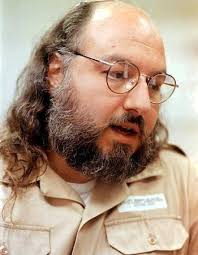
Israel's state comptroller, retired judge Micha Lindenstrauss, last week released a report on the country's handling of the Pollard affair. In a nutshell, the report exonerates Israel's political leadership and blames Jonathan Pollard's continued incarceration on the "fierce and consistent" opposition of U.S. administration and intelligence officials. It also recommends that Israel press the Americans to give Pollard a new trial.

The report is, to put it charitably, a huge disappointment.


For starters, it makes contradictory claims. On one hand it states categorically that since 1996, the governments of Binyamin Netanyahu, Ehud Barak, Ariel Sharon and Ehud Olmert acted "continuously and consistently" to obtain the release of Pollard. "The Pollard issue challenged the prime ministers of Israel," it states. "Their actions were continual and consistent, and the issue was brought up in their meetings and conversations with U.S. presidents."


At the same time, Lindenstrauss admits that Netanyahu, Barak, Sharon and Olmert made sure that their discussions with U.S. presidents and senior administration officials on this sensitive issue were never documented. (He calls this failure a "significant transgression," because it makes it impossible to reassess past efforts to get Pollard freed and try to come up with a more successful approach.)


But if Lindenstrauss didn't have any transcripts of these meetings, how could he be so sure that these prime ministers acted "continuously and consistently" on Pollard's behalf?


Without going into all of the details of the Pollard case, the pertinent facts are as follows: Jonathan Pollard is an Israeli citizen (as of 1995); the government of Israel has recognized him as an Israeli agent (as of 1998); and he has spent the past 24 years in prison for providing Israel with information that saved many, many lives.


In this sense, Pollard is like any other Israeli prisoner, be it Ron Arad, the navigator downed over Lebanon in 1986, or Gilad Shalit, the IDF soldier
kidnapped at the border with Gaza three years ago. But there's one crucial difference: While Arad and Shalit are being held in unknown locations by terror organizations, Pollard is in the hands of Israel's closest ally, the United States. And it is inconceivable that Israel leaders acted "continuously and consistently" and still came up empty-handed.


How can it be that 24 years have passed - with U.S. administrations that were Republican and Democrat; more friendly to Israel and less friendly; with prime ministers from Labor and the Likud - and that at no time was it
possible to close a deal that would send Pollard home?


If the efforts of Israeli prime ministers were truly continuous and consistent, if there was the proper sense of hakaras hatov to Pollard for what he did for Israel, then surely there were ample opportunities in the past 24 years - be it at the signing of Oslo or the disengagement or the end of the administration of former president George W. Bush - to gain the release on humanitarian grounds for a man who is sick and who has expressed remorse for his deeds? (The notable exception was then-Prime Minister Binyamin Netanyahu, who truly tried to engineer a deal upon signing the Wye Plantation agreement on a Chevron withdrawal, only to be bitterly disappointed by Bill Clinton.).

Read All at :

Love of the Land: Editorial: Taking Responsibility for Pollard

Al-Qaeda Targeting Germany for 'Next 9/11' - Within Weeks - Defense/Middle East - Israel News - Israel National News

Al-Qaeda Targeting Germany for 'Next 9/11' - Within Weeks - Defense/Middle East - Israel News - Israel National News

Shared via AddThis

Lieberman Demands Obama Accept %u2018Bush Understandings%u2019 - Politics & Government - Israel News - Israel National News

Lieberman Demands Obama Accept %u2018Bush Understandings%u2019 - Politics & Government - Israel News - Israel National News

Shared via AddThis

US Defense Sec%u2019y Gates to Arabs: Stock Arms to Threaten Iran - Defense/Middle East - Israel News - Israel National News

US Defense Sec%u2019y Gates to Arabs: Stock Arms to Threaten Iran - Defense/Middle East - Israel News - Israel National News

Shared via AddThis

Preparing to Build in Mevaseret Adumim - Inside Israel - Israel News - Israel National News#replies

Preparing to Build in Mevaseret Adumim - Inside Israel - Israel News - Israel National News#replies

Shared via AddThis

Knesset Speaker: Drying Up Jewish Settlements Won%u2019t Save Israel - Inside Israel - Israel News - Israel National News

Knesset Speaker: Drying Up Jewish Settlements Won%u2019t Save Israel - Inside Israel - Israel News - Israel National News

Shared via AddThis

'The Midnight Rabbi' Helps Struggling Yeshiva Students - Jewish World - Israel News - Israel National News

'The Midnight Rabbi' Helps Struggling Yeshiva Students - Jewish World - Israel News - Israel National News

Shared via AddThis

Jew Saved from Lynch in J'lem's Old City - Inside Israel - Israel News - Israel National News

Jew Saved from Lynch in J'lem's Old City - Inside Israel - Israel News - Israel National News

Shared via AddThis

Revealed: Libya paid for medical advice that helped Lockerbie bombers release - Telegraph

Revealed: Libya paid for medical advice that helped Lockerbie bombers release - Telegraph

Israel Matzav: Will Farouk Hosni go down to defeat?

Will Farouk Hosni go down to defeat?

In the post-Camp David euphoria of 1980, I spent three days in Egypt with my grandmother a"h (may she rest in peace), visiting Cairo, Luxor and Alexandria. One of the things that we insisted was that the Egyptian tour guides take us to Jewish sites in Cairo. The Egyptians were embarrassed. There were none.

The situation has not changed much since then. The New York Times reports that the Egyptians are rebuilding a dilapidated old synagogue in which the Rambam, Moses Maimonides (1135-1204) served as Rabbi during the last years of his life. I saw that synagogue in 1980. I even have pictures of it. We went inside for no more than a few minutes. There was nothing there.

The Times says that the Egyptians are now rebuilding the synagogue - and Egyptians are discovering that a sizable Jewish community used to live in their country - as a result of their desire to get Farouk Hosni elected as the head of UNESCO. The Times reports that the Egyptians would like to go just far enough for Hosni to win, but no further.

“The irony is they have done something,” Rabbi Baker said. “It goes back at least several years now. They didn’t want to do it in a formal relationship with us. They said, ‘We accept this as our responsibility to care for our Jewish heritage, so we will do things ourselves.’”

For Egyptians like Mr. Hawass, who seems most comfortable around Pharaonic tombs and mummies, speaking about Egypt’s Jewish past with pride has required a degree of finesse. Mr. Hawass has in the past refused a suggestion by the American Jewish Committee to consider building a small museum to house Egypt’s historic Jewish artifacts, as the government has done to preserve many of Egypt’s Christian artifacts.

As he strode through the old Jewish quarter recently, waving his handwritten list of all the Jewish preservation projects he is now overseeing, Mr. Hawass said that he would not build a Jewish museum in Cairo until the Israeli-Palestinian conflict was resolved.

“If you make a museum like that while Israel is killing Palestinian children, people will kill me,” he said. “What we are doing now is not for the Jews; it is for us, for our heritage,” Egypt’s Jewish heritage.

The Times only gives brief mention to why Hosni, once the leading candidate, is in trouble.

But to appease — or please — his local constituency, he said in 2008 he would burn any Israeli book found in the nation’s premier library in Alexandria. He has apologized, but that has done little to end the attacks on his candidacy to lead an organization dedicated to promoting cultural diversity.

To the Times, Hosni has 'apologized' and therefore the controversy over his candidacy should be over. But since that hasn't worked, the Egyptians are going to bribe the Jews not to oppose Hosni's candidacy. And the bribe seems to be working: Israeli Prime Minister Binyamin Netanyahu has promised not to oppose Hosni.

In its coverage, Time Magazine asks whether Hosni is an anti-Jewish bigot. And it admits that his candidacy is in trouble:

The most notorious of Hosni's comments came during an angry exchange last May with Muslim Brotherhood legislators who suggested the Minister was softening on previously stated hostility to cultural exchanges with Israel. "I'd burn Israeli books myself if I found any in libraries in Egypt," Hosni spat back.

The chorus of voices opposing Hosni's candidacy is growing. In August, an article in Foreign Policy magazine called him a mouthpiece for "rampant Judeophobia" among Egyptian elites. "To say that Farouk Hosni doesn't much like Israel is putting it lightly," the piece began.

As a result of such comments, the number of countries which plan to support Hosni's UNESCO bid have thinned, and eight other rivals have stepped up.

But the Wall Street Journal tells us that Hosni is a bigot and should not be elected to head UNESCO. And not 'just' because he hates Israel.

But there is another reason to pause before appointing Egypt's Culture Minister as Unesco head: namely, the unbroken social, political and cultural repression in Egypt under his tenure.

Having told Agence France-Presse that he believes he has won over 32 of the 58 nations on Unesco's executive council, the 22-year steward of Egyptian culture can taste victory. Cairo is now scrambling to quash any stray quibbles with his candidacy ahead of a vote this week on his appointment. To this end, since the Unseco job campaign began, Egypt has announced plans to allow the translation of Israeli books while feverishly "contextualizing" Mr. Hosni's past tirades against the Jewish state. And last month Egypt ostentatiously unveiled the ongoing restoration of an important synagogue in Cairo.

That scramble, sincere or not, cannot erase Mr. Hosni's sorry record as a culture czar in general. Human-rights activists are not the only ones reeling at the thought of one of Egypt's pre-eminent censors being named standard-bearer in Unesco's self-described goal to "build peace in the minds of men." One can only imagine the peace in the minds of thousands of Egyptian writers, bloggers, artists, musicians, filmmakers, lecturers, broadcasters and other culture-purveyors who have been tortured, harassed, imprisoned or banned in Egypt since Mr. Hosni took office in 1987. Or the 100-plus heavy-metal fans arrested there over the last decade for their supposed Satanism. Or any of the remaining 80 million Egyptians regularly denied access to any new ideas their government deems harmful.

Even if Mr. Hosni's supporters succeed in cajoling or coercing pro-Israel groups to back their man, he would remain as suitable to lead Unesco as a Cairene cat would be to guard a stew. Try convincing jailed blogger Kareem Nabil Soliman, or blackballed satirist Ali Salem, or chronically harassed activist Wael Abbas, that Mr. Hosni's brand of cultural preservation should be exported throughout the world.

Read it all. Hosni does not deserve to head UNESCO.


Israel Matzav: Will Farouk Hosni go down to defeat?

Israel Matzav: Obama's miscalculations

Obama's miscalculations

As you might imagine, I am not particularly happy about the upcoming 'settlement freeze,' but it is clear that the 'freeze' is far less than what the Obama administration tried to impose on us back in May. How did that happen? How did Binyamin Netanyahu come out the winner and Barack Obama the loser (even assuming that the 'Palestinians' come back to the table on the basis of what's being offered)? JPost's Herb Keinon explains.

First of all, the initial US demand was completely impractical. It was impractical not only from a political point of view, since Netanyahu, in his government constellation, could not agree to such a demand, but also practically impossible - there is no way that real needs would not be provided for the nearly 300,000 Israelis living beyond the Green Line.

Furthermore, the administration misread the Israeli public, thinking that the settlements were enormously unpopular, and that the public would back the US president. The administration confused headlines and certain columns in Haaretz with Israeli public opinion, a public that saw the US demand as unreasonable and rallied around Netanyahu.

Secondly, it became clear with time that there had indeed been agreements with the Bush administration on where and how Israel could continue to build in the settlements, and that the Obama administration was simply tossing those out the window.

This in turn led to criticism and some push-back, not only in Israel, but also in the US, with some asking how the Obama administration could call on Israel to fulfill its commitments, when it itself was not doing the same.

Thirdly, it became clear as time went on that the US was a prisoner to its own demand. Netanyahu said he would not agree to a complete freeze, and that talk about stopping construction in east Jerusalem was completely out of the question, even as the Palestinians - taking their cue from the US's initial statement - threw in a condition that they never had when they were negotiating with Ehud Olmert: they would not start talks until there was a total settlement freeze everywhere.

But with Israel standing firm that it would not freeze everything, the US had to decide whether it wanted to launch a process or not, and if it did, then it would have to agree to some construction.

The fourth element that has led to a change in the US position was Saudi intransigence. Even as Washington was trying to get Israel to agree to a freeze, the Obama administration also tried to get the Arab world - especially Saudi Arabia - to ante up some significant confidence-building measures.

Read All at :

Israel Matzav: Obama's miscalculations

Israel Matzav: Video: The Shofar and the Pooch

Israel Matzav: Video: The Shofar and the Pooch

Israel Matzav: Shocka: Israel's Gaza 'blockade' is changing opinions

Shocka: Israel's Gaza 'blockade' is changing opinions

A survey of 'Palestinians' in Gaza, the 'West Bank,' Jordan and Egypt shows that Israel's Gaza 'blockade' is making 'Palestinians' want to get rid of Hamas. Hamas is extremely unpopular in Gaza (with 58% disapproval, including 42% strong disapproval) - even more so than in the 'West Bank' where 57% disapprove of Hamas, but only 16% disapprove strongly.

Further, if elections were held today, Fatah would win despite that organization's continued corruption (several Fatah members have stated that the cheating that went on at last month's Fatah convention votes makes Iran look fair and honest).

Additionally, many 'Palestinians' (including a majority in the 'West Bank' and Jordan) now regret that Yasser Arafat turned down Ehud Barak's offer at Camp David in 2000. Of course, they would love to have that offer back now, but with Netanyahu in power, I doubt that they are going to be offered anything close to that anytime soon.

The poll, conducted by Stan Greenberg of Greenberg Quinlan Rosner Research, included face-to-face interviews with hundreds of adults in Egypt, Jordan, the West Bank and Gaza, along with a series of focus groups in Cairo and Ramallah.

While the numbers indicate ongoing, deep hostility toward Israel in the Arab world, the poll also shows signs that powerful players in the region, such as Hamas, are in deep trouble at home, and that the people living under their direct rule are becomingly increasingly vocal in their criticism.

...

"I've polled in a number of war zones in the 20th century, including Nicaragua and El Salvador during the conflicts there [in the 1980s], and I polled in Afghanistan under the Taliban, before 9/11," Greenberg said. "And I thought that in Gaza, after [Hamas's 2006] takeover, people would be cautious about responding to the poll. But just look at the results. Nearly 60% of the people there have a negative image of Hamas, and felt free to say it, which says to me that it's even worse than that."

...

When asked who was responsible for the current crisis in Gaza, Israel was overwhelmingly blamed by all the groups polled. But while 5% of Egyptians and Jordanians blamed Hamas for the current crisis, 35% of Palestinians in the West Bank said Hamas was to blame, while 16% of Gazans agreed.

Additionally, of all the places polled, Gazans made up the highest percentage - 38% - of those who said they believed that both Israel and Hamas, together, were responsible for the current Gaza crisis.

Nonetheless, Gazans and Jordanians both showed a surprisingly high level of support for direct negotiations with Israel. More than half of those two groups - 52% of those polled - said they believed Palestinians should negotiate directly with Israel, accept its right to exist and honor past agreements. Thirty-nine percent of Egyptians said the same, compared to 36% of Palestinians in the West Bank.

Also surprising, Greenberg said, was that while 35% of the other groups polled stressed the importance of releasing captive IDF soldier Gilad Schalit, an overwhelming two-thirds of Gazans said the same.

Maybe keeping Gaza under a blockade making the 'Palestinians' pay a price for their actions and for the actions of their leadership isn't such a bad idea after all. Right Ismail?

Heh.

Israel Matzav: Shocka: Israel's Gaza 'blockade' is changing opinions

Israel Matzav: Iran to Obama: There's nothing to discuss

Iran to Obama: There's nothing to discuss

Iranian dictator Mahmoud Ahmadinejad said on Monday that there is nothing further to discuss with the 'six powers' (the five permanent members of the United Nations Security Council plus Germany) regarding Iran's nuclear program.

"From our view point (discussion of) our nuclear issue is finished," President Mahmoud Ahmadinejad told his first news conference since he was sworn into office on August 5 following a disputed re-election in June.

"We will continue our work in the framework of global regulations and in close cooperation with the (U.N.) International Atomic Energy Agency. We will never negotiate on the Iranian nation's obvious rights," he added.

Obama has given Tehran until this month to take up a six powers' offer of talks on trade benefits if it stops nuclear enrichment, or face harsher sanctions.

Ahmadinejad invited officials from the six powers -- the United States, Britain, China, Russia, France and Germany -- to take a look at Iran's upcoming package of proposals addressing global "challenges."

Iran was ready to negotiate and cooperate on making "peaceful use of clean nuclear energy" available for all countries and in preventing the spread of nuclear arms, he said.

The semi-official ISNA news agency said Iran was likely to unveil the package by the end of this week.

Read All at :

Israel Matzav: Iran to Obama: There's nothing to discuss

Israel Matzav: Human Rights Watch's precisely wrong report

Israel Matzav: Human Rights Watch's precisely wrong report

Israel Matzav: Real liberals should support Israel

Real liberals should support Israel

Ryan Mauro argues that real liberals should support Israel.

There will be haters no matter what, but on the Israeli side, such hatred is not mainstream or institutionalized. In every conversation I can remember I had with an Israeli, the suffering of the Palestinians was always mentioned as part of the equation. While discussing their own suffering, they’d always turn and say something along the lines of: “You know, the Palestinians don’t deserve what they’re going through either; it’s unacceptable.”

Israel has adopted virtually every liberal cause. The Jewish state has taken in 1,700 refugees from Darfur, giving Africa the attention Hollywood has demanded. Israel does not do so for recognition, as surely they know by now they will never get any, but because it’s simply the right thing to do.

Environmentalists should be hailing Israel as a model. Twenty percent of the water used by Israel will be desalinated by 2010 and, according to Israel @ 60, “Israel treats 92 percent of its wastewater and reuses 75 percent in agriculture, the highest rate in the world.” Israel stands nearly alone as having more trees today than at the beginning of the last century and “is one of two countries in the world in which deserts are shrinking rather than expanding.”

Investing in electric cars and other forms of alternative energy, bacteria that can dissolve oil spills, and other green technology, Israel is taking a leading role in helping the environment. With the current health care debate in the U.S. raging, liberals should also take notice that Israel provides national health insurance — or, as conservatives would say, socialized health care. When we visited a hospital, our guide articulately defended the concept and criticized the American health care system in a way that would have made any Democratic Party operative proud.

Whether it’s protecting and respecting human life or preserving the rights of citizens despite the highest temptation to restrict them, Israel is a bastion of liberalism and progressivism. For liberals to not support Israel is to not support the very issues they fight for at home.

So why do so many liberals not support Israel?

Mauro doesn't deal with that issue. My sense is that it's for two reasons. First, because liberals tend to support the underdog and Israel hasn't really been the underdog in more than forty years.

Second, liberals have a worldview in which there is no exceptionalism. If you don't recognize the possibility of exceptionalism, you won't recognize that Israel is an exceptionally good country.

Read the whole thing.


Israel Matzav: Real liberals should support Israel

Israel Matzav: Jane Fonda, Jew hater

Jane Fonda, Jew hater

My friend Jim Hoft takes Jane Fonda and Danny Glover to task for signing onto a boycott of the Toronto International Film Festival over its focus on Tel Aviv.

Some 50 celebrities, artists and filmmakers, including actors Jane Fonda and Danny Glover, musician David Byrne and filmmaker Ken Loach, have accused the Toronto International Film Festival of "complicity with the Israeli propaganda machine" over its spotlight this year on Tel Aviv.

...

The program "ignores the suffering of thousands of former residents and descendants of the Tel Aviv-Jaffa area who currently live in refugee camps in the Occupied Territories" after a "mass exiling of the Palestinian population" in 1948, according to the letter.

"Looking at modern, sophisticated Tel Aviv without also considering the city's past and the realities of Israeli occupation of the West Bank and the Gaza Strip, would be like rhapsodizing about the beauty and elegant lifestyles in white-only Cape Town or Johannesburg during apartheid without acknowledging the corresponding black townships of Khayelitsha and Soweto," AFP reported the letter as saying.

The picture at the top of this post is a picture of an 'Israeli Arab' at the beach in Tel Aviv. You won't find any signs like this one from Durban, South Africa in Tel Aviv:

But of course, Fonda is now denying that she's anti-Israel and claiming that she favors a 'two-state solution' (Hamas and Fatah?):
"I, in no way, support the destruction of Israel. I am for the two-state solution. I have been to Israel many times and love the country and its people."
Rabbi Marvin Hier, who has won two Oscars for documentaries, disagrees.
Rabbi Marvin Hier of the Simon Wiesenthal Center is blasting the the actors -- and everyone else who signed the letter -- claiming "Whoever would sign on to a campaign like this would support the complete destruction of Israel."

Hier -- who's won two Academy Awards for documentaries -- added, "People who support letters like this are people who do not support a two-state solution. By calling into question the legitimacy of Tel Aviv, they are supporting a one-state solution, which means the destruction of the State of Israel."

"I applaud the organizers of the festival for celebrating on the 100th anniversary of Tel Aviv. If every city in the Middle East would be as culturally diverse, as open to freedom of expression as Tel Aviv is, then peace would long have come to the Middle East."
Tel Aviv was built on sand dunes, and not on 'Palestinian' villages.

In Canada's National Post, George Jonas rips the boycotters' hypocrisy.
Pressure groups operating in democracies must reconcile their urge to bully cultural institutions with their society's residual inhibition against doing so. This requires some mental gymnastics. The Greyson-Klein method is do and deny. Who, us, objecting to Israeli films? Perish the thought. We're only objecting to Israeli propaganda. Okay; what's Israeli propaganda? Well, the Israeli films we're objecting to.

What Israeli film wouldn't be Israeli propaganda for [York University Professor John] Greyson [who withdrew a film in protest CiJ] or [Naomi] Klein? Your guess is as good as mine, but an Israeli film of anti-Israeli propaganda might pass muster -- say, one about kidnapping Palestinians for their body parts.

Greyson should certainly recognize propaganda when he sees it. He's noted on festival and university circuits for his video essays of gay activism. To hear him object to "state-subsidized propaganda" is ironic, to say the least. As an activist-filmmaker, he has been a propagandist for the values of the ultra-liberal state and its shibboleths throughout his career. Pushing a good agenda is still propaganda -- but I guess only old-style communists were honest enough to call their functionaries "agitation and propaganda cadres" or "agit-prop" for short.

Of course, in a free country it's perfectly legitimate to withdraw one's film to protest other people showing their films. Not only that, but it may be an astute way of pushing one's own agenda.
Indeed. Read the whole thing.
Israel Matzav: Jane Fonda, Jew hater

Israel Matzav: Israeli book on Iran a best-seller

Israel Matzav: Israeli book on Iran a best-seller

Israel Matzav: Haaretz making up stories?

Israel Matzav: Haaretz making up stories?

Israel Matzav: Facing the truth

Facing the truth

This post is a little different than the normal fare. Although the post was prompted by something that has happened in Israel, it's not directly connected to Israeli politics, except to the extent that the current Chairman of the Jewish Agency, Natan Sharansky, feels a strong sense of obligation for ensuring the future of the Jewish people - perhaps a stronger sense than his predecessor.

I'd like to show you a chart. If you have trouble reading it, you can find the chart here.

For those having difficulty seeing the chart, the columns are headed Secular, Reform, Conservative, Centrist Orthodox and Hasidic/Yeshiva Orthodox (or what we might call ultra-Orthodox). Each column starts with 100 people (each little person in the square represents 10 people). Each row represents a generation and the number of people represents the number of Jews in that generation. The bottom two rows provide the inter-marriage rate and the average number of children per couple for each group in each column. The results should be self-explanatory.

The chart is based on United States statistics. In Europe, the statistics may be slightly less dismal because anti-Semitism - which is much stronger in Europe than in the US - tends to force Jews to identify as Jews. I have not seen statistics for Europe, and so I do not know for sure. For Israeli Jews who remain in Israel, our statistics are much better. We have higher birth rates, even among the secular (approaching three children per couple), and because the Arabs are considered enemies and because there are relatively few non-Arab non-Jews here, the inter-marriage rate is lower, regardless of how strong your religious identification.

The upshot of the chart should be obvious: Your odds of having Jewish grandchildren (something all parents wanted when I was growing up) are much better if you are Centrist Orthodox or ultra-Orthodox, and the more you tend towards the ultra-Orthodox side of that spectrum (there is no bright red line that separates Centrist from ultra), the more grandchildren you are likely to have.

But there are two other factoids that don't appear on the chart that bear pointing out. One is that if you live in Israel, your chances of having Jewish grandchildren without being Orthodox are much better than they are in the US. And if you live in the United States but spent a significant chunk of time in Israel, the chances are greater that you will feel a stronger connection to the Jewish people and will remain Jewish and have Jewish children (giving you a shot at Jewish grandchildren).

With these last two factoids in mind, the Jewish Agency has taken upon itself to start a program called Masa.

If you follow that link, you will see that Masa is directed at Jewish university students with a view to getting them to spend their semester or year abroad in Israel. It is not directed at the two Orthodox groups and it doesn't need to be. For the last 25-30 years, nearly every Orthodox kid between the ages of 18-21 spends at least six months to a year in Israel. Instead, Masa is directed at the non-Orthodox kids, who might otherwise never make it to Israel, except possibly as part of a Birthright tour. It's meant as a follow-up to Birthright. But because it lasts for a longer period, Masa has the opportunity to do a better job than Birthright does in instilling a connection to Israel and the Jewish people.

Why am I raising this today? I'm not raising it because it's ten days to Rosh HaShanna (the Jewish New Year), although that should certainly be a time for all of us to evaluate honestly our efforts at passing on our Jewish values to our children. I'm raising it because of this advertisement on Israeli television, which caught the ire of both Shmuel Rosner and JJ Goldberg.

Read All at :


Israel Matzav: Facing the truth

Israel Matzav: IDF preparing for US missile systems in Israel

IDF preparing for US missile systems in Israel

Two weeks ago, I reported that the United States was considering deploying anti-missile systems to combat Iran in Israel, Turkey and the Balkans in light of Soviet objections to their deployment in Poland and the Czech Republic. Next month, the Israeli Air Force's Air Defense Division will hold a joint drill, called Juniper Cobra, with the US Military's European Command (EUCOM) and the US Missile Defense Agency (MDA). The drill is being described as the largest joint exercise ever held by the US and Israel. During the course of the drill, the US and Israel will jointly test three different ballistic missile defense systems.

Given that the US already has deployed X-Band radar in Israel's Negev desert - a departure gift from former US President George W. Bush - Israel is hoping that once the drill is over, the United States will decide to leave the missile defense systems here.
Read All at,

Israel Matzav: IDF preparing for US missile systems in Israel

Israel Matzav: Al-Qaeda spinoff says it tried to assassinate Carter and Blair

Al-Qaeda spinoff says it tried to assassinate Carter and Blair

An -Al-Qaeda linked group in Gaza, which is headed by the former commander of Hamas' Izzadin Kassam militia, claims that it attempted recently to assassinate America's worst ex-President Jimmy Carter (pictured) and former British Prime Minister Tony Blair.

In a recent e-mail message to the London-based Asharq Al-Awsat newspaper, Taleb declared that his loyalists considered Osama bin Laden to be the "emir" and "guardian" of all Muslims.

"We don't belong to al-Qaida organizationally, but we follow their ideology," Taleb wrote. "We pray to Allah that we will become part of them. They are our brothers and it's our duty to support them."

Taleb said he was aware of the fact that he had become No. 1 on Hamas's list of wanted men. He claimed that Hamas was also preventing his followers from launching terrorist attacks on Israel.

"They [Hamas] confiscated much of our weapons and ammunition," he added. "Hamas also arrested many of our warriors upon their return from jihad missions."

He also disclosed that his men had planned to kill Carter and Blair, both of whom he dubbed "infidels," during their recent visits to the Gaza Strip. "The hands of Carter and Blair are stained with Muslim blood," he said. "It was our duty to kill the two."

Taleb said that Hamas foiled the assassination plots and arrested the men who had set out to carry them out.

Don't tell Jimmah that Hamas foiled the plots. He'll think that proves that Hamas is 'peace-loving' that convince his protege to have a 'conversation' with them.

Someone please remind me again, when 'peace' miraculously breaks out with the 'Palestinians,' how is Abu Mazen going to gain control over these people? Just wondering....


Israel Matzav: Al-Qaeda spinoff says it tried to assassinate Carter and Blair

Israel Matzav: Another Neo-Nazi gang in Israel?

Another Neo-Nazi gang in Israel?

Remember the Neo-Nazi gang that was busted here in Israel two years ago? There may be another one.

Worshipers who arrived at a Petah Tikva synagogue for prayers on Saturday were shocked to discover anti-Semitic messages scrawled in Hebrew on the building's walls, and the defacement of holy texts and graffiti inside.

The words "Long live Hitler the saint" were written on the synagogue's wall, alongside a large black cross. Inside, crosses were drawn on prayer brooks.

The worshipers waited for Shabbat to end before calling the police.

A police source told The Jerusalem Post that the incident has sparked fears of a resurgence of neo-Nazi activity in the city.

If they're non-Jewish Russian immigrants again, they ought to be sent back to their country of origin. (If you don't understand why I'm saying that, read the post from two years ago that I linked up top).
Israel Matzav: Another Neo-Nazi gang in Israel?

Israel Matzav: Dealing with Obama's missing moral compass

Dealing with Obama's missing moral compass

Barry Rubin describes a meeting between Iraqi President Nuri al-Maliki and Syrian dictator Bashar al-Assad.

Iraqi leader Nuri al-Maliki visited Syria on August 18 to discuss the two countries' relationship. He offered Syrian President Bashar Assad a lot of economic goodies in exchange for expelling 271 Iraqi exiles involved in organizing terrorist attacks against their country. Assad refused. Maliki left.

The next day, huge bombings struck Baghdad, directly targeting the Foreign and Finance Ministries. More than 100 Iraqis were killed and over 600 were wounded. The Iraqi government blamed the very same exiles living in Syria whom Maliki was trying to get kicked out and implicated the Syrian government directly in the attacks. The two countries recalled their ambassadors; the Iraqis are calling for an international tribunal to investigate.

Read All at :

Israel Matzav: Dealing with Obama's missing moral compass

Love of the Land: Tough love for Israel? Imposed Solution? The Ignorant Arrogance of the Advice-Givers

Tough love for Israel? Imposed Solution? The Ignorant Arrogance of the Advice-Givers


Barry Rubin
The Rubin Report
07 September 09


One remarkable thing about watching the Middle East is how what’s celebrated as brilliant in Europe or America is errant nonsense.

Writing such stuff makes people successful and gives them an audience of millions. It is so ridiculous that one wants to laugh, while so totally acceptable in Washington and European capitals that the laugher would be laughed at.

The article to which I refer is by Jacob Weisberg in the June 22 Newsweek, entitled, “A Friend in Need: Barack gets tough on Bibi.” It is far more terrible because Weisberg is neither leftist nor anti-Israel but has simply imbibed what “everyone says.”

Let me quickly add that while I don’t know Weisberg personally, I’m confident in saying he has no serious training in the Middle East, speaks neither Arabic nor Hebrew, spends little time researching the region, and has no real qualification for making the judgments he does.

Here's the theme: Israelis are so stupid about their country, situation, and region on life-and-death issues which they deal with daily that they must be saved in spite of themselves by people who have no knowledge or experience on any of these things. No other country in the world is so frequently told this kind of thing which I hear all the time from Europeans, too.

Is it so hard to comprehend that our views and behavior are based on years of experience and study? That we know best how to save ourselves and have been doing a far better job of it, against tremendous odds and unhelpful kibbitzers,than many others? That heeding their prescriptions would be disastrous, in fact have already proven so? After all, the tragic history of the last 20 years has largely resulted from listening to the same advice he gives now,

When one tries to explain these things in conversations, however, you can see their eyes go blank and their ears close up.

Weisberg’s article follows this pattern. The United States, he says (and these are main elements in the rhetoric among supporters of the Obama administration and several European governments) must show Israel “tough love,” lean “harder on Jews and the Arabs to get serious about a deal,” and stop “fostering Israeli illusions that there [is] an alternative to trading land for peace.”

All three of these arguments are based on false premises.

Tough love: This derives from the late 1980s and early 1990s when the left side of the Israeli spectrum was pushing the land-for-peace and negotiate with the PLO arguments against their rivals on the right. A little U.S. pressure, they argued, would help get talks going.

A lot has happened since then, however, notably the 1992-2000 Oslo process. This proved to the vast majority of Israelis that the Palestinian leadership (and Syria, too, for that matter) wasn’t ready or interested in peace. Disillusioned, a lot of these people supported Ariel Sharon and the disengagement from the Gaza Strip, the results of which (Hamas takeover, rocket fire) made them even more disenchanted.

That’s why the Labour party—which invented the land-for-peace argument in the first place and made the Oslo agreement and offered a two-state solution in 2000—is now in a coalition government with the Likud party. Prime Minister Benjamin Netanyahu is not a “right-wing” or “hard-line” leader but someone who speaks for the national consensus, a consensus based on education through painful, bloody experience.

Israel also faces a more hostile Europe, an Iran racing toward nuclear weapons, an intransigent and incompetent Palestinian Authority, plus Hamas and Hizballah.

Today the last thing Israelis need or want is pressure to make more concessions to the Palestinians. They’ve already made a lot; these didn’t lead anywhere good. What Israel needs today is not “tough love” but real support.

Push “harder on Jews and the Arabs to get serious about a deal”: The false assumption here is that getting an agreement, any agreement, is a desperate need of the two sides and of the region as a whole.

In fact, Israel is doing very well without any comprehensive peace agreement. The economy is doing fine; morale is high; security improved. Moreover, this concept pays no attention to the idea that a deal can be a bad one, inherently instable and leading to more violence.

It never enters the minds of these people that a “peace” agreement that was broken or had dangerous provisions (giving up strategic territory; east Jerusalem; empowering a radical regime in a next-door Palestinian state; opening the door to foreign Arab or Iranian armies entering; bringing in millions of Palestinian Arabs to Israel) could leave Israel far worse off.
Read All at :
Love of the Land: Tough love for Israel? Imposed Solution? The Ignorant Arrogance of the Advice-Givers

Love of the Land: Putting First Things First-Sovling The Arab Refugee Problem

Putting First Things First-Sovling The Arab Refugee Problem


Rael Jean Isaac and Ruth King
Mideast Outpost
September 09

Editors Note: In the September 2003 Outpost we published the first version of this article entitled “Putting First Things Last: The 55 Year Failure to Address the Arab Refugee Problem.” The failure is now 61 years old and we felt it was time to say it again: the integration of the refugees into Arab countries is a prerequisite for any meaningful agreement. We published an updated version of our 2003 article on the Family Security Matters website on August 12, 2009. We reprint that article—slightly expanded—because this issue has been neglected by Jewish organizations almost as badly as by diplomats, Middle East experts and the media. If Jewish organizations, each time the issue of settlements was raised, would say “No, the core issue is refugees, with their claimed ‘right of return,’ What are you doing to resettle them in Arab countries?” they could force a shift in the terms of the debate.

The Rogers Plan of 1969, like all subsequent and ill-fated efforts to resolve the Arab-Israel conflict, tabled the issue of the Palestinian "refugees," leaving it for "final status" negotiations. "It is our hope," said the Rogers Plan, "that agreement on the key issues of peace, security, withdrawal and territory will create a climate in which these questions of refugees...can be resolved as part of the overall settlement."

But this is to put first things last. As the passage of time has made abundantly clear, the issue of "refugees" remains the defining obstacle to any reconciliation in the region. Pretending to negotiate, without addressing this issue at the outset, is like operating on a patient and leaving a growing cancer intact. Had it been confronted in 1949, the prospects for finding a subsequent modus vivendi between Israel and the Arabs would have been vastly improved.

President Obama has promised a fresh perspective on issues, to bring "change" in the old ways of doing things. There is no better place to start than by confronting the core issue of the Arab refugees head on—and putting responsibility for solving it on the only ones who can do so, the Arab states.

When the problem of the Arab refugees was at last put on the table at Camp David in the year 2000, the issue blew up the tattered remnant of the Oslo "peace process." Then-Prime Minister Ehud Barak thought he had a winning formula. Israel would make a virtually total territorial withdrawal to the 1949 armistice lines. In return, all that would be asked of the Palestinian Authority was to abandon the "right to return," i.e. to eliminate, via demography, the Jewish state. If the Arab-Israel conflict was susceptible to solution via "land for peace," Barak should have had a deal. But Arafat refused to give up the "right to return" and launched outright war, including the most deadly series of terrorist attacks in Israel's history.
Red All at :
Love of the Land: Putting First Things First-Sovling The Arab Refugee Problem

Love of the Land: The Myth of Israeli Power

The Myth of Israeli Power


FresnoZionism.com
06 September 09

Recently I was talking with someone who favors direct negotiations between Israel and Hamas. He said that Israel could afford to do this because Israel was so much stronger than Hamas. On another occasion, it was suggested that Israel could afford to withdraw from all the territories and meet all the demands (even accept Arab refugees) of the PA in the name of peace, because “Israel is as powerful as NATO”.

In both cases my discussion partners were ignoring two salient points: the very real external and internal constraints on the use of Israel’s formidable military power, and the physical and societalvulnerability of Israel.

It’s been said (OK, I just said it) that in recent history Israel has often had all of its enemies’ ducks in a row but then was not allowed to pull the trigger.

For example, in 1956 an angry Eisenhower forced Israel to withdraw after successfully capturing the Sinai peninsula and the Gaza strip. In 1973, Israel was forced by threats from the Soviets and US pressure to allow the surrounded Egyptian Third Army to escape destruction. In 1982, Yasser Arafat and his PLO men were allowed to flee to exile in Tunis under the protection of a multilateral force. Supposedly an Israeli sniper had Arafat in his sights but was not permitted to fire; one wonders if an Oslo process could have brought peace had he done so. And of course in 1991, Israel absorbed scud missile attacks from Saddam’s Iraq because the first President Bush did not allow Israel to use her power in self-defense.

In January of this year, then-Foreign Minister Tzipi Livni flew to Washington while the IDF was awaiting orders to begin the third phase of Operation Cast Lead, the entry into Gaza city which would bring about the capture or death of the Hamas leadership and its destruction as a fighting force. She returned with a near-meaningless memorandum of understanding, and shortly thereafter Israel began to withdraw from Gaza without executing Phase III. The IDF was out of Gaza before Barack Obama’s inauguration, and although it was not publicly admitted by Israel or the US, many observers think that Livni received an ultimatum to this effect.

Internal constraints also affect the exercise of Israeli military power. Israel could have completely wiped out Hamas in Gaza with a combination of aerial attacks and artillery fire, in a matter of days and before international pressure could be marshaled to prevent it. This could have been done with almost no risk to IDF personnel, just as the Russians did in Grozny, Chechnya. But no Israeli government — or the Israeli populace — would have been able to accept the thousands or tens of thousands of Palestinian civilian deaths that would result from it.

I can also mention Israel’s nuclear deterrent here. Unlike some other nuclear powers, Israel has never used its capability to threaten other nations, but has always held it in reserve to deter attacks with weapons of mass destruction or as a last-ditch option if the country is in danger of being overrun (as was feared in 1973).

Read All at :

Love of the Land: The Myth of Israeli Power

Love of the Land: Obama’s Dangerous Strategy

Obama’s Dangerous Strategy


melaniephillips.com
Jewish Chronicle
03 September 09

The farce over doorknobs for centrifuges masks the fact that President Obama’s whole Middle East strategy is in the process of imploding.

Obama has been pressuring Israel to freeze every brick and widow-frame of all settlement construction as a precondition for the US ‘getting tough’ with Iran. This has caused Israel’s Prime Minister Netanyahu to walk a diplomatic tightrope. But it is arguably President Obama who has the rope around his own neck.

Israel’s supposed policy of expanding the settlements has been presented as the major stumbling-block to peace with the Palestinians and Arab support against Iran. This was absurd, and indeed Obama is now softening his stance.

Construction of new settlements has been frozen for years with no concessions from the Palestinian side. And the idea that Israeli concessions were needed to bring the Arabs on side against Iran was ridiculous. The Arabs are desperate for the Iranian nuclear threat to be removed because Iran is an overwhelming threat to their existence.

The settlements are irrelevant to the Iran crisis — which has predictably become even more acute because Obama’s policy of appeasing the Arab and Muslim world has gone belly-up. In response to his hand of friendship, the Iranian regime rigged its election, tortured and murdered its internal opponents and turned even more extreme.

As for Israel, Netanyahu faced down Obama over his attempt to define Jewish houses in east Jerusalem as ’settlements’ and to freeze construction there, too. Having united virtually all of Israel against him (only four per cent of Israelis think Obama is pro-Israel) the US President grovelled to the Arabs for a sign of some move towards peace with Israel. They refused.

He begged the Iranians to ‘engage’ with him. In response, they have now appointed as defence minister Ahmad Vahidi, a terrorist wanted for the 1994 bombing of the Jewish community centre in Buenos Aires and who was also involved in the 2006 bombing of the Khobar Towers complex which killed 19 American soldiers. Meanwhile, Iran continues to develop the nuclear capability which threatens not just Israel but America and Europe.

In any event, Obama has already said that he will get tough with Iran if it remains intransigent by this autumn. So how could the settlement issue have been the clincher?

And what does ‘getting tough’ mean? Why, sanctions. The Iranians must be quaking in their boots. We can all write the script for that debacle already. Talk about shutting the stable door after the centrifuges have bolted.

And then what? When Plan B fails, what is Obama’s Plan C? I think we know. It’s called ‘living with a nuclear Iran’ — or the surrender of the west.
Read All at :
Love of the Land: Obama’s Dangerous Strategy

Love of the Land: Success: Golan Facebookers Ain't Syrian

Success: Golan Facebookers Ain't Syrian


Backspin/Honest Reporting
07 September 09

Little more than a week ago, HonestReporting launched the Facebook group,Facebook, Golan Residents Live in Israel, not Syria.

This was in response to Facebook settings that only allowed Golan residents to chooseSyria as their home country. But our members got Facebook's attention: last night, we discovered that Facebook changed the settings. The heights are no longer exclusively "Syrian" now. Facebookers in communities like Ramat Magshimim, Geshur, and Had Nes aren't forced to "select" Syria in the dropdown box.

Screen grab before, with Syria as the only option:

Fb_ramat_magshimim_before


Screen grab after, now includes Israel

Fb_ramat_magshimim_after


Credit Facebook for simply making the change without getting dragged into an acrimonious and embarrassing political debate. And credit our 2,490 members for getting involved and getting results.

Be sure to join the ongoing discussion at HonestReporting's Facebook page.

Love of the Land: Success: Golan Facebookers Ain't Syrian

Love of the Land: A Potential Torah University

A Potential Torah University


Judy Siegel-Itzkovich
JPost
05 September 09

When the visionary, Vienna-born physicist Prof. Ze'ev Lev (William Low) established the Jerusalem College of Technology (JCT) 40 years ago with seven engineering students in an apartment building in the Bayit Vegan quarter, he dreamed of the day when there would be 400 or 500 students. Those familiar with his dream of teaching high-level science and engineering combined with Torah to modern Orthodox and haredi men doubt that Lev actually believed such a goal could be reached.

Lev somehow foresaw that this combination was exactly what 21st-century Jerusalem would need to fight the decline in the number of modern Orthodox residents, the high poverty rate, the minimal levels of secular education in haredi families and the capital's need for a strong technological base.

When Lev's former physics student at the Hebrew University, Prof. Joseph Bodenheimer, was named JCT's fourth president 16 years ago, that target had already been achieved, with 440 students in six buildings on the Givat Mordechai campus. Today, as he hands over the president's chair to eminent French-born mathematician Prof. Noah Dana-Picard, there are 3,000 students on campuses in Jerusalem and Ramat Gan, and 17 buildings on the main Givat Mordechai campus alone.

WHEN I interviewed him in 1993 upon his promotion from JCT rector to president (as I have interviewed the three presidents before him), I was impressed to find Bodenheimer sitting in the secretary's room rather than that of his predecessor, Dr. Yitzhak Nebenzahl (who needed the larger room due to a physical disability). Bodenheimer explained that the very pinched financial situation of the college required the president to serve as an example of modesty, so he remained in the small room, with its simple office furniture, for 16 years. "It is very satisfying when a new student tells me that his father studied here," he says.
Read All at :
Love of the Land: A Potential Torah University

Love of the Land: Netanyahu, It's Time For a Change of Tack

Netanyahu, It's Time For a Change of Tack


Frimet Roth
JPost
07 September 09

Once again, hope for the return of kidnapped soldier Gilad Schalit was raised and then dashed within days. The familiar roller coaster invites the question: Why have our leaders failed to free Schalit?

This year several high-profile missions were carried out to rescue Western hostages. Their success could be instructive for Israel. First, Ingrid Betancourt, a Colombian politician, was freed along with 14 other hostages from jungle captivity in July 2008 in a daring, Hollywoodesque infiltration of guerrilla camps.

Then, on August 5, 2009, former US president Bill Clinton's visit to North Korea scored the surprise release of two American journalists who had been sentenced to 12 years' hard labor by a Pyongyang court. The women were whisked to freedom with Clinton only 20 hours after he landed there.

Next, on August 16, 2009, a visit by US Senator Jim Webb of Virginia to Myanmar secured the return of an American imprisoned there.

Elation over these homecomings has been tempered by concern over the ramifications of the deals cut. As an Associated Press report put it: "Such visits, argue experts, can give regime leaders an aura of respect and recognition that may make it harder for the US to press for sanctions or continue isolation policies aimed at forcing change in everything from humans rights to nuclear power."

ISRAEL IS primed to pay astronomically more for Gilad Schalit. Yet our leaders are indifferent to the deadly ramifications. The release of mass murderers in return for Schalit's freedom poses an irrefutable risk. Yet for three years it has been touted as the single option available.

The day after Schalit's disappearance, his kidnappers offered information about him if Israel agreed to release all female and under-18-year-old Palestinian prisoners.

Since then, while the list of prisoners has grown, no other avenue of rescue has ever been shown, let alone rumored, to be on the cards. Not even the massive Operation Cast Lead produced evidence of any rescue attempt.

Instead, Hamas has been sitting pretty all these years. The only pressure exerted on it has been to delete several prisoners from its list and to approve the exile of several others after release. Moreover, the sine qua non of any deal, the release of all female prisoners, has never been challenged. It is accepted by all as a compassionate stipulation.

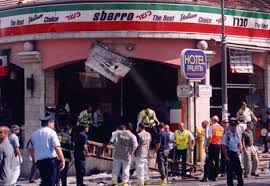
One of those women is Ahlam Tamimi. This journalist-cum-university student was involved in the reconnaissance and planning of the August 9, 2001 terror attack on Jerusalem's Sbarro restaurant.

That morning, Tamimi, along with a suicide bomber and 10 kg of explosives, took a taxi from Ramallah. At the checkpoint between east and west Jerusalem, her accomplice, Izzadin al-Masri, got out and walked past the IDF soldiers empty-handed. Tamimi remained in the taxi, passing through unsearched, while the explosives lay beside her.

Once past the checkpoint, Tamimi rejoined Masri on foot. The pair then walked toward the center of Jerusalem. Tamimi carried a camera and the two conversed aloud in English to pass for tourists.
Read All at :
Love of the Land: Netanyahu, It's Time For a Change of Tack

Love of the Land: School Bells and Rocket Sirens

School Bells and Rocket Sirens


Anav Silverman
IsraelNationalNews.com
04 September 09

Although the third Hamas-Israel ceasefire is still in effect, Sderot schoolchildren began the 2009 school year both excited and yet apprehensive.

Two days before the doors to Sderot's nine schools opened, two rockets fired from Gaza triggered the city's rocket warning system known as the Color Red siren, and sent residents racing for a shelter on Sunday evening, August 30.

"I was scared but not surprised," says Rotem, a 16-year-old Sderot student, beginning eleventh grade at a local Sderot high school. "We know that the rocket attacks will begin again and I don't think that anyone here really believes that the quiet will last. We've lived here [in Sderot] long enough to know that," she says. Although the third Hamas-Israel ceasefire is still in effect, Sderot schoolchildren began the 2009 school year both excited and yet apprehensive.

Two days before the doors to Sderot's nine schools opened, two rockets fired from Gaza triggered the city's rocket warning system known as the Color Red siren, and sent residents racing for a shelter on Sunday evening, August 30.

"I was scared but not surprised," says Rotem, a 16-year-old Sderot student, beginning eleventh grade at a local Sderot high school. "We know that the rocket attacks will begin again and I don't think that anyone here really believes that the quiet will last. We've lived here [in Sderot] long enough to know that," she says.

Dina Huri, principal of a Sderot elementary school, made sure that the opening school year would offer everything for her first to sixth grade students and that also included upgrading the school shelters against future rocket attacks.

"During the summer, I had the 3 school bomb shelters transformed into "kid-friendly" shelters," she says. Huri had the shelter painted in bright colors and installed rugs so that the children would feel more comfortable. Huri doesn't remember the exact date of when the shelters were first installed-- "they have been around for a while"--but she says that the original concrete grey slabs made children feel like they were imprisoned. "Last year, every time the siren blared, the students had to run into these concrete structures, wondering when they could leave. Now these shelters are places that the students want to play in."
Read All at :
Love of the Land: School Bells and Rocket Sirens

Love of the Land: Wishing It Were So

Wishing It Were So


Noah Pollak
Contentions/Commentary
06 September 09

Sheera Frenkel is an American who works for the UK Times in its dubious Jerusalem bureau, which has a great deal of trouble distinguishing truth from fiction. Her current piece, linked on Drudge, provides a nice example of how Frenkel and her employer view the sensationalization of the Middle East as one of their main jobs. The report is entitled “US fury as Israel defies settlement freeze call,” and in case the point wasn’t made clear by the title, the piece goes on to declare that

Israeli plans to authorise the construction of hundreds of houses in the occupied West Bank sparked furious protests from American and Palestinian officials yesterday.

“Fury” and “furious protests” from the Obama administration? I hadn’t seen them mentioned anywhere else. The dictionary says that furious means “full of or characterized by extreme anger; raging.” What was the American reaction? Right there, a few paragraphs down in Frenkel’s own story, we read that:

Read All at :

Love of the Land: Wishing It Were So

A Sham and a Shame

A Sham and a Shame

Regular readers don't need me to elaborate much about the decision to build 455 new homes in six settlements just before starting a construction freeze. The whole thing is a sham. Obama started with a reasonable postition that enlarging settlements while negotiating their dismantling is not helpful. So he demanded that not happen. Netanyahu's government could have accepted his position, though one hopes they'd have demanded a reciprocal requirement from the Palestinians - a demand they not teach children Israel shouldn't exist, or some such. The Obama team, however, perhaps in their haste to distance themselves from the Bush administration, demanded the cessation of construction also in places Israel isn't going to dismantle, thereby encouraging the Palestinians to halt the negotiations they themselves had been intensively engaged in. Netanyahu won't, and indeed shouldn't, buckle on this one, so it seems there is now a fudge. There were plans for constuction of 455 homes in the pipeline; these have now been authorised. There aren't any additional plans at the moment, so tomorrow or next week Netanyahu will declare a freeze. Should the negotiations go well, everyone will agree that Modi'in Illit and Har Gilo remain in Israel, and construction will continue when new plans make their way thru the zoning process. If not, there won't be much reason to halt construction, will there. So it's a sham.

And also a shame. We've got this exciting new American administration, or anyway, we had for a moment. Peace in the Middle East is probably beyond the ability of any American administration to deliver, as is peace in Iraq, Pakistan, Afghanistan, Congo, Sudan, Nigeria, the Caucasus, and diverse other places; still, it would have been nice to have a real stab at it, and not the silly gesture-politics we've been having the past few months.

In late summer 2008 I wrote here that Obama's first 18-24 months would be disastrous, but that then he and his team might understand the dynamics of the job and pull their act together. It's still early enough for them to prove me pessimistic. But it doesn't look so yet.
Originally posted by Yaacov Lozowick's Ruminations

Addiction and Free Choice

Addiction and Free Choice


06
Sep
2009

[From "Maayanei Ha-Yeshua" – Parashat Ki Tetze 5769]

Concern: My name is Rivka. I have experienced extremely hard times, including the loss of a loved one. I now have a terrible addiction, which I do not want to detail. I have been to all types of treatments, but they have not helped. I am not sure I even have any hope. I am completely in despair.
Answer: The common denominator of all types of treatments for addictions, such as for drugs, alcohol or gambling, is that the treatment is not in place of the will to be cured. First and foremost, you must change your outlook on yourself and on life.
Western Culture is a culture of benefit and over-indulgence, i.e. one should give into his inclination whatever they might be. You should change your spiritual direction, and believe in yourself that you have the strength to overcome this inclination, you have free choice and with great effort you can get out of this and return to the light.
Look how much the Torah emphasizes how Rivka Imenu, for whom you were named, received a distorted education from all direction: her father, brother, and locale – and she was able to escape it. Betuel (her father) was a murderer and tried to poison Eliezer (Targum Yonatan on Bereshit 24:33). Lavan was a murderer and wanted to murder Yaakov Avinu (Midrash Ha-Gadol on Bereshit 31:22). Both of them were idol worshippers (Rashi on Ber, 24:31, 31:19). And Lavan had chutzpa to speak before his father (Rashi on Bereshit 24:50). Lavan was greedy and when he saw the jewelry which Eliezer brought, he ran to his father (Bereshit 24:30 with Rashi). Lavan was called "Doubly Evil" (Sanhedrin 105a).
In contrast, Rivka was completely kind (Rashi on Bereshit 24:14), modest, and pure.
This teaches you that there is free choice. It is possible to free yourself from the evil inclination and to climb higher. This is unlike the expression of weakness in Western Culture: "This is how I am. Accept me for me." Look at the determination of Rivka: "And they called Rivka and asked her: Do you want to go with this man (Eliezer)? And she said: "I will go!" (Bereshit 24:28) – Even if you don't want me to go (Rashi).
It is true that a person lives with a body and he is limited by it but the soul is always free. It is an unparalleled Divine wonder. We have the power to overcome all obstacles.
Be strong and courageous.
Originally posted by Torat HaRav Aviner

DoubleTapper: Unemployment in Israel at lower than average

DoubleTapper: Unemployment in Israel at lower than average

RubinReports: Crisis in Israel-Europe Relations?

Crisis in Israel-Europe Relations?

By Barry Rubin

The AP reporter’s voice shows she’s very young and her choice of words show she’s very inexperienced. “What do you think,” she asks me, “about the crisis between Europe and Israel.”

Crisis? Well most immediately this is the kind of “crisis” you want, over a very narrow issue—construction on settlements—which can be easily resolved. The Europeans are supporting U.S. efforts, U.S. policy has become a lot more positive on this issue in recent weeks, and some resolution will soon be found.

The resolution will soon be found because President Barack Obama needs one. In the pattern so often repeated by this administration he has put himself in a corner. If he is going to look “good” at the UN session, feel he has a basis for raising sanctions on Iran, and broker an Israel-Palestinian Authority meeting he has to solve this issue of construction. Right now, he needs a resolution far more than does Israel.

This administration has a genius for putting itself into the weaker position on any international issue.

It’s funny, though, how European governments always find some reason to be annoyed and threatening pressure on Israel but never ever on the Palestinians. Have you noticed that? Massive corruption, incitement to violence, letting terrorists go or never arresting them in the first place, violating commitments, none of its seems to matter.

So European governments have an interesting choice: Is their main goal to be “pro-Palestinian” (if condemning a people to decades of conflict by supporting their intransigence can be called supporting them) or seeking Israel-Palestinian peace?
Read All at :
RubinReports: Crisis in Israel-Europe Relations?

RubinReports: How Not to Moderate Radicals: The UK, Libya, Prisoner Releases, and Oil Deals

How Not to Moderate Radicals: The UK, Libya, Prisoner Releases, and Oil Deals

By Barry Rubin

The scandal of Britain releasing a Libyan terrorist who helped kill 270 people in the Lockerbie bombing in exchange for an oil deal continues to build. But I want to focus on some details of the issue that shed light on…well, just about everything concerning Western relations with the Middle East.

First, in a damaging interview, UK Justice Minister Jack Straw admitted that the oil deal was “a very big part” of the prisoner deal. This in itself is shocking. Straw is known for being too free with his mouth and this time opened it large enough for his foot to enter firmly therein.

The interesting part is how Straw justifies such behavior:

“I’m unapologetic about that... Libya was a rogue state. “We wanted to bring it back into the fold. And yes, that included trade because trade is an essential part of it and subsequently there was the BP [British Petroleum] deal.”

Of course, we know that what goes on with trade—and this applies to Syria, Iran, and other “rogue” states is not to make moderation but to make money. But here are the other problems.

First, Libya, of course, is still an extremist state. . So the “moderation” through concession policy has failed repeatedly.

Only in the last week dictator Muammar Qadhafi blamed Israel for all the woes of the Africa continent and threatened Switzerland because it dare send police when his visiting son beat up two servants.

Second, regarding Switzerland, that country backed down on the incident in the face of Libyan demands. Surrender and concession is also a big part of the “moderation” strategy. But in the context of Middle Eastern social psychology and political culture, such behavior only emboldens the radicals, which is also what’s happening. And this leads naturally to the next point.
Read All at :
RubinReports: How Not to Moderate Radicals: The UK, Libya, Prisoner Releases, and Oil Deals
Related Posts Plugin for WordPress, Blogger...