Language Matters in the Middle East

Michael Rubin
Commentary/Contentions
22 May '11
http://www.commentarymagazine.com/2011/05/22/language-matters-in-the-middle-east/
One of the more irresponsible press habits during the Iraq war was the inconsistent use of the passive voice. Americans might kill five Iraqis in an operation gone awry, but when a bomb went off in a school yard, the major networks and newspapers would passively report, “20 children killed in Iraq.” Never would they say, “Terrorists killed 20 children in Iraq.” Over time, the message of the language matters: When people talk about the tens of thousands of civilians killed after Saddam’s fall, they ironically assumed American responsibility rather than realize that it was the terrorists killing Iraqis whom the Americans and Iraqi government jointly were fighting. To abandon Iraq amidst the terrorist insurgency would not (and will not) bring peace and security, but would be the equivalent of handing Cambodia to the Khmer Rouge.
In the Arab-Israeli conflict language also matters. Israel’s borders today are the 1967 borders, modified only by the annexation of Jerusalem and the Golan Heights and some minor arbitrated settlements with Egypt, Jordan, and Lebanon. Why do we talk about President Obama demanding that Israel go back to the 1967 borders when he technically means withdrawal from the West Bank and portions of Jerusalem to return to the pre-1967 border, i.e., the 1949 Armistice Lines?
Technically, the West Bank is disputed territory, not occupied territory. There was no independent Palestine in 1967 before the Six-Day War. The status of the territory was just as unresolved before 1967 as it was after. If the Israelis “occupy” the portions of the West Bank unresolved under Oslo and subsequent accords then the Palestinian Authority also “occupies” those areas. To resolve the dispute takes negotiations and compromise, not mob rule or executive fiat. Make no mistake: I personally favor a two-state solution and believe that Israel will not ultimately possess the entirety—or even the majority of the West Bank—but I also believe that after so many wars launched from the West Bank, peace requires defensible borders, not an advanced front line for Arab, Iranian, and perhaps Turkish rejectionists bent on Israel’s annihilation.
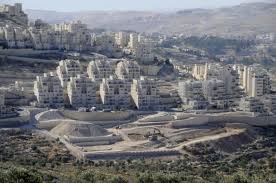
Along the same lines, the term settlement shows tremendous bias. If portions of Jerusalem are unresolved, then new Palestinian construction on disputed lands are as much “settlements” as new Israeli construction. To speak of Palestinian civilians and Israeli settlers is to accept a false narrative and a dehumanizing one.
It behooves those who believe that Israel matters and its security and Jewish identity are important to be accurate with language. Otherwise, they simply cede points in negotiations and risk putting Israel in an even more precarious position as diplomacy continues.
If you enjoy "Love of the Land", please be a subscriber. Just put your email address in the "Subscribe" box on the upper right-hand corner of the page.
Commentary/Contentions
22 May '11
http://www.commentarymagazine.com/2011/05/22/language-matters-in-the-middle-east/
One of the more irresponsible press habits during the Iraq war was the inconsistent use of the passive voice. Americans might kill five Iraqis in an operation gone awry, but when a bomb went off in a school yard, the major networks and newspapers would passively report, “20 children killed in Iraq.” Never would they say, “Terrorists killed 20 children in Iraq.” Over time, the message of the language matters: When people talk about the tens of thousands of civilians killed after Saddam’s fall, they ironically assumed American responsibility rather than realize that it was the terrorists killing Iraqis whom the Americans and Iraqi government jointly were fighting. To abandon Iraq amidst the terrorist insurgency would not (and will not) bring peace and security, but would be the equivalent of handing Cambodia to the Khmer Rouge.
In the Arab-Israeli conflict language also matters. Israel’s borders today are the 1967 borders, modified only by the annexation of Jerusalem and the Golan Heights and some minor arbitrated settlements with Egypt, Jordan, and Lebanon. Why do we talk about President Obama demanding that Israel go back to the 1967 borders when he technically means withdrawal from the West Bank and portions of Jerusalem to return to the pre-1967 border, i.e., the 1949 Armistice Lines?
Technically, the West Bank is disputed territory, not occupied territory. There was no independent Palestine in 1967 before the Six-Day War. The status of the territory was just as unresolved before 1967 as it was after. If the Israelis “occupy” the portions of the West Bank unresolved under Oslo and subsequent accords then the Palestinian Authority also “occupies” those areas. To resolve the dispute takes negotiations and compromise, not mob rule or executive fiat. Make no mistake: I personally favor a two-state solution and believe that Israel will not ultimately possess the entirety—or even the majority of the West Bank—but I also believe that after so many wars launched from the West Bank, peace requires defensible borders, not an advanced front line for Arab, Iranian, and perhaps Turkish rejectionists bent on Israel’s annihilation.
Along the same lines, the term settlement shows tremendous bias. If portions of Jerusalem are unresolved, then new Palestinian construction on disputed lands are as much “settlements” as new Israeli construction. To speak of Palestinian civilians and Israeli settlers is to accept a false narrative and a dehumanizing one.
It behooves those who believe that Israel matters and its security and Jewish identity are important to be accurate with language. Otherwise, they simply cede points in negotiations and risk putting Israel in an even more precarious position as diplomacy continues.
If you enjoy "Love of the Land", please be a subscriber. Just put your email address in the "Subscribe" box on the upper right-hand corner of the page.
Love of the Land: Language Matters in the Middle East




 Posts
Posts