Showing posts with label UNIFIL. Show all posts

Tuesday, 17 May 2011

Love of the Land: Nakba Day: UN Forces Do Little or Nothing to Stop Rioting

Nakba Day: UN Forces Do Little or Nothing to Stop Rioting


Omri Ceren
Commentary/Contentions
15 May '11


http://www.commentarymagazine.com/2011/05/15/nakba-day-un-forces-do-little-or-nothing-to-stop-rioting/

Palestinian “refugees” from the Gaza Strip, the West Bank, Syria, and Lebanon—the Palestinians being the only people on the planet with fifth-generation “refugees”—have been trying to storm Israel all day. Their rioting comes as part of the Palestinians’ annual Nakba Day celebrations, during which they violently indulge in the fantasy of eradicating Israel while fawning global media outlets write about “the uprooting they suffered at the time of Israel’s founding on May 15, 1948” (actual Associated Press phrasing).

On the Lebanese border rioters got all the way to the Israeli border at two different spots. Lebanese troops used light weapons to disperse one riot, but at Marun Aras the LAF was a non-presence—Lebanese soldiers literally stepped aside—and IDF soldiers had to open fire, killing as many as four. On the Syrian border thousands of people, including women and children, rushed the border fence to tear it down. The IDF commander on authorized only selective fire, and the result was that almost one hundred infiltrators managed to enter Israel.

It’s possible that the IDF got caught flat-footed, with Israeli intelligence relying on the Syrian army to maintain calm. Apparently unanticipated was that Assad would try to distract his people from how he’s been killing them, and that he would order his troops to allow a border incident. The Israelis will now start working on where and why they failed to properly anticipate the coordinated riots.

While that’s happening, U.S. policies in Lebanon and on the Golan Heights should also come in for some reevaluation. It’s not that the U.S. is charged with assuring Israel’s security, although that’s the rhetoric we use when we’re pushing the Israelis to give up badly needed strategic depth. It’s that we contribute weapons and money to the Lebanese Armed Forces (LAF) and to UN peacekeeping missions, and those policies have costs, and those costs are supposed to be outweighed by stability-enhancing benefits. And yet this morning it’s been mostly costs and not many benefits. Across the board. Again.

In Lebanon we’ve been vigorously pouring weapons into the LAF since late 2007, with justifications running from “it will shame Hezbollah into disarming” to “it will allow Lebanon to secure its territory.” The subsequent half-decade has seen Hezbollah take over the Lebanese government, something that was explicitly and easily predictable when we embarked on the scheme, while the Lebanese army is still apparently torn over the need to secure their border. Lebanese soldiers have been more than willing to use US weapons to launch sniper attacks against Israelis and destabilize the region. But as far as keeping their own citizens from launching de facto invasions of neighboring countries? Not so much.

Now to the UN peacekeeping missions. Writing in one of his many retrospectives, former Israeli diplomat Abba Eban mused about the “unparalleled speed” with which UN forces stationed in the Sinai Peninsula stepped aside in May 1967, the request to evacuate having been made by Egypt so its forces could wage war against Israel. Plus ça change.

The United Nations Disengagement Observer Force on the Golan Heights is supposed to maintain “overall supervision” of the Israeli-Syrian buffer zone—that’s one of the few reasons they’re suffered to exist, and they’ve recently had their mandate extended—and it doesn’t seem like they did very much. Israeli radio says that UNDOF is even refusing to comment on the incidents. Money well spent, trust well-placed.

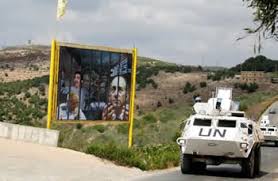
The performance of the United Nations Interim Force in Lebanon—which the Bush-era State Department insisted would secure southern Lebanon if Israel backed off Lebanon II—was even worse. UNIFIL has 12,000-plus troops and a budget of almost half a billion dollars. Where UNDOF is mostly just a useless money pit, however, UNIFIL actively works to destabilize the region. UNIFIL troops have broken up Israeli intelligence gathering operations, have leaked Israeli intelligence to Hezbollah, have threatened to open fire on Israeli military assets, have hidden evidence of Hezbollah attacks on Israel, have provided Hezbollah with human shields during wartime and then lied about it, have dressed terrorists in UN uniforms to smuggle them away from the IDF, and were almost certainly complicit in the Hezbollah operation that triggered Lebanon II.

UNIFIL backers justify the mission’s massive presence in the broadest terms, and peacekeepers are charged with “restoring international peace and security.” In light of their functional absence during multiple, severe border intrusions today, that doesn’t seem like a tenable rationalization.

Of course maybe preventing civilian cross-border rioting isn’t what the Lebanese army and those UN missions are supposed to prevent. Maybe, for instance, they’re supposed to block Israel and Hezbollah from tangling. But since they’re utter failures when it comes to doing that, basic crowd control was really the only justification left. And now it seems absurd too, raising the question of what exactly our policies are supposed to be accomplishing.

If you enjoy "Love of the Land", please be a subscriber. Just put your email address in the "Subscribe" box on the upper right-hand corner of the page

Love of the Land: Nakba Day: UN Forces Do Little or Nothing to Stop Rioting

Tuesday, 20 April 2010

Love of the Land: Lebanon's Double Game is Coming to an End

Lebanon's Double Game is Coming to an End


JINSA Report #: 981
19 April '10

General Petraeus's widely remarked-upon but little-read testimony before Congress made note of:

Ungoverned, poorly governed and alternatively governed spaces. Weak civil and security institutions and the inability of certain governments in the region to exert full control over their territories and conditions that insurgent groups can exploit to create physical safe havens in which they can plan, train for, and launch operations, or pursue narco-criminal activities. We have seen these groups develop, or attempt to develop, what might be termed sub-states.


He cited Lebanon.

For years, the Government of Lebanon has cried to the world that it is abused by Israel because it is too weak to control its territory (as if no fault accrues to that). And the world reliably denounces Israel's efforts to protect its own population from the depredations, first of the PLO and then of Hezbollah, emanating from Lebanese territory. And even when it was understood that Israel had been provoked beyond reason (2006), the Government of Lebanon was treated as if it was twice a victim-first of Hezbollah and then of Israel.

That's not quite the case. Lebanon, like the Palestinian Authority, is both terrorist and state sponsor of terrorists. There are those who consider Hezbollah to be the army of Lebanon, allowing Lebanon to be a confrontation state without taking the responsibility for being one. Lebanon claims victim status when it is convenient, but provides money, territory, and diplomatic and political support to terrorist groups the rest of the time. Hezbollah's politicians are in the Lebanese parliament and hold a "blocking third" in the cabinet (enough to veto policies of the elected government). Hezbollah's army operates with the express permission of the Lebanese government and a good case can be made-and Israelis have made it-that Hezbollah is actually the armed force of Lebanon.

(Read full report)

Please be a subscriber. Just put your email address in the "Subscribe" box on the upper right-hand corner of the page.

Love of the Land: Lebanon's Double Game is Coming to an End

Monday, 1 February 2010

Love of the Land: They’ve Been Telling Us All Along...

They’ve Been Telling Us All Along...


Marty Peretz
The New Republic
31 January "10

United Nations Security Council Resolution 1701, against which I warned long ago, passed unanimously on August 11, 2006. Two days later, the Israeli cabinet approved the motion 24-0--but with one astute minister abstaining. For whatever it is worth, I thought (and wrote) that the restrictions on Hezbollah (and, more than inferentially, on both Syria and Iran) meant less than nothing. Control of the smuggling of arms to Hezbollah and of the reintroduction of Hezbollah men into southern Lebanon was delegated to UNIFIL, the United Nations Interim Force in Lebanon, which had been an interim operation since 1978 ... and a useless operation at that. Utterly useless. And this was the case whether the soldiery was Tonga’s or Spain’s.

Tzipi Livni, the Israeli foreign minister during the Lebanon war, formed a sisterhood with Condi Rice, and together they panicked the Council into passing a measure that was bound to fail. UNIFIL had no authority and few men. Hezbollah very quickly began to test 1701 and found that the path was clear for any and every violation it wanted to commit.

(Read full article)


Love of the Land: They’ve Been Telling Us All Along...

Monday, 16 November 2009

Love of the Land: Spain, Israel and the Row Over UNIFIL

Spain, Israel and the Row Over UNIFIL


Soeren Kern
Hudson New York
16 November 09

Senior Fellow, Transatlantic Relations at the Madrid-based Strategic Studies Group


Both friends and foes believe that Zapatero’s increasingly erratic anti-Israel antics are undermining Spain’s international credibility. And indeed, the Zapatero government’s is becoming more radical in its anti-Israel bias.

Earlier this year, for example, a Spanish magistrate aligned with the Socialist party attempted to prosecute Israeli officials for war crimes. In August, the Zapatero government paid for 40 Spanish activists to travel to Israel to rebuild Palestinian homes in East Jerusalem that the Israeli government deemed illegal and tore down in 2008. More recently, Zapatero’s Housing Ministry disqualified a group of Israeli academics from a solar power design competition (which is being sponsored by the US Energy Department) because their university is in the West Bank.

But what about UNIFIL, where Spain has deployed around 1,000 troops?

Most analysts agree that UNIFIL’s mission has been compromised from the start. Although UN Resolution 1701, which brought an end to the Lebanon war in August 2006, is unequivocal in its call for an arms embargo, UNIFIL’s rules of engagement were deliberately muddled by countries like Spain to prevent the force from actively looking for Hezbollah’s weapons.

The lack of a clear commitment by UNIFIL to disarm Hezbollah is a shortcoming that Iran and Syria have been quick to exploit: They have rebuilt Hezbollah’s arsenal while Europeans have stood by and watched.

Israeli Defence Minister Ehud Barak has cancelled a November 4 and 5 visit to Spain amid a dispute over the command of the European-led United Nations Interim Force in Lebanon (UNIFIL). The visit was called off after reports surfaced that Israeli Prime Minister Benjamin Netanyahu had secretly asked Italian Prime Minister Silvio Berlusconi to keep Italy in command of the 13,000-strong UNIFIL force for six months longer than planned, instead of allowing Spain to take over.

(Read full article)


Love of the Land: Spain, Israel and the Row Over UNIFIL

Wednesday, 28 October 2009

Love of the Land: The Unfinished War

The Unfinished War


Jonathan Spyer
GLORIA Center
15 October 09

The explosion in the south Lebanese village of Tayr Felseir offers the latest evidence of the way in which Hizbullah is rebuilding its infrastructure following the Second Lebanon War in 2006. In the pre-2006 period, Hizbullah maintained its military infrastructure in open countryside areas often declared off-limits to all but the movement's personnel. The rebuilt infrastructure, by contrast, has been constructed within the fabric of civilian life in south Lebanon. This process has taken place largely undisturbed by the Lebanese and UN military personnel conspicuously deployed throughout the south.

Just over a year ago, The Jerusalem Post described some of the methods used by Hizbullah in building its new infrastructure. Fortifications were being constructed in private homes whose owners had left the south for the Beirut area. The owners were offered friendly advice not to inquire too closely regarding the alterations. Evidence suggests that this and similar practices have continued apace.

Hizbullah's decision to make use of populated areas is primarily a result of the increased presence of UNIFIL and LAF (Lebanese Armed Forces) personnel in the area south of the Litani River, a presence which was enforced under the terms of UN Resolution 1701. Of course, the movement has made use of civilian-populated areas in the past. During the 2006 war, Hizbullah often launched Katyushas from villages (generally non-Shi'ite ones). But the placing of arms caches and permanent positions within residential areas has served to render the renewed military infrastructure largely off-limits to international inspection. Past experience indicates that the embarrassing publicity deriving from the Tayr Felsair explosion is unlikely to alter this picture.

This week's explosion was not the first time in recent months that Hizbullah ordnance has accidentally detonated in south Lebanon. On July 14, a series of large explosions took place in the village of Khirbet Silm. The events that followed and the UNIFIL investigation into the explosions show the extent to which both the international forces and the Lebanese Army are adopting a "live and let live" attitude to Hizbullah's preparations for the next war.

At the time, Hizbullah actions in Khirbet Silm followed a similar pattern to those observed on Monday in Tayr Felsair. First, Hizbullah agents removed the evidence. As this was being done, a number of "outraged residents" from the area held demonstrations to prevent UNIFIL troops from inspecting the scene. Peacekeepers eventually conducted their investigation, and concluded that the site at Khirbet Silm contained large quantities of 107 mm.

Katyusha rockets, heavy machine gun rounds and mortar tubes of a type used by Hizbullah.

Investigators from the international force also discovered that the site had been permanently guarded by Hizbullah personnel. They recorded that all this constituted a "serious violation" of Resolution 1701.

Beyond this declaration, the investigation has had no discernible result. No one was ever named, much less held accountable. Nor did UNIFIL's modus operandi change to take into account the likelihood that if there was an arms depot in Khirbet Silm it probably wasn't the only one.

UNIFIL REMAINS deployed mainly in unpopulated areas. It enters Shi'ite villages only with an escort of Lebanese army personnel. Its vehicle and air patrols, taking place along recognized patrol paths and in rural areas, have produced some tangible results in terms of discovering unused bunkers and old munitions. But the international force, which maintains no independent checkpoints, does its best to stay out of the way of Hizbullah and the civilian population.

Except for cases where there are obvious signs pointing to the presence of ordnance - such as when a large explosion occurs - UNIFIL simply prefers not to act on the evidence. And there is no indication that the latest explosion at Tayr Falseir will change this situation. Rather, it is more likely that UNIFIL's investigation will be rapidly forgotten and the results quietly filed away as the media moves on.

Even more problematic is the role being played by the LAF. The Lebanese army and UNIFIL were prevented from entering the house in Tayr Falseir immediately following the explosion. Once LAF representatives were permitted to enter, they swiftly endorsed Hizbullah's version of events.

The Lebanese army, which is much more visible on the ground than UNIFIL, undoubtedly has a far better sense of what is really going on. The problem with the LAF becoming an obstacle to Hizbullah rearming and reorganizing itself in south Lebanon is that the army is a deeply divided organization. Many of its members are sympathetic to the "resistance." Thirty percent of the LAF officer corps, and a majority of its rank and file, are Shi'ite, like Hizbullah. More fundamentally, the official position of the LAF is one of "endorsement" of Hizbullah's "right to resist." The LAF defines Israel as its "primary antagonist and enemy." So neither UNIFIL, nor the LAF, nor their respective employers - the United Nations and the government of Lebanon - are going to be standing in the way of Hizbullah's program of rearming in populated areas any time soon.

Ultimately, the situation in southern Lebanon is a facet of a larger problem, namely, the existence of a Hizbullah state within a state, which is answerable to no one but the movement's leadership and its Iranian patrons. Since the mini-civil war of May 2008, it has been clearer than ever that there is no force in the country able to challenge Hizbullah's independent foreign and "defense" policies. The movement maintains a parallel army, parallel security services, a parallel communications network and also, of course, independent educational and social structures.

The winners of last June's elections in Lebanon do not like the current situation, but they are helpless to prevent it, as they have not even succeeded in forming a government since their victory. The extent to which the Hizbullah state within a state is subservient to Iran or maintains its own agenda remains debated by analysts. But there is no debate that it is entirely free of any control or supervision from the official Lebanese state.

Preparations for the next round of fighting are going on daily, undisturbed, in the heart of the populated areas south of the Litani River, and the occasional "work accident" is the only reminder the world receives that it is happening. UNIFIL conducts its patrols and doesn't get in the way, and the LAF plays an even more ambiguous role. Anyone who thought that the war between Hizbullah and Israel ended on August 14, 2006 was surely mistaken.

Jonathan Spyer is a senior research fellow at the Global Research in International Affairs (GLORIA) Center, Herzliya, Israel


Love of the Land: The Unfinished War

Sunday, 13 September 2009

Israel Matzav: UNIFIL effectively collaborated on Friday's rocket attack

UNIFIL effectively collaborated on Friday's rocket attack

On Friday, I reported on a rocket attack against the town of Nahariya on Israel's northwestern border with Lebanon. The Lebanese newspaper a-Nahar reports in Sunday's editions that UNIFIL knew about the rocket attack ten days in advance and did nothing.
According to A Nahar, UNIFIL troops also received report of the type ofrockets to be used. The United Nations force passed the information on to the Lebanese Armed Forces (LAF) two days ahead of the shooting. The report did not state whether the LAF acted on the intelligence.

On Saturday, Lebanese media reported that the rockets were fired by four men who arrived to a village near Tyre by pick-up truck, positioned the rockets on launchers, set up timers and escaped. Following the shooting on Friday, UNIFIL and the LAF raised their level of alert.

The IDF fired about 15 artillery shells at the source of the shooting immediately afterwards. It estimated that the rockets were fired by elements of Global Jihad and that the incident was isolated and would not lead to escalation on the Lebanese front.

Later Friday evening, Israel filed an official complaint with the UN over the incident. In the complaint, Israel's envoy Gabriela Shalev clarified that Jerusalem held the Lebanese state responsible for the shooting.
Here's the problem: Under the UNIFIL rules of engagement, about all they can (officially) do is to notify the Lebanese Armed Forces. Given those circumstances, it would have been far better had they notified the IDF.

By the way, I wonder if these guys were the shooters:


Israel Matzav: UNIFIL effectively collaborated on Friday's rocket attack

Sunday, 23 August 2009

Israel Matzav: UNIFIL building a fence to keep Zionist cows out

UNIFIL building a fence to keep Zionist cows out

Even the cows in the Middle East are political. This is from Monday's Lebanese Daily Star.

KFAR SHUBA: The Spanish contingent operating as part of the United Interim Forces in Lebanon (UNIFIL) pursued works to build a fence to surround the Baathaiil Lake in the southern Kfar Shuba, while talks to dispose of the cadaver of a cow that recently died came to a halt, according to a report carried by the state-run National News Agency on Sunday.

Read All at :

Israel Matzav: UNIFIL building a fence to keep Zionist cows out

Sunday, 16 August 2009

Israel Matzav: Spain expels Hondurans from UNIFIL

Spain expels Hondurans from UNIFIL

From an IBD editorial (worth reading) on recent terrorist victories in the courts:

Also Thursday, Spain's socialist government showed its low regard for anti-terrorist peacekeeping in Lebanon, where it has a leading U.N. role. Spain declared 51 Honduran volunteer troops unwelcome to help keep peace in that terrorist-threatened nation.

Read All at :

Israel Matzav: Spain expels Hondurans from UNIFIL

Friday, 31 July 2009

Israel Matzav: US may back expansion of UNIFIL powers

US may back expansion of UNIFIL powers

Susan Rice, the American ambassador to the United Nations, told the US House Foreign Affairs Committee this week that the United States does not have the power to expand UNIFIL's mandate in southern Lebanon. However she believes that the Security Council might be willing to expand the mandate.

Addressing the recent explosion at an arms cache in south Lebanon, US Ambassador to the United Nations Susan Rice told the House of Representative's Foreign Affairs Committee that while UNIFIL enjoys limited power in the Arab country, its presence still has some value.

Read All at :

Israel Matzav: US may back expansion of UNIFIL powers

Tuesday, 21 July 2009

Israel Matzav: Shocka: UNIFIL helped Lebanese breach border

Shocka: UNIFIL helped Lebanese breach border

Israel's ambassador to the United Nations, Gavriela Shalev, has accused UNIFIL of assisting 15 Lebanese in breaching Israel's border on Friday.

On Friday, 15 Lebanese civilians crossed illegally into Israel, shouting and waving Hizbullah flags. IDF troops spotted the group, but did not confront them as they were reportedly unarmed and returned to Lebanon minutes later, without incident.

In a letter submitted by the ambassador to UN Secretary General Ban Ki-Moon and the president of the United Nations Security Council, Shalev accused a contingent of Indian UNIFIL peacekeepers of having done nothing to prevent the demonstrators from crossing the border and even cooperating with the group.

"[The demonstrators] stood opposite the UNIFIL force, [which did nothing,] and worse than that, according to statements made by the organizers of the demonstration, they even cooperated with them," the letter read.

Read All at :

Israel Matzav: Shocka: UNIFIL helped Lebanese breach border
Related Posts Plugin for WordPress, Blogger...