Showing posts with label Turkey. Show all posts

Sunday, 16 October 2011

Israel Matzav: Turks rally against NATO

Turks rally against NATO

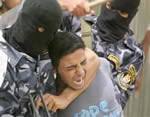
No, you didn't misread the headline. Iran's Press TV is reporting that there was a rally against NATO in Turkey on Saturday (and no, that is not a picture from it) (Hat Tip: Joshua I).
Activists from different political parties are going to participate in Trabzon rally scheduled for 12:30 a.m. Saturday.

The organizers of the protest say that the implementation of the planned project will not only be harmful to Turkey, but also to the whole Middle East.

Turkish newspaper Aydinlik published interviews with some of the political officials that will participate at the rally.

Yavuz Karan, the provincial head of the Republican People's Party (CHP) told the newspaper that “we don't want our country to be a shield for other countries. This is why we will join the demonstration.”

Zekeriya Vural, the provincial head of the Democratic Left Party (DSP) said that the “missile system project will harm Turkey. That is why we will participate at the demonstration and fully support it.”

Sabri Dilber, the provincial head of Turkey's Workers' Party, said that “our plan is to make all the Trabzon people aware about the plan. We invite all people in the region to join the rally.”

The missile system is reportedly planned to be stationed at Kurecik district of Malatya province in eastern Turkey.
I think it would be great if Turkey withdrew from NATO. Heh.


Israel Matzav: Turks rally against NATO

Sunday, 2 October 2011

Israel Matzav: Why not an anti-Turkey alliance?

Why not an anti-Turkey alliance?

Writing at Huffington Post, Sigurd Neubauer discusses Israel's booming alliances with Greece, Bulgaria, Cyprus and other Balkan countries. Neubauer attributes those ties to Israel's poor relations with Turkey that have forced it to seek alternatives. At the end, he comes up with this (Hat Tip: Joshua I).
While improved relations with Athens and Nicosia should be considered a significant foreign policy victory for Netanyahu, it remains unclear whether an alliance with Cyprus and the Balkan states can fully substitute for Israel's former strategic military partnership with Turkey. Given Greece's significant financial problems and Israel's own budgetary restraints, it remains also doubtful whether any of the two countries can "afford" prolonged military tensions presented by an (potentially) adversarial inclined Turkey. Additionally, unless a political solution is found to the 2010 Gaza-Flotilla, the Greek-Israeli military partnership could easily escalate into regional instability as maritime tensions in the eastern Mediterranean with Turkey could become inevitable. For those reasons, coupled with the current regional turmoil presented by the "Arab Spring," Netanyahu's diplomatic outreach to the Balkans and Cyprus should aim to maximize economic and military relations well short of establishing an "anti-Turkish" alliance.
Let's get this straight: Israel's relations with Turkey are over unless and until there is a significant change in the Turkish government away from Islamism and back towards secularism. At the moment, that is most unlikely for the foreseeable future. Israel must assume that its rift with Turkey is permanent, not temporary, and it must act accordingly. If forming an anti-Turkish alliance will keep Turkey in check, then by all means, let's do it. Maybe if Greece were not under constant threat from Turkey, it would not be such an economic basket case (admittedly, cleaning up Greece's taxation system would also help).

We have nothing to lose and everything to gain from entering into alliances with others who are the subjects of Turkish threats.


Israel Matzav: Why not an anti-Turkey alliance?

Thursday, 29 April 2010

RubinReports: Who's Winning So Far? Iran/Syria: 2; United States: 0

Who's Winning So Far? Iran/Syria: 2; United States: 0

By Barry Rubin

Remember Turkey? It used to hold joint military exercises with the United States and Israel. Now it holds them with Syria while refusing to hold even an air-sea rescue drill with Israel. Yet there's no real concern in the U.S. government that Turkey--or rather the neo-Islamist current government--may be changing sides or of U.S. technology becoming available to Iran and Syria in the future.

Consider this list, which is pretty undeniable in factual terms:

U.S. engagement with Iran: failure

U.S. engagement with Syria: failure

Iran/Syria engagement with Lebanon: success

Iran/Syria engagement with Turkey: success

Bottom line: The United States has failed to pull Syria away from Iran; Iran and Syria have pulled Lebanon and Turkey away from the United States.

Iran/Syria: 2; United States: 0

In Washington policy circles and to a large extent in the mass media, no one has noticed this little comparison of success.

RubinReports: Who's Winning So Far? Iran/Syria: 2; United States: 0

Tuesday, 13 April 2010

RubinReports: Two great, brief articles about what's going on in Turkey

Two great, brief articles about what's going on in Turkey

By Barry Rubin

Soner Cagaptay may be the best political analyst writing on Turkey in the world today. He is doing a four-part series on the current regime in Turkey and its march toward Islamism, of which the first two pieces are published so far. If you want a briefing on what's going on read these short articles:

Transformation Under the AKP: The Rise and Demise of Moderate Islamism Part One and Part Two

RubinReports: Two great, brief articles about what's going on in Turkey

Wednesday, 7 April 2010

RubinReports: Wake Up and Smell the Paradigm Shift: Turkey's Regime Marches Toward Islamism

Wake Up and Smell the Paradigm Shift: Turkey's Regime Marches Toward Islamism

Please be subscriber 9,917. Just put your email address in the box on the upper right-hand corner of the page.http://www.rubinreports.blogspot.com/

We depend on your tax-free contributions. To make one, please send a check to: American Friends of IDC, 116 East 16th Street, 11th Floor, New York, NY 10003. The check should be made out to “American Friends of IDC,” with “for GLORIA Center” in the memo line.

By Barry Rubin

More evidence piles up every day that the Turkish government is moving toward radical Islamism yet Western policymakers pretend it merely combines a nice flavor of moderate Islam combined with democracy.

It is clear, for example, asPrime Minister Recep Tayyip Erdogan says, "It's Israel that is the principal threat to regional peace." Not Iran, Israel. Aside from everything else, the Turkish government is on the other side regarding Western efforts to stop Iran from getting nuclear weapons since the prime minister has said that Iran isn't developing weapons, that he regards Iranian leader Ahmadinejad as a friend, and that even if Iran were building nuclear bombs it has a right to do so.

Israeli Foreign Minister Avigdor Lieberman was right when he said that Erdogan is "slowly turning into [someone like Libyan dictator MuammarQadhafi] or [Venezuelan dictator] Hugo Chavez....It's his choice. The problem is not Turkey, the problem is Erdogan." Well, Erdogan and his colleagues.

Meanwhile, the regime also continues to arrest military officers on trumped up coup charges. Here's a good article on how the government is trying to intimidate the armed forces into intimidation, removing the last obstacle to its remaining in power for a very long time and doing as it pleases.

If this kind of thing--making friends with Iran, reducing internal freedoms, arresting scholars [see here for a detailed report] and others on phony coup charges--happened in a South American or Asian country it would set off alarm bells and be dramatic front page news. But as part of the denial psychology with which much of the West deals with anything happening in a Muslim-majority country it fits right in.


RubinReports: Wake Up and Smell the Paradigm Shift: Turkey's Regime Marches Toward Islamism

Tuesday, 6 April 2010

RubinReports: Syrian Regime Never Makes Lasting Peace or Real Compromises, Still Claims Territory From Its New "Friend" Turkey

Syrian Regime Never Makes Lasting Peace or Real Compromises, Still Claims Territory From Its New "Friend" Turkey

Please be subscriber 9,902. Just put your email address in the box on the upper right-hand corner of the page.

We depend on your tax-free contributions. To make one, please send a check to: American Friends of IDC, 116 East 16th Street, 11th Floor, New York, NY 10003. The check should be made out to “American Friends of IDC,” with “for GLORIA Center” in the memo line.

By Barry Rubin

Ha! Syria now proclaims itself a good friend of Turkey and vice-versa. No problems, right? But go to the official website of the Syrian Ministry of Tourism and guess what? There's a map in which the Syrian government claims the Turkish territory of Alexendratta (Iskanderun), which was passed to Turkey back in the 1930s. At several points in recent times, the Syrian government told the Turks it was dropping the claim.

But, of course, the Syrian regime never gives up on its goal of dominating the Arabic-speaking world and incorporting all of Lebanon, Israel, and Palestinian-ruled territories into its empire. When they are feeling in a good mood they sometimes throw in Jordan, as well as Iraq as a sphere of influence.

Meanwhile, the United States courts Syria, ignoring for all practical purposes its involvement in massive terrorism in Iraq and Lebanon. Yet the idea that Syria's regime is going to change its direction and become moderate is an illusion. They haven't even moderated in real terms toward their new friend, Turkey.


RubinReports: Syrian Regime Never Makes Lasting Peace or Real Compromises, Still Claims Territory From Its New "Friend" Turkey

Sunday, 4 April 2010

RubinReports: Turkish Islamist Regime Writes New Constitution To Guarantee Its Future Rule

Turkish Islamist Regime Writes New Constitution To Guarantee Its Future Rule

Please be a subscriber. Just put your email address in the box on the upper right-hand corner of the page.

We depend on your tax-deductible contributions. To make one, please send a check to: American Friends of IDC 116 East 16th Street 11th Floor New York, NY 10003. The check should be made out to IDC and on the lower left you write: For GLORIA Center.

By Barry Rubin

Given the whitewash generally and generously applied to Turkey's Islamist-oriented regime internationally, there is little awareness of one of that government's (now closer to Iran and Syria than to the United States) most dangerous projects: the rewriting of Turkey's constitution.
The drafting of that document is in the hands of party loyalists. Nor does it deal with Turkey's real political problems: the fact that leaders of political parties are virtual dictators; the 10 percent minimum which allowed the regime when it first "won" the elections to get almost two-thirds of the seats with only around 31 percent of the votes.

Instead, there are cute pseudo-democratic gimmicks that sound good but are designed to entrench the current government in power forever.

For example, the president can appoint two people who merely have a BA degree to the Constitutional Court. One can imagine how they would vote. It also takes the right to ban political parties away from the high court and gives it to parliament, meaning the government could ban opposing parties whenever it felt like it.

According to former president Ahmet Necdet Sezer, the prime minister now controls parliament and is adding the judiciary to that, thus having total control over the branches of government. With the army intimidated by threats, arrests, and slander, there is nothing left to limit the regime's power.

Perhaps public criticism--in those parts of the media the government does not yet control or intimidate--could make the regime back down but it could jam through a constitution designed to end Turkey's status as a democratic state.

By taming the army, subordinating the courts, taking over or intimidating the media, packing the bureaucracy with its own supporters, and using leverage over the universities, the regime intends to stay in power forever.

RubinReports: Turkish Islamist Regime Writes New Constitution To Guarantee Its Future Rule

Tuesday, 23 March 2010

Love of the Land: Guardian and Independent play down Turkey threat to deport resident Armenians

Guardian and Independent play down Turkey threat to deport resident Armenians


Just Journalism
22 March "10

(By now, we should all know the punchline.Y.)

Last week’s announcement by Turkish Prime Minister Recep Tayyip Erdogan that he might deport 100,000 Armenians from his country provides an interesting test for media responsiveness. It had – potentially – all the necessary ingredients for an explosive story: strong regional power responds to accusations of genocide against minority by threatening to deport said minority.

However, the comments made in an interview with the BBC following resolutions passed in the U.S. and Sweden acknowledging the mass killings of Armenians by Turkey between 1915 and 1923 as an act of genocide, failed to attract much attention. Only the right-of centre broadsheets covering the story in their print editions. ‘Turkey threatens mass expulsions to punish Armenians for genocide rulings’ led The Times’ international section on Thursday 18th March, detailing Erdogan’s threat:

‘In my country there are 170,000 Armenians; 70,000 of them are citizens. We tolerate 100,000 more. So what am I going to do tomorrow? If necessary I will tell the 100,000: OK, time to go back to your country.’

(Read full article)


Love of the Land: Guardian and Independent play down Turkey threat to deport resident Armenians

Tuesday, 16 March 2010

RubinReports: How Can Turkey's Government be a U.S. Ally if it's an Ally of Iran?

How Can Turkey's Government be a U.S. Ally if it's an Ally of Iran?


By Barry Rubin

Syria's government newspaper says Turkey is an ally of Syria and Iran. Iran's president says that Turkey is an ally of Syria and Iran. And now the prime minister of Turkey says basically the same thing. Yet much of the West is blind to what is right there out in the open.

The latest development is an interview that Turkish Prime Minister, Recep Tayyip Erdogan gave to the BBC totally defending the Iranian regime and claiming that country has no intention of developing nuclear weapons. (Do you think the Obama Administration will persuade Erdogan to support sanctions when he insists that there is no problem at all?)


Erdogan called Iranian President Mahmoud Ahmadinejad a "friend." He said, "Countries with nuclear weapons are not in a position to turn to another country and say: 'You are not supposed to produce nuclear weapons.'" The Turkish prime minister insisted:

"Iran has consistently spoken of the fact that it is seeking to use nuclear energy for civilian purposes and that they are using uranium enrichment programmes for civilian purposes only....That is what Mr Ahmadinejad has told me many times before."

Well as the old labor union song put it about coal miners in Kentucky:

"They say in Harlan County
There are no neutrals there.
You'll either be a union man.
Or a thug for J.H. Blair
Which side are you on?"

The Turkish regime and its new friends--which include Hamas and Hizballah--know which side that government is on, when will the U.S. government notice?


RubinReports: How Can Turkey's Government be a U.S. Ally if it's an Ally of Iran?

Monday, 8 March 2010

Love of the Land: Turkey picks the strong horse

Turkey picks the strong horse


Fresnozionism.org
07 March '10

Yesterday I mentioned the phenomenon of Turkey, under the ‘moderate’ Islamist AKP party, distancing itself from Israel and the US. As part of the process, Turkish PM Erdoğan never misses an opportunity to attack Israel:

Turkish Prime Minister Recep Tayyip Erdoğan on Sunday continued his verbal assault on Israel, according to Saudi paper Al Wattan, which quoted him as saying that that al Aksa Mosque, the Cave of the Patriarchs and Rachel’s Tomb “were not and never will be Jewish sites, but Islamic sites…”

Speaking to Palestinian journalists, Erdoğan reportedly said, “Palestine [was] always at the top of Turkey’s priorities.” He expressed his support for the renewal of indirect talks between Israel and the Palestinians. Donning a cloak of pan-Islamic identity, Erdoğan told Al Wattan that he “loves my brothers in Fatah and my brothers in Hamas to the same degree, because they are my Muslim brothers and I cannot distinguish between them.”


Israel in the past enjoyed a close collaboration with Turkey in military matters, but this has been reduced recently. It’s likely that if the AKP continues with its efforts to reduce the influence of the army (by arresting and prosecuting officers for treason), that this trend will continue.

Love of the Land: Turkey picks the strong horse

Sunday, 7 March 2010

RubinReports: How to Make Defeatism Look Good: Let’s Give Up and Cheer the Islamists

How to Make Defeatism Look Good: Let’s Give Up and Cheer the Islamists

By Barry Rubin

I’m not going to bash or rant about a Newsweek article about Turkey by Owen Matthews—shocking and dangerous as it is--but rather talk about what is wrong and inaccurate about it. That article is part of a new wave of defeatism sweeping the West, though it still remains subordinate to the more ostensibly attractive idea that there is no real conflict or at least one easy to fix by Western concessions.

Here’s the title: “The Army Is Beaten: Why the U.S. should hail the Islamists.” Yes, we should thank the Islamists for taking over Turkey. But wait a minute! The ruling AK party says it isn’t Islamist. Indeed, I have been viciously attacked by them in the Turkish media for saying so. Up until now the line--including that from the regime itself--has been that we shouldn’t be afraid of them because they are really just democrats. But now some are willing to face the truth and still sugarcoat it.

Matthews writes:

“The political logic should be simple. The arrest of a shadowy group of generals for allegedly plotting a bloody coup should be a victory for justice. The end of military meddling in politics should be a victory for democracy. And greater democracy should make a country more liberal and more pro-European.”

Each of these sentences makes a false assumption and must be examined a bit.

Sentence one: Arresting military officers is only a victory for justice if they are guilty. Why does the author assume they are guilty? In fact, the claims are ludicrous. That a group of officers created a 5000 page plan for a coup that involved attacking mosques and massive attacks on civilians. It is one of a series of such accusations for which no real evidence has been presented, in which a widely disparate group of people have been arrested as alleged conspirators when their sole connection is that they are critics of the government.

This is ridiculously gullible. It’s like the famous sentence by a newsweekly magazine that even if the Hitler diaries were forgeries (they were) that would tell us a great deal about the history of the time. If in fact the arrests were trumped-up to tame the army so that the current regime can impose a dictatorship in practice it was not a victory for justice but for injustice. Iran, Syria, Hamas, Hizballah, and Islamists in general lie a lot (and a lot more than democratic government) so why should they be taken at their word, especially when any serious examination of evidence shows the truth.

Sentence two: Of course, in general, keeping the army out of politics is a victory for democracy, but that ignores the specific history of Turkey. The army has viewed itself and been accepted there as the guardian of democracy. This history is certainly imperfect but when the country has been sliding into anarchy in the past or fallen into the hand of those who threatened to destroy the republic, the army has stepped in briefly, gotten civilians to reorganize things on a stable basis, and quickly gone back into the barracks.

The Turkish army is not like those of the Third World which hunger for power, destroy democracy, and unleash corrupt and repressive regimes.

Sentence three: If indeed—as is the case—the regime is systematically cracking down on the free media and imposing its control over all the institutions. This is not leading to greater but to less democracy. There should be a lot more reporting on what's happening within the country instead of just repeating the regime's claims.

Indeed, the author states:

“And with the last major obstacle to the ruling AK Party's power gone, Turkey's conservative prime minister, Recep Tayyip Erdogan, will be free to implement his vision of a more Islamic Turkey. More democracy, then, doesn't necessarily lead to more liberalism, either.”

The assumption here is that this is what the Turkish people want. Yet it should be noted there are some big problems for that claim. Turkey’s electoral system is so weighted that the AK has received near-monopoly control on the basis of a vote that in most parliamentary democracies would have produced a coalition government.

Moreover, many or most Turks who voted for the AK weren’t doing so because they wanted Islamism—as public opinion surveys clearly show--but because they thought (mistakenly, even according to this author) that it was a mildly conservative party.

And finally, the AK is seizing control over institutions so as to be sure that it will never lose another election. It is destroying Turkish democracy, a point made rather obvious by a long list of such actions over non-military institutions like the civil service, courts, and media. The author—and many others—are simply taking the regime’s word for it and ignoring what the government is actually doing.

The author concludes by saying: “It's also clear that Turkey under the AK Party will remain a Western ally, and NATO will remain Ankara's most important strategic partner.”

Then, this unusually candid if wrong author explains:

“How do we know? The AK Party says so, and it has no real options. There's no rival alliance, not with Iran, the Arab world, or Russia, which could possibly rival the clout Turkey has, with the second-largest Army in NATO.”

Of course, Turkey has options. And here is the option the regime has chosen: To keep as much as possible the Western alliances while the content of its policy favors radical Islamist forces.

Incidentally, this "no option" argument is the root of a huge amount of confusion in the Middle East. Supposedly, Iran has "no option" but to become moderate; Syria has "no option" but to dump Iran; the Palestinian Authority has "no option" but to make peace. Yet over and over again the local forces find an option that they are quite happy to pursue other than the one laid out for them by Western observers. They have their own view of the world, ideology, and goals (often the goal of the regime being to amass wealth and stay in power).

And one of the key factors in this process is that--rightly or wrongly--they think they are winning so why should they change course or make compromises? And certain other ideas are calculated into their list of options: soon Iran has nuclear weapons. And the divine being is on their side. And the West is weak, stupid, cowardly, and easily fooled.

Turkey is one of the main places they think they are winning.

Now of course, the Turkish government doesn’t have to say: America stinks and we’re pulling out of NATO. It can keep the benefits of these relationships, having their cake and eating it, too. But in practice Turkey is moving closer to Iran and Syria, with the leaders of both of these two countries openly pointing out that fact. The question is what does it mean for Turkey to be a Western ally in a practical sense? If it supports Iran, Syria, Hizballah, and Hamas, just how does Ankara function as a Western ally? It’s meaningless.

So, the article concludes, “The world would be wise to side with the AK Party, not seek a return of the discredited generals.” I’m not sure why the generals are supposed to be discredited by ludicrous accusations orchestrated by an anti-American (in practice) government which needs to destroy them. Rather, it is the current regime in Turkey that should be discredited.

Still, it’s a pretty neat trick when a regime repressing Turkish democracy and increasingly siding with the enemies of the West can convince people in the West that this is a good thing.

As the theme song to the television show “MASH” put it:

“The game of life is hard to play,
I'm going to lose it anyway,
The losin' card I'll someday lay;
So this is all I have to say...

“That suicide is painless…
And I can take or leave it if I please.”

The Western world should reject playing that particular card as its strategy.


RubinReports: How to Make Defeatism Look Good: Let’s Give Up and Cheer the Islamists

Love of the Land: Israel blamed for US Armenian genocide resolution

Israel blamed for US Armenian genocide resolution


Fresnozionism.org
06 March '10

News item:

Jewish lobbyists contrived a U.S. congressional vote that labeled the World War One-era massacre of Armenians by Turkish forces as genocide, a London-based Arabic-language newspaper claimed on Saturday.

Pro-Israel lobbyists had previously backed Turkey on the issue but changed tack in retaliation for Turkish condemnation of Israel’s policies in the Gaza Strip, the Al-Quds Al-Arabi daily said in an editorial, according to Israel Radio reports…

In his leading article, Al-Quds Al-Arabi editor Abd al-Bari Atwan urged Erdogan not to give in to the Jewish lobby’s “extortion” tactics.


You may remember that back in 2007 a similar resolution escaped the Foreign Relations Committee, although it did not survive to become law due to pressure from the Bush Administration. At that time, Turkey threatened to cool relations with Israel, and even hinted that it might not be able to protect Turkish Jews against antisemitic reactions if the resolution passed.

(Read full post)

Love of the Land: Israel blamed for US Armenian genocide resolution

Thursday, 25 February 2010

RubinReports: Syria Welcomes Turkey to the Iran-Led, Anti-American Bloc

Syria Welcomes Turkey to the Iran-Led, Anti-American Bloc

By Barry Rubin

In its editorial welcoming President Mahmoud Ahmadinejad to Syria, the Syrian government newspaper al-Ba’th makes an interesting point buried at the end. One should note, of course, that this and just about everything else coming out of Syria also makes ridiculous the U.S. policy of engaging the dictatorship there with some illusion of splitting it away from its patron Iran.

But there’s something else going on here of the greatest importance. The editorial speaks of people in the Middle East who are coming together in an alliance rejecting Westernization, artificial borders, America, Israel, and various conspiracies. What countries are in this new alliance?

“Syria, Iran and Turkey, with their great peoples and their lively peoples and their rejectionist [the Syrian term for radical and anti-Israel, anti-American [policies are moving toward brotherhood….Welcome, President Ahmadinejad, in Syria.”

The Syrian regime is thus publicly trumpeting an Iran-Syria-Turkey alliance. The Turkish government's policy, in theory, is one of getting along with everyone. But while one should not exaggerate how far this has gone—and, of course, this is a Syrian, not a Turkish statement—the fact is that Ankara is now politically as well as geographically much closer to Damascus and Tehran than to Washington DC.

RubinReports: Syria Welcomes Turkey to the Iran-Led, Anti-American Bloc

Sunday, 31 January 2010

RubinReports: Answering Readers' Questions and Updates: Fatah and Turkey

Answering Readers' Questions and Updates: Fatah and Turkey

Please subscribe to the blog that raises the questions--and answers them--that the media misses or mistakes

1. Fatah, the Palestinian Authority and Jordan

Question: You describe Fatah hardliners as seeking a Palestine from the Jordan River to the Mediterranean. Why don't they want to take over Jordan also? And why is a similar change of mind impossible about a permanent peace with Israel?

Answer: Historically, the PLO and Fatah have not sought to overthrow Jordan and take it over. The exception is when they were overconfident during the 1968-1970 period and even then that was more a PFLP and DFLP idea than a Fatah one. While seeking revenge through the Black September terrorist group from 1970 to 1972, Fatah and the PLO have not worked actively to subvert Jordan, in part remembering the total defeat Jordan gave them in September 1970. Actually, the fact is that Hamas has largely displaced the PLO and many Palestinian Jordanians support the Muslim Brotherhood-related Islamic Action Front today. Jordan does worry about an independent Palestinian state but doesn't see Fatah as a direct threat today.

2. Fatah and the Al-Aqsa Brigade

Question The new Fatah charter refers to Al Asifa as its military wing. Is there a reason that Fatah seems to be abandoning Al Aqsa martyrs brigade? Or did Fatah itself use both names?

Answer: Al-Asifa has been the name of the PLO irregularforces (guerrilla/terrorist) since the 1960s. Al-Aqsa is not controlled by the Fatah Central Committee. One might call it a deniable terrorist force which is under the control of the West Bank local Fatah organization. Although the Western news media often falls for the trick, since Fatah has never tried to stop the group or disciplined any member for participating in it, al-Aqsa is clearly a Fatah group but, again, not necessarily one controlled from the top Fatah bureaucracy. Al-Aqsa was created by Marwan Barghouti, who is now a member of the Fatah Central Committee though in an Israeli prison for organizing the bloody second intifada--by his own admission--in 2000.

3. Turkish Regime's Plans to Take Over Army

Following the Turkish regime's attempt to intimidate me and my article about how that Islamist government is slandering the army and intimidating or throwing into jail peaceful critics, the next step in the campaign has been taken. Today's Zaman, the leading organ of the regime, now says the solution is that the armed forces reflect Turkey's diversity by admitting Islamist officers. Eventually, of course, the regime would ensure that the army is ideologically loyal to itself. So this is the plan: keep accusing the army of planning coups and terrorism (including schemes to put bombs in mosques), discredit it with the public, and blackmail it into becoming Islamist-oriented, thus completing the AKP regime's control over all Turkish institutions.


RubinReports: Answering Readers' Questions and Updates: Fatah and Turkey

Saturday, 30 January 2010

RubinReports: Scoop: How a "Leftist"-Islamist Alliance is Subverting Democracy in Turkey

Scoop: How a "Leftist"-Islamist Alliance is Subverting Democracy in Turkey

Please subscribe for more exclusive scoops and good analysis

Note: Even if you aren't interested in Turkey you should read this article as a case study of how Islamism works and how too many people in the West are taken in by it.

By Barry Rubin

Scary stuff is happening in Turkey. The stealth Islamist regime is increasingly threatening critics and creating phony plots against itself to justify taking more power into its hands. The process is a slow-motion one but the direction is away from moderation and democracy.

Foreign admirers of the AKP regime like to say it is a moderate Islamic government which proves that Islamism is compatible with democracy. It is possible that a few years in the future—when it is too late—observers will look back on its example to prove the opposite.

But here’s an obscure angle on what’s happening that tells a mountain-load about contemporary politics. Stick with me as we expose a covert operation that ties up the far left with the drive toward an Islamist dictatorship. Briefly, here are the themes:

--A nominally left-wing newspaper is an Islamist front fed disinformation by the regime in order to discredit the regime’s rivals, both the army and the left of center political parties.

--This front is praised by leftists in the West as a heroic venture when it is funded by Islamists and does their bidding.

--The Turkish regime is moving increasingly toward demonizing its secular enemies to the point where they can be repressed and Turkish democracy is, at best, limited and the country is moved toward being at least a partial Islamist state with authoritarian rule by a single party. While there will continue to be elections, the AKP is using extra-parliamentary means to ensure that it always will win.

And this is a pattern we’ll see repeated elsewhere. In fact, we’re already seeing it, in the West as well.

Slick neo-Islamist prime minister Recep Tayyip Erdogan is quoted in Today’s Zaman, which with its Turkish-language partner Zaman is owned by the Islamist Gulen movement and supports the regime, warning of a new alleged coup plot, supposedly called the “Sledgehammer Security Operation Plan,” to overthrow the government. The army is accused of planning a terrorist campaign of placing bombs in mosques to blow up innocent worshippers.

Creating such phony plots is one of the AKP regime’s main techniques for discrediting opposition and putting critics on trial. Previous alleged plots have included ones called Blonde Girl, Moonlight, Sea-sparkle, and Glove. But the main so-called army-opposition conspiracy is called Ergenekon. Those who have waded through thousands of pages of indictments and the disparate group of those arrested point out a rather important fact: there are no specific acts that took place and no real evidence against anyone.

One of the accused, for example, is Turkan Saylan, a secular leader in the grassroots opposition to the regime who has organized several mass demonstrations. The pro-AK media has accused her of being an Armenian-lover, supporter of the terrorist PKK Kurdish group, and a Christian missionary. But the missionary charge was only made in the Turkish-language Islamist media so it would not become known abroad so that the regime can still pretend to be tolerant and non-Islamist.

The real defenders of Turkish democracy are slandered as those who want to destroy it, while the destroyers are portrayed as the defenders.

The Ergenekon label is used to smear all critics of the regime. When an AKP parliamentarian close to Erdogan attacked my daring to point out how the Islamists repressed women’s rights, she accused anyone of agreeing with me of being part of the Ergenekon conspiracy and thus traitors to Turkey. Erdogan, who is portrayed abroad as a democratic leader, is now accusing the opposition of every political assassination in modern Turkish history, which is pretty serious incitement, and threatening newspaper columnists who criticize his government.

Here’s Today’s Zaman teaming up with the prime minister to make false statements labeling the peaceful parliamentary opposition as a group of terrorist coup-makers:

“Erdoğan said he was unable to understand why some parties act as advocates of illegal groups. He was referring to the main opposition Republican People’s Party (CHP), whose leader Deniz Baykal declared that he was an advocate of Ergenekon. Ergenekon is a clandestine crime network that has alleged links within the state and is suspected of plotting to topple the government…[charged with being] a terrorist organization.”

Baykalm leader of the left-of-center opposition party, is hardly an advocate of Ergenekon, terrorism, or overthrowing the regime in a violent coup.

And what is the source of the latest accusation? A mysterious leftist newspaper called Taraf. If you were to read the media column of the world’s leading leftist English-language newspaper, the Guardian, you’d think Taraf is a heroic champion of free speech. It calls Taraf “Turkey’s most courageous newspaper” and regards Ergenekon as a completely true story.

While pointing out there seems to be a mystery about how this newspaper is financed it explains that the editor does so out of his own pocket. In fact the editor is a journalist who owns a small bookstore which does not explain how he comes up with $6.6 million a year.

So where does the money come from? Apparently, though this requires further investigation, from a group of pro-Islamist, Gulen-connected businessmen of whom the most prominent is Ahmer Calik—in other words to the same people who back the regime and run Today’s Zaman. Calik gets big favors from the government, for example a major pipeline project.

Despite supposedly being a leftist newspaper, Taraf never criticizes Islamism or the government. When the regime’s police beat up leftist demonstrators on May Day the story went unreported in Taraf.

The newspaper’s sensationalism is pretty extreme. For example, last year it ran a story accusing NTV television network, a pro-secular station, of sending out electronic signals to crash the helicopter of an Islamist/ultra-nationalist extremist politician to crash. This is an accusation of murder. When NTV released its full phone records showing the accusation was false, Taraf and other pro-regime newspapers ignored the fact that their story was wrong and moved on to new accusations.

Intimidating newspapers and television stations—as well as buying them up--is one of the regime’s main tactics. For example, the main media empire supporting the opposition was hauled into court and given a fine of several billion (that is not a typo) dollars on trumped-up charges. The message is: shut up or we'll put you out of business.

The real threat to Turkey's remaining a free and democratic state is not the made-up Ergenekon nonsense but Erdogan, Gulen, Today's Zaman, and Taraf, with help from varous foreign dupes.
So there you have it. An Islamist regime pretending to be moderately conservative, a “leftist” newspaper set up to smear the opposition, false charges of terrorism against rival politicians, the use of the courts to jail or intimidate democratic critics, and the cheers of the Western left for all of these techniques.

Coming soon [if not already there already] to a country near you.


RubinReports: Scoop: How a "Leftist"-Islamist Alliance is Subverting Democracy in Turkey

Thursday, 28 January 2010

RubinReports: Governing Neo-Islamist Leaders Freak Out Over My Critiquing Their Oppression of Women

Governing Neo-Islamist Leaders Freak Out Over My Critiquing Their Oppression of Women

Please subscribe to the blog that drives the Turkish Islamists crazy--literally

By Barry Rubin

Recently, it has been reported that the AKP has been forcing women out of senior jobs in Turkey. A while ago I wrote an article publishing and describing four photos sent to me by Turkish friends showing graphically how oppressed and miserable Ermine Erdogan, wife of Turkey's prime minister, looked on visiting the Obamas in Washington.

What's going on in Turkey is scarcely a secret. For example, a Turkish-American wrote recently in the Los Angeles Times:

"In a disturbing trend, secular Turkish women feel growing pressure to cover up, even facing intimidation or discrimination if they don't. In one case, Turkish President Abdullah Gul, who has the authority to appoint university rectors, bypassed highly recommended female professor of medicine Gaye Usluer for a man, who was recommended second to her and received far fewer votes from their colleagues at Eskisehir Osmangazi University."

There are many such stories with specific examples to back them up.

Now an AKP member of parliament has thrown more abuse on me than I have ever seen in a mere 800 words. (And I've been working on the Middle East for 30 years!) The article in Hurriyet says that I am an evil Orientalist imperialist, though it at least pays me the compliment of saying I am original about it.

And all I said is that she looked oppressed! Oh, right, that's not a problem for women in the Middle East. Incidentally this is a reaction to the huge number of Turks who have been talking about the piece and complementing it. By referring to the trumped-up conspiracy trials which have labelled critics of the AKP as traitors, the article attacking me implies that Turkey is quickly ceasing to be a democratic country.

Of course the tone of crazed rhetoric and virulent hatred--reflecting the desire to wipe me off the face of the earth--is probably the greatest condemnation of the movement that launched it which professes to be a moderate family-values party, not a radical Islamist one. If the AKP was as it claimed, it would provide a reasoned response, perhaps even trying to convince me that I was wrong.

When one cuts away all the abuse, the only point cited to prove that I'm wrong is that the prime minister's wife has been involved in a campaign against illiteracy.

In strategic terms, the article is rather stupid. What the author should have done was to suggest that I insulted Turkey in some way. But instead she makes it all about the AKP and how great it is. I can practically see Hurriyet readers guffawing and nodding their heads as they read the article since they know what I'm writing is true.

What most amuses me about this attack is that the article never describes what I wrote or what the pictures show.

What makes this most amusing is that I have just published articles on the attempt to crush free speech and on the effort to intimidate people through name-calling. Most timely.


RubinReports: Governing Neo-Islamist Leaders Freak Out Over My Critiquing Their Oppression of Women

Saturday, 16 January 2010

Love of the Land: Palestinians: "Their Charters Call for Dismantling the Jewish State"

Palestinians: "Their Charters Call for Dismantling the Jewish State"


Eli E. Hertz
Hudson New York
15 January '10

Applying double standards by requiring of [Israel] a behavior not expected or demanded of any other democratic nation" is anti-Semitism.

For over 46 years, Turkey has knocked on Europe's door requesting membership in the European Union. The Europeans, however, have been in no rush to invite a Muslim country into their midst, even if it is the most westernized and most democratic Muslim country in the Middle East. To add to it, Turkey is already a strategic partner in NATO and nearly 3 million of its citizens are peaceful and productive immigrants/guest workers in Europe.

Joining the EU, however, demands of Turkey far-reaching political and social reform "on the ground" and "10 to 15 years of negotiations" while the Turks prove democratic changes are "irreversible."

On the other end, U.S. [and the Quartet] yardsticks for the Palestinian Arabs, a hostile society demanding statehood, amount to praise for fabricated non-existent reforms and call to abandon the required incremental progress as clearly stated in the "goal-driven Roadmap."

The end to violence and democratic reform, that Palestinians have yet to begin, is tolerable by the U.S. administration -- all in order to forge the way for the establishment of a Palestinian state within two years, one which will endanger the very survival of a free and democratic Israel and the rest of the free world.

Comparison of the goals and the ramifications of each:

The Turks' goal is membership in the European Union - a political alliance that the Europeans have already stated will have an iron-clad reversibility clause for Turkey if it fails to live up to its commitments.

The Palestinians' goal is sovereignty as a State - status for which there is no reversibility mechanism if 'Palestine' turns into a rogue state - the kind of polity the U.S. is currently grappling with in Afghanistan, Iraq, Syria, Iran, North Korea, Yemen and elsewhere.

Logically, the yardsticks of judging readiness and maturity should be at least equal, if not more stringent for the Palestinian Arabs, a society that consciously and purposely sacrifices its own youth for political gain and tactical advantage, with a leadership that champions the murder of Jews and suicide bombers.

(Read full post)


Love of the Land: Palestinians: "Their Charters Call for Dismantling the Jewish State"

RubinReports: Israel's Turkey Policy: Why It's Apologizing to the Aggressor

Israel's Turkey Policy: Why It's Apologizing to the Aggressor

By Barry Rubin

Several readers have asked me why Israel apologized to Turkey’s government about a recent incident. The Turkish ambassador to Israel (who is a very good guy) was summoned to hear Israel’s complaints about some of the Turkish government’s latest slanders against Israel. He was seated lower than Israel’s deputy foreign minister and there was no Turkish flag on the table. I’m sure there was no intent to insult him or Turkey but it became a big diplomatic issue.

So how does Israel view Turkey right now? Let me begin by saying that there is absolutely no illusion about the nature of the Turkish government and its hostility to Israel. The problem does not stem from specific Israeli actions but from the ideological and political direction of the semi-Islamist regime in Turkey.

That doesn’t mean that the Gaza or other issues are of no importance. There were frictions between the two countries in the past. But the key factor is that the current Turkish government is systematically anti-Israel. By the way, previous Turkish governments were sympathetic to the Palestinians generally but the current regime is sympathetic to Hamas as an ally. It has also moved very close to Hizballah, Iran, and Syria. At the same time, in contrast to its predecessors, the current Turkish government does not view Israel as an ally. (I’d question whether, at least in its private thinking, it views America as an ally either.)

So if everyone in Israel's government understands how hostile the Turkish regime is, why is it working so hard to patch up relations to the greatest extent possible?

1. There is no sense in making the quarrel worse than it is. Israel does not want to give the Turkish regime excuses for more hostility.

2. Especially important is the conviction that the conflict should remain as much as possible between governments and not between nations. As one Turk put it: remember Israel’s problem with Turkey is with the captain and crew, not the passengers. Israel is aware that Turks are very patriotic so any hint of blaming or insulting "Turkey" must be avoided. One day, it is hoped, there will be another government which can return to a friendly policy toward Israel. There is also a special interest in retaining the best possible relationship with the Turkish armed forces (as well as the many Turkish civilians) which, though their power is greatly reduced, oppose a semi-Islamist Turkey and believe that Iran and Syria still do pose a threat to their country.

3. The current Turkish regime must be made to feel that it has a vested interest in not pushing Israel too far because it has interests in avoiding a hotter quarrel. Turkey derives considerable revenue with Israel from trade and tourism. On a political level, it prizes the ability to claim the role of mediator between Israel and others, especially Syria. By the same token, Israel doesn't want to push Turkey even further into the Syria-Iran camp. This is one case where intimidation, sanctions, strategic leverage, or other such measures will not work, since the Turkish regime wants excuses to bash Israel. Nevertheless, it can be responsive to the bestowal or removal of “carrots.”

4. If Turkey can contribute through a mediation process to give Syria an incentive not to escalate terrorism against Israel through its Lebanese and Palestinian clients that is to the good. There are no illusions among Israeli leaders that a comprehensive Syria-Israel peace is possible or that Syria can be pulled away from Iran. Nevertheless, Israel may attack Iran’s nuclear facilities and while Syria will remain a faithful ally to Tehran, how far it will go in promoting indirect retaliation is going to be important.

Some of my Arab friends from that neighborhood don’t like this argument, saying that the only thing that will discourage Syria’s sponsorship and encouragement of terrorism would be direct pressure on Damascus. Certainly, there is no question of direct attacks from Syria on Israel since the regime in Damascus views that as being too risky.

The effect of Turkish mediation might be small and Hizballah has its own reason for not wanting to fight Israel right now. (It is too busy trying to take over Lebanon). But Turkish diplomatic efforts could contribute to preventing a repeat of the 2006 war after Hizballah launched repeated raids into Israel. In order to look good during a period of diplomatic contacts, Syria could reduce its provocations, even if Damascus’s real purpose in doing so is to get goodies from the United States and also Western support for Syrian control of Lebanon.

At the same time, though, it should be recognized as a fiction that Turkey’s hostility is really over Israel’s policy toward the Gaza Strip and the peace process. Here's how a top spokesperson for the ruling party put it in an off-record speech: "We think we no longer need to be allies with Israel in the new Middle East order, and we no longer need the support of the American Jews because we now get along with the Armenians."

The briefer might have addred regarding the former phrase that Turkey has new friends like Iran, Syria, Hamas, and Hizballah so doesn't need Israel's cooperation to defend itself from these radical forces.

The briefer might also have added regarding the latter phrase that since the Obama Administration views the current Turkish government as a great exemplar of a moderate Muslim democracy, Turkey no longer needs the help of Israel's supporters in the United States to ensure its good relations with Washington. In addition, the Obama Administration won't say a word--unlike its various predecessors--to encourage Turkey not to bash Israel.


Turkey’s political leadership and its direction have changed in a way that can only be compared to a revolution. Moreover, the regime there does not have to worry at all about any negative reaction from the U.S. government in response to its hostility against Israel. The conditions that brought about close cooperation between the two countries have changed very much in the estimation of Turkey’s current rulers, who view Iran, Syria, and Islamist revolutionary groups as friends, not threats.

Israel has no great alternative to this policy. It should be stressed that while pressure and tough policies are often the best option, there is nothing to be gained by such an approach in this specific case.

RubinReports: Israel's Turkey Policy: Why It's Apologizing to the Aggressor

Thursday, 14 January 2010

Love of the Land: Learning From The Turkish Wringer

Learning From The Turkish Wringer


Batya Medad
Shilo Musings
14 January '10

Turkey has now crowned its growing list of antisemitic, anti-Israel acts by upgrading diplomatic threats in response to a silly faux pax by Danny Ayalon, Israel's Deputy Foreign Minister.

There's something to learn from this.

No, it's not to treat Turkey (and other countries) more diplomatically. It's how we should be responding to diplomatic insults, antisemitic and anti-Israel acts and statements by other nations.

First of all, Israel must recognize that most, if not all, of our "close friendships" with other nations are very one-sided. We consider them great friends and they just like our tourist and import money. If our business is good for their economy their palms are open, but their hearts are closed. The Israeli mentality just doesn't get it. This is a very dangerous syndrome. It just causes more abuse, diplomatic slights and worse.

(Read full post)


Love of the Land: Learning From The Turkish Wringer

Tuesday, 12 January 2010

Love of the Land: Turkey Formally Enters Iranian Orbit, Plans Sanction-Busting Joint Economic Initiatives

Turkey Formally Enters Iranian Orbit, Plans Sanction-Busting Joint Economic Initiatives


Omri
Mere Rhetoric
11 January '10

You can't really blame them for betting on the strong horse:

While the West is discussing sanctions against Iran, Turkey is discussing the establishment of a joint industrial area with Iran on their shared border the Iranian state news agency, Fars, reported on Friday. Iran's industry minister, Ali Akbar Mehrabian, met on Friday with Turkey's trade minister, Nahat Argon to discuss increasing economic activities between the two nations. Mehrabian said after the meeting that there was a lot of potential for joint economic activities between the two countries.


These aren't just bilateral moves either. The Turks are also boosting their ties with Syria. They've chosen a side and they're making and breaking alliances accordingly:

Two factors in particular seem to have led to Turkey's shift away from Israel and toward Syria. First, Turkey no longer needed Israeli assistance to pressure the Syrian government to change its policy of providing safe-haven to the terrorist Kurdish Worker's Organization (PKK).


(Read full post)


Love of the Land: Turkey Formally Enters Iranian Orbit, Plans Sanction-Busting Joint Economic Initiatives
Related Posts Plugin for WordPress, Blogger...