Rick Richman
Contentions/Commentary
25 September 09
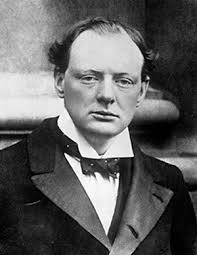
Benjamin Netanyahu’s speech to the United Nations was steeped in history–history denied by some members of the UN, and lessons of history ignored by others. He ended by stating that peace would ultimately depend on whether the international community confronted, or accommodated, the forces led by Iran. His concluding paragraphs offered a quotation from Churchill:
Over seventy years ago, Winston Churchill lamented what he called the “confirmed unteachability of mankind,” the unfortunate habit of civilized societies to sleep until danger nearly overtakes them.
Churchill bemoaned what he called the “want of foresight, the unwillingness to act when action will be simple and effective, the lack of clear thinking, the confusion of counsel until emergency comes, until self-preservation strikes its jarring gong.”
I speak here today in the hope that Churchill’s assessment of the “unteachability of mankind” is for once proven wrong.
There is a history behind the Churchill quotation, unspoken by Netanyahu, that is necessary to recount in order to appreciate its full import.
The quotation came from Churchill’s speech to the House of Commons on May 2, 1935, on German rearmament, which had proceeded much more rapidly than the government’s intelligence had indicated and had already reached a stage that was beyond the power of “engagement” to reverse. It caused Churchill to ask why steps had not been taken two or three years before, when “alarm bells [had been] set ringing, and even jangling:”
It is possible that the dangers into which we are steadily advancing would never have arisen. . . . [But] when the situation was manageable it was neglected, and now that it is thoroughly out of hand we apply too late the remedies which then might have effected a cure.
Then Churchill provided his own answer to why England had allowed the situation to reach the point where the Germans, through rearmament, would shortly be able “if they chose — and why should they not choose? — to reverse the results of the Great War:”
There is nothing new to the story. It is as old as [Rome]. It falls into that long, dismal catalogue of the fruitlessness of experience and the confirmed unteachability of mankind. Want of foresight, unwillingness to act when action would be simple and effective, lack of clear thinking, confusion of counsel until the emergency comes, until self-preservation strikes its jarring gong — these are the features which constitute the endless repetition of history.
Netanyahu left out Churchill’s references to “the fruitlessness of experience” and the “endless repetition of history.” The omission was undoubtedly intentional, reflecting Netanyahu’s concluding hope that the history he had recounted would be a teachable moment, not another instance of the “unteachability of mankind,” and that the world would not be condemned to repeat that history.
His history lesson was reinforced by the speech from the same podium by the president of Iran–who has repeatedly expressed intentions at least as clear as those Churchill discerned in 1935 and who presides over an armament program even clearer and more dangerous than Germany’s at that time.
But Netanyahu was also preceded by the president of the United States, who delivered an extraordinarily self-referential speech, with no sense of either history or the storm gathering before him. Obama’s speech may someday stun historians–except, perhaps, for those aware he began his term by packing up the bust of Churchill and writing on it “Return to Sender.”
Love of the Land: The History Behind Netanyahu’s History







 Posts
Posts