Thursday, 31 December 2009

Love of the Land: A right of return to what?

A right of return to what?


Seth Frantzman
Terra Incognita
29 December 09

One of the holy grails of the Palestinian movement is the "right of return," and it is one that always haunts any peace agreement. Alongside it is one of the most vilified pieces of Israeli legislation, the Absentee Property Law, which has provided more grist for the academic mill of the Israeli-Palestinian conflict than anything else. Even after 60 years of conflict, there is very little understanding by Palestinians or others of either the concept of "return" or that of absentee property - which together represent an idea and the thing to which people might return.

It is important to begin with something that should seem undisputed. Why is there such a dispute as to the total number of Palestinians who became refugees in 1948? The UN claimed, based on British estimates, that there were 1,076,000 Muslims, 13,500 Druse and 145,000 Christians in Palestine in 1947. After the War of Independence there were 32,000 Christians, 90,000 Muslims and 14,000 Druse. Some 507,000 people lived in the West Bank and Gaza before 1948. No more than 592,000 people could have become refugees, and that is using the Mandatory government's population estimate, which was probably an exaggeration. It is the descendants of those people who today claim a right of return.

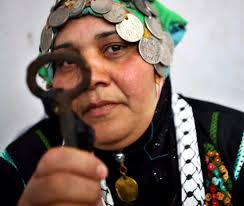
THERE ARE many Palestinians who, clinging to their ancient keys and documents relating to some property in Israel, have come to visualize a return to a place that is a fantasy. I've spent enough time traveling around the country with educated Palestinians to come across this distortion of memory. Palestinians have an attachment to things that they believe relate to their ancestors, such as old mosques that remain in many places. But they also have an attachment to things that they assume are Palestinian, such as Nahlaot in Jerusalem. The area, built from stone, seems to many Arabs to remind them of the Old City, and they wrongly assume that it must have been an Arab area. Thus some of the "right of return" relates to areas that were never Arab, but which Arabs imagine must have been Arab because of the way they look.

(Read full article)

Love of the Land: A right of return to what?

Love of the Land: AP Photo Caption Errs on Roads "For Jews"

AP Photo Caption Errs on Roads "For Jews"

TS
CAMERA/Snapshots
30 December 09

Rehashing an old canard (see here and here) that there are West Bank roads that are for "Jews only," an AP photo caption from yesterday reads:

443 jews only.jpg

FILE - In this Friday, Jan. 4, 2008 file photo, Palestinian, Israeli and foreign protesters run from tear gas fired by Israeli troops, bottom, during a demonstration on Highway 443 near the West Bank village of Beit Horon outside Jerusalem. Israel's Supreme Court ordered the military on Tuesday Dec. 29, 2009 to allow Palestinians to travel on the part of Highway 443 that runs through the West Bank, handing Palestinians their biggest victory yet against Israel's practice of reserving some roads for Jews. (AP Photo/Sebastian Scheiner)

As documented earlier by CAMERA, while there are some West Bank roads prohibited to Palestinian traffic, there are no roads either in Israel or the West Bank reserved only for Jews, as this caption claims. The difference is significant -- while most Palestinians may not travel on Highway 443 (this will change in the next five months) and certain other West Bank roads, Israeli Arabs -- Christians and Muslims -- most certainly may.

AP's Amy Teibel accurately described the restriction in her article yesterday, saying that "Israel has created a system of roads in the West Bank restricted to Israeli use." Moreover, AP corrected this very same error last year.

See here and here for other recent AP photo miscaptions.


Love of the Land: AP Photo Caption Errs on Roads "For Jews"

Love of the Land: Bombing Argentinian Jews (1994)

Bombing Argentinian Jews (1994)


Today's Golden Oldie is a Dry Bones cartoon done 15 years ago in 1994. The cartoon was done after the horrific bombing that obliterated the seven-storey Jewish Community Center building in Argentina, killing 85 and injuring more than 300.

Ahmad Vahidi, who led a unit of Iran's Revolutionary Guards known as the Quds Force was the "mastermind" behind the brutal, antisemitic, terrorist attack. Interpol issued a wanted persons alert for him in 2007. To see the Interpol "wanted" poster for Ahmad Vahidi, click onInterpol.

Want to know where this wanted terrorist is today? He is not in hiding. He is the Secretary of Defence in Ahmadinejad's Iranian Government.

When he got the job, earlier this year, a spokesman for Obama's State Department described Vahidi's nomination as "disturbing".


Love of the Land: Bombing Argentinian Jews (1994)

Love of the Land: The double standard exposed: Iran v. Israel

The double standard exposed: Iran v. Israel


Meryl Yourish
Yourish.com
30 December 09

Iranians are being murdered in the streets. The sister of Shirin Ebadi, the 2003 Nobel peace laureate who is not currently in Iran, was arrested and imprisoned apparently for the crime of being Shirin’s sister. The Iranians are beating protesters, hanging protesters, torturing protesters, and have been doing so since last year.


And the world’s outrage this month is focused on—Israel. At Human Rights Watch, the last comment on Iran was Dec. 10th, where there is an article titled “Iran: Stop harassing Shirin Ebadi.” There is nothing to date about the current wave of protests, beatings, and murders.


The UN website is concentrating on Gaza. And Gaza. And Gaza. And Gaza. Four news releases in the last week on Gaza. How many on Iran? You’re kidding, right? Because the last one was over a month ago, and it was about Iran’s nuclear violations.


(Read full post)


Love of the Land: The double standard exposed: Iran v. Israel

Love of the Land: Hassan Nasrallah made four mistakes

Hassan Nasrallah made four mistakes


Michael Young
Daily Star (Lebanon)
31 December 09

In his Ashoura speech this past weekend, Hizbullah’s secretary general, Sayyed Hassan Nasrallah, irritated many Christians. He recommended that they take stock of their situation, especially, as he described it, the mistaken wager that some Christians once placed on Israel; but also, Nasrallah implied, their more recent dependence on the West in general and the United States in particular.

Nasrallah urged Christians “not to accept that some of them push [the community] toward suicide built on artificial fear and the [fear] of a bogeyman raised constantly and daily.” He went on to advise that Christians engage in “a calm dialogue between themselves … over their present and future choices to benefit from the experiences of the past.”

At one level, Nasrallah’s statements were interpreted as a warning to those Christian parties, above all the Lebanese Forces and the Kataeb, who have opposed the government’s legitimization of Hizbullah’s weapons. It is in this vein that Samir Geagea, the head of the Lebanese Forces, responded that Nasrallah’s comments suggested that there was no need for a national dialogue over the weapons, even though such a process was approved during the Doha conference of May 2008.

However, there was something far more disturbing in what Nasrallah said, much more illustrative of Hizbullah’s impossible relationship with the Lebanese system. Echoes of this we heard several weeks ago, when the secretary general read his party’s new program. It is that Hizbullah today is challenging a key foundation of post-Independence Lebanon as a place between East and West, belonging to neither but also – and this was always understood – open to, and ambiguously even a part of, both.

There has long been in Hizbullah’s actions and public discourse a desire to turn Lebanon against the West, or at least to widen the rift between the two. Nasrallah’s mention of Israel was but a pretext, since Christians long ago, and quite sensibly, gave up on an Israeli alliance. The assault on Lebanon’s Western sympathies began during the 1980s when Hizbullah and its precursors abducted Americans and Europeans in Beirut, several of whom were murdered or allowed to die; and it continued during the postwar period, when the party used resistance against Israel as a byword to justify the broader rejection of American and European influence in Lebanese affairs. At the time this found favor with Syria, which saw the attitude as reinforcing Syrian exclusivity in shaping Lebanon’s future.

After 2005, and the Syrian withdrawal, Hizbullah went a step further. Because the party was obliged more than ever before to anchor itself in Lebanese realities, without a Syrian Army protecting its back and allowing it to focus on the conflict with Israel, it became imperative for Hizbullah to mobilize anti-Western sentiment nationally. The endeavor was mostly unsuccessful, until the party was rewarded when it pushed Michel Aoun and his Christian followers into a confrontation with the United States and, to a lesser extent, with the Europeans, by forcing the general to make a priority of defending his affiliation with Hizbullah.

(Read full article)


Love of the Land: Hassan Nasrallah made four mistakes

Elder of Ziyon: What does a moonbat feed a starving Gazan?

Elder of Ziyon: What does a moonbat feed a starving Gazan?

Elder of Ziyon: The 45th anniversary of...what?

Elder of Ziyon: The 45th anniversary of...what?

DoubleTapper: Religion of Peace

Religion of Peace

This year, the Muslim holiday of Ashura fell on December 27. Ashura (عاشوراء (ʻĀshūrā’, Ashura, Ashoura, and other spellings) is on the 10th day of Muharram in the Islamic calendar and marks the climax of the Remembrance of Muharram.

It is commemorated by Shia Muslims as a day of mourning for the martyrdom of Hussein ibn Ali, the grandson of the Islamic Prophet Muhammad at the Battle of Karbala on 10 Muharram in the year 61 AH (October 10, 680 AD). According to Sunni Muslim tradition, the Prophet Muhammad fasted on this day and asked other people to fast.; Sunni Muslims also celebrate the day claiming that Moses fasted on that day to express gratitude to God for liberating the Israelites from Egypt.

In some Shia countries and regions such as Afghanistan, Iran, Iraq, Pakistan, Lebanon, Bahrain, Commemoration of Husayn ibn Ali has become a national holiday and most ethnic and religious communities participate in it. Even in Sunni dominated Muslim community of India, Ashura (often called Moharram) is a public holiday.


So how do peace loving Muslims celebrate this holiday?


تنسيق-الكليات-لعام سكس نيك كس


Ashura rituals and observances consist primarily of public expressions of mourning and grief by flagellating themselves on the back with chains, beating their head or cutting themselves. This is intended to connect them with Hussein's suffering and death as an aid to salvation on the Day of Judgment.


It's a family holiday, you take a big knife...


...and cut your head, then show your neighbors how much you bleed


Fathers and Sons


Brotherhood


Mothers and Children


As Israeli Prime Minister Golda Meir said,
"Peace will come to the Middle East when they love their children more than they hate us!".


Islam, now that's what I call the Religion of Peace!

DoubleTapper: Religion of Peace

A Soldier's Mother: The War that Took Forever...was just 18 days?

A Soldier's Mother: The War that Took Forever...was just 18 days?

2009 Summary

2009 Summary

I'll be going offline soon. A member of our clan, a young man who fought in Gaza in the same brigade as our son Achikam, is getting married. A year ago his father and I were exchanging tidbits of information seeping out; tonight we'll dance.

An item on the news earlier this afternoon told how in 2009 the number of young Israeli Arabs volunteering to do National Service (a non-military alternative to military service) has more than doubled. Maybe we're doing something right.

The Shin-Bet has the numbers for terrorism in 2009. Not many countries in the free world would live well with such numbers, but compared to what we've been having all decade it has been a good year. I think 1997-98 were similar, more or less, but before that you've got to go back to the mid-1980s for numbers as good as these.

The Israeli economy did better than the experts expected. GDP grew by 0.5%, but keep in mind that it was 2009, and that we're not China. Unemployment is at 7.7%.

There are 7,509,000 Israelis living here, give or take a few. The Jewish birthrate is inching up, the Arab birthrate is inching down, and the 4.3% of non-Jews, most of whom are non-halachically Jews form the former USSR are still on track to disappear into the Jewish surroundings over time. It's a young country compared with most rich democracies.

I once wrote here that after all the excitement, vituperation and turmoil, Israeli society needs to be measured by three criteria, in rising order of significance:
1. Is the economy stonger than the previous year. (Guarded yes).
2. Did Jewish creativity have a good year (you bet).
3. Are there more Jews here than a year previously (Yes).
Originally posted by Yaacov Lozowick's Ruminations

Fatuousness in Cairo

Fatuousness in Cairo

Phil Weiss will probably soon travel back to New Jersey and interest me less than he has this week, but for the meanwhile he continues to purvey high quality silliness from Cairo. It has been most helpful in getting a feel for the roots of the man's positions and those of his ilk.

Here's his most recent column. The quandary this time is whether to send 100 demonstrators to Gaza, as the Egyptians have allowed, or not.

Over the last week, as the international marchers arrived in Egypt, the Egyptian Foreign Ministry made it very clear that it did not want them going into Gaza, and it would arrest them short of that goal. But these 1400 are not tourists or milquetoasts, they are activists; and they were not going to be stopped by any old Ministry, even the ministry of a police state.

Awesome. Then the Epyptian said some could go, but most not.

Over the next 4 hours I witnessed agony and torment, and said a secret blessing that I had not tried to get on the buses last night. A crowd of those opposed to the 100 stood outside barricades set up around the buses and shouted "All or none!" and "Get off the Bus!" It turned out that they had many confederates among the 100 who boarded the buses– confederates who at a signal marched off the buses, some giving heroic speeches.

The people staying on the buses leaned out the doors to say that the Gazans wanted them to come so as to to join their march to the Israeli border on the 31st. But they wavered. Indeed, you saw some of the most resolute activists on the planet—Bernardine Dohrn, the law professor and former member of the Weather Underground; Ali Abunimah of Electronic Intifada; and Donna Mulhearn, an Australian woman who was a human shield during the beginning of he Iraq war, board the bus and get it off it, and then board it again and get off it, and on and on.

Weathermen, huh? Maybe these demonstrators are a wee bit more sinister than they let on. Here, I thought they were thoughtful people who've been carefully weighing the facts and trying to do the right thing in a complicated situation, while unfortunately reading too many counter-factual reports and so getting into the wrong positions.

Abunimah, who had been roughed up by security at the American Embassy yesterday, told me it was the hardest decision he’d ever had to make. It was an individual decision, he had no clarity on it, and no one could tell you what to do, and he respected the decisions of all parties. Mulhearn said that going to Iraq in 2003 had been easy compared to this; for that choice was in the face of physical danger and she would take that any day, this was in the face of moral doubt.

Moral doubt, yeah, that's hard. Fortunately most of us manage to get through life without much of it, and even then rarely on the level of actually getting on a bus to demonstrate. That must have been tough.

Dohrn said that the principle of "All or none" was a miserable one for activist politics. You always took what you could get and kept fighting for more. A European man in a red keffiyeh screamed at her that she was serving the fascisti. Her partner Bill Ayers gently confronted him and asked him why he was so out of control. Between getting on and off the bus, Dohrn, who wore a flower in her hair, said that she didn’t like the absolutist certainty of the people on the other side of the police barricades, and having been in the Weather Underground, she knew something about absolutist feeling.

Dohrn. Ayers. Now wait. I've seen those names somewhere. Israel must be doing something right if these are her enemies.

Yet I remind readers that good things are arising from this experience. The Americans, who are so conditioned to living with the Israel lobby, as an abused wife to her battering husband, are being exposed to a more adamant politics—we are having a rendezvous with the Freedom Riders. For another thing, our direct actions and demonstrations seem to be awaking Egypt, a little, and getting a lot of publicity. Helen Schiff told me that the front page of an official government newspaper today said, "Mubarak to Netanyahu: Lift the siege and end the suffering of the Palestinian people." We gave him that line! she said. A longtime civil rights activist, Helen told me it’s "fabulous" what happened, we are achieving more in Cairo than we would if we had gotten into Gaza.

Freedom Riders. Now that's an admirable role model, we can certainly agree on that. Young citizens willing to be arrested, beaten up, and indeed to risk their lives in a very real way, so as to heal their society of its worst affliction. That's quite a mantle Phil's claiming, isn't it. And note also that the demonstrators have been handing Mubarak his lines! (But not enough to have him let them travel to Gaza).

So there’s a tumultuous and ascendant feeling here tonight, in the little hotels that we have to meet in to make our plans. I can feel the spirit of the Freedom Riders and of the abolitionists, who fought the limits on freedom of movement of black people for so long in my country. As for the divisions, and bitterness, I think they will go away. A European friend advised me tonight that those who take the Palestinian side will find that they share somewhat in the Palestinian experience. They will experience isolation, division, bitterness, failure, contempt, manipulation. Surely not on the scale of the Palestinians; still, they will experience some of those things, and they will grow from them.

Freedom Riders move over, it's the abolitionists now. Of course, these brave folks will of course be called upon to endure great suffering in the little hotel rooms they've got to meet in, but that's how it is with the movers and shakers of history and justice.

There's something almost endearing, in a wistful sort of way, about the way Phil Weiss (and his readers) seek the confirmation of historical greatness. No, he's not Martin Luther King, of course (who is? Khaled Meshaal perhaps?). Yet if he can be a foot-soldier and chronicler of the Movement, that will satisfy him. As long as his grandchildren or theirs look back at him someday with awe for his far-sightedness and bravery.

Actually, I know the feeling, and that's what makes Phil Wiess so weird. He could easily join us.

Originally posted by Yaacov Lozowick's Ruminations

The Geography of Mandatory Palestine

The Geography of Mandatory Palestine

Last time I talked to him, Seth Frantzman was completing his doctoral dissertation in geography. He had been digging up old maps and traveling around the country, trying to figure out the stories of the many Palestinian villages which were gone after the 1947-48 war. As you'd expect, careful examination of factual evidence was giving a different story than the boilerplate accusations regularly aimed at Israel. I told him I hoped he'd soon finish, and I'd love to read the whole dissertation.

If the Jerusalem Post is to be believed, either he still isn't finished or perhaps a committee of professors hasn't yet finished their reading. Still, in today's column he gives a little taste of the sort of things he was coming up with. I recommend.
Originally posted by Yaacov Lozowick's Ruminations

Apartheid Deconstruction

Apartheid Deconstruction

The Americans seem to have run into a spot of bother with these attacks on airplanes. Patting people down at airports won't stop terrorist with explosive underpants, for that you need invasive means of screening such as making informed but potentially offending assumptions about individual people in front of you (the Israeli method), or using whizbang technologies that make some folks squeamish. It's a problem, to be honest, this matter of balancing rights such as privacy vs life when the privacy will be violated always (if you're squeamish) but terrorists will be apprehended only rarely (how many of them are there, after all). Would that the world were simpler.

Balancing is of course part of life. Here:

Israel’s Supreme Court ruled on Tuesday that a major access highway to Jerusalem running through the occupied West Bank could no longer be closed to most Palestinian traffic. In a 2-to-1 decision, the court said the military overstepped its authority when it closed the road to non-Israeli cars in 2002, at the height of the second Palestinian uprising. The justices gave the military five months to come up with another means of ensuring the security of Israelis that permitted broad Palestinian use of the road.“The court was saying that you can’t reasonably find every Palestinian inhabitant to be a security risk,” said Moshe Negbi, a legal commentator for Israel Radio, in a telephone interview. “The security considerations are legitimate, but they have to find other solutions.”

Let's see if we can disentangle the various strands of this story.

First, this is not about the roadblocks in the West Bank that were making life unpleasant for Palestinians between 2001-2008, but saved lots of lives on both sides. If you look at this screen-shot I made from Google Earth, you'll see that the 443 road (I highlighted it in light blue) merely cuts across a corner of the West Bank on the way from Modi'in to Jerusalem. Of the millions of Palestinians who need the freedom to move around the West Bank, no more than thousands, perhaps a few tens of thousands, are going to use this road: the ones who live alongside it and wish to reach Ramallah faster than on their local roads.


For most of history the route taken by 443 was the main road to Jerusalem. The story in the book of Joshua about the sun standing in the Ayalon valley happened here. The Hasmoneans had a big battle with Seleucid troops whom they were trying to block from reaching Jerusalem - on this route. The Romans paved the road, and you can see sections of their pavement to this very day. The Crusaders marched to Jerusalem on this route.

It was only in the 20th century, with the advent of motorized vehicles that weren't bothered by climbs, that the main road to Jerusalem moved a few miles to the south. The present route of highway 1 makes three climbs and two descents on the way up to Jerusalem, while the ancient road climbs once. However, as highway 1 became congested in the 1970s, traffic moved naturally to the ancient route, which was paved by the British and meandered through the center of a number of villages. This wasn't politics, it was simply drivers seeking the shortest drive. There was a well-paved highway with traffic jams, and a by-road without them. In the 1980s the Israeli authorities decided to follow the public behavioiur and pave a highway that wouldn't go through the center of three or four villages. In those days such road-paving projects were happening all over the country.

Of course, in this case the road went through a corner of the West Bank, and these particular villagers were Palestinians. Whenever a highway gets paved someone's private property is lost, and this often goes through the courts - in every normal country. Here, however, the lawyers arguing the case were not out to ensure the highest compensation for their clients, but the Civil Rights brigade, who use human rights to cloak their political agenda. They'd never dream of regarding land confiscations for the new road up to Safed as a human rights issue, but will swear their only reason for arguing against plans to pave 443 is human rights.

As you can see from the next screen shot, there are seven affected villages. The state argued that they, like everyone else, would benefit from using the snazzy new road, and the court allowed the project. When the new road opened, each village had its own connecting road feeding into 443. The section of the road that goes through the West Bank is 13 kilometers long.

Just for coincidental context, here are two items from today's New York Times, both dealing with conflicts between locals and large projects. This one is from North Dakota, and this is from China. Don't misunderstand me. I'm not saying the paving of route 443 was an innocuous case of civil differences of opinion and confiscation of land for public purposes. The bi-national conflict really was there, and is. But it's not the reason for the road's being put there, and it cast banal considerations into highly charged terms.

Someday, if Israelis and Palestinians ever manage to agree on partition, there will be a road connecting the Palestinian West Bank and Palestinian Gaza strip. Laying down that road will require confiscation of land from Israeli farmers. Don't expect the Association of Civil Rights to come to their defense, of course, and even if they do the confiscations should still happen. National considerations are often stronger than individual ones. My understanding of the Olmert proposal of September 16th 2008 was that route 443 would remain under Israeli control (but not the villages alongside it), as a corollary to that Palestinian road.

Tragically, when the Palestinians launched the second intifada, they also began killing Israelis on route 443. Six Israelis were murdered on the road between after 2001, and also one Palestinian from Jerusalem whose car, naturally, had an Israeli license plate. Part of the Israeli response was to prevent Palestinian vehicles from using the road. This measure, along with many others, was eventually crowned with success, the second Intifada was defeated, and lives on both sides were saved. This was good, make no mistake. It also promoted the ultimate human rights.

The question is, for how long. Defensive and preventive measures that were clearly justifiable when the level of violence was high, do they remain justifiable once the violence is over? The families of the victims and the mayor of Modi'in, along with the army, would all like the measures to remain in place. The villagers want to use the highway. The supreme court has carefully accepted the position of the villagers, but has given the army five months to devise alternative security measures before opening the road to the villagers: the court recognizes that there may still be a danger, but thinks it's time to balance it.

And ACRI, those proud campaigners of human rights irrespective of politics? As their spokeswoman says: it's occupied territory. Interestingly, she doesn't suggest that the Israelis plow up the road so the villagers can go back to where they would have been had the occupation not intervened. As she sees it, since the Israelis have paved the road, the Palestinian villagers mush have access to it, but the Israelis: not.

Originally posted by Yaacov Lozowick's Ruminations

The Torah Revolution: "Suspect"

The Torah Revolution: "Suspect"

Placing stones on graves

Placing stones on graves


30
דצמ
2009

Q: Why do we places stones on graves when we visit?
A: To honor the deceased. When a person visits and places a stone, and then visits again and places another stone, and does so again and again, he shows that he is honoring the deceased. It is permissible to clean the grave and remove the stones if one so wishes.
Originally posted by Torat HaRav Aviner

Parashat Vayechi: Why Efraim and Menashe?

Parashat Vayechi: Why Efraim and Menashe?

[Tal Chermon based on Me'eina Shel Torah p. 208 in the name of Igra De-Kallah]

Yaakov Avinu blessed his grandsons: "He blessed them on that day, saying: Israel will be blessed through you, saying: May G-d make you like Efraim and Menashe" (Bereshit 48:20). When we bless girls on Shabbat evening, we say: "May G-d make you like Sarah, Rivka, Rachel and Leah," but we do not blessed our boys: May G-d make you like Avraham, Yitzchak and Yaakov." Instead we quote Yaakov: "May G-d make you like Efraim and Menashe." Why is Israel specially blessed through Efraim and Menashe?

A fundamental principle of the Torah is that a person should not be arrogant and should not be envious of others. When Yaakov Avinu saw that even though he maneuvered his hands to place the younger Efraim before Menashe, the first born, Efraim was not overtaken by arrogance, nor was Menashe stricken with envy. Yaakov Avinu therefore said: All of Israel should be this way, without arrogance and without envy. Unfortunately, we see that this was not the case among the other brothers: "And his brothers were jealous of him [Yosef]" (Bereshit 37:11). Yaakov Avinu therefore blessed them and we follow in their footsteps: "May G-d make you like Efraim and Menashe."
Originally posted by Torat HaRav Aviner

RubinReports: Obama's 2010 Policy and Iran: Misconceptions Guarantee Failure

Obama's 2010 Policy and Iran: Misconceptions Guarantee Failure

By Barry Rubin

A friend of mine is angry, saying I’m too tough on President Barack Obama and that nothing he does pleases me. Well, I wish he’d do more that pleases me, and disconcerts America’s enemies.

True, he has done three good things lately: his Nobel speech, which sounded like it was actually given by a U.S. president; his remarks on the demonstrations in Iran (better six months late than never), and his tough verbal stance about investigating the mistakes that led to the near disaster (though I worry they’re less about dramatic change and more just a show to reassure the public that something will be done). I also pointed out that the administration’s relationship with Israel was pretty good overall.

Yet on the single most important Middle East issue, Iran’s nuclear program and its aggressive ambitions, hints about his policy are getting worrisome both because of what this administration isn’t doing and what it’s obviously thinking. The year has now ended with no major public move toward imposing serious sanctions.

True, there are a few statements you can dig out indicating a turn in that direction. Yet what should have happened was a major public speech by December 31 about the administration’s sanction plans. After all, it set that date as a deadline for action ten months ago yet let it pass with no visible action.

There are other bad signs that the administration still doesn’t comprehend the problems it faces. The likely sending of Senator John Kerry to Tehran is a terrible idea. It signals to the Tehran regime U.S. desperation to make a deal and chooses a highly unqualified envoy with too big an incentive to get some hint of agreement at any price. (Meanwhile, further weakening the Western hand, an 11-member EU parliamentary delegation is visiting Tehran and will make clear how eager the Europeans are to make concessions in exchange for Iran offering some kind of deal.)

Of even more concern is the strategy revealed by officials in interviews with the Washington Post: that the sanctions are focused “against discrete elements of the Iranian government, including those involved in the deadly crackdown on Iranian protesters….” In other words, they’ll put sanctions against the Islamic Revolutionary Guard Corps and its front companies.

"We have never been attracted to the idea of trying to get the whole world to cordon off their economy," a senior U.S. official told the Washington Post, adding, "We have to be deft at this, because it matters how the Iranian people interpret their isolation--whether they fault the regime or are fooled into thinking we are to blame."

In other words, Obama Administration sanctions on Iran (if they ever arrive) will have three functions. First, as a public relations’ campaign “to avoid alienating the Iranian public” while striking at their rulers. Second, to “force the Tehran government to the negotiating table, rather than to punish it” for being an oppressive dictatorship or for seeking nuclear weapons. Third, it will supposedly bring the most fanatical group of rulers to their knees by attacking their pocketbooks.

It would be hard to device a worse strategy, other than doing nothing at all. The U.S. government thus signals the Iranian regime in advance that it won’t go too far because it wants to avoid making the regime too angry to negotiate. In addition, the strategy encourages Iran’s rulers to manipulate American eagerness for talks in order to stall for time. Then, too, it makes clear that there won’t be a serious effort to undermine the country’s economy. So why should Iranians pressure the regime to change course due to sanctions since it isn’t costing them anything?

Finally, the strategy “hits” the current rulers in their least vulnerable spot. Once again we see the West’s absolutely classical mistake in dealing with revolutionary Islamism: the belief it is responsive to materialist punishments. What are the Revolutionary Guard and Mahmoud Ahmadinejad and the supreme guide going to say: Oh, my! The Americans are reducing my income! Unless I give up nuclear weapons I won’t be able to buy that new country house, that sports car I’ve been eyeing and the Paris original evening gown for my wife!

Sigh. No matter what sanctions the United States focuses on the Iranian elite that group will still have enough money from within the country to buy whatever it wants.

But there’s more. Ordinary people may not understand the uses of sanctions yet leaders of great nations should. Of course, the ideal is to use sanctions to force the target to change its policies. Just because sanctions don’t succeed in doing that, however, doesn’t mean they failed because there are other goals involved:

--Sanctions seek to weaken the target so that it might be more easily defeated or fall in future.

--Another purpose is to deny the enemy resources, making it less able to carry out its programs.

--Still another is to show one’s own allies a high degree of resolution in containing and countering a threat, thus encouraging their own defiance of the mutual foe.

--Sanctions seek to isolate and discredit the target, denying it allies and the help of others.

For example, sanctions against South Africa and the USSR failed to force directly any major policy shift yet by succeeding in the other categories they eventually contributed to the regime’s downfall

The administration is ignoring all these functions to focus merely on one—which will inevitably not work—of getting the Tehran regime to make a deal. But we know they won’t back down, which is precisely why the regime should be weakened and made to face a tougher challenge to succeed in getting nuclear weapons at a relatively low cost.

Then there’s the idea that sanctions will rally Iranians to believe that America is on their side because they won’t affect the lives of the masses.

Can the United States really determine what the Iranian people are going to think by such methods? If they support or believe the regime they will hate America no matter what it does. If they oppose the regime, they will blame it for Iran’s troubles any way and want a tougher policy against it, though they still might be anti-American despite these calibration efforts. Like the bumper sticker says: Never apologize. Your friends don’t need it and your enemies won’t believe it any way.

In fact, the administration’s sanctions strategy could have the opposite effect. By being afraid of even non-violent confrontations, Washington would be showing Iranians the power of the regime, its ability to defy the United States which is either afraid or unable to fight back effectively. This could make more Iranians support the government.

Equally disconcerting is that the U.S. government continues to believe that much of the regime wants a deal in which it will give up the pursuit of nuclear weapons and long-range missiles, it’s just too divided and busy dealing with internal conflict to make a decision.

Whatever back-channel intelligence has been handed out—remember the 1996 scandal when the Iranian regime fooled the Reagan administration into thinking it was divided in order to get American missiles to use in the Iran-Iraq war?--this Iranian regime is not split between moderates and radicals. How has the United States scared regime elements to the point they want to make a big concession? Does any Iranian politician still in power believe he can give up on the nuclear campaign and still stay in office given the views of that country’s supreme guide and president?

Two other fantasies on the administration’s part add to the mess. One is the idea that the engagement effort has somehow undermined the regime because it is so attractive to some leaders and the masses. An official told the Post that the effort to engage "has had an unsettling effect on people in the regime. It has made it more difficult to demonize the United States and say it has been the root of all evil." This is a fantasy.

In addition, the administration is still pretending that its strategy of engagement has won over Russia and China for tougher sanctions, despite the constant statements from these two countries that they aren’t interested.

One “clever” technique was Obama telling the Chinese that they should support tough sanctions since if Iran did get nuclear weapons Israel would then attack and China’s own energy supply would be jeopardized. The Chinese opposition to sanctions runs deep: fear of antagonizing Iran, of jeopardizing their energy supplies right now, and of setting a precedent that might someday be used against itself.

When the U.S. government so clearly misunderstands the situation and how countries interact with it, the odds of Washington’s policy being effective are zero. If you want a guarantee that there will be lots of violence and defeats for U.S. interests, follow the Obama Administration’s strategy.


Here’s what needs to be done: show the revolutionaries that the West is courageous, that they cannot win, isolated them and deny them of every possible asset. The United States should not attack Iran, except with words, aid to its own allies and the opposition, and sanctions that weaken the regime. If you want an alternative to war this is the one to pursue.


RubinReports: Obama's 2010 Policy and Iran: Misconceptions Guarantee Failure

Netanyahu Hints IDF Must be Present on Future PA-Jordan Border - Defense/Middle East - Israel News - Israel National News

Netanyahu Hints IDF Must be Present on Future PA-Jordan Border - Defense/Middle East - Israel News - Israel National News

Guma Aguiar Honored as 'Builder of Jerusalem' by Aish HaTorah - Jewish World - Israel News - Israel National News

Guma Aguiar Honored as 'Builder of Jerusalem' by Aish HaTorah - Jewish World - Israel News - Israel National News

PA, Abbas Bless Rabbi%u2019s Murderers as %u2018Martyrs%u2019 - Defense/Middle East - Israel News - Israel National News

PA, Abbas Bless Rabbi%u2019s Murderers as %u2018Martyrs%u2019 - Defense/Middle East - Israel News - Israel National News

Jewish Town in Samaria: 'Thank You, Peace Now' - Inside Israel - Israel News - Israel National News

Jewish Town in Samaria: 'Thank You, Peace Now' - Inside Israel - Israel News - Israel National News

Rabbis to US Ambassador: Time to 'Go Biblical' with Arabs - Jewish World - Israel News - Israel National News

Rabbis to US Ambassador: Time to 'Go Biblical' with Arabs - Jewish World - Israel News - Israel National News

Binyamin Residents 'Fight the Freeze' with Building Project - Inside Israel - Israel News - Israel National News

Binyamin Residents 'Fight the Freeze' with Building Project - Inside Israel - Israel News - Israel National News

Iranian Mullah: Kill the Protesters - Defense/Middle East - Israel News - Israel National News

Iranian Mullah: Kill the Protesters - Defense/Middle East - Israel News - Israel National News

Israel Matzav: NOW they look for Gilad?

NOW they look for Gilad?

In January 2009, with Ehud Barak in charge as Defense Minister, the IDF was not ordered to try to find Gilad Shalit and rescue him. Now that it's nearly January 2010 and Ehud Barak is still in charge as Defense Minister, Hamas claims that the Israeli government is making a half-hearted effort to find Gilad Shalit. Do you believe it?

A senior Hamas official said that Israel had recruited a number of officers who used to serve in the Fatah-dominated security forces before the Islamist movement seized control of the entire Gaza Strip in the summer of 2007.

Abu Abdullah, who serves with Hamas's Internal Security Service, said that the officers had been entrusted with the mission of locating the place where Schalit was being held by his captors.

"The Shabak is very interested in obtaining any information about the whereabouts of Schalit through various methods," Abu Abdullah said, referring to Israel's Security Agency (Shin Bet). "One of these methods was the last war [Operation Cast Lead], whose goal was to break Hamas and obtain information about the location of Schalit to rescue him."

The Hamas security official revealed that his men arrested "a number of collaborators" who had rented an apartment and vehicles in the eastern area of the Gaza Strip.

He claimed that the "collaborators" were planning to kidnap a senior member of Hamas's armed wing, Izaddin al-Kassam, and hand him over to Israel for interrogation about the location of Schalit.

Abu Abdullah did not name the top operative who was supposed to be abducted. However, he told a Hamas-affiliated Web site that his men managed to foil the alleged scheme in the last minute.

Sorry, but Fatah 'collaborators' helping Israel is just too convenient for Hamas. I don't buy this story. I believe Israel knows where Shalit is anyway, but the family has convinced the IDF not to try to mount a rescue attempt.

Israel Matzav: NOW they look for Gilad?

Israel Matzav: Overnight music video

Overnight music video

Here's another rendition of HaMalach HaGoel (see last night's overnight video). This one was done by Dovid Dachs, whose father Shloime once gave a concert in my living room, probably around the time Dovid was born (it was 1998). Yes, really.

Let's go to the videotape.


Israel Matzav: Overnight music video

Israel Matzav: Hezbullah flags and Nazi salutes at government expense in Toronto

Hezbullah flags and Nazi salutes at government expense in Toronto

Post OptionsThis picture, with a Hezbullah flag in the foreground and a person doing a Nazi salute (the gray sweatshirt) in the background, was taken in downtown Toronto on Sunday. They were financed by Canadian taxpayers' money. More details here.


Israel Matzav: Hezbullah flags and Nazi salutes at government expense in Toronto

Love of the Land: Rundown on the Silencing of Darwish at Princeton

Rundown on the Silencing of Darwish at Princeton


"Under God's power she flourishes."

AS
CAMERA/
Snapshots
30 December 09

A few weeks after Nonie Darwish, Egyptian, former Muslim and founder of Arabs for Israel, was prevented from speaking at Princeton University, Princeton's Conservative paper, The Princeton Tory, published a piece detailing what caused the last minute cancellation of Darwish's lecture.

Imam Sohaib Sultan, Muslim Life Coordinator and Chaplain at Princeton University, took offense at quotes he attributed to Nonie Darwish and felt she attacked all of Islam in her presentations. Comparing Darwish to a "neo-Nazi," Sultan called on the sponsors to reexamine the invitation, and they did.

Writing in the Tory, Aaron Smargon ’11 observed:

Sadly, if only [those opposed to Darwish's appearance at Princeton] had listened to even twenty seconds of Nonie Darwish's prepared speech, they may have learned something: "I want to stress that I am not here to offend the good and peace-loving Muslims; but I am speaking out and trying to expose horrific human rights violations in Muslim countries, allowed under Sharia law. How can we ignore suppression of freedoms of speech and religion, and the demonizing of whole groups of people such as Jews and Christians in the Middle East?"

A Nov. 23, 2009 letter to the Daily Princetonian, co-authored by CAMERA's Aviva Slomich, defended Nonie Darwish's right to speak on campus:

(Read full post)


Love of the Land: Rundown on the Silencing of Darwish at Princeton

Israel Matzav: Government invites terror attack

Government invites terror attack

The Supreme Court gave them five months to do it, but with US Special Middle East envoy George Mitchell arriving in our region next week, the government decided to just do it and open Route 443 to 'Palestinian' Arab traffic.

I would make a prediction as to how soon the next terror attack on the road is - God forbid - likely to occur, but I'm afraid of being right about it.


Israel Matzav: Government invites terror attack

Wednesday, 30 December 2009

UNIVERSAL TORAH: VAYECHI

UNIVERSAL TORAH: VAYECHI


By Rabbi Avraham Greenbaum

Torah Reading: VAYECHI Gen. 47:28-50:26. Haftara: I Kings 2:1-12.

AND JACOB LIVED.

"And Jacob lived in the land of Egypt seventeen years" (Gen. 47:28). These were "good" years (17 is the gematria of TOV = "good") as opposed to the first one hundred and thirty years of Jacob's 147-year life. The first hundred and thirty years were riddled with suffering. Through the suffering Jacob endured while struggling to build his family, the House of Israel, he rectified Adam's 130 years of separation from Eve (see Rashi on Genesis 4:25), during which Adam wasted his seed and created demons, instead of peopling the world with Bney Adam.

G-d's first command to Adam was "Be fruitful and multiply and fill the earth and conquer it" (Gen. 1:28). As explained by Rabbi Nachman (Likutey Moharan II:7), this commandment is fulfilled not by producing anthropoid monsters but by giving birth to, raising and educating true Children of Adam, who bear the TZURAH ("form") of ADAM, who was made "in the image of G-d".

Ever since Adam and Eve ate the fruit of the Tree of Knowledge of Good and Evil, their generations were flawed. Cain killed Abel, Canaan sodomized Noah, the Sodomites wanted to sodomize the angels, the kings of Egypt and of the Philistines and the crown prince of Shechem kidnapped women, Ishmael lived by the sword, Esau was a rapist.

Only Jacob was SHALEM, "Whole" or "Perfect" (Gen. 32:18): Jacob bore the true TZURAH of ADAM, of whom it is said: "And upon the likeness of the throne was a likeness having the appearance of ADAM upon it from above" (Ezekiel 1:26). When man perfects himself, G-d shines through him and is thus revealed in the world.

Jacob is sometimes called Yaakov, sometimes Yisrael. Yaakov is "small" ("Yaakov her SMALL son" Gen. 27:15; "How will Yaakov rise, for he is SMALL" Amos 7:5). In his "small" aspect -- his time of struggle and suffering (MOCHIN D'KATNUS, "constricted consciousness") -- Jacob signifies that the revelation of G-d is as yet incomplete and is still proceeding in stages. But Yisrael, Israel, is Jacob's name of greatness -- "for you have struggled with G-d and with men and you have prevailed" (Gen. 32:29).In his "great" aspect (MOCHIN D'GADLUS, "expanded consciousness") Jacob -- Israel -- signifies that G-d's greatness is revealed and manifest in the world.

This was the case at the time of the Exodus from Egypt and the Giving of the Torah, when the entire world shook with G-d's self-revelation. It was the case during the reigns of King David and his son Solomon, who built the Holy Temple in Jerusalem. And it will be the case again in the near future, when G-d's House of Prayer for All the Nations will stand in the center of the world on Mount Moriah in the Holy City of Jerusalem. [The intensity of the hatred in much of the world today for all that goes by the name of Israel signifies how far the world is from HaShem. But "the people that go in darkness will see great light and those who dwell in the land of the shadow of death, light has shone upon them" (Isaiah 9:11).]

Our parshah of VAYECHI puts the seal on the first of the Five Books of Moses, the book of Genesis (Bereishis), portraying Jacob, the rectified Adam, in his "good" years at the end of his life. They are good years, because Jacob is now reunited with Joseph, who is in his place of true glory ruling over Egypt. Jacob's main love was essentially for Rachel. It was for her that he served Laban, and it was because Joseph was Rachel's firstborn that "Israel loved Joseph out of all his sons" (Gen. 37:3). While Leah signifies the "hidden realm", Rachel signifies G-d's glory revealed in and through this world. This comes about when Jacob-Israel (=ADAM, the Soul complete with its Nefesh, Ru'ach and Neshamah levels) conquers Esau (=the Serpent, ASIYAH, the realm of material activity), using this world to build a sanctuary for G-d.

Our parshah of VAYECHI also contains a number of specific allusions to the Temple in Jerusalem, as in Jacob's blessing to Judah (Gen. 49:11) and especially his blessing to Benjamin (ibid. v. 27). The Temple Altar stood in the territory of Benjamin, son of Rachel. Thus in Jacob's funeral procession, his twelve sons carried him up to the Land of Israel in the same positions in which their descendents the twelve tribes encamped around the Sanctuary in the Wilderness. Jacob and his sons, the House of Israel, are the Sanctuary in which G-d dwells in the world. "And I will dwell within them" (Exodus 25:8).

* * *

HEAR O ISRAEL!

Jacob spent the final "good" years of his life fulfilling the commandment to be spiritually fruitful -- by educating the young, especially his grandson Ephraim (see Rashi on Gen. 48:1: "Ephraim was habitually with Jacob learning"). Jacob'sfinal blessings, will and testament to his sons, with their harsh chastisements, were also intended to be educational.

According to tradition, "At the time when Jacob our father assembled his sons in Egypt at the hour of his death, he commanded and spurred them on in the unification of the name of G-d and that they should follow the path of HaShem that Abraham and Isaac his father walked. He asked them and said, 'My sons, maybe someone among you is flawed and does not stand with me in the Unification of the Name.?' They all answered and said, 'Hear Israel HaShem our G-d HaShem is One' -- that is, 'Hear from us, our father Israel, HaShem our G-d HaShem is one'. The old man answered 'Blessed be the Name of the Glory of His Kingship for ever and ever!' And this is why all Israel has the custom of repeating the expression of the praise used by Israel when he was an old man after this verse". (Rambam, Laws of Recital of Shema Ch. 1:4).

* * *

JACOB'S BLESSINGS

Jacob's death-bed blessings to his sons contain some of the most beautiful flights of Biblical poetry. It is noteworthy that Onkelos, author of the best-known Aramaic Targum (= "translation") of the Five Books of Moses, departs here from his usual practice of giving the simplest, clearest PSHAT (= "simple meaning") of the Biblical text except where DRUSH, Midrash, "searching out" beneath the surface is absolutely indispensable. However here, as in the case of some other highly poetic passages (the Song at the Sea, Bilaam's blessings, the Song of Moses -- HA-AZINU -- and his final blessings), Onkelos felt obliged to introduce MIDRASH into his Targum in order to bring out the essential meaning of the text, which contains allusions to all historical periods and especially the time of Mashiach.

Thus it is Onkelos who informs us that SHILOH (Gen. 49:10) is Mashiach. The Tribes are compared to various animals. Judah is a lion, Issachar is a wide-boned donkey, Dan is a serpent, Naftali a gracious hind, Benjamin a preying fox. In the case of Jacob's children, the animal qualities are elevated in order to destroy the wicked and give the victory to G-d. Thus Onkelos translates Gen. 49:14-15 as: "Yissachar will be wealthy in possessions and his inheritance is between the boundaries. And he saw that his share is good and that the land produces fruits. And he conquered the territories of the nations and destroyed their inhabitants and those who remain of them will serve him and pay him taxes." Onkelos translates the blessing of Benjamin (v. 49:27: "Benjamin is a preying fox, in the morning he devours the prey, in the evening he divides the prey") as: "In the land of Benjamin the Shechinah will dwell (= TISHREI) and in his inheritance the Holy Temple will be built, in the morning and in the afternoon the priests will offer sacrifices and in the evening they will divide the rest of their portions from the other offerings".

Onkelos himself was a GER TZEDEK ("righteous convert"). He was the son of the sister of the Roman Emperor Titus." It is said that before Onkelos converted, he raised the spirits of Titus, Balaam, and Yeshu from hell in order to find out the truth. All three confirmed that the nation of Israel is held in the highest repute in the world to come (Gittin 56b, 57a). Onkelos learned Torah from Rabbi Eliezer ben Hyrcanus ("Rabbi Eliezer the Great") and Rabbi Yehoshua, who were outstanding students of Rabban Yochanan ben Zakkai and were also the teacher-partners of Rabbi Akiva. Onkelos' Targum is the first and most authoritative "commentary" on the Torah.

* * *

AND THE DWELLER OF THE LAND OF THE CANAANITE SAW.

When Joseph went up with his brothers to bury Jacob, "they came to the threshing floor of Atad (= bramble)" (Gen. 50:10). According to Rashi, "It was surrounded by brambles. All the kings of Canaan and princes of Ishmael came to war, but when they saw the crown of Joseph hung on Jacob's ARON (= Ark), they all stood and hung their crowns and surrounded him with crowns from the threshing-floor which was surrounded by a fence of brambles.

The kings and Canaan and princes of Ishmael were confounded by the ARON, the holy ark of Jacob, crowned with the crown of Joseph.

According to tradition, this took place on during Chanukah-time. Jacob's HISTALKUS (ascent) was on 15th Tishri, the first night of Succos. The Egyptians wept for him seventy days, upon which Joseph and his brothers went up to Israel to bury him. The seventieth day after 15th of Tishri is 25th Kislev, the first day of Chanukah. The initial letters of the four Hebrew words in the verse "and the dweller of the land of the Canaanite saw" are the permutation of the name of HaShem that holds sway in the month of Kislev (see Kavanos of Rosh Chodesh Musaf prayers).

There is an integral conceptual connection between Jacob's funeral procession and Chanukah, which is the time of the inauguration of the Temple. Jacob's twelve sons, the holy House of Israel, under the leadership of Joseph the Tzaddik, were taking Jacob -- the archetypal House-Builder -- to his final, eternal house and home in the Cave of Machpelah, the resting place of Adam and Eve as well as the patriarchs and matriarchs.

The funeral procession was a "rehearsal" for the formation in which the twelve tribes would would bring the Ark of the Covenant up from the wilderness and into the Holy Land. This is paradigmatic of the building of the Holy Temple, the House of G-d on the spot where Jacob had his dream of the ladder: "This is none other than the House of G-d and this is the Gate of Heaven" (Gen. 28:17). That place is alluded to in the opening word of the Torah, BEREISHIS, the letters of which, when re-arranged, spell out BAYIS ROSH, the House that is Head (=Tefilin shel Rosh). It was to that place that Joseph promised his brothers that they would return from Egypt: "G-d will surely redeem you and bring you up from this land to the Land which He swore to Abraham, to Isaac and to Jacob" (Gen. 50:24).

CHAZAK! CHAZAK! VE-NIS-CHAZEK!
"Be strong! Be strong -- and we will be strong!"

Shabbat Shalom!

Avraham Yehoshua Greenbaum

--
AZAMRA INSTITUTE
PO Box 50037 Jerusalem 91500 Israel
Website: www.azamra.org
Related Posts Plugin for WordPress, Blogger...