
Whitehouse Blues

I am off on a speaking tour in the States until the end of October. I wrote, drew, and posted a set of cartoons to provide you with a daily chuckle while I'm away.
This is one of those cartoons.
Love of the Land: Whitehouse Blues

This is one of those cartoons.
The ADL also cited an interview with The Miami Herald in which Zelaya said
that "Israeli mercenaries are torturing him with high-frequency radiation."
 Everyone has always assumed that peace with an Arab country would mean 'normalization,' which includes business relations, tourism, cultural exchanges and all the things that countries with normal relations do between themselves. Thirty years after the peace treaty with Egypt and fifteen years after the peace treaty with Jordan, it's clear that's not happening. Here's an interesting perspective on why.
 In fact, normalization is not so important to Israelis. Most do not want to integrate culturally into the region – they just want their neighbors to let them live in peace. One indication for this is the poor state of Arabic language instruction in Israeli schools. Less than five percent of Israeli students finish high school with a meaningful (although far from satisfactory) knowledge of Arabic. The conflict is largely responsible for this reluctance, but is not the sole reason. Even in the heyday of the Oslo accords, the number of students who took advance Arabic language courses did not increase, even in parts of Israel where the process was cheered.
...
While Israelis don’t see normalization as a real strategic asset, Arabs – regimes and citizen alike – view it as deep a strategic threat. This perception must be understood if we wish to ever resolve the conflict. First, the autocratic nature of Arab regimes must be taken into account. For a regime such as Syria’s, the prospect of dozens of thousands of tourists coming from a free society such as Israel poses a potential risk to its foundations. These tourists may bring dangerous ideas along and tell locals about free elections or freedom of speech.
Second, there exists the danger that cultural interactions between the two sides will lead to hatred rather than understanding. Historian Bernard Lewis once relayed that Jordanians felt Israeli tourists were acting triumphantly while visiting their country. Lewis comforted his Jordanian friends, "[The Israelis] are acting this way towards everybody," and concluded: "The tragedy of the conflict is that the most polite nation [the Arabs] is encountering the most impolite nation [The Israelis]." Perhaps Prof. Lewis was exaggerating (are we that impolite? Get out of here!), but the point nevertheless deserves our attention: cultural encounters, when improperly constructed, do not always advance relations.
Third, normalization with Israel underlines the ultimate historical failure of some Arab regimes, especially in Syria. Arab attitudes towards Israel can be divided into two groups: Those who reject any recognition of Israel and seek to destroy it; and those who reject Israel as an historical or a cultural entity, but accept it as a political reality. Arab regimes can perhaps justify the signing of agreements with Israel in the diplomatic sense, but it is much harder for them to welcome Israelis, a welcoming that essentially entails a legitimization of the Zionist project, which their publics strongly object to.
 If you're an American and you object to Israel's 'security fence,' Chicago attorney William Choslovsky reminds you that the United States has a fence along its border with Mexico that is more than six times as long as Israel's fence. But if anything, the comparison argues even more in Israel's favor.
 Imagine what we would build -- or do -- if instead of trying to take a job, those on the other side were trying to take . . . our lives. Imagine what we would do if people 10 miles away lobbed rockets each day at our children and "taught" their children with textbooks that have maps that omit our country. Imagine what we would do if instead of suffering one terrorist attack since 2001, almost 20,000 were attempted against our people. Viewed in this light, I ask, what took Israel so long?
Simply stated, Israel's "inhumane" walls and policies are the effect; the cause is terrorism. Israel seeks the same thing she has sought since her founding: true peace. As judged by deeds, not sound bites, she still awaits a willing, sincere Palestinian partner.
 JPost's Khaled Abu Toameh points out some of the hypocrisy in the 'Palestinian Authority's recent policies.
 During Operation Cast Lead, Palestinian security officers in the West Bank provided Israel with valuable intelligence that contributed to the elimination of many Hamas operatives and "military targets." Moreover, the PA even pressured Israel not to stop the war unless Hamas was removed from power. In other words, the Palestinian Authority was telling Israel that it should continue bombing the Gaza Strip until Hamas surrendered.
Palestinian officials, including some of Mahmoud Abbas's top aides, did not hide their disappointment when the war ended without the removal or collapse of Hamas.
As soon as the war ended, the same Palestinian Authority that had urged Israel to "finish off the job," and that had provided Israel with vital information about Hamas figures and installations in the Gaza Strip, started accusing Israel of committing "war crimes." The PA even appealed to The Hague court to launch an investigation into the alleged war crimes.
...
The PA's "generals" and "colonels" hold daily meetings with their Israeli counterparts to discuss security-related issues. Unlike ordinary Palestinians, senior Palestinian officials can travel to Israel and anywhere they want thanks to VIP cards and other privileges they receive from the Israeli Defense Ministry.
During the night, Palestinian security officials hold secret meetings with their Israeli counterparts. But during the day, the Palestinian Authority is demanding that the same Israeli officials be tried as war criminals. Some of these "war criminals," by the way, are responsible for the fact that the senior PA leaders and their families are able to receive free medical treatment in Israel - a privilege that most Palestinians can only dream about.
 In an earlier post, I discussed the 'quartet's abandonment of the principle of reciprocity that was the underlying basis of the 'road map.' One of the reasons the 'quartet' has taken this action is that it's putting all of its eggs into one basket: The basket named Salam Fayyad. In August, Fayyad announced a plan to create a 'Palestinian state' by 2011 with or without Israeli consent. The 'quartet's plan has run into opposition from two quarters before it gets off the ground: Israel and Fatah.
Another direct challenge to Israel is that Fayyad's "blueprint" calls for massive Palestinian development in Area "C" of the disputed West Bank, which is under Israeli civil and security control, and which directly challenges the delicate, agreed-upon framework of the 1993 Oslo accords.35 Palestinian plans include building an airport in the Jordan Valley, taking control of Atarot airport near Jerusalem, establishing new rail links to neighboring states, and water installation projects near Tulkarem and Kalkilya close to the pre-1967 "green line."36 Israeli security echelons firmly oppose Palestinian airport development plans near Jerusalem and in the Jordan Valley.37 Furthermore, Fayyad's agenda has broader designs on Area "C." Fayyad told the Arab daily Al-Sharq al-Awsat in a September 1, 2009, interview: "Many think that zone "C" areas have become disputed territories rather than occupied territories in the public consciousness. We assert that these are PNA territories where the state will be established."38
The Israeli government is aware of the possibility of unilateral Palestinian moves in the ongoing dispute over the future of the West Bank. Foreign Minister Avigdor Lieberman told Quartet envoy Tony Blair and EU policy chief Javier Solana soon after the plan's release in August 2009: "Palestinian unilateral initiatives do not contribute to a positive dialogue between the parties and if the unilateral initiative presented by Salam Fayyad is promoted, Israel will respond."39 In a September 17, 2009, interview, Prime Minister Benjamin Netanyahu reiterated his rejection of the Palestinian demand that the 1967 lines will become Israel's eastern border, which is a central part of Fayyad's plan. Netanyahu told the Israeli daily Israel Today: "There are those who prophesized that the 1967 lines would be (Israel's eastern) border, but these are indefensible, something that is unacceptable to me. Israel needs defensible borders and also the ongoing ability to defend itself."40
Netanyahu's comments were not made in a vacuum. They were based on Israel's international legal rights as preserved in UN Security Council Resolution 242. Netanyahu's insistence on "defensible borders" also stems from understandings Israel has secured with the U.S. in the past. The concept of "defensible borders" was a central element in President George W. Bush's letter to former Prime Minister Ariel Sharon of April 14, 2004, with a commitment made by the White House as a diplomatic quid pro quo for Israel's withdrawal from the Gaza Strip in August 2005.41 The Bush letter was approved overwhelmingly by both houses of the U.S. Congress immediately afterward.
...
Former IDF Intelligence Assessment Chief Maj.-Gen. (res.) Yaakov Amidror notes that the Jordan Valley now serves as an important natural barrier to the potential flow of rockets to the West Bank hilltops overlooking Israel's coastline, where they could easily strike Israel's main airport, key utilities, and most of Israel's major cities.44 Former IDF Chief of Staff Shaul Mofaz made a similar assessment to the Israeli cabinet in 2000 at the time of the Clinton proposals,45 while his successor as chief of staff, Moshe Yaalon, underscored the same requirement for defensible borders in the West Bank in 2008.46
Despite robust Western support, Fayyad's ambitious plan has enjoyed a mixed reception in Palestinian circles. Fatah has decided to give Fayyad's plan a chance due to the prospect of his implementing Palestinian state projects on an unprecedented scale.20 At the same time, Fayyad's agenda has triggered tensions in Fatah and the PLO and has drawn sharp criticism from the Arab media for co-opting the power and legitimacy of official PLO bodies.21
Fayyad has emphasized that any decision on a declaration of statehood at the end of two years would be made by the PLO organs.22 However, the Fayyad plan is seen to pose a direct challenge to Fatah and its leader, Mahmoud Abbas, who reiterated, when Fayyad presented the plan, that "negotiations with Israel are the only option for the Palestinian Authority."23 Furthermore, Fayyad's approach collides with Fatah's traditional platform of "armed struggle" to "liberate Palestine" using "all options" available, as confirmed at the recent Fatah Congress.24 Fayyad's program also contradicts the Fatah Congress' reaffirmation of a "one-state" solution in the event that negotiations over a "two-state" solution fail.25
Fayyad, who is not a member of the ruling Fatah movement, enjoys only limited political backing in the Fatah-led Palestinian Authority, particularly following the latest central committee elections in August 2009. Fatah's rejection of Fayyad was manifested in the rejection of his candidacy to the PLO executive committee, which, had he been elected, would have empowered him to declare a Palestinian state as part of the PLO political hierarchy. However, Fayyad reached a limited understanding with powerful Fatah warlord Mohammed Dahlan. In fact, Dahlan is currently one of Fayyad's staunchest supporters in the complex constellation of Palestinian politics. However, Fayyad's political rivals, such as Tawfiq Tirawi, Abu Maher Gneim, and Mahmud al-Alul, who support "armed resistance" against Israel and were recently elected to the new Fatah Central Committee, have already blasted Fayyad's plans as being a "governmental intifada" that contradicted the "armed struggle."
 It's been nearly four months since elections were held in Lebanon, and the country still doesn't have a government. The reason is apparently that Syrian President Bashar al-Assad is preventing Hezbullah and its allies from joining the government (why Sa'ad Hariri is unwilling to form a government without Hezbullah is a separate issue that no one in the West discusses - I suspect it's because he fears for his life). And why is Assad able to prevent a government from being formed in Lebanon? The Washington Post explains.
 The Obama administration's outreach has resulted in "the invigorating of Syria's role in the region, including Lebanon," said Wiam Wahhab, a pro-Syrian Lebanese politician.
Syria has "has influence in Lebanon as do Saudi Arabia, America and Iran. But by virtue of its geographical location, Syria has greater influence in Lebanon than other countries," Wahhab told The Associated Press.

The list of Russian nuclear scientists believed to be helping Iran develop a nuclear bomb presented to the Kremlin by Israeli prime minister Netanyahu shows why all Russian assistance to rogue regimes in the development of nuclear energy is dangerous.
The Russians have long insisted that their assistance for civilian nuclear-power projects in Iran is legitimate. Recently, it was announced that Russia would cooperate in developing a nuclear power plant in Venezuela. Russia claims that these projects are peaceful and it has the same right to seek commercial opportunities as anyone else.
This explanation, however, ignores the depth of Russian corruption. Netanyahu’s list will come as no surprise to the Kremlin because a big incentive in dealing with Iran is the opportunity for powerful individuals to enrich themselves with the help of kickbacks and illegal deals. Once contacts are established in “legitimate” nuclear energy and Russian and Iranian specialists begin traveling back and forth and officials establish contacts, myriad opportunities are created for the development and transfer of illegal weapons technology. The same situation will prevail in Russia’s dealings with Venezuela.
Russia treats the consequences of its actions with complete moral indifference. In 1992, members of Aum Shinri Kyo, the Japanese doomsday cult, held a “Russian Salvation Tour.” With the help of Oleg Lobov, the secretary of the Russian security council, the cult members, identified as “Japanese businessmen” trained at military bases near Moscow, shopped for advanced weapons and attended lectures on the circulation of gases. Sect members later carried out a sarin nerve gas attack on the Tokyo metro in which 12 persons died. At the trial of Shoko Asahara, the leader of the sect, Aum’s chief of intelligence testified that the production designs for the sarin had been delivered to Aum by Lobov in 1993 for $100,000 in cash. (Yeltsin’s response was to give Lobov a promotion.
In 2002, the U.S. tried to convince Russia to “reconsider” cooperation with Iran. It offered military and space cooperation and permission to store foreign nuclear waste in Iran. The visible economic benefits would have been the same or greater than the visible benefits derived by Russia from its trade with Iran. But the deal in question was rejected because no deal with the U.S. evaluated by Congress and scrutinized by the government accounting office can provide the payoffs for influential individuals that are possible in a totally non-transparent deal with Iran.
Israel is trying to embarrass the Russians into cracking down on illegal help for the Iranian nuclear weapons program. But the Russians are beyond embarrassment. The necessary conclusions need to be drawn by the West.
— David Satter is a senior fellow at the Hudson Institute and a visiting scholar at the Johns Hopkins University School of Advanced International Studies. His latest book is Darkness at Dawn: The Rise of the Russian Criminal State.
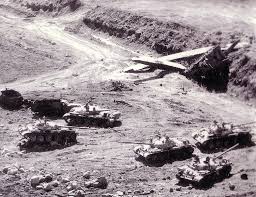
As Haaretz.com reported, Israel marked on Tuesday the 36th anniversary of the Yom Kippur War, one of the most costly and traumatic conflicts in the country’s history.
At a state ceremony at Israel’s national cemetery on Mount Herzl, Deputy Defense Minister Matan Vilnai (Labor) spoke of the bravery of the Israel Defense Forces soldiers who repelled the assault.
“Whoever fought in the tough battles in the [Suez] Canal and the Golan Heights is well aware that it was not the wisdom of leaders but the heroism of warriors in the battlefields that saved the State of Israel,” he said.
A coalition of Arab states led by Egypt and Syria launched the war in a surprise attack on the Jewish holiday in 1973.
More than 2,600 Israelis were killed in the hostilities, which had far-reaching effects on Israel and the entire Middle East.
Knesset Speaker Reuven Rivlin also attended the ceremony, during which a cantor recited the Hebrew prayer of mourning El Malei Rachamim.
Vilnai added: “The Yom Kippur War is going further and further away… [but] the impression the war left on the state and on the army’s preparedness is very deep.”
The military and political lessons are by now fairly straightforward, as this article makes clear:
What did Israel get out of the Yom Kippur War?
Despite the initial successes of the Egyptian and Syrian forces, the war proved once again how effective the Israeli military could be. After the initial set-backs, the war served as a huge morale boost to Israelis. Despite a co-ordinated attack on two fronts, Israel had survived and had pushed back the nations that had initially broken through Israel’s defences.
Though the Americans provided the Israeli military with weaponry, they also provided Israel with something far more important – intelligence. Documents relating to the American spy-plane, the ‘SR-71 Blackbird’, show that the Israelis knew where major concentrations of Arab forces were as they were supplied with this information as a result of a SR-71 flying over the war zone. With such knowledge, the Israelis knew where to deploy their forces for maximum effect. What appeared to be intuitive devastating counter-attacks by the Israelis, were based on very detailed information gained from American intelligence. Basically, the Israelis knew where their enemy was and could co-ordinate an attack accordingly.
The war also served as a salutary lesson to the Arab nations that surrounded Israel in that initial victories had to be built on. The failure of the Egyptian and Syrian forces to defeat Israel pushed Sadat towards adopting a diplomatic approach. It also encouraged some Palestinians to more extreme actions. On the diplomatic front, the Camp David talks took place while the actions of the PLO became more violent.
Why didn’t the Arab nations build on their initial successes?
Clearly, the use of intelligence massively benefited the Israelis. However, as in 1948, the Arab nations did not fight as one unit. Their command structure was not unified and each fighting unit (in the Sinai and the Golan Heights) acted as individual units. With up to nine different nationalities involved on the Arab side, mere co-ordination would have been extremely difficult.
Secondly, the Israelis had to work to one simple equation: if they lost, the state of Israel would cease to exist. Therefore, for Israel it was a fight to the finish – literally “death or glory”. If the various Arab nations lost, they could survive for another day.
Those lessons and lasting effects of the Yom Kippur War are well-reviewed in a brilliant column by Yossi Klein Halevi, called, “War and Atonement,” written in 2003 on the 30th anniversary of the war:
For 30 years, Israel has been obsessed with the political and strategic consequences of the Yom Kippur War, when the nation learned the limits of power and the treachery of self-confidence — and learned, too, how the heroism of ordinary soldiers could compensate for the incompetence of their leaders.
Each of those lessons has had profound consequences for the Israeli soul. But Israel has yet to fully understand the spiritual effects of the war that began on the Day of Atonement.
Historian Michael Oren has called the Yom Kippur War the moment when Effi Eitam started, and Yossi Beilin stopped, putting on tefillin. Eitam, a former secular kibbutznik and now head of the National Religious Party, emerged from the war convinced that only a divine miracle had saved the Jewish state and that ultimately there was no one to depend on but God.
Beilin, by contrast, had abandoned his secular upbringing and, as a teenager, become an observant Jew. Like Eitam, he emerged from the war convinced that all of Israel’s political and military leaders had failed. But Beilin went one step further: He determined that God had failed, too.
Oren’s formulation is a reminder that the political decisions taken after 1973 by Eitam and Beilin and so many other Israelis on the Right and the Left were, in fact, responses to the spiritual shattering that took place in that war.
Tellingly, both Gush Emunim and Peace Now were founded not after the Six Day War but only after Yom Kippur 1973. Though both movements presented themselves as optimistic, they were driven more by the apocalyptic dread of 1973 than by the utopian dreams of 1967.

For previous Sukkot cartoons and commentary click here.

Introduction
In August 2009, Palestinian Prime Minister Salam Fayyad announced a unilateral plan to establish a de facto Palestinian state in the West Bank and eastern Jerusalem following a twenty-four-month state-building process. Fayyad's 54-page plan to build Palestinian infrastructure and establish Western-style public institutions is the first of its kind since the signing of the 1993 Oslo accords.
Fayyad's state-building vision has already elicited Western enthusiasm and financial and political support from the Obama administration and European countries. However, Western optimism may have underestimated the ominous political tensions which the plan has exacerbated among the fractured Palestinian leadership. Fayyad, as an unelected prime minister of the Palestinian Authority, has provoked some in the Palestinian leadership by announcing his far-reaching program without first seeking approval from the PA Legislative Council or the PLO governing bodies, without whose support such an initiative cannot be implemented.1
Israel supports "bottom up" Palestinian state-building. However, Israeli leaders have voiced legal and security-based concerns over Fayyad's intention that the PLO governing bodies will unilaterally declare Palestinian statehood in 2011 based on the June 4, 1967, lines. Such a move would be unacceptable to Israel, as it would contravene the internationally recognized principles of a negotiated settlement and secure and recognized boundaries - defensible borders - that were firmly established in UN Security Council Resolution 242 following the 1967 Six-Day War. This resolution, passed in November 1967, has governed all Arab-Israeli peace negotiations since then, including the Oslo process, the Roadmap, and Annapolis.
Israel would welcome the opportunity to share its vast experience in state-building to help Fayyad achieve his "bottom up," state-building vision within a strong Israeli-Palestinian partnership. However, any unilateral Palestinian declaration of statehood would preclude Israel's vital security requirements, its internationally-sanctioned legal rights, and could end up derailing the peace process and lead to armed conflict between PA forces and Israel.
The Fayyad Plan
Fayyad's plan is the first serious Palestinian outline of a state-building effort since the PLO was founded in 1964 and replaces the traditional PLO position of advocating a "struggle of every means" including armed struggle to "liberate Palestine," that was reaffirmed at the Sixth Fatah Congress in Bethlehem in August 2009.2 Fayyad's stated intention is to dedicate the next 24 months until 2011 to building physical infrastructure, public institutions, public services, and tax incentives for foreign investors.3 These state-building assets would anchor a viable de facto state throughout the West Bank including areas that, in line with signed agreements between Israel and the PLO at Oslo, fall under Israeli control, such as the hills that overlook Jerusalem and Israel's coastal cities to the west, as well as the strategically important Jordan Valley to the east.
Fayyad's intention is to create facts on the ground that will garner major international support and lead to pressure to transform recognition of a de facto Palestinian state in 2011 into a de jure state in the event that the Palestinian Authority and Israel fail to reach a negotiated solution.4 Fayyad said: "If occupation has not ended by then (2011) and the nations of the world from China to Chile to Africa and to Australia are looking at us, they will say that the Palestinian people have a ready state on the ground. The only problem is the Israeli occupation [the Israeli communities and security presence] that should end."5
 A report in the London-based Arabic daily al-Sharq al-Awsat claims that Israel knows exactly where kidnapped IDF corporal Gilad Shalit is being held, but cannot rescue him because the site is surrounded by explosives.
 [T]he IDF knows "exactly" where kidnapped IDF soldier Gilad Shalit is being held, and ... the location is under constant Israeli surveillance. Hamas is aware that Israel knows where Shalit is being held, the report said, quoting an Israeli source.
The reason Israel has withheld from rescuing Shalit, the report said, is because of a fear that Hamas will kill the soldier if Israel attempts to rescue him. The site where Shalit is being held is surrounded by explosives, which will be set off remotely if IDF soldiers get too close....
 Friday's Wall Street Journal editorial slams the Obama administration for releasing Iranian President Mahmoud Ahmadinejad from his predicament.
 By yesterday, all that had changed. At the 18th-century Villa Le Saugy, Iran's representative sat among the world's powers as a respected equal. Responding to an overture from the Obama Administration, the Iranians even talked about the future of the U.N. and other nonnuclear issues. Meanwhile, Washington was "buzzing" (as one newspaper put it) that a one-day visit by Iran's foreign minister might signal more detente to come. Back in Tehran, Mr. Ahmadinejad floated a tete-a-tete with the U.S. President. In short, this engagement conferred a respectability on his regime that Mr. Ahmadinejad could only have imagined amid his vicious post-election crackdown.
The price of entry is surprisingly modest, too. Though cautious, the P5+1 (the veto-wielding Security Council members, plus Germany) welcomed signs of Iranian concessions: Inspectors at Qom, an openness to send low-enriched uranium outside Iran for enrichment, possibly suspending its own enrichment program. Mr. Ahmadinejad said the Geneva talks were "a unique opportunity" for the West.
Consider the Iranian offers in turn. Inspectors from the International Atomic Energy Agency won't find anything incriminating at the Qom facility. Having lied about it for years, the Iranians now have plenty of time to clean the place out. Iran's experience with the IAEA goes back to the first inspections starting in 1992, which somehow prevented the world from learning about Iran's bomb program for a decade and then only from an Iranian dissident group. A freeze on enrichment used to be the U.S. precondition for talks with Iran. Now the U.S. and Europeans say that in exchange merely for this enrichment promise, they'll freeze any additional sanctions.
Iran has timed its olive branch well. The Europeans are more frustrated with past Iranian stalling than is Washington and have started to hanker for tougher measures. Those demands will now be muted. For years, Iran has talked with the Europeans, using the time and diplomatic cover to make nuclear progress. The Obama ascendency offers the mullahs another chance, with an even more eager partner, to repeat the exercise with a far bigger potential payoff. Expect Iran to follow the North Korean model, stringing the West along, lying and wheedling, striking deals only to reneg and start over. In the end, North Korea tested a nuclear device.
On long evidence, the regime has no intention of stopping a nuclear program that would give it new power in the region, and new leverage against America. The Qom news reveals a more extensive, sophisticated and covert nuclear complex than many people, including the CIA, were willing to recognize. The facility is located on a Revolutionary Guard base, partly hidden underground and protected by air-defense missiles. Its capacity of 3,000 centrifuges is too small for civilian use but not for a weapons program. It's a good bet an archipelago of such small covert facilities is scattered around Iran.
 Sderot mayor David Buskila has sent a scathing letter to United Nationsl 'Human Rights Council' investigator Richard Goldstone.
 "The world, and you in it, was silent. You were silent in the face of the dead bodies of our children, in the face of our children's frightened eyes, you were silent in the face of every one of the 8,000 Qassam rockets that hit our city," Buskila wrote.
"Your silence was frightening, and reminiscent of things forgotten," he added.
The letter began with the mention of three Sderot children who were killed in rocket attacks. "The blood of the children whose lives were cut short is screaming out from the earth, there is no redemption and no forgiveness for the blood of a little child whose short existence had not yet taught him that there is evil and that there are wars," Buskila wrote, attaching pictures of the three children "who will never grow up" to the letter.
The Sderot mayor also expressed his identification with the Palestinian people, writing that "I regret and am sorry for the death of every Palestinian child, I feel the pain of the Palestinian civilians, but let's not ignore the facts - the leaders of Hamas and other fundamental Islamic terror organizations are to blame for the suffering of Sderot residents and their children, as well as the suffering of Gaza's residents. These people, whose sole purpose in life are war crimes, and to whom the norms of the West do not apply, are to blame."
Buskila concluded his letter by expressing hope that "peace will prevail in our region, and I invite you to personally examine the suffering of the residents of Sderot, who represent the other part of the equation, the part you didn't bother understanding."
 This is simply excellent (Hat Tip: Sandmonkey via Twitter).
 We would do well to recall that the PLO never changed its spots. It failed to do so when it signed for "peace" with the naive Yitzhak Rabin, who was lured into the trap sprung for him by the Osloites. And it failed to do so when it allegedly abrogated its charter. Even the recent Fatah conference and the statements by the "moderate" Holocaust denier, Palestinian President Mahmoud Abbas, can attest to this. The goal was and remains to this day: the liberation of the "occupied" territories from Israel, namely the State of Israel within the confines of the Green Line.
...
Most of the Arabs in the Land of Israel immigrated here after our waves of aliyah. In other words, Zionism and the prosperity it engendered spawned "the Palestinian people." Since the Arab occupation of the Land of Israel in the seventh century, and throughout the centuries of Muslim occupation, not one of the occupiers viewed this land as anything more than a distant imperial outpost.
The demand to grant a state to Arab immigrants to this country and their army, which is stationed here thanks to the blindness of certain Jews and the nations of the world, is without foundation. It is tantamount to legitimizing a reality that was created here after the criminal act that allowed an occupying army to enter this country.
The critics' responses are predictable: What do you propose, that the Arabs just evaporate into thin air? In contrast with the critics who espouse a racist transfer of Jews from Judea and Samaria, I reject any forcible transfer of any population group. Perhaps there is no solution to the problem. There is certainly no solution at this point. But this is no reason to commit suicide or sacrifice the Zionist vision on the altar of "peace."
 Last Saturday night, I noted a statement by the 'quartet' (the United States, the European Union, Russia and the United Nations) that effectively gutted the reciprocity requirement contained in the 2003 'road map' to a 'Palestinian state.' In Friday's JPost, former Israeli ambassador to the United Nations Dore Gold, who is a close Netanyahu adviser, elaborated on the 'quartet's action, which did much more than gut the reciprocity requirement.
 In general, the Quartet wanted to provide its own multilateral stamp of approval on President Barack Obama's UN address from September 22. It is to be remembered that Obama's remarks were unusual in their exceptionally long and detailed treatment of the Arab-Israel conflict: Roughly one-tenth of the speech was devoted to the issue of Israel and the Palestinians - far more than any other conflict in the world. He specifically proposed the establishment of "a viable, independent Palestinian state with contiguous territory that ends the occupation that began in 1967."
In doing so, Obama adopted language that was not balanced out by an equal reference to UN Security Council Resolution 242, which appears in the Quartet road map and did not call for a full Israeli withdrawal to the 1967 lines.
OBAMA'S PUSH for the 1967 lines is also evident in his language during his UN address that "America does not accept the legitimacy of continued Israeli settlements."
...
The Quartet statement also goes out of its way to back the Palestinian Authority's new plan for building the institutions of a Palestinian state over the next 24 months - which was drafted by Palestinian Prime Minister Salaam Fayad. On the one hand, the Fayad Plan appears to address Israel's call for bottom-up peacemaking by tackling head-on the lack of sufficient self-governing bodies on the Palestinian side. On the other hand, it is a program that leads the Palestinian Authority seven-eighths of the way to an independent Palestinian state, leaving ambiguous how the Palestinians get to the finish line. What it leaves open is the possibility of a unilateral declaration of statehood by the Palestinians or by someone else.
...
ISRAELI DIPLOMACY is heading for unchartered waters, having to balance between negotiations with the Palestinians and the possibility of a new muscular multilateralism at the UN, led by the Quartet. What is clear is that if the Palestinians understand that they will receive a Palestinian state on a silver platter in two years time - that will additionally be based on the 1967 lines - then why should Mahmoud Abbas bother to negotiate or make a single concession?
Under such conditions, the Palestinians are likely to prefer advancing the campaign to delegitimize Israel, by increasingly turning to the International Criminal Court and other UN bodies. At the same time they will insist that the Obama administration put its own peace plan on the table that prejudges the outcome of negotiations by detailing future borders. An alternative that has been raised is an Obama side-letter to the Palestinians on borders that neutralizes Bush's past guarantees.
The only way to block this drift in diplomacy is for Israel to be very firm about its positions. It cannot accept any negotiating process with Abbas that allows the Palestinians to multilateralize Israeli-Palestinian differences while negotiators sit across from one another.
Israel rejects the 575 pages of the Goldstone report (presumably without reading any of them) because the UN fact-finding mission was a UN Human Rights Council investigation, a body that Israel considers to be biased against it.
 . It's a fascinating read. As you might expect from a hard-bitten Bundist, he had no patience for the Zionist mythologizing of the uprising which had been so important in the 1950s and 1960s. He then went on to live long enough to see most Israeli thought on the subject come closer to his perspective, even while never embracing any of the Bundist elements.


 Posts
All Comments
Posts
All Comments


