Tuesday, 9 February 2010

Israel Matzav: Change!

Change!

JPost reports that 'moderate' 'Palestinian' President Mahmoud Abbas Abu Mazen is disappointed that the Obama administration is not putting enough pressure on Israel. In the same article, Abu Mazen describes his 'negotiations' with former Prime Minister Ehud Olmert as follows:

The PA president also revealed that he had an active engagement with former prime minister Ehud Olmert, saying “we didn’t reject his offer, he simply stepped down before we reached the final part of the negotiations. His successor, Tzipi Livni, did not become prime minister and that’s why we never reached an agreement.”

But that's quite different than what he told the Washington Post's Jackson Diehl in May.

In our meeting Wednesday, Abbas acknowledged that Olmert had shown him a map proposing a Palestinian state on 97 percent of the West Bank -- though he complained that the Israeli leader refused to give him a copy of the plan. He confirmed that Olmert "accepted the principle" of the "right of return" of Palestinian refugees -- something no previous Israeli prime minister had done -- and offered to resettle thousands in Israel. In all, Olmert's peace offer was more generous to the Palestinians than either that of Bush or Bill Clinton; it's almost impossible to imagine Obama, or any Israeli government, going further.

Abbas turned it down. "The gaps were wide," he said.

Abbas and his team fully expect that Netanyahu will never agree to the full settlement freeze -- if he did, his center-right coalition would almost certainly collapse. So they plan to sit back and watch while U.S. pressure slowly squeezes the Israeli prime minister from office. "It will take a couple of years," one official breezily predicted. Abbas rejects the notion that he should make any comparable concession -- such as recognizing Israel as a Jewish state, which would imply renunciation of any large-scale resettlement of refugees.

Instead, he says, he will remain passive. "I will wait for Hamas to accept international commitments. I will wait for Israel to freeze settlements," he said. "Until then, in the West Bank we have a good reality . . . the people are living a normal life." In the Obama administration, so far, it's easy being Palestinian.

So now that Abu Bluff sees that his tactics aren't working, he tries to depict what happened in 2008 slightly differently. Change!

But wait - it gets better.... This is the JPost again.

In an interview published Sunday by Der Spiegel, Abbas told the German magazine he would not change his position and would not agree to resuming negotiations unless Israel completely halts construction in West Bank settlements and recognizes the 1967 borders.

“These are not preconditions, but the first stages in realizing the Road Map and they should have been taken long ago. Unlike Israel, we stood up to our commitment – we recognized Israel’s right to exist and we are combating violent groups. It is now Israel’s turn,” Abbas said.

Abbas expressed his disappointment that as the president of the “strongest country in the world,” Barack Obama was not doing more to pressure Israel.

Well guess what happens when Obama doesn't pressure Israel. Change!

Senior Palestinian sources confirmed Sunday that Abbas has agreed in principle to the U.S. proposal for indirect talks. According to the same sources, Abbas intends to ask for a number of clarifications with the U.S. administration and will consult with Arab leaders prior to giving Washington his final response.

Abbas is inclined to respond positively to the American proposal, as a refusal would shed negative light on the Palestinian position.

...

The proposal relayed to Israel and the Palestinians during Mitchell's last visit to the region, about two weeks ago, involved the indirect negotiations beginning with American mediation. The format will be similar to the indirect talks Israel held with Syria in Turkey, with Mitchell relaying messages to the negotiating teams sitting in separate rooms.

Heh.

Israel Matzav: Change!

Israel Matzav: Human Rights Watch defends the New Israel Fund

Human Rights Watch defends the New Israel Fund

Human Rights Watch issued the following press release on Sunday in support of the New Israel Fund (Hat Tip: Noah P).

For Immediate Release

Israel: Attacks on New Israel Fund, Critical Groups, Threaten Civil Society

(New York, February 7, 2010) – The growing harshness of attacks by Israeli government officials on nongovernmental organizations poses a real threat to civil society in Israel, Human Rights Watch said today.

The most recent attacks center on the New Israel Fund (NIF), which supports a wide range of Israeli civil rights and social welfare organizations, including some that provided information to the United Nations fact-finding mission under Justice Richard Goldstone that investigated abuses by both sides in last year’s Gaza conflict.

“What we’re seeing in Israel is a greater official intolerance of dissent,” said Sarah Leah Whitson, Middle East director at Human Rights Watch. “One of Israel’s outstanding strengths has been its vibrant civil society and its flourishing public debate, so these developments are particularly worrying.”

In response to a private report accusing NIF of supporting groups that gave Justice Goldstone information relating to abuses in the Gaza conflict, Member of Knesset Otniel Schneller proposed a parliamentary commission to specifically examine the conduct of NIF and its grantees in “transferring false, exaggerated, and non-credible information, to Justice Goldstone, thus harming the national interest of the State of Israel.” The debate and vote on this commission is slated to take
place the week of February 8, 2010. A parliamentary subcommission has already been established to examine foreign funding of Israeli organizations in the wake of similar allegations that local groups provided information to Goldstone’s inquiry.

The Israeli Government Press Office has several times singled out articles detailing private allegations against NIF and other nongovernmental groups for translation and circulation.

Minister of Information and Diaspora Affairs Yuli Edelstein is reported by The Forward to have said on February 2 that the support of NIF to critical groups “has reached an absurd level” and that “it is worth looking into.”

In 2009, the Israeli government approached European governments to end their support of groups such as Breaking the Silence, which published accounts of Israeli soldiers that pointed to possible abuses during the Gaza conflict.

“The government’s encouragement of attacks on NIF and Breaking the Silence should not be seen as aberrant or in isolation,” said Whitson. “A clear pattern of official efforts to suppress voices critical of government policy is emerging.”

Other developments that reflect increasing official hostility to critical NGOs include the arrest on January 15 of 16 activists in Jerusalem protesting the take-over by settlers of Arab homes in East Jerusalem; the arrest and harassment last year of hundreds of Arab Israeli demonstrators protesting the Gaza operation; the barring of human rights organizations from Gaza; a new 2009 policy denying work
permits to foreign nationals working for scores of humanitarian organizations in the Occupied Palestinian Territories; and many statements by top Israeli officials characterizing critical NGOs as threats to national security.

On January 31, 16 Israeli human rights groups sent a public letter to the prime minister and president of Israel requesting a meeting to discuss the worsening attacks on human rights and social change organizations.

For more Human Rights Watch reporting on Israel and the Occupied Palestinian Territories, please visit:

http://www.hrw.org/en/middle-eastn-africa/israel-and-occupied-territories

For more information, please contact:
In Jerusalem, Bill Van Esveld (English): +972-52-604-1120
In New York, Sarah Leah Whitson (English) +1-212-216-1230

I haven't heard of Naomi Chazan or any of these NGO's leaders being placed under house arrest for months on end without trials. For that matter, I haven't heard of any attempts to force them to disband.

Where was Human Rights Watch from 1993-95 when opponents of Oslo were being placed under house arrest without trial for months on end?

Where was Human Rights Watch from 1995-96 when saying that Peres was next in line in a barber shop could get you arrested (yes, there was such a story going around)?

Where was Human Rights Watch during the run up to the Gaza expulsion when dozens of opponents were placed under house arrest and buses heading to demonstrations were turned around to prevent their passengers from arriving?

Had they been present then, they might have more credibility now. But they weren't and they don't. Not to mention all of the other events of the past year that have made Human Rights Watch's biases abundantly clear to all.


Israel Matzav: Human Rights Watch defends the New Israel Fund

Israel Matzav: Ethan Bronner becomes the story

Ethan Bronner becomes the story

Over the weekend, a controversy that has been simmering for a few weeks boiled over into the public arena. In January, Ali Abunimah's Electronic Intifada reported that New York Times' Jerusalem bureau chief Ethan Bronner's son serves in the IDF. Over the weekend, after confirming the report, Times public editor Clark Hoyt urged that Bronner (pictured) be reassigned.

Bronner occupies one of journalism’s hottest seats, covering the intractable conflict between Israelis and Palestinians. As the top correspondent for America’s most influential newspaper, everything he writes is examined microscopically for signs of bias. Web sites like the Angry Arab News Service have called him a propagandist for Israel. I have received hundreds of messages heatedly contending the opposite: that his coverage is slanted against Israel. Sometimes the “evidence” is a single word in one news article. Sometimes it is his “failure” to show how one side or the other is solely to blame for what is happening.

“No place, date or event in this conflicted land is spoken of in a common language,” Bronner wrote in The Times last year after the three-week Israeli assault on Gaza, intended to stop rocket fire into southern Israel. “Trying to tell the story so that both sides can hear it in the same way feels more and more to me like a Greek tragedy in which I play the despised chorus.”

Since the initial report of his son’s enlistment, I have heard from roughly 400 readers, many of them convinced that Bronner could not continue in his current assignment. Linda Mamoun of Boulder, Colo., wrote that although she found Bronner’s coverage “impressively well-written and relatively even-handed,” his position “should not be held by anyone with military ties to the state of Israel.” His son has the direct ties, not Bronner. But is that still too close for comfort?

The situation raises tough questions about how the paper best serves its readers, protects its credibility and deals fairly with a correspondent who has what I believe is an excellent track record.

Hoyt goes on to catalog various columns written by Bronner that drew complaints from one side or the other. He describes some of the reactions from people with whom he consulted (I'll come back to that below). And then he reaches this conclusion:

The Times sent a reporter overseas to provide disinterested coverage of one of the world’s most intense and potentially explosive conflicts, and now his son has taken up arms for one side. Even the most sympathetic reader could reasonably wonder how that would affect the father, especially if shooting broke out.

I have enormous respect for Bronner and his work, and he has done nothing wrong. But this is not about punishment; it is simply a difficult reality. I would find a plum assignment for him somewhere else, at least for the duration of his son’s service in the I.D.F.

Hoyt may be the public editor, but he doesn't make the assignment decisions. Executive editor Bill Keller disagrees with Hoyt and so Bronner will be staying right here in Jerusalem.

It’s not just that we value the expertise and integrity of a journalist who has covered this most difficult of stories extraordinarily well for more than a quarter century. It’s not just that we are reluctant to capitulate to the more savage partisans who make that assignment so difficult — and who make the fairmindedness of a correspondent like Ethan so precious and courageous.

It is, in addition to those things, a sign of respect for readers who care about the region and who follow the news from there with minds at least partially open. You seem to think that you (and Alex Jones) can tell the difference between reality and appearances, but our readers can’t. I disagree.

As you say in your column, our policies require us to pay attention to potential conflicts of interest, or appearances of such conflict, that could impair our credibility in the eyes of readers. Editors at The Times take those policies very seriously, because we love this paper and prize its reputation, and because we write regularly about conflicts of interest in other institutions. But our policies are designed to make us alert, not to preempt our professional judgment.

In some cases the rules are clearcut. (A business reporter, even one of unquestioned integrity, cannot own stock in a company he or she covers. That’s the policy.) But more often the rulebook leaves us wide latitude to apply our own judgment of how to best serve our readers, taking several things into account: the nature and extent of a reporter’s personal or family involvement in a story, the real potential for undue influence, the reporter’s track record for fairmindedness, the risk to the paper’s reputation. Sometimes possible conflicts of interest can be resolved by disclosure. Often they can be resolved by carefully defining the boundaries of an assignment. (We have had reporters in Washington married to spouses who worked in Congress or the executive branch; we make sure to keep a distance between the reporter’s beat and the spouse’s work, but we do not put the entire federal government off limits.)

Sometimes it’s a matter of avoiding certain stories. (A reporter married to a defense lawyer can cover the courthouse, but someone else will be sent to cover a trial when the spouse is part of the defense team.) You seem to see this as a binary choice: either we ignore the situation, because we trust the reporter, or we remove him from the assignment, because it might cast doubt on the paper’s credibility. But our rules — and real life — are more complicated.

Every reporter brings to the story a life — a history, relationships, ideas, beliefs. And the first essential discipline of journalism is to set those aside, as a judge or a scientist or a teacher is expected to do, and to follow the facts. Of course, journalism is made by human beings, and our lives seep into our stories — sometimes in the form of bias, but often in valuable ways.

Keller goes on to give a number of examples. I'm only putting in one of them - partly so that you will have an incentive to read the whole thing, and partly because the one example I am putting in is one I will come back to below.

Anthony Shadid, who currently covers Iraq for us, is an American of Lebanese descent. He covered the Israeli invasion of Lebanon for the Washington Post, and he wrote with distinction and fairmindedness. Again, I don’t know his politics and can’t discern them in his work, but I know that his background — what you and Alex Jones might call his appearance of a conflict of interest — enriches his work with a deep appreciation of the language, culture and history of the region.

...

Readers, like reporters, bring their own lives to the newspaper. Sometimes, when these readers are unshakeably convinced of something, they bring blinding prejudice and a tendency to see what they want to see. As you well know, nowhere is that so true as in Israel and the neighboring Palestinian lands. If we send a Jewish correspondent to Jerusalem, the zealots on one side will accuse him of being a Zionist and on the other side of being a self-loathing Jew, and then they will parse every word he writes to find the phrase that confirms what they already believe while overlooking all evidence to the contrary. So to prevent any appearance of bias, would you say we should not send Jewish reporters to Israel? If so, what about assigning Jewish reporters to countries hostile to Israel? What about reporters married to Jews? Married to Israelis? Married to Arabs? Married to evangelical Christians? (They also have some strong views on the Holy Land.) What about reporters who have close friends in Israel? Ethical judgments that start from prejudice lead pretty quickly to absurdity, and pandering to zealots means cheating readers who genuinely seek to be informed.

My point is not that Ethan’s family connections to Israel are irrelevant. They are significant, and both he and his editors should be alert for the possibility that they would compromise his work. How those connections affect his innermost feelings about the country and its conflicts, I don’t know. I suspect they supply a measure of sophistication about Israel and its adversaries that someone with no connections would lack. I suspect they make him even more tuned-in to the sensitivities of readers on both sides, and more careful to go the extra mile in the interest of fairness. I do know he has reported scrupulously and insightfully on Israelis and Palestinians for many years. And I have no doubt that if a situation arose that presented a real conflict of interest, as opposed to an imaginary or hypothetical one, we would discuss it, and he would not hesitate to recuse himself.

I agree with Keller that there is no reason to disqualify Bronner from remaining in Jerusalem. I want to raise two other issues regarding possible sources of bias in reporting from here. If someone at the Times sees this post (I've been quoted in their Opinionator section a couple of times), then all the better.

First, one of the people to whom Hoyt spoke was David Shipler, who was the Times' bureau chief here in Jerusalem a generation ago. Shipler raised an issue that is not treated elsewhere in Hoyt's or Keller's article, but it's an important issue that needs to be addressed, and it has become much more of an issue since the 'Palestinian Authority' was established in 1994.

I asked David K. Shipler, a Pulitzer Prize-winning author, what he would do. Shipler was The Times’s Jerusalem bureau chief a generation ago and its chief diplomatic correspondent until he left the paper in 1988. He said foreign correspondents operate in far more nuanced circumstances than readers may realize. They may rely on translators and stringers with political ties or biases that have to be accounted for. They develop their own relationships that enrich their reporting, just as Bronner’s son’s military service could open a conduit for information that other reporters might not have.

“There are always two questions,” Shipler said. “One is whether there is an actual conflict; the other is whether there is the appearance of a conflict. Given the high quality of Bronner’s reporting, I don’t see an actual conflict.” He said he thought Bronner should remain in his post and The Times should disclose the situation. Keller and Bronner responded freely to my questions, but the paper has otherwise been tight-lipped so far.

The idea of using stringers is a big problem that can tilt the coverage against Israel. Especially in wartime, most of the on-the-ground reporting and photography from the 'Palestinian' territories (and from Lebanon in 2006) is done by stringers - locals who act on behalf of the large newspapers and wire services. Guess whose side they're on. In fact, they are on the 'Palestinian' side or Hezbullah's side much more than any Israeli would necessarily be on the Israeli side, if for no other reason than fear for their lives. That's why you saw things like photoshopped pictures during the Second Lebanon War. It's not that the foreign reporters are necessarily biased; it's that they don't always get to see both sides of the story because the stringer controls what they see and what they don't see. Moreover, the stringer often acts as the correspondent's interpreter (with an obvious potential for abuse) and the stringer may also report back to the authoritarian rulers in whose territory the stringer lives what might have been said by anyone the foreign correspondent interviews through the stringer.

I don't have Bronner's resume handy, but my guess is that his Hebrew is far better than his Arabic, and I am positive that he has much more freedom of movement in Israel than he does in the 'Palestinian territories.' As much as Bronner may try to be objective, the need to use stringers may affect how things in the 'Palestinian territories' get reported by him.

Second, this comment was in an email (posted to a discussion group) whose writer has asked that I not use his name. It is why I left Keller's comment about Anthony Shadid in this post.

Both Hoyt's initial report and Keller's response are off. Anyone who cites the Angry Arab News Service, as Hoyt does, the silly, vicious site of an Arabist professor, is not seeking "balance" but is tipping his hand. Even as Keller defends Bronner, in comparing him to Anthony Shadid he also shows that this "balance" idea is way off-base. Shadid, who is due to become the NYT's Beirut bureau chief, has rebuilt his family home in south Lebanon, i.e. Hezbollah territory. In other words, a man whose personal security and that of his family as well as his property is in the hands of Hezbollah is going to be covering Hezbollah. That the editors of the NYT are incapable of understanding the not so subtle issues of reporting from within the hive of an authoritarian culture and comparing that to an open society like Israel's is hardly an excuse. Are they not capable of imagining what if any of their staff had family who served in Iraq or Afghanistan over the last 5 years. Would that disqualify them from covering the wars, or Washington, or the media?

Good questions.

Another email that I received asked whether the fact that the Times has apparently never had a correspondent with a first-degree relative in the military exposed a cultural bias. Hmmm.

I'm going to stop here. This post is far too long already, and I have work to be done.

UPDATE 6:00 PM

Shmuel Rosner has some interesting comments here.


Israel Matzav: Ethan Bronner becomes the story

Israel Matzav: J Street: 'Pro-Israel' is still optional

J Street: 'Pro-Israel' is still optional

In an interview with the Jerusalem Post, J Street executive director Jeremy Ben Ami hedges his bets on whether his organization is pro-Israel.

During a question-and-answer session, a student at the University of Pennsylvania, where the event was held in space rented from Hillel, asked Ben-Ami about reports that J Street’s university arm was dropping “pro-Israel” from its messaging.

“We absolutely never, ever dropped the pro-Israel part,” Ben-Ami said.

Later, he told The Jerusalem Post that J Street and J Street U share mission statements that support the State of Israel as the national homeland of the Jewish people. “The question is whether or not every single group has to use the phrase, pro-Israel,” he said. “If they feel they can get more students to turn out using different words, they don’t need to put that in 48-point letters in everything they do.

“As long as their mission statement is clear, we’re going to give them some latitude in how they market their events,” he said.

So they're pro-Israel when it's convenient? When Israel's actions fit their worldview? What could go wrong?


Israel Matzav: J Street: 'Pro-Israel' is still optional

Israel Matzav: Israeli warships cross Suez Canal

Israeli warships cross Suez Canal

Arab media reported that two Israeli warships crossed the Suez Canal on their way to the Red Sea this weekend.

Two Israeli missile ships crossed the Suez Canal on their way to the Red Sea, weekend reports in Arab media said. The reports said that Egyptian authorities held up other sea traffic in order to allow the Israeli ships to pass through.

If correct, this would be the first time that Egypt stopped other canal traffic in order to enable Israeli ships to pass through with full security, Israeli officials said. However, the officials said, this was not the first time Egypt had allowed Israeli weapons ships to pass through the canal.

No, it's not the first time.

But you have to wonder whether the destination is really the Red Sea or somewhere a little further afield.

Hmmm.


Israel Matzav: Israeli warships cross Suez Canal

Israel Matzav: The IDF answers to 'Human Rights Watch'?

The IDF answers to 'Human Rights Watch'?

'Human Rights Watch' has the very strange idea that the IDF is answerable to it for the IDF's investigations into Operation Cast Lead.

The human rights organization Human Rights Watch claims that the IDF has failed to prove that it will carry out a thorough and unbiased investigation into claims that its forces violated rules of war during Operation Cast Lead in Gaza last year.

A statement published by the organization said that its representatives met with IDF legalists on Thursday to discuss its probe of the war, and that the latter did not provide information proving that its inquiries will be thorough and fair. The organization stressed that "an independent probe is crucial for the understanding of why so many civilians were killed and in order to bring justice to the vicimts of the illegal assaults."

Since when does the IDF have to provide these Nazi fetishists with the time of day?


Israel Matzav: The IDF answers to 'Human Rights Watch'?

Israel Matzav: Amnesty: Putting terrorists' rights ahead of their victims

Amnesty: Putting terrorists' rights ahead of their victims

Cheer up fellow Israelis. Our country is not the only place in the World where the do-gooders from Amnesty International put terrorists' rights ahead of victims' rights (Hat Tip: Jihad Watch).

A SENIOR official at Amnesty International has accused the charity of putting the human rights of Al-Qaeda terror suspects above those of their victims.

Gita Sahgal, head of the gender unit at Amnesty’s international secretariat, believes that collaborating with Moazzam Begg, a former British inmate at Guantanamo Bay, “fundamentally damages” the organisation’s reputation.

In an email sent to Amnesty’s top bosses, she suggests the charity has mistakenly allied itself with Begg and his “jihadi” group, Cageprisoners, out of fear of being branded racist and Islamophobic.

Sahgal describes Begg as “Britain’s most famous supporter of the Taliban”. He has championed the rights of jailed Al-Qaeda members and hate preachers, including Anwar al-Awlaki, the alleged spiritual mentor of the Christmas Day Detroit plane bomber.

Amnesty’s work with Cageprisoners took it to Downing Street last month to demand the closure of Guantanamo Bay. Begg has also embarked on a European tour, hosted by Amnesty, urging countries to offer safe haven to Guantanamo detainees. This is despite concerns about former inmates returning to terrorism.

Sahgal, who has researched religious fundamentalism for 20 years, has decided to go public because she feels Amnesty has ignored her warnings for the past two years about the involvement of Begg in the charity’s Counter Terror With Justice campaign.

“I believe the campaign fundamentally damages Amnesty International’s integrity and, more importantly, constitutes a threat to human rights,” Sahgal wrote in an email to the organisation’s leaders on January 30. “To be appearing on platforms with Britain’s most famous supporter of the Taliban, whom we treat as a human rights defender, is a gross error of judgment.”

I wonder why no one at Amnesty has reached the same conclusion about Hamas - another fundamentalist organization - yet.


Israel Matzav: Amnesty: Putting terrorists' rights ahead of their victims

Israel Matzav: Netanyahu nixes discussion of bill to annex Route 443

Netanyahu nixes discussion of bill to annex Route 443

You may recall that in December, the Supreme Court ruled that Route 443, the 'back road' from Jerusalem to Modiin, must be opened to 'Palestinian' traffic. Last week, the IDF announced how it plans to attempt to secure the road once it is opened to 'Palestinian' traffic. If all goes well, the road will move at a crawl pace much of the day, traffic on Route 1 - the 'main road' - will increase drastically, and no one will be murdered in terror attacks.

Our system of government in Israel does not include an absolute 'balance of powers.' The Knesset reigns supreme, and the Knesset can overrule the Supreme Court by passing a law. This is known in Hebrew as "okef bagatz" (circumventing the [Supreme Court acting as a] High Court of Justice). And so, on Sunday, MK Moshe Matalon of Yisrael Beiteinu attempted to present a bill at the cabinet meeting - which was co-sponsored by 17 other MK's - that would have annexed Route 443 to the State of Israel such that 'Palestinians' could be prevented from using the road.

"It is sad that there are those in Israel who, citing 'civil rights,' empathize with the need for Palestinian comforts, yet are not that concerned with the lives and safety of Israeli citizens," said Matalon.

Prime Minister Netanyahu vetoed discussion of the bill.

Prime Minister Binyamin Netanyahu on Sunday morning said that the government would not discuss annexing Road 443 to Israel. The Ministerial Committee for Legislation was set to discuss on Sunday a proposal to annex the road. A new date for the discussion has not been set. The proposal, by MK Moshe Matalon (Yisrael Beiteinu), has the backing of dozens of Mks from a wide variety of parties. The law attempts to override a recent High Court decision demanding that Arabs living in Palestinian Authority towns have access to the road.

President Obumbler wouldn't be happy if we started annexing land, would he?

So now the Court decision will be implemented, God forbid someone will be killed in a terror attack and then the Knesset can discuss annexing the road.

What could go wrong?


Israel Matzav: Netanyahu nixes discussion of bill to annex Route 443

Israel Matzav: McCarthyism?

McCarthyism?

Labor MK Isaac Herzog condemned the attacks on the New Israel Fund on Saturday, calling them 'McCarthyism.'

"Hounding humans because of their beliefs is McCarthyism, and is a danger to Israeli democracy," he said. "One of the most basic democratic rights is the right to voice criticism. The attempt to silence, to prevent protest, and to enforce a particular definition of nationalism and patriotism is a slippery slope that endangers us all."

Herzog might have more credibility if he had opened his mouth when the Right was being harassed (and arrested and held under house arrest for months without charges) fifteen years ago by the Rabin government to suppress dissent against Oslo and then even more so in the aftermath of Rabin's assassination.

In the meantime, the Jerusalem Post explained its decision to drop New Israel Fund President Naomi Chazan's column in a brief statement in Sunday's paper.

The Jerusalem Post has canceled Naomi Chazan’s biweekly column, after she and the New Israel Fund of which she is president threatened legal action against the paper over a recent advertisement.

The decision was taken by Jerusalem Post management after a legal threat was received at the paper from the NIF and Chazan’s lawyers.

Along with other publications, the Post last Sunday carried an advertisement criticizing Chazan and the New Israel Fund in the context of the Goldstone Report on Operation Cast Lead.

In Friday’s paper, the Post carried an advertisement defending the NIF and Chazan against their critics.

Trying to prevent a newspaper from carrying an advertisement sounds to me like exactly the type of "attempt to silence, to prevent protest, and to enforce a particular definition of nationalism and patriotism is a slippery slope that endangers us all" against which MK Herzog ought to wish to protect us, doesn't it? Don't worry - you won't hear him protesting about that.

Shmuel Rosner, who used to write for Haaretz Israel's Hebrew 'Palestinian' daily, wrote in a blog post on Sunday that he agreed with the decision to terminate Chazan.

Three short comments - and let me first say that I had nothing to do with this decision, I wasn't asked to consult or give advise, and I don't expect to deal with it in the future:

1. No paper should carry articles by people threatening to take it to court. No reasonable reader will ask a paper to carry such articles. Either you write for the paper and have a dialogue with it - or you go to court. Thus, the basic decision not to post Chazan's articles is more than understandable.

2. I'm sure this decision was made with a heavy heart. JPost carries many articles by writers from left and write (Chazan isn't the "only one" or "one of two" as some commentators observed. Larry Derfner, Gershon Baskin and David Newman write from the left).

3. I really hate the campaign against NIF - it's ugly, brutal and quite disgusting. But the demand that it will be censored, and that media outlets would refuse to carry it, should be considered carefully. Bad taste isn't good enough reason to cease from posting an ad. Chazan - not the new face of the Israel-is-becoming-McCarthystic campaign - should have been well-advised to write her next column on the controversy surrounding NIF rather than trying to silence criticism by legal means. Maybe she can still take this course (I didn't ask Post Editor if he's agree to such arrangement, but I suspect some compromise can be easily arranged).

I agree with him on points 1 and 2 - I don't agree with him on point 3 for two reasons. First, because point 1 precludes Chazan from getting her column back. And second, because the New Israel Fund has been acting traitorously for years and it's time that they be exposed for what they are. There's a fine line between being a loyal opposition and being treasonous. The New Israel Fund has crossed it (for the record, I believe that 'Peace Now,' Gush Shalom and J Street have also crossed it, although with respect to J Street, only to the extent that there are Israelis involved in it - Americans have no duty of loyalty to the State of Israel, although some of them may have a moral duty of loyalty to the Jewish people).

Israel Matzav: McCarthyism?

Israel Matzav: Ask Michael Oren a question

Ask Michael Oren a question

Roger Simon will be interviewing Israel's ambassador to the United States, Michael Oren, on Tuesday morning. The main topic of discussion will be Iran.

Roger invites you all to submit questions. Go here to find out how.


Israel Matzav: Ask Michael Oren a question

Israel Matzav: Left concerned: Mark Kirk is too pro-Israel

Left concerned: Mark Kirk is too pro-Israel

President Obumbler's friends on the Left are concerned that Congressman Mark Kirk, who won the Republican primary for President Obumbler's old Senate seat, is too pro-Israel (Hat Tip: Jennifer Rubin).

Republican Rep. Mark Kirk enters the Illinois Senate race as the member of the House who has consistently reaped the biggest contribution totals from pro-Israel PACs, making a name for himself through five terms in Congress as a hardline leader on legislation relating to the Israel-Palestine conflict.

Kirk, who is considered a moderate Republican on most issues, sailed to an easy victory in the GOP primary this week and goes into the general election race as a strong contender for Barack Obama's old Senate seat.

There are plenty of members of Congress who subscribe to the same hawkish pro-Israel positions as Kirk. But the money totals (and his legislative record) show that Kirk is a particular favorite of the pro-Israel community.

With polls showing Kirk in a strong position in his Senate race, activists and liberal Mideast policy groups are concerned that he could become AIPAC's point man in the Senate. (It's worth noting that AIPAC, the American Israel Public Affairs Committee, is a lobbying organization and does not donate to campaigns.)

Kirk's campaign Web site calls the congressman a "pro-Israel champion," listing accomplishments against Iran and Hamas. His Democratic opponent, Alexi Giannoulias, also touts "unwavering" support for Israel, though his site also endorses a two-state solution, which Kirk's does not.

In the House, Kirk has been a driving force behind a host of legislative efforts to sanction Iran (he's the founder of of the Iran Working Group), increase U.S. military support of Israel (including the integration of Israel into the American ballistic missile defense system), and cut any U.S. support for Palestinians (he wants to slash funding for the UN agency that is charged with aiding refugees).

He was also one of the leaders of the campaign against Chas Freeman, an Obama pick for the National Intelligence Council whose nomination was killed after a campaign by the pro-Israel community.

Kirk caused a mini controversy when, during the invasion of Gaza last year, he said: "To misquote Shakespeare, something is rotten in Gaza and now it's time to take out the trash."

Kirk sounds like the kind of guy we in the pro-Israel community ought to be supporting. And he has a good chance of winning. It seems that his opponent, Alexi Giannoulias is 'ethically challenged.' But then, it's Illinois and you probably expected that, didn't you?

Israel Matzav: Left concerned: Mark Kirk is too pro-Israel

Love of the Land: Who's demonizing who?

Who's demonizing who?


Ben-Dror Yemini
Op-Ed Contributor/JPost
07 February '10

The New Israel Fund is angry. It thinks that it is okay to cooperate with the Goldstone commission, even though it was formed by an automatic majority of the benighted countries that control the UN Human Rights Council. The NIF thinks it is okay that Israel cooperate with the commission, even though there is no country in the free world that supported its formation. It thinks it is ok to disseminate unsubstantial accusations against Israel. It thinks it is okay to take part in the demonization campaign being staged by certain NGOs. And it is absolutely legitimate, in a democratic country, to do all these things.

But there is something else that is also legitimate: To reveal the truth about the fund and the groups that falsely claim to be “human rights” organizations. If some of the political organizations supported by the fund do not recognize the right of Israel to exist as a Jewish and democratic state – don’t cry human rights.

Tell the truth: the denial of rights is to Jews only. The Palestinians have a right to a state of their own, as do the Croats, the Hungarians, the Czechs, the Slovaks and other nations – but not the Jews.

The New Israel Fund provides support (though not funding – editor, JPost), for example, the Zochrot organization. This is a nonprofit organization that openly strives to destroy Israel by means of the “right of return.” Not that there is any such right, and not that there ever was another precedent for a mass “return” after a population swap in the wake of war – but this does not bother the New Israel Fund. It will always jump in under the slogan of “human rights.”

All this doesn’t mean Israel is exempt from criticism. After all, out of the hundreds of allegations, there are a few of substance. But if many sane people loathe the human rights organizations, it’s not because they loathe human rights. Just the opposite. It’s because the sane majority is fed up with ‘human rights’ becoming the weapon of benighted forces.

(Read full article)


Love of the Land: Who's demonizing who?

Love of the Land: You Know What’s a Human-Rights Violation?

You Know What’s a Human-Rights Violation?


Noah Pollak
Contentions/Commentary
08 February '10

Criticizing anti-Zionist NGOs, that’s what. In what is apparently not a parody, Human Rights Watch has issued a press release about the New Israel Fund controversy, apparently in the belief that making the association between the two groups explicit will help the NIF:

(New York, February 7, 2010) – The growing harshness of attacks by Israeli government officials on nongovernmental organizations poses a real threat to civil society in Israel, Human Rights Watch said today.

The most recent attacks center on the New Israel Fund (NIF). …

“What we’re seeing in Israel is a greater official intolerance of dissent,” said Sarah Leah Whitson, Middle East director at Human Rights Watch. … “A clear pattern of official efforts to suppress voices critical of government policy is emerging.”


Note that HRW has done zero investigation into the clear pattern of official efforts to murder democracy activists by the Iranian regime. However, a thoroughly democratic debate in Israel about NGOs sends the group into hysterics about “threats to civil society.”

Aren’t there some actual dissenters in the Middle East who are actually being attacked who Human Rights Watch could pay attention to?

Love of the Land: You Know What’s a Human-Rights Violation?

Love of the Land: Back in the saddle

Back in the saddle


NOW Lebanon
New Opinion
08 February '10

(Once again, good insights from NOW Lebanon)

Syria is back in the Lebanese saddle. The feeling must be good after all these years, because already its politicians are talking about Lebanon as if it were a local province, and using all tools at their disposal, including a high-profile American journalist, to position their country as the voice of moderation in the region.

Damascus has also been indulging in a bit of saber rattling with its old enemy in Tel Aviv. This would be of less concern to the Lebanese if the threat to open a new front in South Lebanon had not been part of the message, and if Walid Jumblatt, for so long a stalwart supporter of Lebanese self-determination, had not pledged unstinting support for the Syrian regime in such an event.

It was Foreign Minister Walid Mouallem who fired the opening broadside late last week by announcing that Syria was ready for either war or peace. “Do not test the resolve of Syria,” he warned. “You Israelis, you know that war at this time will reach your cities. If such a war breaks out... it will indeed be total war, whether it begins in South Lebanon or Syria.”

It is clear that Damascus is tightening the screws in trying to get Tel Aviv to the negotiation table, but the inclusion of Lebanon in the threat is as galling as it is shameless. We wonder what Lebanese Foreign Minister Ali Shami (the irony of his name should not be lost on us) might have to say about the fact that it was his opposite number in Damascus and not he who is briefing the world on matters of Lebanese foreign policy. Indeed one wonders what the Lebanese people might have to say about a Syrian minister threatening to take their country into a war with Israel.

President Bashar al-Assad sought to clarify Mouallem’s statement over the weekend by telling Lebanese Parliament Speaker Nabih Berri, who at long last received his invitation to Damascus, that Syria is committed to “stand by Lebanon’s government and people against any Israeli aggression.” It was too little too late. The damage has been done. It is clear from the Israeli response to the heightening of tensions which country it sees calling the shots; and it was not because of what it said, but what it failed to mention that should worry us most.

“Israel aspires to reach peace with all its neighbors,” said Israeli Prime Minister Benjamin Netanyahu on Sunday. “We did so with Egypt and Jordan, and we aspire to do so with Syria and the Palestinians.” Hang on, Bibi. What about Lebanon? Is it that you do not want peace with your northern neighbor or is it simply that you already see Lebanon as back in the Baathist fold?

(Read full article)


Love of the Land: Back in the saddle

Love of the Land: Why the Truth Constitutes “Incitement”

Why the Truth Constitutes “Incitement”


Evelyn Gordon
Contentions/Commentary
08 February '10

As Noah noted, the New Israel Fund controversy is laying bare just how warped the “human rights” community’s definition of human rights is. But it has also showcased two particularly Israeli variants of this disease: that freedom of information constitutes “incitement,” and that freedom of speech requires financing speech you oppose. The NIF’s Israeli president, former Meretz MK Naomi Chazan, demonstrated both in response to the Im Tirtzu organization’s report that 92 percent of the anti-Israel information in the Goldstone Report came from Israeli groups funded by the NIF.

Neither Chazan nor her American parent organization has disputed Im Tirtzu’s findings: they do not deny that the NIF grantees supplied the material in question to a UN inquiry into last year’s war in Gaza, nor do they deny the Goldstone Commission’s use of it. On the contrary, Chazan said she was “ever so proud to be a symbol of Israeli democracy,” while the NIF’s American CEO, Daniel Sokatch, told the Forward that the grantees bolstered “Israel’s moral fiber and its values” by “tell[ing] the truth.”

If so, why was Chazan so upset over the revelation of the NIF’s contribution to this achievement that when the Knesset announced it wanted more information on the subject — a Knesset committee said it would establish a subcommittee to examine foreign funding of Israeli nonprofits, and one MK even advocated a parliamentary inquiry commission — she responded by accusing the Knesset of trying to “fan incitement”? Since when has the search for, and dissemination of, truthful information constituted incitement?

(Read full post)


Love of the Land: Why the Truth Constitutes “Incitement”

Love of the Land: Palestine's 'economic miracle'

Palestine's 'economic miracle'

Immense amount of international donations inflate Palestinians' disposable income


Avi Trengo
Israel Opinion/Ynet
07 February '10

Palestinian Prime Minister Salam Fayyad has been crowned as "the Palestinian Ben-Gurion at the recent Herzliya Conference. However, there is a great gap between the achievements attributed to him and his abilities in practice.

Fayyad is credited with changing the corrupt PA apparatus, but even in the financial realm where his expertise lies, his abilities are mostly manifested through the drafting of impressive documents as well as fundraising.

Meanwhile, the absurdity inherent in his statements regarding "Palestinian independence within two years" is clear to anyone familiar with the Palestinian economy. Fayyad is a former World Bank official, but even on the financial front his deeds are far from the image he has nurtured.

The Palestinian economy is the only place in the world where the per capita GDP is less than half the disposable income per capita. This is the result of three factors:

1. The Palestinians barely produce anything. Most of their GDP comes from government expenditures by the PA itself.

2. The Palestinians receive immense sums donated by the world.

3. Tax collection is almost unheard of, aside from the taxes collected (for Fayyad) by the Israeli government, which provides the PA with NIS 450 million (roughly $120 million) monthly; this comprises about 40% of the PA's budget.

The result is clear: Low GDP, but high disposable income. Indeed, it's an economic miracle.

(Read full article)


Love of the Land: Palestine's 'economic miracle'

Love of the Land: BMJ's Selective Editing

BMJ's Selective Editing

While the online version includes positive material, why is it missing from the medical publication's print edition?


Honest Reporting
Media Critique
08 February '10

The tragic story of Dr Izzeldin Abuelaish, a Palestinian obstetrician and gynecologist whose three daughters and niece were killed by Israeli fire during the Gaza conflict, featured prominently in Israeli and world media at the time and subsequently.

To recall, Dr Abuelaish, fluent in Hebrew, worked in Israel's Tel Hashomer Hospital and advocated for peace and coexistence. Even after his terrible personal loss, Dr Abuelaish has continued to promote coexistence and was nominated for a Nobel Peace Prize.

As the British Medical Journal's online feature (PDF format) on Abuelaish stated:

Even before the interview began it was clear that his warmth for Israelis was still intact. A few moments before getting into the taxi he saw a pregnant Israeli woman, and although he was in a hurry he stopped to ask her when she was due and how the pregnancy was going.


The article describes Abuelaish's plans to create a foundation to enable women from the Middle East to attend university and for an academic campus located in Gaza. It concludes:

Dr Abuelaish is also raising funds for an Israeli institution. At the end of January he will travel to Germany to seek money to build a conference facility at Sheba Medical Center, near Tel Aviv, where he used to work. He envisages a project that will be named in memory of his daughters. For several years Dr Abuelaish worked part time at Sheba on fertility research and treatment projects.


(Read full critique)

Love of the Land: BMJ's Selective Editing

Love of the Land: The Most Unethical Act: Losing a War

The Most Unethical Act: Losing a War


Jonathan S. Tobin
Commentary Magazine
07 February '10

(Excellent article. Y.)

Monday night, PBS’s American Experience series will broadcast a new documentary titled The Bombing of Germany, about the strategic-bombing campaign carried out against the Nazis by American forces in World War II. Coming from the liberal-leaning PBS and in an era where denunciations of American military actions — even in the “good war” against Nazi Germany — have become commonplace, it would have been no surprise if this film was yet another revisionist attempt to decry Allied tactics as immoral. This impression is reinforced by the introduction to the film on PBS’s website, which highlights the number of German civilian casualties incurred by Allied bombing and the “defining moments that led the U.S. across a moral divide” that would make it easier to drop a nuclear bomb on Japan. Indeed, the narration heard during the opening moments of The Bombing of Germany goes straight to this conclusion when it says that by the time the war ended, the bombing left “both German cities and America’s lofty ideals in ruins.”

But, fortunately, there is more to this documentary than the facile conclusion that the bombing of Germany was so immoral that it cannot be defended even in a war in which the future of civilization was at stake. By the time the 50-minute film is over, liberals expecting another trashing of America are left with some conclusions that not only reinforce the morality of American tactics during that war but also might affect the way we think about contemporary conflicts.

The story of the bombing offensive is complex. During the war, Britain’s Royal Air Force believed that the key to knocking German war industries was to burn down the cities where the factories existed. From their frame of reference, there was no moral distinction between the factories themselves and the homes of the defense workers who created the material that enabled the Nazi regime to commit the crimes against humanity that made the war a matter of life or death for the free world.

(Read full article)

Love of the Land: The Most Unethical Act: Losing a War

Love of the Land: Who Rules Iran? Iranian Ambitions

Who Rules Iran? Iranian Ambitions


Reza Molavi/K. Luisa Gandolfo
VOLUME XVII: NUMBER 1
Middle East Quarterly
Winter '10

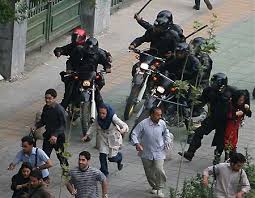
(As February 11th approaches, all signs say that the streets of Iran will be explosive. This paper offers some insight into the dangerous forces at play within the ruling elements of Iran. Y.)

In the 30-year reign of Iran's Islamic Republic, there have been few controversies as serious as the one surrounding the 2009 elections. The votes that brought Mahmoud Ahmadinejad to power for a second term have been challenged, not just on paper, but by citizens taking to the streets in angry protests that have only been quelled by brute force on the part of the establishment. Less well known is the upset that followed Ahmadinejad's nepotistic appointment of Esfandiar Rahim Masha'i, the father of his daughter-in-law, to the post of first vice president. Not long after this, Iran's supreme leader, 'Ali Khamenei, demonstrated his personal authority over the entire political system by forcing Ahmadinejad to reconsider his appointee, leading to Masha'i's dismissal. Masha'i had become controversial for his impolitic references to Israel and America. In a speech at a tourism convention in July 2008, for example, he had observed: "Not only we have no enemy, but we are friends with the American people, with the Israeli people, and we are proud that we are friendly with all the nations in the world."[1]

How did this happen? How did a man holding such views on two countries regarded throughout Iran as the Great and Lesser Satan come to such an important public position? Was something less obvious going on? Why was it so important for Khamenei to risk such a public censure of the president?

It is hard to know just what Masha'i intended by his original remarks since they were overtaken so quickly by condemnation and denial. In themselves, they are of little importance since they clearly did not mark any change in emphasis for Iranian foreign policy. It is the incident in its entirety that is of importance, in what it says about the workings of the regime, above all the relationship between the supreme leader and the president.

(Read full paper)


Love of the Land: Who Rules Iran? Iranian Ambitions

Love of the Land: An assault of illogic

An assault of illogic


Fresnozionism.org
06 February '10

The flap over Im Tirtzu’s exposé of the New Israel Fund’s (NIF) support of left-wing Israeli organizations that contributed to the slanderous Goldstone report gets bigger every day.

Naomi Chazan, the fund’s president, was dis-invited from a speaking tour of Australia.

After Chazan threatened to sue the Jerusalem Post, the Post dropped her as a regular columnist.

There are calls in the Knesset to set up a commission of inquiry to investigate the NIF and foreign funding of Israeli non-governmental organizations (NGOs).

A group of high-ranking reserve officers signed a petition supporting Im Tirtzu against the NIF.


It’s hard to exaggerate the feelings of most Israelis about the Goldstone report, which many see as a modern-day blood libel. Even many members of the so-called ‘peace camp’ feel that the report goes too far in crediting Palestinian accusations against Israel for alleged ‘war crimes’ in Gaza, while downplaying and ignoring real crimes perpetrated by Hamas. So when Im Tirtzu pointed out that the 16 Israeli groups that produced a large majority of the anti-IDF ‘documentation’ — most of which is clearly false — were all grantees of the NIF, there was immediate outrage against the US-based fund.

Supporters of the fund in Israel and the US struck back with an assault of illogic, red herrings, ad hominem arguments and manufactured outrage at Im Tirtzu’s advertisments, but did little to refute the content of its criticism.

(Read full article)

Love of the Land: An assault of illogic

Love of the Land: Benny Morris talk stirs uproar at Cambridge

Benny Morris talk stirs uproar at Cambridge


Jonny Paul
Jewish World/JPost
07 February '10

LONDON – The Israel Society at Cambridge University has succumbed to pressure and canceled a talk by Ben-Gurion University of the Negev historian Benny Morris after protesters accused him of “Islamophobia” and “racism.”

Morris was scheduled to speak to students at the university on Thursday, but following a campaign led by anti-Israel activist Ben White the Israel Society canceled the talk. Instead Morris was invited to speak at an event hosted by the university’s Department of Political and International Studies.

White, who graduated from the university in 2005 and authored the book Israeli Apartheid: A Beginners Guide, set up a protest page on Facebook in which he claimed that “on different occasions, Morris has expressed Islamophobic and racist sentiments towards Arabs and Muslims.”

He added: “We find it offensive and appalling that an official student society would want to invite such an individual.”

Following the Facebook protest, a letter was sent to the student union by the university’s Islamic Society, other students and two staff members from the English Department asking it to take a stand and show it is serious “in opposing bigotry and Islamophobia.” The 15 signatories said Morris’s views were “abhorrent and offensive.

“The issue is hate speech, and the impact of a visit by this individual on the campus’ atmosphere for the student body’s minority groups... His visit is insulting, threatening to Arab and Muslim students in particular and also goes against the spirit of the student union’s stated anti-Islamophobia policy,” the letter read.

Last year, Cambridge’s Palestine Society hosted Abd al-Bari Atwan, editor-in-chief of the London-based Al-Quds Al-Arabi newspaper. In 2008, Atwan said the terrorist attack on Jerusalem’s Mercaz Harav yeshiva, in which eight students were killed and 15 were wounded, was “justified” as the school was responsible for “hatching Israeli extremists and fundamentalists.”

(Read full article)


Love of the Land: Benny Morris talk stirs uproar at Cambridge

Love of the Land: Welfare for Palestinians

Welfare for Palestinians


Ira Sharkansky
Shark Blog
04 February '10

In several of these notes I have described the United States as a laggard among wealthy democracies in its support of social services. Anti-tax individualism shows itself in one of the lowest indicators among this group of countries for government outlays as a percentage of national resources. President Obama's disappointment in health reform is only the most recent demonstration of a culture unfriendly to government programs. It is most apparent among Republicans, but it is far from absent among Democrats.

Now I am pleased to identify a significant departure from public sector stinginess. The American representative to the Palestine National Authority--Daniel Rubinstein--traveled to Bethlehem and announced another U.S. contribution, this time of $40 million, to the United Nations Relief and Works Agency for Palestine Refugees in the Near East (UNRWA). According to the Palestine News Agency, "The United States is UNRWA's largest bilateral donor. In 2009, the United States provided over $267 million to UNRWA, including $116.2 million to its General Fund, $119.5 million to its West Bank/Gaza emergency programs, $30 million to emergency programs in Lebanon, and $2.2 million to assist other Palestinians in the region." Other Palestinians in the region are mostly those in Syria and Jordan. http://english.wafa.ps/?action=detail&id=13712

Yet another positive note in the story is the openness of the State Department to people with a name like Daniel Rubinstein. The 1940s was a long time ago.

Close to last in aid to its own citizens but first in aid to Palestinians is a mark of some distinction, but not clearly a positive mark. If any people demonstrate the folly of excessive public support it is Palestinians who have lived off their claim of being refugees through four generations and 60 years.

One can argue without end about the facts and the morality as the British Mandate for Palestine became Israel. Who did what, and who rejected what compromises are questions in the dustbin of history, along with who is responsible for African slavery, and which group may claim ownership over each part of North and South America, Europe, Asia, Africa and other places where migrations and bloody conquests began long before recorded history, and continued through much of the history that has been recorded. One can ponder the responsibility of Arab countries and the United Nations, along with Palestinians themselves and Israel for the maintenance of the refugee phenomenon. While individual Palestinians have left the camps and done well, UNRWA remains a vital part of Palestinian lives and international politics. Dependence is the name of the game, for the organization, the refugees, the politicians of Palestine and those of other countries who accuse only Israel of responsibility.

There is no better demonstration of the American mantra that aid breeds weakness, and cuts off individual initiative before it can develop.

(Read full post)


Love of the Land: Welfare for Palestinians

RubinReports: MERIA Journal, New Issue Now Available

RubinReports: MERIA Journal, New Issue Now Available

RubinReports: Benny Morris: Banned at Cambridge University Out of Fear. Who’s Next?

Benny Morris: Banned at Cambridge University Out of Fear. Who’s Next?

By Barry Rubin

Jake Witzenfeld, president of Cambridge University's Israel Society, canceled a talk by Benny Morris, an Israeli scholar, apologizing for any "unintended offense." "I decided to cancel for fear of the Israel Society being portrayed as a mouthpiece of Islamophobia," he said. "We understand that whilst Professor Benny Morris' contribution to history is highly respectable and significant, his personal views are, regrettably, deeply offensive to many....”

Mr. Witzenfeld should resign his position immediately since by leading a pro-Israel group he will no doubt be portrayed as all sorts of slanderous things and give offense to people. After all, the existence of Israel itself is “offensive” to many Muslims and others, which is not a reason for wiping it out, presumably. As Witzenfeld might know, pro-Israel groups have been banned on British campuses before and perhaps this is what he fears.

As for giving offense, his cowardice offends me, if that's his criterion for making decisions. Hopefully, someone less fearful can be found to head the society.

I have known Benny Morris for many years, including at a time when he was on the far left and we disagreed on just about everything, through the time that he has shifted position as a result of the trauma—felt by all Israelis—over the failure of the 1990s peace process. These experiences underlined the fact that certain more self-blaming and optimistic ideas about politics in Arabic-speaking and Muslim-majority societies didn’t work. Professor Morris adjusted to that reality, as did many other Israelis and others. Come to think of it, that was Israel's equivalent of September 11.

In addition, I have read Professor Morris's books, including the recent one arguing that historically Islam has been used by Muslim-majority polities to foster imperialism. While my approach is somewhat different, I respect his work, he makes many good points, and people write parallel things about Christianity’s historic employment in politics every day.

Moreover, while I was “offended” by Professor Morris’s views for many years in the past the idea that this should make me or anyone else to try to ban him from speaking never occurred. There’s something called belief in freedom of speech and a faith in the power of debate to reveal the truth that counters such censorship.

For the record, the idea that anything Morris has said or written shows some hatred of Muslims or racism is, let’s not mince words, a lie.

But what is most shocking about this travesty is Witzenfield's phrase “being portrayed as.” In other words, the mere fear that someone might claim that you are racist or Islamophobic—even if you know you aren’t and even if you know the speaker isn’t--is now a cause to refuse to hear a speaker or discuss an idea in the United Kingdom. Following the Witzenfield rule, any serious discussion of Middle East politics, terrorism, religion, and lots of other subjects should be banned since there are definitely those who will portray opinions they don't like as hateful, offensive, and racist (even if they have nothing to do with race).

What does the kind of behavior evidenced at Cambridge--and many other recent examples can be cited-- do but turn slander into a very effective weapon, indeed an irresistible weapon. Now if Muslims or leftists or antisemites or anti-Americans don’t like someone or something they can just attack him or her or it—even proving the accusations have some basis in truth is not important—and destroy their ability to speak to an audience.

This began with the refusal to admit Geert Wilders, the Dutch politician, to the United Kingdom and it is spreading to the point where the basic rights taken for granted by people living in democratic societies are now in jeopardy, at least in Western Europe. Wilders himself is now on trial in the Netherlands for using his right of speech. Indeed, this harassment is also being used by his political rivals to hurt his party’s electoral chances in the coming election.

Isn’t this kind of thing precisely what believers in liberty have been warning about for three centuries? Well now it’s here. If this can happen to Benny Morris it can happen to anyone. Indeed, I wonder whether I would be allowed to speak at the Cambridge University's Israel Society. After all, a few sentences or phrases can always be twisted or taken out of context. Or, if that proves too difficult, claims about what someone says or believes can simply be completely made up.

And why even bother to do that since no proof is required of anything except someone opposing your views and not believing in democracy or free speech. Is this the kind of behavior we want to reward with total vitory? Are these the kind of people we want in control of our rights?

RubinReports: Benny Morris: Banned at Cambridge University Out of Fear. Who’s Next?

DoubleTapper: Arab states reject Pakistani Ambassador Mr. Biggest Dick

Arab states reject Pakistani Ambassador Mr. Biggest Dick

Up until just over a month ago, His Excellency Miangul Akbar Zeb had lived an esteemed life as one of Pakistan's most senior diplomats.

Mr Zeb has served as the ambassador of Pakistan to the United States, India and South Africa, the director general of Pakistan's Foreign Ministry and most recently was Pakistan's High Commissioner Designate to Canada.

According to the Media Line news agency, Mr Zeb's impressive career hit a hick-up when Pakistan recently decided to send the 55-year-old veteran diplomat to the Arab world, seemingly ignorant to the Arabic translation of the senior diplomat's name: 'Biggest Dick'.

A relatively common Muslim name, Akbar means 'biggest' or 'greatest' in Arabic. While Zeb is a common Urdu name, in Arabic it is a slang reference to the male genitals and not used in polite conversation.

Faced with an uncomfortable conundrum, it seems the unfortunate diplomat's Arab hosts felt that local references to 'His Excellency Biggest Dick' would not go over well.

According to the Arab Times, the United Arab Emirates refused to accredit Mr Zeb as ambassador. Undeterred, Pakistan then tried to send Mr Zeb to neighboring Bahrain instead, where the emissary was rejected again. Then, most recently, Pakistan tried sending Mr Zeb to Saudi Arabia, only to be rebuffed a third time.

None of the Gulf States have made a statement as to why Mr Zeb was refused accreditation.

"It's hard to imagine that someone's name would be a problem, especially on this level, but I understand why the governments reacted this way," Ahmed Al-Omran, a Saudi cultural critic told The Media Line. "It crosses a cultural red line so I don't think the media would dare to publish a name like this. So every time he would be in the media they would have to face the name issue and it would make it difficult to work with him. That would just be an embarrassment for Pakistan."

Eman Al Nafjan, an influential Saudi blogger, said Pakistan should have known.

"If they were Russian or Chinese we could say maybe they didn't know or they were ignorant," she told The Media Line. "But they are Muslim, they use the Arabic alphabet and they know what his name means in Arabic so I'm surprised they didn't pick up on it sooner. The Pakistani's should have known and they could have avoided the whole thing, so nobody thinks the government was wrong on this issue.”

"On the one hand I would have thought it was a source of pride for him," Al Nafjan said laughing. "It's funny, but you can't just pronounce that name. It's too awkward: how would he be announced at events? How would he be written about?"

"If he were the president of Pakistan it would be a different issue," she added. "I mean we can't choose their president for them. But if it's an ambassador, I'm sure they can find someone else."

David Kenner of Foreign Policy magazine wrote that the issue was likely a source of embarrassment for Pakistan.

"One can only assume that submitting Zeb's name to a number of Arabic-speaking countries is some unique form of punishment designed by the Pakistani Foreign Ministry," he wrote. "Or the result of a particularly egregious cock-up."

Iqbal Khattak, Bureau Chief of the Pakistani Daily Times, said the issue has not been reported locally.

Pakistan's Ministry of Foreign Affairs declined to comment for this article

Hat tip Rafi G


DoubleTapper: Arab states reject Pakistani Ambassador Mr. Biggest Dick

Elder of Ziyon: Latest IDF secret weapon: Odor-free socks!

Elder of Ziyon: Latest IDF secret weapon: Odor-free socks!

Elder of Ziyon: Iran nervous about upcoming anniversary

Elder of Ziyon: Iran nervous about upcoming anniversary

Elder of Ziyon: Nutty Israel-haters: "Underwear bomber was Zionist"

Elder of Ziyon: Nutty Israel-haters: "Underwear bomber was Zionist"

Elder of Ziyon: Iranian leader calls Israel's destruction "imminent"

Elder of Ziyon: Iranian leader calls Israel's destruction "imminent"

Elder of Ziyon: The Israeli task force did interview Gazans

Elder of Ziyon: The Israeli task force did interview Gazans
Related Posts Plugin for WordPress, Blogger...