Tuesday, 5 January 2010

Israel Matzav: Uh oh... US weapons sales to Arab countries 'will alter the military balance in the region'

Uh oh... US weapons sales to Arab countries 'will alter the military balance in the region'

Haaretz has a deeply disturbing report on recent sales of American weapons to other countries in the region, principally Egypt, Saudi Arabia and the United Arab Emirates. Of particular concern are the sale of offensive weapons to the Egyptians that could potentially be used against Israel, and the fact that there have been no arms sales to Israel since the Obama administration took office. In a report to Congress, the Pentagon notes that some of the arms sales 'will alter the military balance in the region.'

Israel's defense establishment began to be concerned by U.S. arms sales to moderate Arab states during George W. Bush's presidency. In response to criticism the U.S. has argued that providing Egypt, Saudi Arabia and other Arab countries with arms is part of Washington's efforts to boost the moderate axis in the Middle East and to deter Iran.

Senior Israeli and U.S. officials have said that Israel has been informed about the arms deals.

One of the deals troubling Israel was the sale to Egypt of four batteries of Harpoon Block II anti-ship cruise missiles, in a deal worth $145 million and containing 20 missiles. The Harpoon II is an advanced, accurate missile, capable of overcoming the countermeasures and electronic warfare suites generally available for defense.

The U.S. also sold Egypt four fast missile boats in a deal worth $1.29 billion. The U.S administration said the Egyptian navy needs the boats in order to better defend access to the Suez Canal.

Another deal with Egypt, this one to bolster the country's air force, included 450 Hellfire antitank missiles. These missiles are usually launched from Apache attack helicopters. "Egypt needs these missiles in order to protect its borders," the Pentagon explained in its report to Congress. "Restrictions on the use and transfer of the missiles will be part of the deal," according to the Pentagon.

The U.S. will also sell Cairo 156 jet engines for F-16 jets, valued at $750 million, in the wake of a deal in October for the sale of 24 F-16 C/D fighter aircraft equipped with electronic warfare suites. The total value of the F-16 deal is estimated at $3 billion.

Read the whole thing. At the end of the day, restrictions on use and transfer are pieces of paper that can be torn up whenever the Egyptians don't like. Surely you don't believe that the United States would come and try to repossess its missiles (or that it could do so even if it wanted to).

Egypt is a repressive regime that continues to reap rewards for a peace treaty it signed thirty years ago while holding the other party to that peace treaty at arms length or worse. One cannot escape the sense that the Egyptian regime is lying in wait, still hoping one day to destroy the Jewish state. In all of its war exercises, the enemy is Israel.

What could go wrong?


Israel Matzav: Uh oh... US weapons sales to Arab countries 'will alter the military balance in the region'

Israel Matzav: Iran asks Hamas and Hezbullah to coordinate attacks on Israel

Iran asks Hamas and Hezbullah to coordinate attacks on Israel

Iran has apparently asked Hamas and Hezbullah to coordinate attacks on Israel.

A Lebanese Web site on Sunday quoted Saudi newspaper al-Madina as reporting that Iran nuclear negotiator Saeed Jalili met with Hamas and Hizbullah officials, including Hamas politburo chief Khaled Mashaal, in Damasucs and asked them to orchestrate "operations" against Israel.

The report said that Jalili also traveled to Beirut and urged Hizbullah and Amal representatives to launch attacks.

Jalili reportedly also asked Hamas and Hizbullah to coordinate their attacks.

There's only one thing about this story that makes no sense: Why now? With the West reaching the conclusion that Iran cannot produce a nuclear weapon for another 18 months anyway and Israel apparently playing along, why would Iran try to spur Hamas and Hezbullah into action now - especially Hamas which still has not recovered from last winter's Operation Cast Lead? Unless Iran doesn't believe Israel intends to give Obama the time he has requested for sanctions against Iran to take effect.

Hmmm.


Israel Matzav: Iran asks Hamas and Hezbullah to coordinate attacks on Israel

Israel Matzav: Some of us saw this coming

Some of us saw this coming

Caroline Glick wrote a brilliant column over the weekend, but ultimately she still fails to recognize that the current Prime Minister, Bibi Netanyahu, whom she strongly backed, is no different than Ariel Sharon whom she blames for most of Israel's ills over the last decade. And many of us saw it coming two years ago.

As we move into the second decade of this century, we need to understand how the last decade was so squandered. How is it possible that in 2010 Israel continues to embrace policies that have failed it - violently and continuously for so many years? Why, in 2010 are we still ignoring the lessons of 2000 and all that we have learned since then?

There are two main causes for this failure: The local media and Sharon. Throughout the 1990s, the Israeli media - print, radio and television - were the chief propagandists for appeasement. When appeasement failed in 2000, Israel's media elites circled the wagons. They refused to admit they had been wrong.

Misleading phrases like "cycle of violence" were introduced into our newspeak. The absence of a security fence - rather than the presence of an enemy society on the outskirts of Israel's population centers - was blamed for the terror that claimed the lives of over a thousand Israelis. Palestinian propagandists and terrorists such as Fatah leader Marwan Barghouti were treated like legitimate politicians. Palestinian ties to Iran, Syria, Iraq and the nexus of global jihad went unmentioned or uncommented upon.

At the same time, opponents of appeasement - those who had warned of the dangers of the Oslo process and had spoken out against the withdrawal from Lebanon and a potential withdrawal from the Golan Height and Gaza - were not congratulated for their wisdom. They remained marginalized and demonized.

This situation prevails still today. The same media that brought us these catastrophes now derides Likud ministers and Knesset members who speak out against delusion-based policies, while suddenly embracing Netanyahu who - with Barak at his side - has belatedly embraced their pipe dreams of appeasement-based peace.

Netanyahu didn't belatedly embrace the 'peace process.' He embraced it long before he became the Likud's candidate for Prime Minister, because he felt that he could not get enough support from the Left to form a government without embracing the 'peace process,' and after what happened to him in 1999 (when the Right brought him down for not being ideologically pure enough), he wasn't going to try to form a government of the Right alone, even though that's what most Israelis wanted. The failure to recognize that Netanyahu's campaign for media appeal and his rejection of the people's will is our fault, will ensure that we continue to elect spineless politicians who are more able to endanger us on the Right than on the Left.

All one needs to do is mention some of the people with whom Netanyahu surrounded himself two years ago to appreciate that his goal was to be Prime Minister rather than to defeat our enemies, and that he was willing to forfeit all of his values for that goal. Dan Meridor. Uzi Dayan. Tal Brody. Even Caroline Glick herself was taken in. This is Caroline from right after the Likud primary in August 2007.

Here in Israel, after Likud leader Binyamin Netanyahu's stunning victory in the Likud leadership primaries Tuesday, we are also moving into pre-election mode. Israeli voters will expect Defense Minister Ehud Barak, the Labor Party leader, and Netanyahu to present their visions of where Israel should be going.

Since Barak owes his primary victory to Labor's Arab voters, no one expects him to give up on his commitment to Palestinian statehood. But Netanyahu is a different story. It would make perfect sense for the Likud to base its electoral platform on recognizing that Fatah is Israel's enemy, and by rejecting the establishment of a Palestinian state. And Netanyahu is better qualified than any politician to convince Israeli voters to support such a reality-based platform.

...

As Cantor's letter and Giuliani's article make clear, there also is a strong coalition in the US that is willing to recognize that Fatah is a member of the enemy camp and to accept that a terror-supporting Palestinian state would harm US national security interests. Yet, as Steny Hoyer made clear, only Israelis can stand at the helm of such a coalition. Israelis and Americans alike must hope that Netanyahu will embrace his duty to lead that coalition.

But for reasons that were evident two and a half years ago, Caroline was doing some wishful thinking. Netanyahu wasn't going to take chances with his shot at being Prime Minister to head a Right wing coalition that would recognize that Fatah is the enemy.

Caroline is right that Olmert and his government refuse to accept that Fatah is the enemy. And if left to his own devices, there is little doubt that Olmert will reach an agreement with Abu Mazen that, like Oslo, Netanyahu will be obligated to honor should he come to power again.

But does Netanyahu understand that Fatah is the enemy? Does Netanyahu want to stop Olmert from reaching that agreement? Or would he prefer that Olmert reach the agreement and then that he, Netanyahu come to power 'facing' a fait accomplis? From his actions this week, Netanyahu seems to think that it's not Fatah - but Feiglin - who is the enemy, and that he'd just as soon let Olmert reach an agreement with Abu Mazen.

In this week's Likud primary, Moshe Feiglin garnered just over 23% of the vote. Instead of being gracious and trying to co-opt Feiglin into a strong nationalist coalition, Netanyahu treated him and one quarter of the Likud's voters like interlopers. He barred Feiglin from the victory celebration and made sure he was not photographed with Feiglin. In fact, he made sure that former education minister Limor Livnat stood by him like a wall to make sure that no photographer would get a picture of him with Feiglin. Instead of speaking out against the corrupt government of Ehud K. Olmert in his victory speech, Netanyahu spoke of recruiting "moderates into the party's leadership from the business sector, academia and former IDF generals." Earlier this week, I noted what Netanyahu meant by that statement:

He's talking about bringing people who abandoned the Likud for Kadima Achora back into the party. He's talking about people like Shaul Mofaz, who zealously commanded the expulsion of the Jews from Gaza two years ago, and Bibi's old buddy Tzachi Hanegbi who has never seen a bribe that looked too criminal to take, and who has been under 'investigation' nearly as many times as Olmert. Bibi's not talking about former generals like Effie Eitam, who was beaten by police at Amona, or Moshe (Boogie) Yaalon, who was fired as Chief of Staff of the IDF because he opposed the Gaza expulsion. (Yaalon is already a member of the Likud, but if Bibi brings Mofaz back, you can bet that it is Mofaz who will be defense minister and not Yaalon).

Netanyahu wants to make the Likud a 'centrist' party and not a party of the right. It's as if he's playing for votes from Haaretz and not from Israel's right. People seem to have forgotten - as he wanted them to - that Netanyahu stayed in the cabinet and voted for the expulsion from Gaza almost to the very end. Netanyahu was the only leader in the Likud who could have mobilized people against the expulsion. He didn't do it:

So when Netanyahu was elected and immediately started courting Barak and Livni, none of us should have been surprised. Not even Caroline Glick.

Caroline goes on to blame Ariel Sharon for betraying his voters, and she's right about that. What she missed is that Binyamin Netanyahu did - and continues to do - exactly the same thing. Were it not for Moshe Feiglin, we would not have the likes of Danny Danon and Tzipi Hotovely in the Knesset today trying to do something to protect the Likud's traditional positions. Yes, we need to understand why we continually squander opportunities. One reason is that we're afraid to stand up to the mainstream media and espouse goals - like a Jewish state from the Jordan to the Mediterranean - that aren't politically correct, but that are our only hope - with a lot of help from God - for survival.

Caroline Glick is smart enough to recognize that.

Israel Matzav: Some of us saw this coming

Israel Matzav: What Egypt gets and the 'internationals' don't

What Egypt gets and the 'internationals' don't

Over at Firedog Lake, the moonbats are trying to show how they 'won' despite the fact that the Egyptians did not let them into Gaza to commemorate Operation Cast Lead, and despite the fact that their protests on the Israeli side of the border only made a big deal here because an 'Israeli Arab' MK handed his government-issued cell phone to Ismael Haniyeh (Hat Tip: "Memeorandum"). The bottom line here is that a year later, Israeli Jews still overwhelmingly support the war and the way it was fought and understand that the IDF did what had to be done. As a collective, we are not suicidal morons, although we do have some such among us (you will see one of them below). The overwhelming majority of Israeli Jews understand that if things like glass and concrete are allowed into Gaza, they will be used to build rockets and to make bunkers for the Hamas leadership and not to build homes.

And the Egyptians understand it too. The Egyptians understand that rehabilitating Hamas means creating an Islamist province on their border that could spread its noxious doctrine to them. They are not fools either, and that's why they did not let the vast majority of the useful idiots into Gaza and why they are going along with preventing the types of supplies that could be used to make rockets from reaching Gaza.

Let's go to the videotape.


Israel Matzav: What Egypt gets and the 'internationals' don't

Love of the Land: PR fails again

PR fails again


Jonathan Dahoah Halevi
Israel Opinion/Ynet
04 January '10

The Palestinian Center for Human Rights (PCHR) published in its weekly summary a report on an incident in which three Palestinians were killed by IDF fire: “On Saturday, December 26, 2009 at around 00:30 Israeli forces opened fire on a number of Palestinians who approached the border. As a result, three of them were killed. They were unarmed and apparently trying to infiltrate Israel in order to look for work.”

The organization thus accuses the IDF of killing three innocent Palestinian civilians. In order to further exacerbate the Israeli “crime”, the organization added details in the service of Palestinian propaganda in relation to the economic distress in the Gaza Strip, which it claims is the reason that the group of Palestinians attempted to enter Israel to find work.

Stories of this kind, about young people who were killed in an attempt to cross the border to find work in Israel, can be found in abundance in reports issued by Palestinian human rights groups as well as in reports on Palestinian victims issued by B’Tselem.

This case allows one to learn about the conduct of terror organizations, Palestinian propaganda (sometimes with the assistance of Israeli human rights organizations) and the ineffectiveness of Israeli public relations. In this relation it should be clarified that not a single Palestinian terror organization claimed responsibility for the incident. Does this mean that these were civilians and not terrorists? Not necessarily.

The IDF Spokesperson’s Office issued a statement on December 29, 2009, which sheds some light on the incident:

“On Friday night an IDF force identified four terrorists approaching the border fence in northern Gaza in a military crawl, apparently in order to carry out an attack in Israel. The force fired at them using the ‘see and fire’ system, with the help of Air Force jets and forces from the Golani Brigade. The fire killed three terrorists and an additional terrorist was injured… In patrols held after the incident soldiers discovered a rope ladder and three explosive devices, among them a powerful device.”

The story of the incident, as it is revealed by the IDF’s version, is totally different from the report published by the Palestinian human rights group. The four Palestinian youths, three of whom were killed by IDF fire, were not trying to find work in Israel due to economic distress, but were sent either by a Palestinian terror organization or the Hamas government’s security forces on a mission – to plant powerful explosive devices on the border with Israel.

(Read full article)

Jonathan Dahoah Halevi is a senior researcher and fellow at the Jerusalem Center for Public Affairs and Director of Research at the Orient Research Group


Love of the Land: PR fails again

Love of the Land: Ideology is still today

Ideology is still today


Now Lebanon
New Opinion
04 January '10

Last year, US Secretary of State Hillary Clinton declared that ideology was “so yesterday.” She should tell that today to the brave demonstrators on the streets of Tehran who have shown us otherwise, and to the thousands of Lebanese who still dream of a fully-fledged state, even as they see their country slip back into political retardation.

The Middle East, and much of the rest of the world for that matter, may be on the receiving end of US President Barrack Obama’s ruthless policy of engagement, but the good news is that at a grass-roots level, the will to express dissatisfaction is still alive and kicking. In Iran, the leadership is finding it harder and harder to suppress news of the demonstrations making its way to the West via Twitter and other networking systems. US policy may be more carrot than stick (a policy that might make it less inclined to fan the flames of insurrection if it succeeds in fulfilling the nuclear agenda) but the world will find it hard to ignore the impact of a revolution played out on cell phones and laptops across the globe.

So if real politic is the order of the day, then it is even more important to support those who fight against regimes that are not afraid to persecute, and even spirit away, those who stand up to their draconian policies. The Iranian regime, which, let us not forget, is the spiritual and financial sponsor of Hezbollah, is particularly unforgiving to those who utter dissent. Since the anti-government demonstrations started in mid 2009, dozens have been killed, while others have simply disappeared. Meanwhile, news is emerging of a system, initiated in 2006, whereby those accused of being involved in, or even sympathetic to, dissent are denied professional opportunities and even banned from education. It is a system of which the Nazis, not to mention some former communist bloc security services, would be proud.

(Read full article)


Love of the Land: Ideology is still today

Love of the Land: Is the US Constitution Worth Dying For?

Is the US Constitution Worth Dying For?


Emmanuel Navon
For the Sake of Zion
04 January '10

(While there are some points here with which I beg to disagree, the over all thrust of the response is on target. Y.)

A few weeks ago, a reader posted the following comment on my blog: "I perceive that young liberal U.S. Jews (i.e., the vast majority) are uncomfortable with the idea of a Jewish "nation" - just as they challenge the ethnic identification of nations generally. This is only natural for an American whose allegiance is to a legal document (the Constitution) and a flag, not a people. How do you make the argument to young Jews who are two generations removed from violent anti-Semitism, attracted to the "tikkun olam" worldview, and skeptical of nationalism generally, that Jews need a separate nation of their own that is worth killing and dying for? I think this is a serious issue that is already manifesting itself in the ever weakening support of Israel among under 40, non-orthodox U.S. Jews."

Most nations today define themselves ethnically. This is true of the Japanese, of the Germans, of the Russians, or of the Swedes. Indeed, it is because of ethnic differences that a civil war broke out in Yugoslavia in the late 1980s and that Czechoslovakia broke apart twenty years ago. And it is because of ethnic differences that the Québécois keep trying to break apart from Canada. Nationalism and national identity are a fact a life, whether you like it or not. Many academics have tried to de-construct and to de-legitimize nationalism and national identity, but it is a fact that most people identify with a nation, and that most nations define themselves ethnically.

I can understand that some people feel uncomfortable with the fact that many nations, indeed most nations, define themselves ethnically. But nations are entitled to define themselves however they want. And it is illiberal to be judgmental on how they define themselves. So people cannot on the one hand call themselves "liberal" and on the other hand denigrate the way other people wish to define their identity. Why is there such tolerance for gender and ethnic differences within American society, but at the same time such intolerance for ethnic differences within the international community?

(Read full article)


Love of the Land: Is the US Constitution Worth Dying For?

Love of the Land: Arab employees of Israeli institutions misuse their positions to slander Israel

Arab employees of Israeli institutions misuse their positions to slander Israel


Itamar Marcus and Nan Jacques Zilberdik
Palestinian Media Watch (PMW)
04 January '10

Three Arab employees of Israeli institutions misuse their positions to slander Israel

A teacher instructs his Israeli Arab students that the Israeli curriculum should "not be considered information"

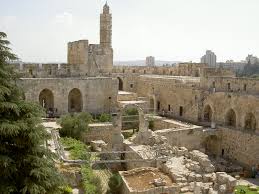
A researcher of the Tower of David Museum of Jerusalem's History calls the museum's information "lies"

A guide at the museum prefers to convey "the Arab point of view" rather than the museum's "deceptions" when guiding Arabic-speaking visitors


Interviews with three Arab employees of official Israeli institutions in Jerusalem, a teacher, a researcher and a guide, were recently broadcast on Palestinian TV. The interviewees revealed that in the course of their work they do not convey to students and visitors the historical information which they are meant to impart - contrary to the guidelines of their Israeli employers, and without their knowledge.

Mustafa Othman, a teacher from the Beit Safafa neighborhood in the western part of Jerusalem, revealed on Palestinian television that he teaches Israeli Arab children that the Israeli state curriculum is "only for the test; you shouldn't consider it as information". The truth, he teaches Israeli Arab youth, is "that [Israel] conquered our land by armed force, robbed it, destroyed the houses, expelled its people from the cities and from the villages."

In another broadcast, two employees of the Tower of David Museum of the History of Jerusalem, a history scholar and an Arabic-language tour guide, were interviewed. Both defined the Israeli historical narrative regarding the Jewish connection with Jerusalem, which they are meant to convey to tourists, as "false," and testified that they teach different information instead. According to one, the museum invents stories for the purpose of "creating a historical right and a historical dimension, claiming that they [the Jews] were here 3,000 years ago and that they had buildings here, and that they had a presence here." The tourist guide in the museum said that the information signs on the walls of the museum are incorrect, while the history scholar reiterated the central Palestinian historical distortion denying the existence of the Temple in Jerusalem, referring to it as the "alleged Temple".

(Read full report)

Love of the Land: Arab employees of Israeli institutions misuse their positions to slander Israel

Love of the Land: The Lebanon War's Toy Story

The Lebanon War's Toy Story

Honest Reporting/Backspin
04 January '10

Errol Morris of the NY Times Opinionator blog discusses with AP photographer Ben Curtis about toys appearing in photos from the Second Lebanon War. The interview was prompted by Slublog's 2006 post, The Passion of the Toys.


Ben_curtis_lebanon_2006


A child’s toy lies amidst broken glass from the shattered windows of an apartment block near those that were demolished by Israeli air strikes in Tyre, Southern Lebanon, Monday, August 7th, 2006.


It's worth reading because it gives a sense of the dynamic between photographers on the scene and their editors back home, what happens when a war zone is saturated with cameramen, and how photographers choose shots like this.


ERROL MORRIS: The good example, of course, is the Mickey Mouse photograph, because it is not a photograph that has been manipulated in Photoshop. And yet people find it problematic, regardless. People look at the photograph and think, “They’re trying to blame this on Israel, saying the country killed innocent children.” And then comes the follow-up thought: “How dare they! They’re anti-Semitic,” and so on and so forth. And my own two cents of opinion on posing is that often we say a picture is posed if the photograph suggests a view that we don’t like, regardless of what the intention of the photographer might have been and regardless of whether it has or has not been manipulated.


(Read full article)


Love of the Land: The Lebanon War's Toy Story

Love of the Land: Stalinism at the Foreign Ministry?

Stalinism at the Foreign Ministry?


Isi Leibler
Candidly Speaking from Jerusalem
31 December 09

Foreign Minister Avigdor Lieberman has a penchant for rubbing against the grain of Israelis with some of his more abrasive statements.

Today’s Jerusalem Post contains an item in which an unnamed Foreign Ministry official accuses Liebermann of trying to initiate a “Stalinist” regime inside the ministry in order to strike fear in the hearts of ministry workers. This came after Lieberman approved the suspension of a senior official accused of having leaked information to the media.

The incident exemplifies the problem prevailing within the Foreign Ministry and other civil service divisions in Israel where too often officials have become so full of themselves that they seem to have lost the plot.

(
Read full article)


Love of the Land: Stalinism at the Foreign Ministry?

Love of the Land: Passing the Buck on the bad boys of football

Passing the Buck on the bad boys of football


Bataween
Point of No Return
03 January '10

The
Financial Times' partial Middle East coverage has for some time been giving cause for concern - a bias no less worrying than that of the BBC and The Guardian. There must only be bad news about Israel. One narrative that western journos like the FT's correspondent Tobias Buck dutifully follow is that Israel society may come across like one big family, but is in fact hopelessly fractious and divided.

On Saturday, under the guise of an article on the 'not-so-beautiful' game of football, the FT
published a portrait of the downright ugly 'bad boys' who support Beitar Jerusalem. No other soccer team in Israel glories in the fact it will not recruit an Arab player (although Buck does not reveal it has black players). What an unpleasant bunch. Out-and-out racists they are, screaming milhama at their opponents ('war'). Their hatred for Arabs and for the Ashkenazi 'liberals' of Hapoel Tel-Aviv is truly venomous.

The Mizrahim behind Beitar Jerusalem, Buck acknowledges, come from Arab countries. How and why did the families of the fans come to Israel? How many Jews have ever been allowed to play for Moroccan teams? Might persecution in Arab countries just have something to do with their anti-Arab racism? While it can never excuse it, might it explain some of their behaviour? No, Buck is not going there. Jews can never be portrayed as victims, except of each other. That role is reserved for Arabs - sorry, 'Israeli-Palestinians,' as Buck calls them.

(
Read full article)


Love of the Land: Passing the Buck on the bad boys of football

Love of the Land: The Expansion of Al-Qaeda-Affiliated Jihadi Groups in Gaza: Diplomatic Implications

The Expansion of Al-Qaeda-Affiliated Jihadi Groups in Gaza: Diplomatic Implications


Dore Gold
JCPA
Vol. 9, No. 17
4 January '10

In the West there is a growing trend to view Hamas as separate from al-Qaeda in order to open a political dialogue with Hamas, but is this view correct?

In its annual survey of terrorist threats to Israel during 2009, the Israel Security Agency noted the spread and buildup of "global jihadi" organizations in Gaza. In recent years a number of these jihadi groups have emerged that openly identify with al-Qaeda, such as Jaish al-Islam (the Army of Islam), Jaish al-Umma (the Army of the Nation), and Fatah al-Islam.

Hamas was founded in 1987 as the Palestinian wing of the Muslim Brotherhood. Osama bin Laden was educated in Saudi Arabia by Muhammad Qutb of the Egyptian Muslim Brotherhood and Abdullah Azzam of the Jordanian Muslim Brotherhood. Khalid Sheikh Muhammad, the architect of the 9/11 attacks, came out of the Kuwaiti Muslim Brotherhood. The Muslim Brotherhood still defines its goal as "a world Islamic state."

In February 2004, the U.S. designated Sheikh Abd al-Majid Zindani, president of Iman University in Yemen, as a "loyalist to Osama bin Laden." On March 20, 2006, Zindani, who recruited volunteers for al-Qaeda, sponsored a major fundraising event for Hamas in Yemen. Umar Farouk Abdulmutallab, the Nigerian who tried to blow up Northwest Flight 253 to Detroit, went to hear lectures on radical Islam at Iman University.

The al-Qaeda affiliate Jaysh al-Islam joined Hamas in the 2006 kidnapping of Israeli soldier Gilad Shalit. This proves that Hamas and al-Qaeda affiliates have been involved in joint operations. In 2007, the Egyptian press reported that one of the heads of al-Qaeda in Egypt had escaped and sought sanctuary in Gaza. In May 2009, Egypt charged that another al-Qaeda-linked group was using Gaza for training terrorists for attacks in Egypt.

In its annual survey of terrorist threats to Israel during 2009, the Israel Security Agency (also known by its Hebrew acronym Shabak or Shin Bet) noted a number of positive trends - with one glaring exception: the spread and buildup of "global jihadi" organizations in Gaza.1 A number of these groups, like Jaish al-Islam (the Army of Islam), Jaish al-Umma (the Army of the Nation), and Fatah al-Islam, openly identify with al-Qaeda.2

Indeed, PA Chairman Mahmoud Abbas told al-Hayat on February 26, 2008, that al-Qaeda was present in Gaza and he charged that "the Hamas movement brought al-Qaeda." He described the two groups as "allies." However, in the West there is a growing trend to view Hamas as separate from al-Qaeda in order to open a political dialogue with Hamas.

Western Calls to Open a Dialogue with Hamas

For this reason, it should not be surprising that in the months ahead, it is likely that British, European, and even American groups will step up their efforts to demand that Hamas be brought into the political process. To advance this goal there will be increasing calls for direct political engagement with Hamas by various governments and current and former officials.

(
Read full report)

Love of the Land: The Expansion of Al-Qaeda-Affiliated Jihadi Groups in Gaza: Diplomatic Implications

Love of the Land: Jewish Voice for Peace and AFSC Formally Admit It-- They Are Opposed to the Existence of Israel

Jewish Voice for Peace and AFSC Formally Admit It-- They Are Opposed to the Existence of Israel


Blue Truth
02 January '10

At a pro-Hamas demonstration in San Francisco last week, Jewish Voice for Peace and the American Friends Service Committee finally dropped all pretense about their position on Israel. While both of these groups had been vigorously involved in anti-Israel activities for years (and joined together to co-present the now-notorious showing of "Rachel" last summer at the San Francisco Jewish Film Festival), each had maintained the pretense that they didn't oppose the existence of a Jewish state per se. They have now decided to admit what we knew all along-- that they are fully and completely aligned with groups that openly call for the elimination of Israel, and that they share the agenda of groups such as al-Awda, International ANSWER, and, in the end, Hamas.

(Read full post)

Love of the Land: Jewish Voice for Peace and AFSC Formally Admit It-- They Are Opposed to the Existence of Israel

Love of the Land: Palestinians To Israel: Instead Of A Peace Summit, How About We "Escalate Our Struggle" Instead?

Palestinians To Israel: Instead Of A Peace Summit, How About We "Escalate Our Struggle" Instead?


Omri
Mere Rhetoric
03 January '10

The awesome thing is that the two statements came out on the exact same day, a nicelypointed illustration of the differences between Israel and its partner in peace. Netanyahu proposed a reinvigorated peace summit in Egypt, and promptly got his answer:


The secular Fatah movement led by Palestinian president Mahmud Abbas on Thursday vowed to step up its struggle against the Israeli occupation with demonstrations and diplomacy. "Our programme emphasises the importance of a two-track approach, with the first being the escalation of the popular struggle to resist occupation," the movement said in a statement. The group said it would model the struggle on the weekly demonstrations in two West Bank towns, Bilin and Nilin, where residents hurl rocks and protest against the expansion of Israel's controversial separation barrier. Fatah, which marks the 45th anniversary of the start of its armed struggle on Friday, also vowed to "increase movement on the international level to pursue Israel, to isolate it and to force it to answer to international law."


The really elegant part is how they bundled together (a) threats of Palestinian violence and (b) international efforts to delegitimize Israeli self-defense in the face of Palestinian violence ("to isolate it and to force it to answer to international law"). Only Israel's Arab enemies could be soconfidently brazen about crowing that they'll attack Israeli civilians and then whine about Israeli retaliation.


(Read full post)


Love of the Land: Palestinians To Israel: Instead Of A Peace Summit, How About We "Escalate Our Struggle" Instead?

Love of the Land: Iran Expands Its Target List

Iran Expands Its Target List


Timothy J. Geraghty
Wall Street Journal
03 January '10

The nagging question of the nuclear age has been what if a madman gets hold of an atomic bomb? That question is about to be answered as Iran's defiance puts it on a collision course with the West.

On Nov. 4, 2009, Israeli commandos intercepted an Antiguan-flagged ship 100 miles off the Israeli coast. It was carrying hundreds of tons of weapons from Iran and bound for Hezbollah in Lebanon. Since the 2006 Israeli-Hezbollah war, Iran has rearmed Hezbollah with 40,000 rockets and missiles that will likely rain on Israeli cities—and even European cities and U.S. military bases in the Middle East—if Iran is attacked. Our 200,000 troops in 33 bases are vulnerable. Shortly before this weapons seizure, Hamas test-fired a missile capable of striking Israel's largest city, Tel Aviv.

Iran is capable of disrupting Persian Gulf shipping lanes, which could cause the price of oil to surge above $300 a barrel. Iran could also create mayhem in oil markets by attacking Saudi oil refineries. Moreover, Iran possesses Soviet made SS-N-22 "Sunburn" supersonic antiship missiles that it could use to contest a naval blockade.

Iran could unleash suicide bombers in Iraq and Afghanistan or, more ominously, activate Hezbollah sleeper cells in the U.S. to carry out coordinated attacks nationwide. FBI, CIA and other U.S. officials have acknowledged in congressional testimony that Hezbollah has a working partnership with Mexican drug cartels and has been using cartel smuggling routes to get personnel and contraband into the U.S.

While Iranian centrifuges continue to produce low-enriched uranium, the mullahs and their henchmen have been carrying out a campaign of deception. In October 2009, Iran rejected a plan to ship its low-enriched uranium out of country, primarily to Russia and France, to be highly enriched and then sent back to Iran for "peaceful medical purposes."

On Nov. 28, 2009, reacting to increased pressure from the International Atomic Energy Agency, Iran warned it may pull out of the Nuclear Non-Proliferation Treaty. This would seriously undermine international attempts to stop Iran's nuclear weapons program. Two days later, Iran announced plans to build 10 new nuclear plants within six years.

(Read full article)

Love of the Land: Iran Expands Its Target

Love of the Land: Vintage Pilar Rahola: Jews of Six Arms

Vintage Pilar Rahola: Jews of Six Arms


Mario M
Portal of Ideas
3 January '10

As I have done before, I am reprinting here a speech given by Pilar Rahola at the Conference in the Global Forum for Combating Anti-Semitism. For those of you not familiar with Dr. Rahola, she is a Spanish Catalan journalist, writer, and former politician and Member of Parliament.

Pilar Rahola has published several books in Spanish and Catalan and is a columnist in La Vanguardia, Spain; La Nación, Argentina; and Diario de América, USA. Rahola appears frequently on television and has taken part in several university lectures. From 1987 to 1990, she was director of the Catalan publishing house Pòrtic, and as a journalist, she covered the Eritrean-Ethiopian War, the Balkan Wars, the Gulf War, and the fall of the Berlin Wall. As a politician, Rahola was the only member of the Esquerra Republicana de Catalunya in the Spanish Congress of Deputies in 5th and 6th Spanish legislatures. She also served as vice-mayor of Barcelona. Rahola also participated in several committees of investigation, especially those related to political corruption such as the comisión Roldán. In 1996, she left Esquerra Republicana de Catalunya to join Àngel Colom and Joan Laporta in a new political group, the "Partit per la Independència", but after this failed, she concentrated on journalism and writing. Her areas of interest include women's rights, international human rights, and animal rights. In recent years she has attracted controversy in Spain for her critical support of Israel and Zionism.

Jews of Six Arms, speech by Pilar Rahola

A meeting in Barcelona with a hundred lawyers and judges a month ago.

They have come together to hear my opinions on the Middle-Eastern conflict. They know that I am a heterodoxal vessel, in the shipwreck of “single thinking” regarding Israel, which rules in my country. They want to listen to me, because they ask themselves why, if Pilar is a serious journalist, does she risk losing her credibility by defending the bad guys, the guilty? I answer provocatively – You all believe that you are experts in international politics when you talk about Israel, but you really know nothing. Would you dare talk about the conflict in Rwanda, in Kashmir? In Chechnya? – No.

They are jurists, their turf is not geopolitics. But against Israel they dare, as does everybody else. Why? Because Israel is permanently under the media magnifying glass and the distorted image pollutes the world’s brains. And because it is part of what is politically correct, it seems part of solidarity, because talking against Israel is free. And so, cultured people when they read about Israel, are ready to believe that Jews have six arms, in the same way that during the Middle Ages people believed all sorts of outrageous things.

The first question, then, is why so many intelligent people, when talking about Israel, suddenly become idiots. The problem that those of us, who do not demonize Israel have, is that there exists no debate on the conflict. All that exists is the banner; there’s no exchange of ideas. We throw slogans at each other; we don’t have serious information, we suffer from the “burger journalism” syndrome, full of prejudices, propaganda and simplification. Intellectual thinkers and international journalists have given up on Israel. It doesn't exist exist. That is why, when someone tries to go beyond the “single thought” of criticizing Israel, he becomes suspect and unfaithful, and is immediately segregated. Why?

(Read full article)

Love of the Land: Vintage Pilar Rahola: Jews of Six Arms

DoubleTapper: MDT Armor's David ULAV

MDT Armor's David ULAV

تنسيق-الكليات-لعام سكس نيك كس

While I was attending the Police and Security Show I had the opportunity to meet a representative from MDT. We talked armor and vehicles for a few minutes and exchanged contact info.

I had a chance to check out the David ultra light armored vehicle that was on display


My experience with the David in the IDF has been very good. The David ULAV is mounted on a 3.5 ton Land Rover Defender platform. It is functional with 4 gun ports and comfortable with front and rear Air Conditioning. The David is extremely durable and can withstand quite a bit of firepower and abuse for such a maneuverable vehicle.


Developed by M.D.T. in close cooperation with the Israeli Ministry of Defense to serve as the Israel Defense Forces' next generation armored vehicle.

MDT Armor sent me this video of the David ULAV in action. Some of footage is from the IDF.


Lots more details on the MDT David here


DoubleTapper: MDT Armor's David ULAV

Elder of Ziyon: Iranian apology for horrible crime

Elder of Ziyon: Iranian apology for horrible crime

Elder of Ziyon: Israeli ISM co-founder admits she supports "armed resistance"

Elder of Ziyon: Israeli ISM co-founder admits she supports "armed resistance"

Elder of Ziyon: Israel's PR failure

Elder of Ziyon: Israel's PR failure

The Little Prince as a Moral Tract

The Little Prince as a Moral Tract

פורסם על ידי Mordechai Friedfertig ב- 10:04
04
ינו
2010
[Be-Ahavah U-Be-Emunah – Parashat Vayigash 5770 – translated by R. Blumberg]


Question: I heard that the book, The Little Prince (by French author, Antoine de Saint-Exupéry), is full of Christian messages, hence it should be avoided. Answer: Not so. It includes moral lessons of value to all mankind. This work is read all over the world. It has been translated into 180 languages and dialects, and has been ranked number four on the list of the world’s best books from the last hundred years. It success derives from its having been written in a simple, endearing style suited to children. Its messages are profound, and are expressed in the form of symbols meant for adults.
Moreover, it encourages the adult to go back to the child within him and not to lose the innocence of childhood. It contains criticism about the illogical manner in which adults behave, in that they forget the simple truths:
“That's the way they are. You must not hold it against them. Children should be very understanding of grown-ups. But, of course, those of us who understand life couldn't care less about numbers!”
The Little prince travels through the world, looking for a personality of true worth. Yet he encounters only laughable types, trapped in their loneliness: The king, who rules over an imaginary kingdom, ordering everybody to do things that they do anyway, and who treats the little prince as a subject.
The egotist, who views the little prince as an admirer, and whose ambition it is to be admired by all. Yet he lives all alone on his planet.
The alcoholic, consumed with shame due to his alcoholism, who keeps drinking in order to forget his shame, caught in a vicious cycle.
The businessman, who never ceases counting the stars, thinking they belong to him, and who plans on using them to buy other stars.
The streetlamp lighter, stuck in his own world of meaningless, automatic behavior. His job is to turn on the streetlamp at the start of the night, and to turn it off in the morning. Yet his planet revolves faster and faster until he is turning the streetlamp on and off without pause, and he has no time left for himself.
The geographer, who is busy producing thick roadmaps, but never encounters anything outside of himself. When he wants to document the world of the little prince, the little prince tells him that on his planet there is a beautiful rose. Yet the geographer explains to him that is unfamiliar with roses. The little prince is shocked that the geographer deals with life’s externals, and is missing out on the important things like the rose, which symbolizes man’s search for his true help-mate. The little prince looks for a life of meaning and finds empty worlds. Particularly disturbing is the image of three gigantic baobab trees holding the little planet with their roots and threatening to blow it up. All this happens because the seed of the baobab tree resembles that of the rose, hence it is related to complacently and no one sees its inherent danger, so they neglect to weed it out. This is an allusion to all kinds of evil forces which seem friendly at first, but if one falls asleep at the watch and doesn’t strike them immediately, they develop into monsters. This hints at Nazism and fascism, which at first seemed friendly as a rose. The depiction of the baobab trees is very frightening, as a warning of the terribly urgent need to deal with them. Obviously, the same thing applies to all the seeds of evil in every generation, in every country and society.
The little prince is busy endlessly weeding the baobab roots, which are trying to take control over his planet, as well as with sweeping the craters of the three dormant volcanoes on his planet – even dormant volcanoes have to be watched carefully. We learn that the author’s invitation to us to rediscover the child in us – “All the grown-ups were once children, although few of them remember it” – is not just entertainment, but a very serious, responsible task, hidden within innocent childhood. The third thing on the little prince’s planet is a rose, the ideal mate he longs for. Yet here, again, disappointment awaits him. The rose is truly very lovely, but it has its thorns: it is arrogant, coquettish and demanding. It truly has thorns.
Moreover, in his search for true friendship, he comes upon a garden of roses, discovers that his own rose isn’t the only one, and becomes very miserable. Then he meets the fox, who at first seems very odd to him, but ends up teaching the meaning of deep friendship, and teaching him how one forges a true bond. The fox says, “One only understands the things that one tames”… “It is the time you have wasted for your rose, that makes your rose so important for you”… “It is only with the heart that one can see rightly; what is essential is invisible to the eye.”
After much searching, the little prince goes to see the sunset, but his planet is so small that it suffices for him to move his chair several meters: there’s no need to go far to gain contentment. It’s here.
Originally posted by Torat HaRav Aviner

Censorship at Mondoweiss

Censorship at Mondoweiss

CIfWatch routinely documents how the Guardian staff censors opinions it disagrees with. This morning I tried to post a comment at Mondoweiss. First I had to register (why?). Then I had to re-register twice until the system let me in. I then posted a comment, which has yet to appear, even though in the ensuing hours Phil Weiss has put up a post of his own, so apparently he has been online. Will he eventually authorize my comment? I don't know. May he be waiting until the post it's appended to, sinks so far from the top that no-one will read it? I also don't know. So for the sake of documentation, I'm putting it up here. Perhaps Fake-Ibrahim, who seems to have no problem posting comments at Mondoweiss, will link to this post in a comment. Though I wouldn't count on it.
------------------------------


To the Mondoweiss community,

This will be my one and only comment on this website.

As a regular reader of Mondoweiss, I have long since resigned myself to the spite and the malice which are its main fare. Indeed, one reason I regularly visit is to keep updated on the themes and argumentation of the enemies of my nation. Perhaps someday we will manage to make peace with our Palestinian neighbors: I certainly hope so, having lost far too many of my friends in wars with them, and wishing them better than what they've got.

We will never be able to make peace with the sort of people who write at Mondoweiss and frequent its comment sections, however, since the source of your enmity is irrational, it's resistant to facts, and there's no common ground from which to begin a discussion. Ask yourselves a simple question: is there a theoretical interpretation of the facts as they seem, which might lead you to a different understanding of the reality; is there any explanation of Israel's actions which might weaken the template always used here at Mondoweiss? Not: Do we agree with that interpretation, simply: could it exist?

One of the oddest things a regular reading of Mondoweiss demonstrates is that the Mondoweiss community has not the slightest interest in the Israelis as human beings. There is never any honest attempt to understand who they are, how they see their world, and how this understanding informs their actions. Yet odder, however, the exact same thing holds also for the Palestinians. The Mondoweiss community loves the Palestinians, automatically sees them as beautiful people and wonderful, but never sees them as human beings. There is no slightest interest in who they are, how they see their world, and how this understanding informs their actions.

The Israelis are cardboard figures of evil, devoid of any real life. The Palestinians are cardboard figures of virtue, devoid of any real life. It's weird.

Dr. Yaacov Lozowick, Jerusalem
Originally posted by Yaacov Lozowick's Ruminations

Songs of Prayer

Songs of Prayer

Someone recently brought to my attention a beautiful new record of Israeli songs. It's called The Sound of the Soul
קול הנשמה, שירי תקווה וגעגוע
The producer is the son of Moshe Hovav (1930-1987). Hovav was the younger brother of Reuma Eldar, one of the most famous radio announcers in Israel's history, whose articulation of Hebrew (with a recognizable Mideastern accent) was widely regarded as near perfect. Moshe's was even better. Until the 1980s there was only one radio news channel, and since Israelis listened to the news hourly and obsessively, Reuma Eldar and Moshe Hovav were recognized by literally everyone. Moshe announced many historic events, the single most important being the liberation of the Kotel (Western Wall) in June 1967. You can still hear him every morning at 6am, more than 20 years after his death: a recording of him reading the Shema Yisrael prayer opens the daily program.

His son has now collected 35 songs in his honor. They are all songs of prayer, from varying sources. Some are straight from the Bible, others are traditional prayers written over the centuries, yet others are contemporary and don't belong to the liturgy at all. They are in many musical styles: traditional east and west, hassidic, almost-rock, and others. There's a prayer from the culmination of Ne'ila, at the end of Yom Kippur, which must surely be familiar to anyone who ever participated in that service, but in a version which sounds like pure Arabic music (and exceedingly moving). There's a chant by a young man hoping to be granted to do the utmost with his time in this world - this may be a traditional text but I don't recollect having come across it, and may well be his own heartfelt prayer. It's a gripping record.

It's also a snapshot into a part of Israeli society many foreign observers will never see: the conflation of popular music and prayer, preformed by a broad gamut of musicians. Predictably there are recordings by religious men whose entire career is made of singing religious songs - many of which however are consumed (also) by people who don't share any religious life-style with them. There are popular singers who have become religious and their music has evolved accordingly, while their popularity has never flagged. Yet there are also deeply moving prayers by singers, especially women, who cannot be identified as religious in any standard meaning of the term, by any measure: Ilanit, say, or Achinoam Nini (better known in Europe as Noa).

My favorite is the second track on the second disk. It's sung by Rivka Zohar. Back in the 1970s, when I spent lots of time following such matters, Zohar easily had the best voice on offer, like a crystal-clear bell. Then her life spun out of control, and she spent years roaming drug-scenes in many countries; most of us forgot her, though someone once told me he'd heard her in some club in Amsterdam, if that's where it was, and her ruined shell was pitiful to observe. Then she came back, pulled herself together, and lives on a hilltop in the Galilee. Only rarely will she record a single song - there have been but a handful since she came back. Her voice now contains all that she's gone through, and it's the most powerful voice you can imagine. The track is a simple expression of thanks to her creator.
Originally posted by Yaacov Lozowick's Ruminations

JEWISH THOUGHT OF THE DAY - Optical Illusions

JEWISH THOUGHT OF THE DAY - Optical Illusions

%u2018Passenger Behavior%u2019 Key to Catching Airline Terrorists - Defense/Middle East - Israel News - Israel National News

%u2018Passenger Behavior%u2019 Key to Catching Airline Terrorists - Defense/Middle East - Israel News - Israel National News

Ben-Ari Claims: Likud MKs Perpetuate Left Leaning Court - Inside Israel - Israel News - Israel National News

Ben-Ari Claims: Likud MKs Perpetuate Left Leaning Court - Inside Israel - Israel News - Israel National News

Midnight Trauma: Police Expel %u2018Settlers,%u2019 Wreck Home Second Time - Inside Israel - Israel News - Israel National News

Midnight Trauma: Police Expel %u2018Settlers,%u2019 Wreck Home Second Time - Inside Israel - Israel News - Israel National News

Zambian Presidential Candidate: Israel has the Right to Defense - Defense/Middle East - Israel News - Israel National News#replies

Zambian Presidential Candidate: Israel has the Right to Defense - Defense/Middle East - Israel News - Israel National News#replies

Israeli Court: No PA Justice in %u2018Peace House%u2019 Case - Politics & Gov't - Israel News - Israel National News

Israeli Court: No PA Justice in %u2018Peace House%u2019 Case - Politics & Gov't - Israel News - Israel National News

Iran Kicks Out Soccer Official for E-Mail to Israel - Inside Israel - Israel News - Israel National News

Iran Kicks Out Soccer Official for E-Mail to Israel - Inside Israel - Israel News - Israel National News

Monday, 4 January 2010

Israel Matzav: Overnight music video

Overnight music video

Here's Yaakov Schwekey singing Love your friend as you love yourself, this is a great rule in the Torah, all of Israel is responsible for each other, this is a great rule in the Torah.

Let's go to the videotape.


Israel Matzav: Overnight music video

Love of the Land: Feeding the Crocodiles

Feeding the Crocodiles


Jonathan Spyer
GLORIA Center
12 March 05

(While written almost five years ago, I think this has stood the test of time. Europe is now being served.)

The internal peace of the democracies of western Europe is no longer assured. It is threatened by the growing presence, and growing confidence, of the organizations, activists and spokesmen of radical Islam. This is a phenomenon rarely remarked upon in Israel. It may yet have serious and damaging effects on European views of the Middle East conflict.

Observe: In July 2004, Ken Livingstone, mayor of London and a Labor Party member, hosted Imam Yusuf Qaradawi on a visit to the city. Qaradawi, an Egyptian with a Muslim Brotherhood background, is a resident of Qatar and a founder member of the Al-Jazeera TV channel. He is also the director of the European Council for Fatwa and Research, based in Dublin. Qaradawi is a keen supporter of suicide bombings in Israel, which he describes as 'martyrdom operations.' He has spoken of the inherent 'iniquity of the Jews as a community.' These views (in addition to suspected terrorist connections and his support, variously, for the execution by stoning of homosexuals and adulterous women) led to Qaradawi's being banned from entering the United States.

They did not prevent, however, the princely welcome afforded the controversial cleric by the elected mayor of London, who addressed a packed public meeting together with Qaradawi, praised the 'unacceptable truths' he has raised, and denounced the 'Islamophobic outcry' against him.

The public action of Mayor Livingstone, is, according to Jewish community activists in the UK, only the tip of the iceberg. They point to the presence of Muslim Brotherhood extremists such as Azzam Tamimi among the leadership of the Stop the War Coalition, which was raised to protest the war in Iraq (and organized a demonstration of over a million people in central London in April 2003).

Hebron-born Tamimi, in an interview in November on BBC's 'Hard Talk,' expressed his willingness to undertake a suicide bombing in Israel. The coalition has now morphed into a left-wing political party, improbably uniting Muslim Brothers and British leftists under one political roof.

In the very different context of France, as official recognition of communal differences increases, once again the representation of Muslim communities is falling into the hands of the extremists. Thus, the French Council of the Muslim Faith, created in December 2002 as a representative body of the Muslim community in France, is headed by a moderate, Dalil Boubakeur. The real power in the organization, however, is the Union of Islamic Organizations of France (UOIF), a Muslim Brotherhood-associated group.

The role of Tariq Ramadan, with his condemnations of Jewish 'communalism,' close relationships with key mainstream bodies (including the editorial staff of Le Monde Diplomatique) and quoting of Voltaire is of similar importance. Ramadan, surely a world master in the art of ambiguity, deems the killing of Israeli children in suicide bombings to be 'contextually explicable.' (He has similarly refused to condemn the stoning of female adulterers.)

Why does any of this matter? The shared goal of Qaradawi, Tamimi, Ramadan, the UOIF and other Islamist organizations in Europe is to effect a shift in the terms of the European debate. They seek to establish a foothold in the mainstream political discussion in Europe for elements of militant Islamist ideology. These elements include the delegitimization of Jewish communal activity, the normalizing of support for violence against Israelis and Jews, and of calls for the destruction of Israel. This is a long-term project, which through the slow build-up and nurturing of political power and influence is intended to eventually bring forth the fruit of profound shifts in policy.

(Read full article)


Love of the Land: Feeding the Crocodiles

Chester Chronicles - This is Not Our Father's War: Terrorism 2009-2010

Chester Chronicles - This is Not Our Father's War: Terrorism 2009-2010

Israel Matzav: A previous use of the underwear bomb

A previous use of the underwear bomb

ABC reports that the terrorist who attempted to murder Saudi Prince Mohamed bin Nayef, chief of Saudi counterintelligence, in August 2009, used an underwear bomb similar to the one used by Umar Faruq Abudulmuttalab to try to blow up Northwest Airlines Flight 253 on Christmas Day.

National security sources tell ABC News that the al Qaeda terrorist who tried to kill Saudi prince and counterintelligence chief Prince Mohammed bin Nayef in August used the same technique -- an underwear bomb -- and the same PETN explosive that Umar Farouq Abdulmutallab tried to use in his attempted Christmas Day attack.

Al Qaeda in the Arabian Peninsula claimed responsibility for that August attack as well as the Christmas Day attempt.

Within a week of that failed August attack on Prince Mohammed, President Obama dispatched his top counterterrorism and homeland security adviser John Brennan to Saudi Arabia to meet with Prince Mohammed to discuss the attempt, a senior administration official told ABC News.

That September visit "started the process by which we worked with Saudis on the forensics of the attack and the technique, which we did over the next several weeks," the official said. "That information was shared widely within the government."

Hmmm.


Israel Matzav: A previous use of the underwear bomb

Love of the Land: Pianist Kissin protests against BBC anti-Israel bias

Pianist Kissin protests against BBC anti-Israel bias


World famous musician writes to BBC Director-General

Stephen Pollard and Robyn Rosen
The Jewish Chronicle
30 December 09

The Russian-born pianist Evgeny Kissin, who became a British citizen in 2002, has accused the BBC of “slander and bias” against Israel, broadcasting material he describes as “painfully reminiscent of the old Soviet anti-Zionist propaganda”.

Mr Kissin, 38, who until now has not generally been known as politically engaged, has written to the director-general of the BBC, Mark Thompson. According to a close friend of the pianist, he has decided to become “actively involved in exposing and countering the evil propaganda of certain British media and especially the BBC.”

Mr Kissin’s decision to use his fame and artistic renown to protest to the BBC on Israel’s behalf contrasts with the criticisms against the Jewish state regularly voiced by musicians such as Daniel Barenboim, who holds Israeli citizenship.

In Mr Kissin’s letter, he accuses the BBC’s Persian Service of a “blood libel concerning Israel’s alleged harvesting of Palestinian organs and blood for future transplant”.

He continues: “It beggars belief that the British taxpayer should be funding an organisation which is aligning itself with Iran’s despotic leader in its antisemitic propaganda. Other print media like the Guardian, which erroneously printed this libel propagated by Israel’s enemies, have since apologised. I am not aware of any such retraction from the BBC.”

Mr Kissin, who was a child prodigy in his native Russia and is now widely recognised as one of the greatest living pianists, intends from now on to speak out against media bias against Israel, which he sees as both fuelling and being fuelled by antisemitism.

(Continue article)

When not giving of his time on behalf of Israel he is likely to be found in these more classical surroundings.


.
Love of the Land: Pianist Kissin protests against BBC anti-Israel bias
Related Posts Plugin for WordPress, Blogger...