Sunday, 20 December 2009

Israel Matzav: Netanyahu making additional concessions to Obama and Mitchell?

Netanyahu making additional concessions to Obama and Mitchell?

Writing in Foreign Policy, former AIPAC director Steven Rosen says that Prime Minister Netanyahu is making concessions to President Obama's Middle East envoy George Mitchell beneath the radar (Hat Tip: Shmuel Rosner).

I think Benjamin Netanyahu has gone through a personal evolution a little like my own. He continues to be profoundly skeptical that signing a piece of paper can put an end to this conflict. He is a fierce advocate of defensible borders and military strength as the true guarantors of Israel's security. Nevertheless, he has come back to a second term as prime minister with a deeper appreciation of the reality that his relations with the United States, Europe, and moderate Arab neighbors depend on the perception that he can be a partner in the search for diplomatic progress with the Palestinians. And he certainly knows that many harbor doubts about him.

That is why Bibi agreed to do something unprecedented, something that six previous Israeli prime ministers since the1993 Oslo Accords (Rabin, Peres, Barak, Sharon, Olmert, and Netanyahu himself in his previous term) refused to do. Very much against the will of his party and coalition, Netanyahu consented to putting a freeze on "natural growth"of settlements. He has drastically curtailed the volume of construction starts,even in the "consensus" settlement blocs that he believes wereconceded to Ariel Sharon by George W. Bush.

Now, below the radar, Netanyahu is making a series of additional concessions to Barack Obama and his Mideast peace envoy, George Mitchell. Their current priority is negotiating "terms of reference"to permit the resumption of Israeli-Palestinian negotiations (TORs in negotiators' vernacular). Dismissed by some as mere "talking about talking," TORs are in fact vital elements to create the parameters for serious negotiations.For example, then-Secretary of State James Baker shuttled around the region for eight months to negotiate the TORs that made the 1991 Madrid conference possible. All that was done just to phrase a letter of invitation that all sides could accept. The result was far from trivial; it was a framework that opened the way to all the direct negotiations that followed over the ensuing two decades.

Mitchell's challenge today is to define such a framework that can bridge differences between Netanyahu and his Palestinian counterpart, Mahmoud Abbas. Defying skeptics who say you can bridge a river but not an ocean, Mitchell keeps going at it, and his perseverance is paying off. While no one was watching, Netanyahu has in fact agreed to language that Mitchell can accept. With the Israeli agreement in his pocket, Mitchell is now working to bring Abbas around, according to sources close to the discussions.

The issues are not small. Abbas wants to enshrine the 1967 boundary as sacrosanct, even though that line was merely a military demarcation after the war that ended in 1949 and had never been recognized by the Palestinians or anyone else as a legal border. Reflecting the Israeli consensus, Netanyahu insists that future agreed frontiers have to meet Israel's security imperatives and reflect post-1967 demographic realities, whether or not they diverge from the former armistice line. But Netanyahu has accepted a solution based on Secretary of State Hillary Clinton's formulation: "an outcome which ends the conflict and reconciles the Palestinian goal of an independent and viable state based on the 1967 lines, with agreed swaps, and the Israeli goal of a Jewish state with secure and recognized borders that reflect subsequent developments and meet Israeli security requirements."

Abbas wants Israeli territorial concessions in Jerusalem as a precondition for negotiations. Netanyahu has accepted that the Palestinians will bring their claims for Jerusalem to the table, but he is not going to make this or any other concession just to bring Abbas to negotiate. Mitchell's TORs will include implementation of all existing agreements between the parties, as well as the 2003 "Roadmap" for a two-state solution. These already define Jerusalem as a subject for discussion.

Abbas wants an absolute two-year deadline for the achievement of a permanent agreement. Netanyahu is accepting target dates for agreements, but he does not believe achievement can be guaranteed. Mitchell has the language he needs for the TORs regarding target dates.

Abbas wants language that obliges Israel to repatriate and compensate descendants of Palestinians who lost their homes in the upheavals before 1949. Netanyahu has agreed to participate in multilateral solutions for this "refugee" problem, provided these solutions do not include an obligation that will dilute Israel's own Jewish majority. Mitchell will point out that a solution to the refugee question is already incorporated in the documents to which the TORs will refer.

Abbas wants the 2002 Saudi-initiated Arab Peace Initiative to be the basis of negotiations. Netanyahu has agreed to have it listed among the references, though it is not among the signed agreements whose specific terms are binding. In any case, the Roadmap already contains a positive reference to the Saudi peace plan, and the Roadmap will be a major source document for the TORs.

The Palestinians eschew the concept of interim agreements because they fear that any temporary arrangements will become final. Israel believes that interim steps are a necessity for building confidence between the two parties. The Roadmap's Phase II already contains "the option of creating an independent Palestinian state with provisional borders and attributes of sovereignty," and the Oslo Accords are replete with interim steps. This will not be an obstacle to agreed TORs.

Mitchell has not announced the agreement with Netanyahu because delicate negotiations with Abbas still lie ahead. He did say on Nov. 25,"We have been in discussions with both Israelis and Palestinians for sometime regarding terms of reference for negotiations. We have closed many gaps between them. And while admittedly important differences remain, we've made very substantial progress."

Now, a month later, the work on the Israeli side is done. Netanyahu has put the ball in the Palestinian court.

It's likely that Netanyahu is trying to call the 'Palestinians' bluff, as Barak and Sharon tried to do before him. There are two problems with this scenario. First, when Mitchell goes back to the 'Palestinians' and they demand more than what Netanyahu has already conceded, Mitchell is likely to come back to Netanyahu and press for more. Then what happens? Does Netanyahu risk being branded as the intransigent one as he was in 1998-99?

Second, anything Abu Mazen agrees to is irrelevant, because he has no power to carry it out. Hamas controls Gaza, and American assertions notwithstanding, Hamas would control Judea and Samaria as well were it not for the fact that the IDF and the revenants are still in those areas.

Third, suppose Abu Mazen said yes, and they get to the table and Abu Mazen discovers what he already knows: That Netanayhu is likely to offer far less than what Abu Mazen turned down from Olmert and what Arafat turned down from Barak. Then what happens? Who is likely to be blamed when the 'talks' break down? What could go wrong?


Israel Matzav: Netanyahu making additional concessions to Obama and Mitchell?

Israel Matzav: Another deadly mistake?

Another deadly mistake?

In Sunday's Boston Globe, Jeff Jacoby gets it right on the potential 'terrorists for Gilad' trade.

But to knowingly risk the lives of civilians in order to protect soldiers is to turn the social contract inside out. The state’s first duty to its citizens is to protect their lives and liberties; that is what justifies the creation of a military in the first place. Releasing hundreds of terrorists may mean that Shalit comes home safely, but it almost certainly condemns other Israeli citizens to death. The plight of Shalit and his family is heartbreaking and tragic. Yet it cannot be right to win his freedom by risking the lives of the civilians he, like every soldier, is sworn to protect.

In 1976, Israeli troops rescued Jewish hostages being held in Uganda’s Entebbe airport, a spectacular feat that electrified the world. Jonathan Netanyahu, the mission commander (and brother of Israel’s current prime minister), died in that operation. He made the supreme sacrifice in the service of his nation, as soldiers so often have. Before the Israelis agree to a reckless deal with Hamas, perhaps they should reflect on Entebbe, and ask themselves: What would Jonathan do?


Israel Matzav: Another deadly mistake?

Israel Matzav: A 'small minority'?

A 'small minority'?

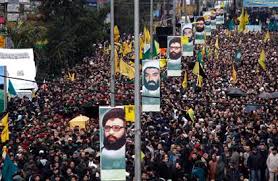
You know how the Leftist apologists for militant Islam keep telling us that the jihadis are a 'small minority.'

Well, have a look at this and tell me whether you think it's a 'small minority.'

That looks like an awfully big minority to me....


Israel Matzav: A 'small minority'?

Israel Matzav: Iran: 'Please don't threaten us'

Iran: 'Please don't threaten us'

Iran now says that it is willing to consider nuclear fuel swaps, but it asks the West 'please don't threaten us.'

On Friday, the French news agency AFP quoted Iran's President, Mahmoud Ahmadinejad, as having said that Iran would be willing to reach a deal with the West over its controversial nuclear program as soon as the U.S. and other Western nations stopped issuing threats against Iran.

"Everything is possible, 400 kilos, 800 kilos, it's nothing," for enrichment abroad, Ahmadinejad was quoted by AFP as saying in a new gesture to try to end the nuclear standoff.

"But not in a climate where they threaten us. They have to change their vocabulary, in respect and legality," Ahmadinejad said.

Six world powers have urged Iran to accept a United Nations-drafted proposal that would have Iran ship 1,200 kilograms of its low-enriched uranium to Russia in one batch.

"From the outset, delivering 1,200 kilos of uranium was not a problem for us," said Ahmadinejad, "but they believe they can wave a stick to threaten us, those days are over."

U.S. President Barack Obama's administration has signaled that time is running out for the diplomatic approach to resolving the nuclear dispute with Iran. Both the U.S. and Israel have not ruled out a military strike against Iran's nuclear facilities should diplomacy fail.

"They are threatening us now, with sanctions, with resolutions, pressure, it's going backwards," said Ahmadinejad.

Here's betting that the US, China and Russia (and note which country I put first) seize on this to give Iran more time.

What could go wrong?


Israel Matzav: Iran: 'Please don't threaten us'

Israel Matzav: Israeli pleads guilty to publishing classified US intel on Israel

Israeli pleads guilty to publishing classified US intel on Israel

Israeli anti-Israel Leftist Shamai Leibowitz, who used to defend ISM 'activists' from deportation, has pleaded guilty to turning over classified American documents to a blogger who then dumped them all over the Internet.

Unfortunately, Leibowitz got a much shorter sentence than Jonathan Pollard: He's been sentenced to a year and eight months in jail.

An Israeli lawyer and left-wing activist who worked as a linguist for the FBI has pleaded guilty to leaking classified documents to a blogger who posted the information online.

Officials say 39-year-old Shamai Kedem Leibowitz of Silver Spring, Md., admitted giving secret documents to the unidentified host of the Web site.

The FBI says Leibowitz held a top security clearance for his work as a linguist, and in April of this year gave the blogger documents about U.S. communication intelligence activities.

Officials would not say what the information was or where it appeared online.

Leibowitz has described himself "an Israeli-American attorney, admitted in New York and in Israel" and "a certified Hebrew-English translator and interpreter," according to the Web site Politico, which also reported that Leibowitz previously garnered attention for working on the defense team of jailed Fatah leader Marwan Barghouti.

Private Investigator Bill Warner thinks he knows where Leibowitz published the documents, but the blogger in question denies it.

If Warner is correct, Leibowitz published classified American information about Israel on a pro-'Palestinian' blog. Hmmm.


Israel Matzav: Israeli pleads guilty to publishing classified US intel on Israel

Israel Matzav: Deployment of giant bunker buster delayed

Deployment of giant bunker buster delayed

Remember the Massive Ordnance Penetrator (MOP), the giant bunker buster that was supposed to be deployed on American B-2 bombers by July 2010? Well, here's a picture of it in case you've forgotten:


At the time, it was thought that the MOP could be used to stop Iran and North Korea from deploying nuclear weapons. I posted about it again here and here (and I even posted about it in 2007 here).

There's bad news about the MOP this weekend. Reuters is reporting that its deployment has now been delayed to December 2010. That delay could be significant in terms of the weapon's usefulness against the two nuclear rogue states who are apparently about to go on line.
A "bunker buster" bomb with more than 10 times the explosive power of its predecessor will be put into service by the United States next December, six months later than previously scheduled, the U.S. Defense Department told Reuters on Friday.

The deployment's timing may help shape calculations of the United States and others in long-running standoffs with Iran and North Korea over their nuclear programs.

...

"Funding delays and enhancements to the planned test schedule have pushed the capability availability date to December 2010," Tara Rigler, a Pentagon spokeswoman, said in an email.
Bad news. Really bad news.

Israel Matzav: Deployment of giant bunker buster delayed

Israel Matzav: Bloggers grade Obama's foreign policy

Bloggers grade Obama's foreign policy

David Kopel reports on a group of political bloggers that graded President Obumbler's foreign policy.

This week’s National Journal poll of political bloggers asked for a grade for President Obama’s foreign policy. The average grade from the Left was a C. From the Right, it was a D-. I gave him the highest grade of any voter, which was a B, and explained: “Finally did the right thing on the Afghanistan surge. His most important speech to the world — in Oslo — was magnificent. Badly mishandled Honduras at the start by opposing the lawful removal of Zelaya, but no long-term harm was done.” Next year’s grade might be much lower, in that the shared Clinton-Bush-Obama policy of all talk and no action about Iran’s nuclear weapons development may get to the terminal point of Iran acquiring nuclear weapons.

No one asked me, but I would have given him an F. He's totally blown it on both Iran and the Middle East. He's allowing Iran to develop nuclear weapons while twiddling his thumbs about 'engagement' and 'dialogue.' Here at home, he managed to end all negotiations between us and the 'Palestinians' with his outrageous demands for a 'settlement freeze.'

I just hope Netanyahu hasn't lost the nerve to defy him.

What could go wrong?

Israel Matzav: Bloggers grade Obama's foreign policy

Israel Matzav: Standing silent in the face of Iranian provocations

Standing silent in the face of Iranian provocations

On Friday, Iran breached its border with Iraq and took control of an oil well in Iraqi territory. As usual, the world stood silent. Michael Ledeen, who refers to this as the extended finger from the mullahs' clenched fist, explains why this could be significant for Israel.

[T]oday’s event is part of a well established pattern: Iran attacks us and our friends and allies, and we look away. This is the theme of Accomplice to Evil. Just as we dithered and “negotiated,” as the Nazis prepared the Second World War, and then as the Soviets prepared the Cold War, so we have dithered for thirty years as the Islamic Republic has waged war against us. Do not think for a minute that this sort of appeasement is unique to Obama; the unique thing about the current phase is that we are so open about it.

There will probably be other events for us to ignore in short order. Top Iranian officials, including the head of the national security council and the defense minister, have recently visited Damascus, where they met with the leaders of the region’s terrorist leaders, and those killers, along with Syrian officials, will soon go to Tehran for further meetings. This suggests, to me at least, that an escalation in the terror war is now under way, and I expect to see a considerable tempo of killing in the near future. That is likely to include attacks in Iraq, Pakistan, Afghanistan and Israel.

I do not expect us to respond effectively. Our own leaders are even shying away from increasing the sanctions against Iran. With this sort of fecklessness, the regime will press ahead with its mayhem, and our friends in the region will be very cautious.

Israel faces more terror attacks and Iranian nuclear weapons. The Obama administration will continue to stand silent - unwilling to even impose sanctions against this brutal regime, let alone come to the defense of any of its allies in this region.

Ledeen quotes Vaclav Havel on how to deal with tyrants:

“…they respect it when someone is standing his ground, when someone is not afraid of them. When someone soils his pants prematurely, then they do not respect you more for it.”

Obama's pants are long since soiled and are just getting worse with his calls for 'engagement' and 'dialogue.'

What could go wrong?

Israel Matzav: Standing silent in the face of Iranian provocations

The Dead End of Legalism

The Dead End of Legalism

This afternoon I participated in a small blogger meeting. One of the drawbacks of bashing the Left so often is that people forget that doesn't make me Right. This afternoon's event was the second or third such a get-together where I've found myself way off to the left of a roomful of true Right-wingers.

A central theme of the meeting was that International Law must be wrenched back into the service of the Right, by demonstrating that settlements are legal, the Palestinian's claim to the West Bank is, at best, less credible than Israel's, and so on. The funny thing is that these cases really can all be made using legal tools - which if you think about it isn't that surprising. The art of being a lawyer is that you build a legal case from the position you're handed, no matter what it is. In a nation-state there's a universally accepted judiciary which decides who's case is more convincing, there are layers of judicial appeals, and there's a legislature that can change things if the laws have become outdated or unacceptable by enough of the voters.

None of this exists between states, so ultimately, the entire international law aspect of the conflict (and most other conflicts, too) is at best an attempt by one side or the other to bludgeon their adversary into accepting a position they aren't willing to accept.

None of the discussants at the meeting ever broached the subject of what the Palestinians are supposed to do with the positions being mooted. Nor did they need to. A legal confrontation isn't about finding common ground; it's about using the law to achieve your desired outcome.

I need to describe how the Israelis and Palestinians might find that common ground. Or not find it.
Originally posted by Yaacov Lozowick's Ruminations

2009: A Fine Year

2009: A Fine Year

Once the operation in Gaza was over, and Hamas spent another few weeks shooting off rockets merely to prove it was still able to do so, 2009 has been one of the most peaceful years Israel has had in decades. Avi Issacharof tells that in the West Bank it may have been the best year since all the way back to 1948:

The current situation in the West Bank is one of the best, if not the best, since 1948. Quiet prevails in the streets of every city there, the economy is starting to take off, the civilian police are maintaining law and order, and even the courts, despite their tremendous caseload, are upgrading their activity with every passing week.


Of course, this will never be mentioned by the anti-Israel brigade. It's no coincidence they've switched their attention to Gaza with a near-total neglect of the West Bank: the reality in which Israel and the PA are stingily figuring out how to live and let live even without peace, and actually, even without much high-level peace negotiations, simply doesn't fit the usual templates for explaining the conflict, so it's not noticed, and certainly not elaborated upon.
Originally posted by Yaacov Lozowick's Ruminations

The Primacy of Politics

The Primacy of Politics

I honestly appreciate the many thoughtful comments people have been writing here the past few days, including over the weekend where I disappeared from the blogosphere. Thanks for the interesting perspectives.

I see the time has come to write a few basic posts about long-term matters such as what my position is on the potential outcome of peace negotiations, Jerusalem, settlements and such matters, so that readers can understand if they agree with me or not at all. I take pride in the fact that not all of you will agree: this blog has a mildly eclectic readership

OK, I've noted the need.
Originally posted by Yaacov Lozowick's Ruminations

In the meantime, one fundamental position which seemingly wasn't clear enough in my post about human rights in Hebron. Although there's much about the matter I still need to study, for the time being my position is that politics are superior both to international law and to human rights. I expect some of you may cringe, and there are millions of folks out there who'll never read this blog who would respond with abysmal derision, but that's life. As JRR Tokien once wrote, I don't expect I'd much like what they write, either.

Human rights and international law are not the same thing, though people who unthinkingly bandy the terms around as magic charms to ward off reality don't always recognize this. That post I just mentioned wasn't very well written, I see, but its point was to say that since human rights are separate from matters of international law, you'd expect its champions to be able to recognize that the current desolateness that is central Hebron is better - from the narrow perspective of human rights - than its preceding alternatives in which lots of people were dying. Yet they can't recognize that, and one of the reasons they can't is that they aren't truly champions of human rights. They're bearing the mantle of human rights in vain, while actually talking politics.

The reason they engage in this charade isn't hard to understand. Human rights are noble (really!), and we'd all like them to exist, and be respected, on a higher plane than mundane and unseemly politics. Moreover, using the terminology of human rights in a political discussion is like playing poker with only the strongest cards: the other side can't win. If one side is noble and the other is mundane and the best it can offer is the cynicism of politics, clearly the noble side wins automatically. My point was to poke a hole in the intellectual pretension. B'tselem and their like are framing their view of human rights in Hebron (and everywhere else) in the terms of their political position, not in terms of some universal context as they ought in order to be intellectually consistent.

The other point I made, but mostly in order to set up the main argument, was that international law and human rights aren't the same, and at times can even contradict each other. It may be that international law frowns on Jews living in Hebron (which is a reason to have reservations about international law), but human rights can't have an opinion on the matter. A champion of international law may feel comfortable in saying there should be no Jews in Hebron; a champion of human rights must say the international law is irrelevant for the matter of the rights of the Jews who are there, irrespective of how they got there.

Having hopefully clarified that, let me add that in my humble opinion, politics trumps them all, human rights and international law. Yes, at first glance politics is messy, cynical, full of backhanded deals between tired and jaded negotiators with all matter of hidden agendas, while international law and human rights, both, profess to be clean systems of orderly thinking and finest principles. How nice, and what is there not to like.

Politics, like them or not, are the space where societies work out how they're going to get things done, and then change their mind when reality intervenes; they're also the space where different societies work out how to live with each other, or fight with each other, or fight and live. A society which is contained within one political unit will hopefully have a healthy balance of law, rights, needs, agenda and so on, and its political discussion may take place within the limits of its accepted consensus. Separate societies which don't share a basic set of assumptions, don't. Pretending they do won't change that. Suggesting they ought to is.... politics. It's legitimate, but as part of the political discussion, not as some divine set of aces which over-ride the political process.

Coming down from the heavenly spheres, this means that Israelis and their neighbors need to find accommodations that work. Human rights, international law, emotional drives, history, economics, clashing religions, global warming, hummus and tabuleh, American politics, European politics, South American politics, swine flu, military power, water tables, and zillions of other things are all relevant if they are. It all gets worked out - resolved, or unresolved - in the space where societies work these things out.

Politics.

PS. In democracies, at least, politics are where the will of the people expresses itself. Can't get any nobler than that, can you?

Life in Israel: Saudi Feminists and Polyandry

Life in Israel: Saudi Feminists and Polyandry

Life in Israel: Litzman and Breast Enlargement

Life in Israel: Litzman and Breast Enlargement

Life in Israel: Religious Reasons?

Life in Israel: Religious Reasons?

Life in Israel: misused insults - Women of the Wall

Life in Israel: misused insults - Women of the Wall

The Torah Revolution: Bye-bye secular Zionism, welcome Judaism!

The Torah Revolution: Bye-bye secular Zionism, welcome Judaism!

The Torah Revolution: Wargames to prepare for the new wave of expulsion of the Jew

The Torah Revolution: Wargames to prepare for the new wave of expulsion of the Jew

RubinReports: Afghanistan: The Obama Administration's Trust in Pakistan is Going to Get Americans KIlled

Afghanistan: The Obama Administration's Trust in Pakistan is Going to Get Americans KIlled

By Barry Rubin

Prediction: One day some enterprising author or former intelligence officer is going to write a best-selling book about the hunt for Usama bin Ladin. Readers will be horrified to find how the Pakistani government and military sabotaged the effort to catch or kill the al-Qaida leadership.

Meanwhile, reading Secretary of State Hillary Clinton’s December 10 interview with al-Jazira, it's striking how much she speaks in a totally American psychological and political context. Perhaps it is always like that with U.S. governments. But an administration claiming to be multi-cultural, open to the world, seeing the other side’s viewpoint, and criticizing its predecessors for insensitivity, still sounds like a bunch of naive Americans who don’t quite seem to grasp what other parts of the world are like.

What better example than Afghanistan and Pakistan, countries as different from the United States as you’re going to get. She states:

“We’ve admired the way Pakistan has pulled together to go after those elements of the Taliban that are directly threatening them. And I think that the people of Pakistan are so unified now in support of this military action”

Consider this bizarrely self-subverting first sentence. Isn’t it great, she says, that Pakistan is fighting those Taliban types who are trying to take over the country and kill them. Well, of course they are! Is it hard to understand that they don't want to be murdered and overthrown?

[A digression: What's truly amazing is that other people don't seem to notice stuff like this nowadays. The media keeps missing the essential points, whether it be in Clinton's reaction to Israel's construction freeze which set out a new U.S. policy or in her statement during the Spanish foreign minister's visit when she signalled the start of the sanctions' campaign.]

But the problem, of course, is that Pakistan isn’t going after those elements of the Taliban that are not "directly threatening" them. In fact, as most recently attested by a freed New York Times reporter who the Taliban had been holding hostage, Pakistani intelligence is helping the Taliban and other terrorists who want to kill Americans or Indians!

It is remarkable that the secretary of state can put the issue in such a backwards manner. Tens of thousands of American soldiers are about to be risked in Afghanistan, depending on Pakistan to guard the back door and stop terrorists who want to kill them. But in fact Pakistan will do the minimum possible, thus placing those troops and their mission at risk. Meanwhile, the administration sending them there is pretending the problem doesn’t even exist.

With all due respect, the idea of Pakistanis as “unified” and ready to be “pulled together” sounds like a rather out-of-touch way to describe an incredibly divided nation full of anti-Americanism, packed with many thousand radical Islamists, mired in corruption, hovering on the verge of anarchy, and where armed factions shoot at each other daily.

It is a country whose government just one year ago sponsored a massive terrorist attack on Mumbai and got away with it at no cost whatsoever, not even any international criticism!

As for Afghanistan, all the atmospherics make people miss the point that the administration sounds strikingly like that of the Bush presidency. After all, they both claim to be able to take another country, create a democratic system there, help build a responsible government, and ensure there's a strong military that will be able to defeat the terrorist forces.

The irony is that Bush had by far the better situation. First, Iraq is far more promising raw material than Afghanistan.. Second, Bush was willing to tough it out when things looked bad; Obama has already announced a short-term time limit publicly.* Third, Bush could depend on his main local allies--Saudi Arabia, Kuwait, and Turkey--to oppose the enemy while Obama can't rely on Pakistan for anything in that regard.

If George W. Bush erred in seeing parts of the world as being ready for democracy when they definitely were not, Barack Obama, and the administration for which he sets the tone, seems to think of itself as a community organizer pulling together those who really do want to play nice. Even at the Copenhagen summit such tactics led to the diplomatic equivalent of a barroom brawl.

In public at least--and whatever differently they think in private doesn't manifest itself in their policy--this administration seems to believe in a fantasy Pakistan packaged like some slightly exotic version of a Hollywood film set or some idealized American image of everyone pitching in to raise money in order to save the farm.

This is the kind of thing people make fun of today when they describe how innocent Americans once thought about a country named Vietnam.

Barry Rubin is director of the Global Research in International Affairs (GLORIA) Center and editor of the Middle East Review of International Affairs (MERIA) Journal. His latest books are The Israel-Arab Reader (seventh edition), The Long War for Freedom: The Arab Struggle for Democracy in the Middle East (Wiley), and The Truth About Syria (Palgrave-Macmillan). To read and subscribe to MERIA, GLORIA articles, or to order books To see or subscribe to his blog, Rubin Reports.

*Yes, I know that he also said he would take into account conditions at the time of the deadline but he also implied he will pull out regardless and Obama doesn't seem like the type to fight a war against tough odds and domestic criticism, does he?


RubinReports: Afghanistan: The Obama Administration's Trust in Pakistan is Going to Get Americans KIlled

Love of the Land: Lebanese unity? Not at the point of a Hizbollah gun

Lebanese unity? Not at the point of a Hizbollah gun


Emile Hokayem
The National (UAE)
17 December 09

(Oh, who are the people in your neighborhood? ... Sesame Street)

After six months of political drama and wrangling, Lebanon has a government. Congratulations poured in from abroad as soon as cabinet proposals by the prime minister, Saad Hariri, won overwhelming parliamentary support.

On a delicate visit to Washington, the president, Michel Suleiman, felt confident enough to promise a sceptical audience of US officials and Lebanese Americans that this national unity government would usher in a period of stability.

In fact, what happened between the elections in June and the formation of the new government was the political weakening of the March 14 coalition that nominally leads the cabinet, and the erosion of its tenets; from delineating borders with Syria to bringing suspects in the assassinations of anti-Syrian figures before an international tribunal. Mr Suleiman did not even raise these issues in his discussions in Washington.

The reasons for this collapse will leave a bitter taste in the mouths of those who hoped this tiny and volatile country could establish full sovereignty and authority over its own territory and people, and worked so hard towards that end.

(Read full article)


Love of the Land: Lebanese unity? Not at the point of a Hizbollah gun

Love of the Land: David Solway’s Hear, O Israel!: A Feast for the Conservative Mind

David Solway’s Hear, O Israel!: A Feast for the Conservative Mind


Barbara Kay
pajamasmedia.com
19 December 09


The new book by PJM's Solway asks why Jews are so prone to turn on themselves and make common cause with their enemies.

Hear, O Israel!
By David Solway
Canadian Values Press (Mantua Books)
181 pages; $25

On September 10, 2001, Canadian David Solway was merely an acclaimed poet, educator, and literary critic, warming himself (and his unexamined 1960s-era left-wing views) on a tranquil Greek island.

On September 11, 2001, he became a prophet. Watching the collapse of the twin towers on a television in his local café, Solway experienced a worldview-shattering epiphany that drew him into a singular fellowship of Western liberal intellectuals — Christopher Hitchens, Alain Finkelkraut, Michael Novak, and Nick Cohen, among them — who had been shocked by 9/11 into a fearful awareness of Islamist triumphalism’s threat to the West. As if making up for lost time, these ideological converts have brought a special urgency to their newly embraced roles as political Cassandras, perhaps none more apocalyptically than Solway.

Since then, Solway has put his formidable intellect to the service of myth-busting. In 2007, he published The Big Lie: On Terror, Anti-Semitism, and Identity, an indictment of the left’s collusion with Islamo-fascism in demonizing America and delegitimizing Israel.

In a way, Hear, O Israel!, partially adapted from published articles, is a recapitulation and updating of perils that have proliferated since the publication of The Big Lie. But this time Solway dwells at greater length and depth on what the Talmud calls sin’at achim, or brotherly hatred, a dynamic throughout Jewish civilization, currently embodied in the intensifying standoff between fellow-traveling anti-Zionists and Israel’s defenders.

Hear, O Israel!’s chapter titles give a good sense of what preoccupies him: “We Are All Israeli,” “The Darkness of Anti-Semitism,” “A House Divided,” and “The Question” (in a nutshell: why are Jews — not all, but a disconcerting number — so prone to turn on themselves and make common cause with those who would delight in their extermination?).

Page 1 of 2 Next ->


Love of the Land: David Solway’s Hear, O Israel!: A Feast for the Conservative Mind

Love of the Land: Another thought experiment

Another thought experiment


FresnoZionism.org
17 December 09

Recently while reading “A Safe Haven: Harry S. Truman and the Founding of Israel” by Allis and Ronald Radosh (a Hanukah gift from my wife, thank you!) I was struck yet again by the stubborn refusal of the Arab nations during that period — not just the Palestinian Arabs, but Ibn Saud, the Syrians, Iraqis, Egyptians, etc. – to consider any kind of compromise on Jewish immigration into Palestine (not to mention a Jewish state). This despite the fact that there was clearly enough room and resources in the area to support both Jews and Arabs, and although the Jewish presence had already improved economic conditions greatly, even leading to an increase in the Arab population.


As everyone knows, their refusal to compromise ultimately led to war, and a much worse end result for the Palestinian Arabs. And the cynical use of the Arab refugees as a weapon against Israel by the Arab leadership from 1948 to today constitutes one of the most massive violations of human rights since WWII. What a scandal it would be if it weren’t for the remarkably twisted perceptions of those organizations concerned with human rights!


Arab opposition to Jewish immigration actually began at the beginning of the 20th century. It was usually expressed by saying that the Jews would ‘take over’ although the Arabs themselves had not been in charge for centuries. And partition proposals which would have limited Jewish sovereignty to small parts of Palestine were violently rejected.


Today, sixty-one years after the founding of the state and (roughly) 120 years since the beginning of the Zionist enterprise, Arab opposition to it is probably stronger than ever. Even the fact that two Arab states have signed peace agreements with Israel does not disprove this — in practice the ‘peace’ is as cold as possible, antisemitic incitement continues, and only massive American bribes keep it in force.


(Read full article)


Love of the Land: Another thought experiment

Yad La-Shiryon

Yad La-Shiryon

From Wikipedia, the free encyclopedia

Jump to: navigation, search
The Armored Corps Memorial Site and Museum at Latrun

A Mandate era Tegart fort serves as the main building of Yad La-Shiryon.
Yad La-Shiryon is located in Israel
Location of museum
Established1982
LocationLatrun, Israel
TypeMilitary Museum
Websitewww.yadlashiryon.com

Coordinates: 31°50′17″N 34°58′50″E / 31.838056°N 34.980417°E / 31.838056; 34.980417

Yad La-Shiryon (officially: The Armored Corps Memorial Site and Museum at Latrun, Hebrew: יד לשריון) is Israel's official memorial site for fallen soldiers from the armored corps, as well as one of the most diverse tank museums in the world. The cornerstone for Yad La-Shiryon was laid on December 14, 1982. The site was created through the initiative of veteran officers of the armored corps in cooperation with the armored corps.


Memorial Site

The main building, a mandate era Tegart fortress houses an archive of the fallen, a library, and a synagogue. The tower of the fortress has been converted into a "Tower of Tears" by Israeli artist Danny Karavan. The inside of the tower is covered by steel taken from a tank and water circulating from a pool underneath the installation trickles down the walls.[1]

The Wall of Names, erected outside, displays the names of all the fallen soldiers from the Armored Corps, beginning with the War of Independence (1948) and up to this very day.

The Tank on the Tower

The tank on the tower

The most famous sight at Yad La-Shiryon is most likely that of a tank on top of a tower, which serves as the Museum's logo. In 1979, by decision of late Major General (Ret.) Moshe Peled, the tank was hoisted on top of a tower on the site, which was originally used as a water tower. The tank that was chosen is an American M4 Sherman tank, one of the first tanks that fought in the service of the IDF. Since the water tower was only designed to support 25 tons and the aforementioned tank weighed 34 tons, both the engine and transmission gears had to be removed.

In a famous April Fools' Day prank, one of the soldiers serving at the site called the site's manager early in the morning and told him that the tower had collapsed. The manager rushed over only to find the tank in place and the tower intact.[citation needed]

Tank Collection

Yad La-shiryon is famous worldwide for its unique and diverse collection of tanks and armored vehicles. There are over a hundred different vehicles in the collection, including Israeli made tanks, enemy tanks seized in combat, and vehicles purchased specifically for the collection.

Some of the tanks and military vehicles included are:

Israeli

Latrun tanks
Israeli Merkava III at Yad La-Shiryon
"Eyal observation post" Israeli adaptation of American M4 Sherman tank at Yad La-Shiryon
American M42 Duster at Yad La-Shiryon
British Alvis Saladin at Yad La-Shiryon
French Renault R35 light tank at Yad La-Shiryon
German Panzer IV at Yad La-Shiryon
Captured Egyptian T-100 at Yad La-Shiryon
BTR-50 based Medevac vehicle at Yad La-Shiryon

American

British

French

German

Soviet

Allied Forces Monument

Allied Forces Monument at Yad La-Shiryon

A monument was constructed as a tribute to the Allies of World War II, led by the United States, Great Britain and The Soviet Union. The monument is composed of a rock pile, on top of which the three main battle tanks that served in the armies of the Allied Forces on different fronts: the Soviet T-34, a British Cromwell and the American Sherman. The monument is surrounded by the flags of 19 countries and organizations that actively participated in the struggle, including the flag of the Jewish Brigade, which fought within the ranks of the British army.

Museum of Armored Corps History

The museum includes several exhibits dedicated to the history of armored combat in general, including:

  • Model room with dozens of tanks
  • Full scale models of:
  • Stamp collection, featuring tanks and other armored vehicles

Other Features

The site also has a large amphitheater where various ceremonies and performances take place, as it is one of the largest amphitheaters in the country and centrally located. There is also a birdwatching facility equipped with a radar to track migratory birds.

See also

External links

References

  1. ^ [1] (Hebrew)

Israel Matzav: Overnight music video

Overnight music video

This video is neat because it's 20 years old. The voice is familiar - the face looks a little different than what you're used to seeing. The song is called "Someday."

Let's go to the videotape.


Israel Matzav: Overnight music video

Israel Matzav: Jews and multiculturalism

Jews and multiculturalism

Yale Computer Science Professor David Gelernter writes about some of the reactions he's gotten to his new book Judaism: A Way of Being.

[M]ulticulturalism among Jews has a special, tragic resonance. It is a wickedly tempting overdose of morphine to a patient who has suffered too long.

Jews have said they are God’s chosen people--and many are desperate to unsay it. History has proved their chosenness again and again; the Jews are God’s lightning rod, and mankind has struck them with explosive rage in every generation—rage at the idea that man must not be a mere animal satisfying his animal wants; that man doesn’t merely live but performs in a theater of God and must judge himself by God’s own standards. Rage over the invention of conscience. The Jews have paid dearly for their influence, their importance, their centrality to the history of the West and the world. Can you blame them for wanting, desperately, that soothing syringe-full of oblivion? Multiculturalism is uniquely appealing to Jews in its idea that, after all, all nations are the same, all are equally good and equally bad; multiculturalism is the perfect way for Jews to atone for the sin of chosenness. The last thing Jews want is to hear that they have been vindicated by history, have been right all along, because that means they must go on living. Must go on being Jews. And in every generation, b’kol dor va’dor, evil men will rise up against them and against their children.

Of course boasting is bad whoever does it. Chauvinism is bad. Arrogance is bad. But it’s also bad not to know who you are. The Jews owe it to their ancestors, their children, and their own selves to know how they have changed history. Having figured it out, they must speak of it without arrogance or preening, but they must speak. Young Jews in America are increasingly in danger of valuing at zero the continued survival of the Jewish people—or of valuing it at the price of some folk music, some recipes, a few stale crumbs of Yiddish and a pocketful of loose Chanukah gelt.

When I started reading The Israel Test and I told someone what it was about, they said that they didn't want to read it because it sounds like one of those books that proves that all the things the anti-Semites say about us are true (and she's not multi-culti by any stretch). Hmmm.

Maybe I should buy her Gelernter's book?


Israel Matzav: Jews and multiculturalism

DoubleTapper: Protector USV

Protector USV

Reports of Israeli unmanned surface vessel on patrol in the Persian Gulf, are all over the internet.


Developed by Israel’s Rafael Armament Development Authority in response to emerging terrorist threats against maritime assets, the Protector USV (aka Death Shark) is stealthy, highly autonomous and can operate with general guidance from a commander in port, riverine, harbor and coastal waterways in a variety of roles, thanks to the plug-and-play design of its various mission modules, such as force protection, anti-terror, surveillance and reconnaissance, mine warfare and electronic warfare. The options include a highly accurate, stabilized mini-Typhoon weapon system with an excellent hit-and-kill probability, plus cameras, search radar and a Toplite electro-optical (EO) pod for detection, identification and targeting operations.

The Protector USV is a mature and operationally proven system currently operational in several naval forces worldwide including Israel's IDF, Singapore, and is being reviewed by the USA, India and South Korea.


Full specs here and here


DoubleTapper: Protector USV
Related Posts Plugin for WordPress, Blogger...